A Team Effort Against Suspected CTE

For Jim Yost, life has always revolved around football.

A coach’s son, Jim played youth tackle football in Lockport, Ill. and grew to become a Division I prospect. Though college coaches sent letters and scholarship offers throughout his senior year of high school, the hard-hitting safety had decided long before that he would first play for his father Jerry, who had extensive success as the head coach of nearby Joliet Junior College.
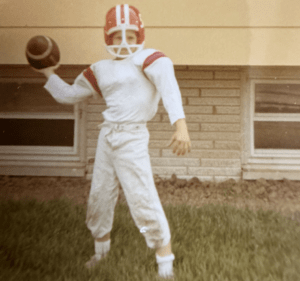
Jim Yost in his youth holding a football

From All-State in high school to All-American in junior college, Yost’s football accolades continued to attract coaches’ attention nationwide. He visited universities on each coast but decided to continue his career at the University of Iowa, whose home and away games were all within driving distance for family in the Chicago suburbs.

Jim was thrilled to play for future Hall of Fame coach Hayden Fry, but his Iowa career became a series of haunting what-ifs. Injuries to each knee cost him his first two seasons, but three major concussions would ultimately cut his Hawkeyes career short.
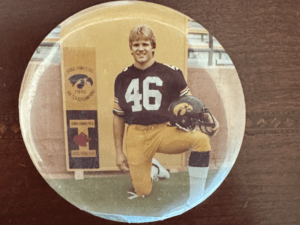
Jim Yost in a his University of Iowa football uniform

“You can imagine how bad it must have been, because that was 1984,” Yost said. “Back then, all they used to do is wave ammonia under your nose and tell you to get back in there.”

After his third concussion of the 1984 season, he watched from a hospital bed as a doctor called Coach Fry to advise that this was the end of Yost’s playing career. As a young man whose sole focus in life was to play in the NFL, Yost says he wept for a week straight, shattered by his circumstances.

“To this day, I dream at least twice a week that I’m playing or I have an extra year of eligibility,” he said. “It still literally haunts me.”

“You’ve got something, but I don’t know what it is.”

Though he could no longer play, Yost remained with the Hawkeyes as he completed his degree, joining the team for memorable bowl game trips to Southern California, Jacksonville, and Atlanta. He was so enamored by Atlanta that he decided to move there after college.

Jim found success as a healthcare technology executive, but football remained a big focus in the family. From the start of his relationship with his wife Caroline in 2013, the two spent many Saturdays tailgating and rooting on Jim’s son Zander, who played safety at Georgia Southern.
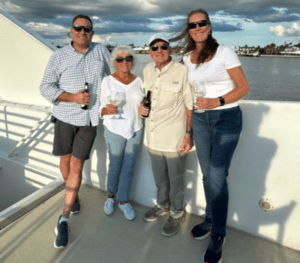
Jim and Caroline Yost on a boat with family

A few years after his son’s final snap, Jim started to grapple with what he thought could be consequences of his own football journey.

Around the time he turned 60, Jim and Caroline noticed he would sporadically struggle with word recall and started experiencing mild tremors. Jim had also acted out his dreams each night for years, seeming at times to be unconsciously fighting someone or something. Jim and Caroline only recently learned of the potential link between REM sleep behavior disorder (RBD) and traumatic brain injury (TBI).
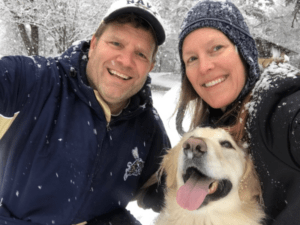
Jim and Caroline Yost with their dog in the snow

While a sleep study confirmed the RBD diagnosis, the Yosts’ quest for answers about Jim’s newer symptoms proved extraordinarily frustrating. One Atlanta neurologist ruled out Parkinson’s Disease following a DaTscan, but otherwise provided little actionable guidance.

“He basically said, ‘Yeah, you’ve got something, but I don’t know what it is,’ Caroline recalled. “’It’s not diagnosable, so I’ll see you in a year.’ I thought to myself, ‘That’s unacceptable and not what I’m going to do.'”

As a cancer survivor and the daughter of a doctor, Caroline learned not to accept “We don’t know” as a final answer while navigating the complex healthcare system. As football fans, she and Jim had learned a bit about Chronic Traumatic Encephalopathy (CTE) over the years, so they were surprised when multiple Atlanta clinicians told them they couldn’t determine if Jim’s symptoms were related to brain trauma from football. Every appointment seemed to end with a doctor telling Jim there wasn’t much they could do to help.

Jim and Caroline Yost smile in front of a building

Jim says in more than 12 years together, he and Caroline can count on one hand the times they had raised their voices at each other. So, when he would catch himself getting more easily aggravated, he felt even more urgency to learn what was troubling him.

Knowing there must be someone who could provide answers, Caroline was not going to give up.

Finally, someone who ‘gets it’

Forced to expand their search for experts beyond Atlanta, Caroline contacted the Concussion & CTE Foundation HelpLine and signed Jim up for the foundation’s Research Registry in May 2025. They quickly learned about three CTE studies for which Jim was eligible, and he eagerly enrolled in all three.

Jim was determined to find a clinician with insight into his symptoms and excited to contribute to cutting-edge research. He and Caroline headed south to Gainesville, Fla., where they first met with Dr. Breton Asken, a Site Principal Investigator for the DIAGNOSE CTE Research Project.

The initial part of the study involved Jim answering a lengthy list of questions from Dr. Asken, followed by a clinical evaluation by Dr. Michael Jaffee, the director of the University of Florida Brain Injury, Rehabilitation and Neuroresilience Center.

Impressed by the amount and specificity of questions and tests, the focus of the evaluation, and the compassionate approach of Drs. Asken and Jaffee, Jim finally felt heard and understood. The UF team seemed to have a true grasp of his experience, his symptoms, and his concerns.
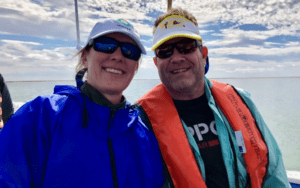
Jim and Caroline Yost on a boat in the sea

“Even though we’re Georgia Bulldog fans, we hang out in Gainesville now,” he said. “When I left, I didn’t feel alone at all.”

While CTE is currently only diagnosed post-mortem, UF doctors explained to Jim in October 2025 that based on his football experience and his symptoms at his age, it is likely he is living with CTE.

“It was heavy,” Caroline says. “Honestly, I’m still processing it, and I know Jim is, too.”

Through his discussions at UF, Jim had come to understand he had likely sustained at least 50 concussions playing football, in addition to thousands of additional impacts that did not lead to immediate symptoms. Lovingly called a “big teddy bear” by his wife, Jim does not worry about becoming aggressive or violent. His biggest concern with suspected CTE is not knowing whether he can maintain his own high standards of caring for his family.
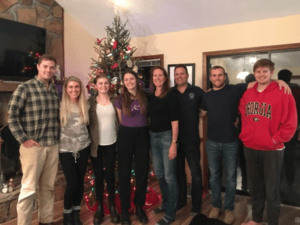
Jim and Caroline Yost with their family during Christmas

“That is my purpose: being a husband and father,” Jim said. “The thought of not being a significant help and inspiration in their lives is extremely difficult for me.”

A new community, a renewed purpose

Jim says Caroline is the ultimate care partner — a true empath. She said her own experiences inspire her to help others avoid the roadblocks she has overcome.

“I believe thoroughly in advocacy,” Caroline said. “I’ve been doing that very actively on the cancer front, and I’ve had lots of people tell me that it’s made a difference in their own journey, and it gives me hope to help other people.”
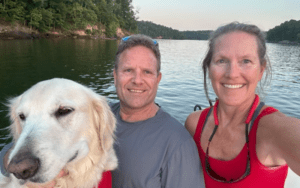
Jim and Caroline Yost on a boat with their dog

While she has vast experience navigating healthcare, Caroline says supporting a partner with suspected CTE is still very new.

“Part of what’s hard for me is that we don’t know the direction this is going to go,” she said. “There have been times when I’ve gotten frustrated with Jim, and I haven’t understood the difficulties that he was having. We’ve gotten a lot more open with some of the things he’s been dealing with.”

Though Caroline has a close friend caring for a spouse battling Alzheimer’s diseaseshe had never met anyone facing suspected CTE. Searching for guidance, she decided to join a Zoom meeting with the Concussion & CTE Foundation’s CTE Caregivers Support Group, which meets the third Tuesday of each month.

While members of the group were helping loved ones at different stages with different needs, Caroline says it was refreshing to be in a room with people on a similar journey.

“The conversation was just proof that it’s a safe space for people to talk about what is hard right now,” she said. “I need community. It’s just part of my being.” 

Guided by their faith, which Jim says is “not a crutch but an iron lung,” the Yosts are taking one step at a time, continuing to self-advocate, and looking forward to helping others navigate life with suspected CTE.
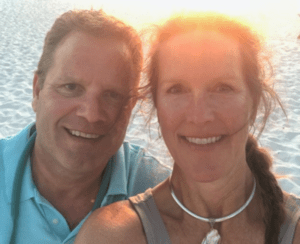
Jim and Caroline Yost on the beach  

Jim said he was astonished by the depth of CTE knowledge he found in Gainesville and within the Concussion & CTE Foundation. He and Caroline joined the foundation’s Advisory Board At Large in 2026, committing to advance research into CTE diagnostics and treatments and to raise awareness for the need to train the medical community on treating suspected CTE. 

In a life defined by football, Jim says this is no time to retreat to the sidelines. 

“I have an opportunity to make a difference in tens of thousands of people’s lives,” he said. “I’m at a point in my life where that’s more important than anything.”
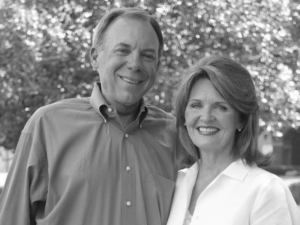
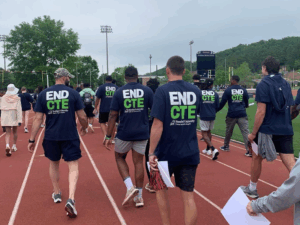
The Pat Sullivan Family Race to End CTE: Honoring a Football Legend

The first Race

Jean Sullivan had never organized a 5K. She couldn’t remember even participating in one. But as she considered how to honor her late husband, Heisman Trophy winner and beloved coach Pat Sullivan, Jean knew she, her family, and her community could make an impact.

“My advice is really just to make the determination to do it and then just start talking to everybody,” Jean said. “It comes together easier than what you think. It is time-consuming but well worth it.”

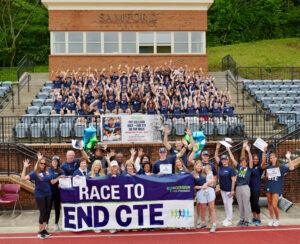
In 2024, Jean launched her first Race to End CTE campaign, an online fundraiser leading to a 5K walk in memory of Pat, her husband of 50 years who gave everything to his teams and his players. More than 200 people walked together at Samford University to honor not only the legendary Auburn quarterback, but all former athletes, veterans, and families affected by CTE.

Former NFL player and coach Pat Sullivan with his wife Jean

Jean was inspired by her experiences building community at CLF’s biannual Legacy Family Huddle in 2022 and 2024. Meeting family members who had faced similar challenges not only validated her own experience, but their strength and resilience galvanized her to share her story and involve her Alabama community in the Race to End CTE.

“It was eye-opening to hear from these families and researchers,” Jean said. “Families talked about sharing our stories and encouraged us to have our own Race. Even though it was just a month or so away [in 2024], I decided maybe we could have one in Birmingham.”

Jean Sullivan's Race to End CTE event in Alabama

The support shown to the Sullivan family in Birmingham was immediate and impactful. That first year, Jean’s campaign raised more than $82,000. In 2025, she set an even bigger goal — and hit it. Her campaign became the first to raise $100,000 in a single Race to End CTE.

As its name suggests, the Pat Sullivan Family Race to End CTE centers a family’s spirit — a family with strength in numbers. From Jean’s 2-month-old great-granddaughter to her 98-year-old father, these events have brought together five generations to support CLF in honor of their treasured patriarch.

Helping other families

Jean says this passionate work on behalf of CLF is about sparing future football families from the struggles hers faced in Pat’s final years. She encourages everyone at her events to share the CLF HelpLine with those struggling with concussion or CTE symptoms.

“We know there are others that are suffering in silence, and their families and their children are suffering with them and they don’t know where to turn for help,” she said. “We were one of those families.”

On top of promoting awareness, prevention, and the HelpLine, Jean uses her campaign to explain the role of research in the Race to End CTE. She lets her supporters know their donations are helping researchers at the BU CTE Center make breakthroughs.

Pat Sullivan and members of the Legacy Family Community share why they Race to End CTE

“It gives me hope when I hear that they’re working on finding a cure for diagnosis in the living through biomarkers,” she said, referencing studies like BANK CTE. “Once they can detect it, then they hopefully can find a cure for it. And then with education, people can learn to take better care of their brains.”

With two wildly successful fundraisers under her belt, Jean says she feels deeply grateful and motivated to build on this momentum in Alabama and beyond. Her Race to End CTE is far from over.

“I’m appreciative of everyone that has participated in the Race, whether it be online or here in person,” she said. “If they can all go out and share what they have learned about CTE, that would be very important to me.”

Participants smile for the camera at Jean Sullivan's Race to End CTE event at Samford University in Alabama

Team Dice: a Family’s Passion Powers Their Race to End CTE

“Say their names.”

It’s the only way Elizabeth Allardice believes she can guarantee her husband and others diagnosed with CTE will not be forgotten.

Her husband Robert, known by loved ones as “Dice,” never won a Heisman Trophy or a Super Bowl, but Elizabeth says his story — and others like it — need to be told and heard. For more than a decade, she and her daughter Kelly Dubs have been on a mission to not only raise awareness for CTE, but to directly support research and education focused on eliminating the preventable disease that robbed Dice of his golden years.

As a captain for Team West Point, Kelly honors her stepdad’s memory through the Concussion & CTE Foundation’s annual Race to End CTE. While some center their peer-to-peer campaigns around an in-person event, Kelly has found fundraising success simply through personal outreach, sharing her family’s story with all 400 contacts in her phone.

“My text message is short, but the story on my page is extensive,” Kelly said. “It starts with just one donation. You put one foot in front of the other and go for it.”

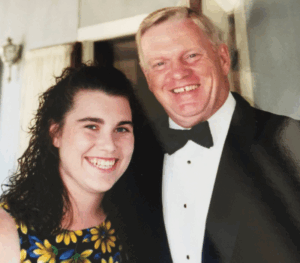
Kelly Dubs dressed up with her father, Legacy Donor Robert Allardice

The response from friends, family, and colleagues has been nothing short of incredible. Kelly has been the Race to End CTE’s top individual fundraiser for four consecutive years, raising more than $150,000 to support the Concussion & CTE Foundation’s research, prevention, and education initiatives.

Elizabeth and Kelly also fundraise to ensure the HelpLine remains free to every person and family with concerns about brain health. They are particularly passionate about the HelpLine because of their own experience with CTE. In the mid-2000s, when Dice started to show signs of struggle with cognition and communication, they didn’t know where to look for help.

Educating others through “Team Dice”

Thanks entirely to support from Concussion & CTE Foundation donors, families today can not only find medical recommendations and guidance for living with CTE, but they can also find community with a CTE support group or a Peer Support Connection with someone who understands their challenges.

“There was none of the help available when we were going through this,” Elizabeth recalled.

Though “Team Dice” utilizes texts, social media posts, and emails for their fundraisers, Elizabeth and Kelly have made it a point to travel from North Carolina to support others in the Legacy Family Community at in-person events in Alabama and Ohio. Kelly says she wants families to know they are not alone and that their loved one’s brain donation is making a difference.

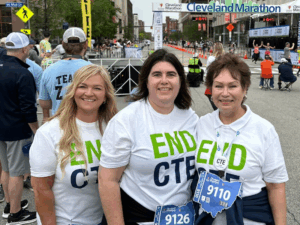
Team Dice smile for the camera at the 2025 Cleveland Marathon

Elizabeth reminds Legacy Family members the best way to honor their loved one is to educate others about CTE and support the ongoing work to diagnose, treat, and — someday — cure this disease. Her efforts are extensive, but Elizabeth says she will remain relentless in honor of Robert Allardice, the love of her life.

“I’ll be darned if I’ll be sitting on the sideline and letting him be forgotten.”

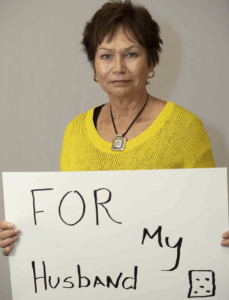
Liz Allardice, wife of Legacy Donor Robert Allardice, holds up a sign on why she's Racing to End CTE

What I Would Tell My Younger Self about Concussions

Ask most young children what sport they want to play, and their answers are probably similar: soccer, basketball, football, baseball. But for Dahlton Brown, it was always wrestling. At just eight-years-old, Dahlton fell in love with the sport. Sure, it may have been a logical choice since Dahlton was big for his age and had exceeded weight restrictions for youth football. He was immediately enamored with wrestling’s competitive nature and the fact he could be an athlete while being a “big kid.”

Dahlton continued to wrestle into the 8th grade; while also losing weight so he could join the football team. He continued participating in both through high school, adamant they were his way forward into adulthood.

Still, wrestling remained Dahlton’s true passion, even after his first diagnosed concussion as a high school sophomore. A mishap during a match knocked him out for several minutes and he had to be rushed to the nearest hospital. He didn’t know it then, but that injury would be classified as a traumatic brain injury (TBI). A neurologist suggested taking some time away from football, due to symptoms he exhibited that included vertigo and balance issues.

Wrestling, however, was fair game. Dahlton was back at it as soon as he cleared, in spite of lingering injuries he sustained from that accident, including sprained C1 and C2 vertebrae, a dislocated shoulder, and a fractured palate. He made it through the season, determined to pursue the sport collegiately.

That dream became a reality when Dahlton attended Stanford University as a walk-on to the wrestling team. He remembers that time fondly and is fortunate to still have close relationships with his former teammates. Balancing his academics with athletics proved to be a challenge and Dahlton chose to step away from the sport to focus on his studies.

Within weeks of leaving wrestling, Dahlton was approached by the Stanford men’s rugby coach during a gym session and asked if he wanted to join the team. After attending one practice, he was hooked.

“I loved rugby’s physicality and camaraderie,” said Dahlton. “And honestly, I was pretty damn good at it.”

Despite not having played before, Dahlton earned all-conference honors twice. After finishing graduate school, he considered taking a run at semi-pro or even professional rugby. Instead, Dahlton met a woman and chased love instead. It ended up being the perfect choice – they’re now happily married with a beautiful two-year-old daughter, Romie.

Dahlton acknowledges not knowing much about concussions during his youth, other than seeing the movie Concussion with Will Smith. Incidentally, that was also the first time he had heard about Chronic Traumatic Encephalopathy (CTE). While he loved the movie, it didn’t change how he thought about his brain or the sports he played. Dahlton only took brain injuries seriously once he entered college, as there were much stricter return-to-play protocols and more chance for education.

Thinking back on his sports history, Dahlton can recall a couple of concussions so significant they required him to leave during play and either trigger a concussion protocol or keep him out of competition for an extended period of time:

  • 2007, high school football when he used forehead for a hard block
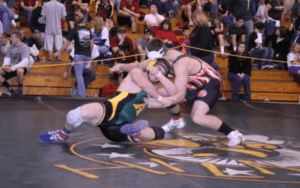
  • 2009, wrestling – he fell unconscious after an opponent landed with full body weight on Dahlton’s face; left him with a memory gap between warming up for his match and waking up in an ambulance
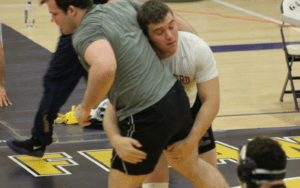
  • 2012, college wrestling practice – he collided with a wall and had to go to the ER for X-rays and other scans
  • 2015, college rugby – he was kicked in back of head by an opponent during a tackle
  • 2016, college rugby – inadvertent knee to the forehead during a maul

In addition, Dahlton believes he had quite a few undiagnosed concussions – hits to the head that left him stunned, but nothing that caused him serious concern or forced an athletic trainer to stop him from playing.

“Since the professionals never said anything, I just kept going,” said Dahlton.

With each of his concussions, Dahlton experienced varying symptoms; some were short-term for him, such as headaches and sensitivity to light. Others, like vertigo, continue to affect him to this day.

There were also the nonconcussive impacts Dahlton experienced, likely in the hundreds. As an upper weight wrestler, his forehead was considered one of his biggest weapons during competitions. Collisions with opponents were common, as were snapdowns, hand fights, headbutts, and falls to his face. Add in the years of rugby when he played prop, the position most likely to weaponize their forehead, and the number grows even more.

Now at age 31, Dahlton considers himself significantly more educated on concussion, TBI, and CTE, and thinks very differently about them than he had in the past. All aspects of his life have been touched by what he suspects are CTE symptoms, including aggression, mood swings, depression, anxiety, and issues with memory and executive function.

“I wish I knew what I know now, back when I was 16,” said Dahlton. “It would have made a world of difference in my health and my neurological outlook to have taken concussions more seriously.”

In 2017, Dahlton started seeing a therapist for some of his depression and anxiety-related symptoms. He’s also tried nearly a dozen different combinations of antidepressants, stimulants, mood stabilizers, and homeopathic medication. They help keep some of his problems at bay, but he still feels more challenging days than easy ones.

“I’ve spent the last decade or so trying to navigate an ever-changing landscape of mental and physical health symptoms that have escaped adequate treatment,” said Dahlton. “While I’m absolutely guilty of making ‘CTE jokes’ at my own expense, I never took the threat seriously until doing the right research and connecting the dots.”

Dahlton immersed himself in all the literature he could get his hands on to better understand the science. He also reached out to the Concussion & CTE Foundation HelpLine in 2024, receiving personalized resources to help with some of his issues. After reading the stories of fellow athletes and those battling similar issues, he was further moved to take action and support the Foundation’s mission.

First, Dahlton pledged to donate his brain to advance critical concussion and CTE research in the future. He then joined the Race to End CTE, noting after he first posted about it on Instagram, he had multiple former teammates reach out to express how they’ve been dealing with similar mental health challenges.

“The Race isn’t just about me,” said Dahlton. “At this point, I’ve done my damage and whatever happens, happens. But that doesn’t mean it should continue. As I look at social media with youth sports and the emphasis on early athletic development, I can’t help but worry about my own daughter, who has changed my world in countless ways since she was born. I race for her, and all the other youth of this world, to have agency over their health.”

Dahlton is sharing his story to help others dealing with the aftereffects of concussion and so other parents understand the long-term potential consequences of repeated head trauma.

“Don’t be afraid to talk to someone, especially when it comes to former teammates or your loved ones,” said Dahlton. “Be honest about how you’re feeling and your concerns. While they may not have the exact same experience, it may help to hear their perspective.”

Dahlton knows finding a cure for CTE may be close, and even the ability to diagnose and treat it during life would bring a significant sense of relief. Though he and those around him are aware he’s not an angry or hurtful person at heart, he fears his brain will eventually betray him down the line. For now, Dahlton knows research is the key so we can better understand how to help those battling suspected CTE, and so loved ones can learn about the best ways to provide support during their journey.

Making it Through the Perfect Storm

Warning: This story contains mentions of suicide and may be triggering to some readers.

I am honored the Concussion & CTE Foundation asked me to share a little about myself and provide some of my sports background along with mental health, addiction, suicidality, and recovery. My biggest hope is that my story can help someone else in their journey.

I was born and raised in Portland, Oregon. I was the youngest of eight kids and grew up in a very athletic family. My older brothers excelled in just about every sport. My brothers played football and my siblings were involved in bull riding, horseback riding, track & field, and everything in-between. I was constantly learning from and competing with them.

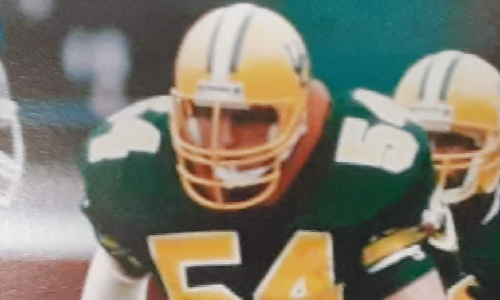
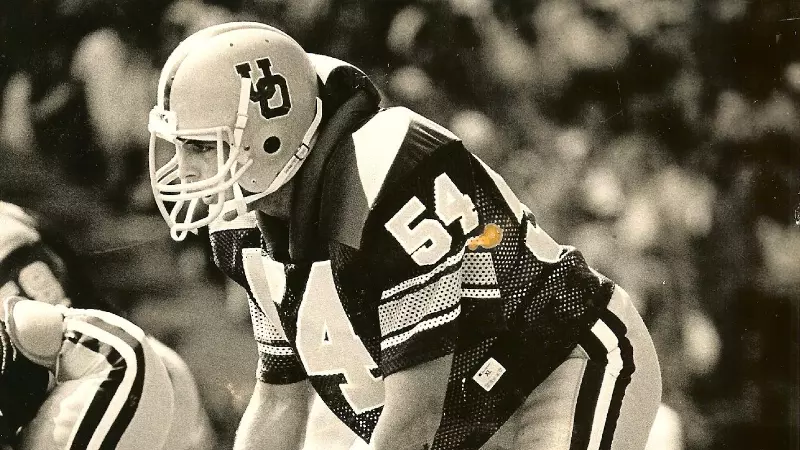
In seventh grade, I started playing tackle football. My success in football took me to the University of Oregon, where I played linebacker from 1982 to 1986.

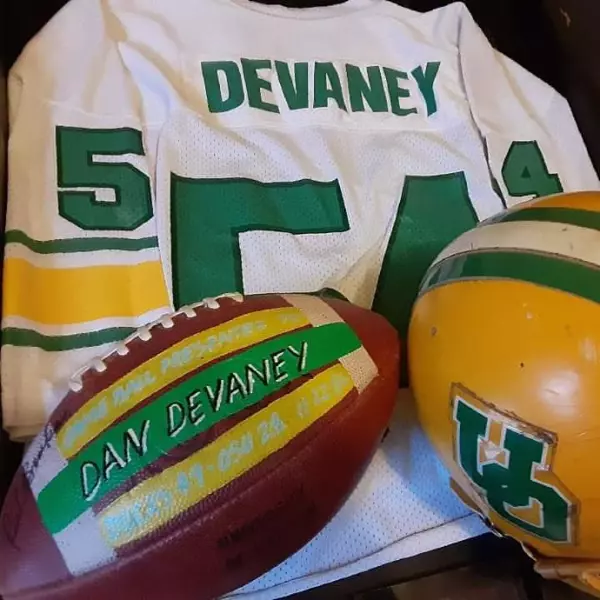
Football took me to great heights. I had the game-winning fourth down stop against UCLA. My senior year after we beat rival Oregon State 49-28, coach Rich Brooks presented me with the game ball.


I loved putting the uniform and helmet on. It was quiet inside the helmet. No one could see me in there. I was Clark Kent before I put the uniform on and Superman when I came out.

Over the course of my decade-plus in football, I was involved in countless collisions and hundreds of what were then known as “bell-ringers.” I was an undersized linebacker and I compensated for my lack of size by weaponizing my head. There were many instances where my teammates had to help me line up in the right place after I had made a big hit.

Back then, those hits were simply part of the game. But now I know those hits add up and I believe have affected my mental health. My head trauma is part of what I like to call the “perfect storm” of issues I face.

Addiction is another part of the storm. I became lost when there was no more uniform to wear and no helmet to hide in. The 30-plus years of my life after the University of Oregon are colored by alcoholism, poor decision-making, and denial. I was fired from a sales role for drinking on the job but still wasn’t ready to admit I had a problem.

I worked survival jobs for years to keep myself and my addiction alive. I spiraled for years before my life moved in a positive direction.

The last part of my perfect storm was the trauma I endured in my life. I lost both parents before I was 23 years old. I’ve been abused. I uncovered these traumas through eye movement desensitization and reprocessing (EMDR) therapy. Working backwards through trauma allowed me to move forward and get closer to sobriety.

By 2020, life was great. I was sober. I was working as a drug and alcohol counselor. But then the COVID-19 pandemic hit and turned everything upside down. Within six weeks of the pandemic, I had lost multiple friends to suicide and overdose. The pandemic halted all my personal and professional momentum.

I became deeply depressed. I relapsed. At my lowest point, I decided I didn’t want to live with the mental and physical pain I was experiencing. I had no idea how to find my way out. There was only one way. I attempted suicide on May 15, 2020. Luckily, a friend happened to call me to check in shortly after the attempt. She sent an ambulance to my apartment and saved my life.

Fortunately for me, I made it past that lowest point. It wasn’t overnight, and no one thing got me out of that dark hole – rather a combination of a lot of different factors that I’ll gladly share here in the hope it helps others.

I embraced a higher power. I chose God, but your higher power can be anything that grounds you and is greater than yourself.

I continued EMDR and other therapies. Dealing with past traumas, guilt, and shame allowed me to move forward. The past is a place of reference, not a place of residence for me.

I try to go to an AA meeting every day. It was in a meeting where I finally said aloud what I had been grappling with for years: “I don’t know what’s wrong with my brain.” The culture of meetings is good for me. Even if I don’t want to go, I always leave meetings feeling like I took the medicine I needed. I always say meetings are the cheapest form of therapy you could ever have.

I got more comfortable opening up, and specifically got comfortable opening up to other men. My dad had died when I was young and my brothers had already moved out of the house and lived with their families. From early on, I took on the role of protector for my mom and sisters. My years in football only strengthened my expectation that men should be tough and not come to each other with their problems. Eventually, I learned to embrace the guys in AA meetings and in football circles who had been where I had been and would support me.

Lastly, I fully embraced the power of connection. I’ve developed a “No Matter What” club full of people who know any of the members will pick up the phone, no matter what. It took me a very long time to get to the point where I could support others but being here feels great. I keep my side of the street clean and can be of service to others.

That’s how I manage my mental health and my addiction but remember – I am in the perfect storm. I know CTE may be part of my reality. I suffer from short-term memory loss. Looking back, I can see my decision-making has been poor. I can be impulsive. I know so many of my football brothers face the same question I do about whether we are living with CTE. It’s a difficult place to be but there are things we can do to help ourselves.

First and foremost, we have to take care of our bodies. For me, that means no drinking and no drugs. It means getting good sleep and eating well.

I also find success being consistent with my lifestyle and keeping things simple. I often ask myself, “What’s good for Dan?” The answer might mean I have to disappoint others, but I know what I need to do to protect my physical and mental health.

Connection is also a key part of living in the face of CTE. Sure, so many of us wonder if we are living with the disease. But to flip that around, so many of us can connect and bond over the fact that we share the same worry. We are not alone, and we can’t do this alone. Believe me, I have tried more than once to do it my way and failed miserably.

My final way to manage my perfect storm is by stepping outside my comfort zone and doing things that fill my heart. I’ve got a big novel experience, albeit in a familiar place, coming up soon. On Saturday, October 1, I will be honored by the University of Oregon in the Ducks’ home game against Stanford. I was extremely flattered by the honor but also knew the experience will also bring up several intense emotions. I’ll think of ex-teammates I’ve lost. I’ll have to go to an airport – an extremely triggering environment for many addicts. A younger me may have run from the moment, but some friends urged me to go. To help things, I’ll be going with a member of the No Matter What Club.

Connection has turned my life around. I’m happy to do what I can to connect with anyone else out there struggling. If you want to connect with me, please don’t hesitate to reach out. I’m always available at [email protected].


Suicide is preventable and help is available. If you are concerned that someone in your life may be suicidal, the five #BeThe1To steps are simple actions anyone can take to help someone in crisis. If you are struggling to cope and would like some emotional support, call the National Suicide Prevention Lifeline at 988 to connect with a trained counselor. It’s free, confidential, and available to everyone in the United States. You do not have to be suicidal to call.

Are you or someone you know struggling with lingering concussion symptoms? We support patients and families through the Concussion & CTE Foundation HelpLine, providing personalized help to those struggling with the outcomes of brain injury. Submit your request today and a dedicated member of the Concussion & CTE Foundation team will be happy to assist you.

Controlling Your Mental Health is Key

My whole life, all I wanted to do was to work with kids and help change their lives for the better. I played college football so I could get my degree and work in education to help kids. I wasn’t the best student, but I knew football could put me in a position where I could control my circumstances after college.

I played hard to earn and keep my scholarship. During my career I suffered multiple concussions that I wasn’t aware of. I was negligently put back into games, which only made things worse. I was playing through concussions that I didn’t remember or understand. At one point, my dad had to leave the stands and step in to tell trainers to keep me out of the game.

I’ve been through it all after my football career ended. I have experienced the lingering effects of multiple concussions. I’ve developed epilepsy, which induces grand mal seizures. These seizures are unpredictable, scary, and immensely painful. My shoulder would dislocate so often during these seizures that I had doctors drill a titanium screw in my shoulder to keep it in place. I’ve also had laser ablation surgery to get my seizures under control. Doctors have told me I’ll never be epilepsy-free, but my seizures are less severe and less frequent than they used to be.

I’m ecstatic with where I am now in my life and the control I’ve gained over my mental health, but it wasn’t always this way.

Football was supposed to be my gateway to the life and career I wanted. I always had the energy and passion to work with kids and help others. But suddenly, I didn’t want to be around anybody. All that passion was gone.

I had no sense of control. I couldn’t control my seizures, my memory, my anger, my depression, or any aspect of my mental health. As a result, I couldn’t accomplish any of the goals that used to be important to me. I couldn’t work. I couldn’t be the father I dreamed of being. I had lost control – and there is no scarier feeling.

Think about driving a car. If suddenly you lost control of where the car is going or how fast it’s going, something tragic would happen to you or to others. But if someone sees you driving a car towards them, they would be very scared. That’s exactly how I felt. I couldn’t control who I was, and the outside world couldn’t understand my reality.

My spiral out of control led me to the brink of homelessness. I had lost the people who could support and take care of me. I decided to take control of my life, my narrative, and the man I wanted to be.

The first thing I could control was getting medical care. I met doctors who believed they could help me. The surgery helped get my seizures in check, but there wasn’t a surgery to help my declining memory or my lack of emotional stability. To help navigate my new world, I learned the power of communicating what I was going through.

I couldn’t control my symptoms, but I could control how much people knew about them. It’s very hard to admit you have an invisible injury and open yourself up to the judgment that might come from that. But I learned that explaining my brain injury history allowed people to accept me in a different way. By explaining how I might have the occasional seizure or outburst or how I might struggle to remember things, people could meet me where I was.

Once I could communicate my situation, I found gracious employers who accepted me and the problems I face. My current employer, Rivian Electric Adventure Vehicles, allowed me to work. They respected my reality, valued me for who I am, and developed protocols for how to respond if I had a seizure so I could become a productive individual in society.


Having financial control of my life again is amazing. I don’t have to rely on others to provide for myself or for my daughters. I am reminding myself of what I am capable of. I can work. I can buy things. I can go on runs and work out again.

Rivian’s company slogan is “keep life adventurous forever.” Returning to normal life after what I’ve been through has been an adventure. I’ve had to brave the unknown and adjust to a new reality. But I am so grateful for the opportunity to do so. I hear other people complain about going to work every day and I will never be one of those people. I am humbled to get up and go to work every day and to be in control of how I feel at work every day.

I’ve lost a lot and know the journey ahead won’t be easy, but at least I’m in control again. I want the next generation of football players to be in better control of their mental health than I was.

Don’t get me wrong – I love football. I still watch the game. I played defensive back and I understand how difficult it is to keep your head out of tackles, so I get upset when I see players get ejected or penalized for targeting. We should try to limit the amount of head-to-head contact as much as possible, but I worry we are focusing too much on penalizing the big hits. We also need to focus on making sure players with concussions are comfortable speaking up about their symptoms. We need training staffs to give thorough concussion evaluations to players after big hits. And perhaps most importantly, we need to be looking after athletes’ mental health after they suffer concussions. Kids playing football, chasing their dreams, shouldn’t have their lives and their futures destroyed from playing the game. Our brain is the most important tool we have, and we shouldn’t sacrifice that for football.

That starts with us as players. People on the outside can’t tell if you’re struggling unless you let them know. I want players to be able to say, “I’m scared. I’m hurt. I’m in pain. I’m out of control.” We look like these big, strong people who are invincible. But we need to get away from being silent about what we’re feeling.

But we also need allies. So many people are in invisible battles with brain injury, mental health, and mental illness. If you see someone struggling and you don’t understand why, consider the root cause of their problems. They might not be in control of their situation.

I give the Concussion & CTE Foundation a pat on the back on behalf of people like me. Knowledge and understanding are essential. The Concussion & CTE Foundation and other organizations in the space are key to education the public and supporting the brain injury community to move forward. Thank you for the platform and allowing me to be an advocate for others.

October 2022 Update to Adrian’s Story

I was motivated to write another update on my story because the idea of control continues to be a constant in my life.

First, the death of former Denver Broncos receiver Demaryius Thomas in December and his CTE diagnosis this summer was very alarming to me. Demaryius Thomas died of a seizure. I have had hundreds of seizures due to my epilepsy. People in the epilepsy community live with a fear of sudden unexpected death. Demaryius’ death and diagnosis were reminders of the realities of what I’m up against and the lack of control I have.

Second, I’ve lost my job and my marriage in the past year. These losses have been painful and made me reflect on certain things.

I lost my job because I was having seizures at work. As I wrote in my last story, I underwent a surgery that helps to limit the severity and frequency of my seizures. That has been extremely helpful for my day-to-day life, but my job had me working around lithium batteries. Lithium exposure can trigger seizures, so my job became unsafe for me. There’s another example of control – my disabilities limit the amount of work I’m able to do and therefore hurt my ability to support myself and my family.

I came into a relationship sick and lost. While I was figuring out my health situation, my health put stress on those around me and made it difficult to being a man living in a no-excuses society. Ultimately, I don’t want others to be miserable trying to be there for me.

I know there are plenty of other people with brain injuries who have been separated from their families. My message to them is to continue doing the best with what you have.

Our brains control everything. And injuries to our brains can therefore change everything, too. It’s extremely hard for people like me who live with brain injuries. We are constantly fighting to be the people we once were. We are fighting against society to tell them we have these disabilities. We fight through physical and emotional pain we can’t control.

We can apologize for the pain our brain injuries have caused others. But we can’t apologize for getting up and trying our best to survive in a world that’s not equipped for our disabilities.

How Concussions in Motocross Changed My Life

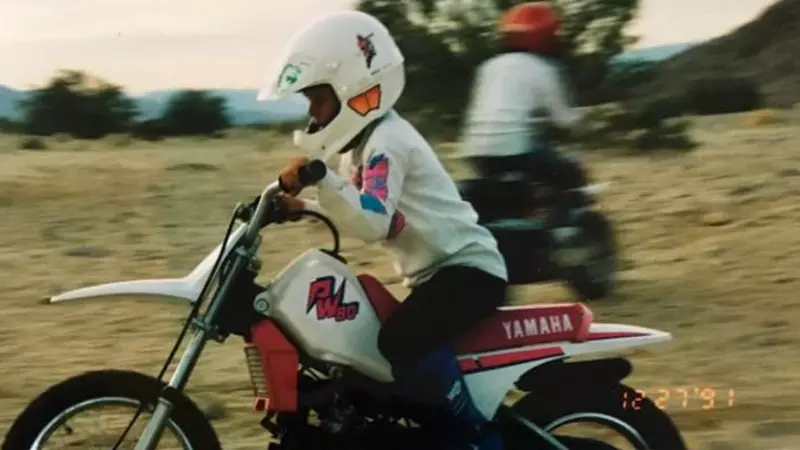
Jeffry’s love for bikes came early, getting his first motorcycle at just 5 years old. Oh, did he love the freedom of putting on a helmet and going fast. He was always drawn to jumping his motorcycle; his family coined the phrase “Jumpin’ Jeffry” at a young age. Jeffry was always a daredevil in some aspect – from climbing trees or rock climbing to jumping his BMX bike.

Jeffry’s first substantial crash happened when he was six. He was riding in the desert with his family and had his 50 at full speed, somewhere around 25 mph or more. He tucked his head and twisted the throttle to the max. Jeffry then saw a washout in front of him from a rainstorm. He did not have enough time to hit the brakes, so he decided to try and lift the front of his bike to clear the gap. That didn’t work and he buried his front tire in the ditch, bringing the bike to a dead stop. Jeffry was flung over the handlebars and traveled over 20 feet. The visor on his helmet broke, and he was left completely dazed. His motorcycle’s front forks bent the tire into the engine due to the harsh impact. He later remembers his dad using a sledgehammer to get the forks unbent. This was the first of many concussions throughout his early riding life.

He did not know the effects of falling while riding motocross would start to add up.

Jeffry grew up in sunny California so there was plenty to do. He started playing football when he was 12 and even won a CIF Championship with Newport Harbor High School in the process. There were many undiagnosed concussions to the head Jeffry can remember from his football days in the mid 90’s. Over and over, collision after collision. He was having a hard time focusing in school and was challenged with forgetfulness. Jeffry’s family at the time associated it with just being lazy or not following through on something.

“Back then there was no concussion protocol,” said Jeffry. “If you could play you were back in the game.”

Toward the end of high school, motorcycle riding really started to take off. Jeffry’s skills were improving, and he started collecting sponsors. He went on to compete in 125cc motocross races. After racing and jumping in the hills of Beaumont, California, he knew he had a skill and subsequently turned pro.

But going big comes with a price, including numerous hard falls and many broken bones. The love for flying on a motorcycle though, kept Jeffry committed to the sport. He then went from racing to Freestyle Motocross, turning pro shortly after the transition. He started jumping ramps and performing more challenging stunts. This resulted in numerous concussions. Things got harder for Jeffry; he was more snappy and not as nice as he once was. He only cared about riding and himself. He was changing and no one knew why.

Jeffry qualified for the X Games three times, competing with the likes of Travis Pastrana and Brian Deegan to name a few. Then a big fall happened in Northern California that would forever change Jeffry’s life. He was hard at work preparing for Games’ qualifiers, learning a new trick to bring to the big show. His riding friends (other pros) helped him pull the ramp back to a much bigger gap. This gap was nearly impossible to clear in second gear, so third gear it was. But jumping a ramp is a lot different than jumping on dirt – while not as much speed is needed, an extra push is important at that distance.

As Jeffry was practicing, he turned the corner and started running up to the ramp. He hit it at the right speed and twisted the throttle. But near the top of the ramp, the bike’s engine stopped. He had slowed down enough that he was not going to make the landing. Jeffry pushed off his bike and jumped for it, flying in the air about 30 feet high traveling roughly 35 mph. He landed on his back. Everything at the time went numb. He then slid down due to the momentum before losing consciousness. Jeffry was out for some time. No one recalls exactly how long. But he woke up to a serious concussion, a broken C7 and C3, a torn groin, and many ligament tears all through his neck and back. It took more than six months of rehab to get back to mostly normal, though he still does not have full mobility in his neck. This was by far the worst of his TBIs.

After that accident, Jeffry decided to hang up his boots. Through all the broken bones and many concussions, it just didn’t make sense for him to continue. He walked away from the sport he loved and began a semi normal life. He battled depression, anger, anxiety, heavy drinking, and the list goes on. For years he had a chip on his shoulder. He lost many motocross friends to suicide or overdose. He then later sought help to better learn about chronic traumatic encephalopathy (CTE) and the effects of repetitive head trauma.

“Understanding CTE was extremely important to me,” said Jeffry.

After learning more about CTE, Jeffry decided to pledge his brain to the Concussion & CTE Foundation for research. He saw the effects of brain injury to his close friends and other extreme sport athletes and knew a few who were diagnosed with CTE after death. Nobody knew that their livelihoods as motocross professionals would turn out this way. If they would have known, Jeffry doesn’t think they would have jumped dirt bikes for a living.

“Most of us who were professional freestyle motocross riders just assumed we were like this,” said Jeffry. “We didn’t know about TBI and CTE. But I have been working on speaking with my fellow riders on social media about this so they can be aware and seek the help they need.”

For Jeffry, there is light at the end of this wild tunnel. He has tried different treatments and found meditation especially helpful. He works hard to learn new things and challenge his brain. He surrounds himself with a strong support system who can keep him positive on the tougher days. And Jeffry is motivated to maintain his brain health for his daughter.

Jeffry eventually became an entrepreneur, starting his first company, a sales consulting firm, when he was 30. He has been a private equity CEO and most recently founded Ecommerce Management and Ecommerce EDU in 2019. He has also written many ecommerce courses for top universities in the country. Living with a TBI is not easy, but Jeffry’s commitment to learn what triggers his symptoms has saved his life.

“You don’t have to quit life because your head is a little banged up,” said Jeffry. “You can have a full and great life. I am so grateful for all of the support my family has given me. Moral and emotional support. I am thankful for the doctors I work with to maintain my health. I hope my story shows you that you too can beat this thing. We are all in this together! We have each other!”

If you or someone you know is struggling with concussion or suspected CTE symptoms, reach out to us through the Concussion & CTE Foundation HelpLine. We support patients and families by providing personalized help to those struggling with the outcomes of brain injury. Submit your request today and a dedicated member of the Concussion & CTE Foundation team will be happy to assist you.

Life After Brain Trauma in the U.S. Army

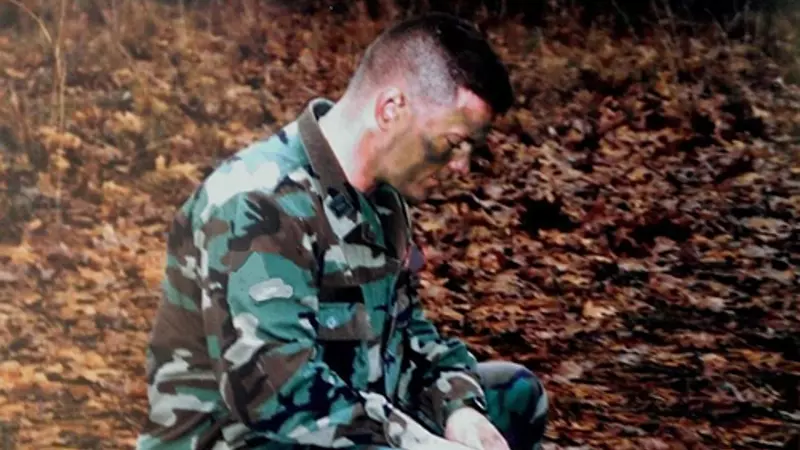
Retired Lieutenant Colonel Robert Gowan experienced a substantial share of head trauma during his athletic and military careers. He grew up playing football in Houston, Texas before walking on to the football and rugby teams at the Virginia Military Institute. This was in the 1980’s, well before concussions were widely regarded as a serious injury.

His sports teams were “old school” and prioritized toughness. For Gowan and his teammates, that meant playing through pain and leading into tackles with their helmets.

One of the earliest concussions Gowan can remember came during a high school playoff game in the Houston Astrodome.

“It was a toss sweep to their running back on my side. When I made contact the lights went out,” said Gowan. “I don’t remember the hit or much after it besides looking up at the scoreboard and seeing sparks and stars flying toward me, but I finished the game. Back then if you weren’t knocked out cold and put on a stretcher you got on your feet and kept going.”
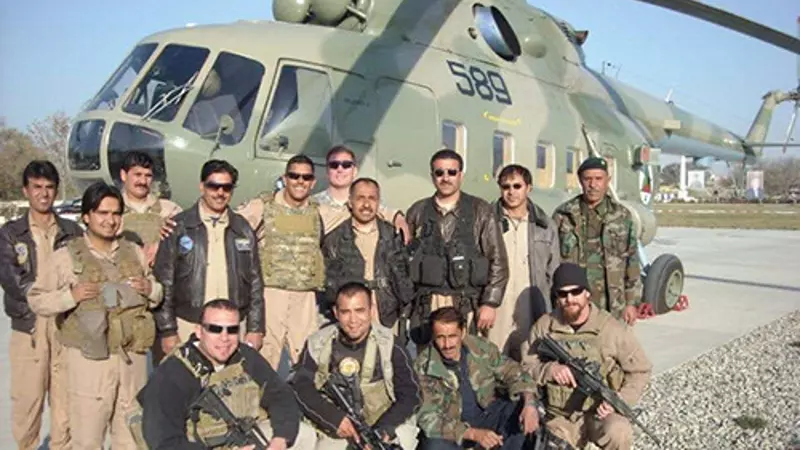
Gowan has several similar stories, as do some of his former teammates. The common factor: if they could hide their symptoms enough to continue playing, they did. Gowan’s military experience was no different.

Decades of Service

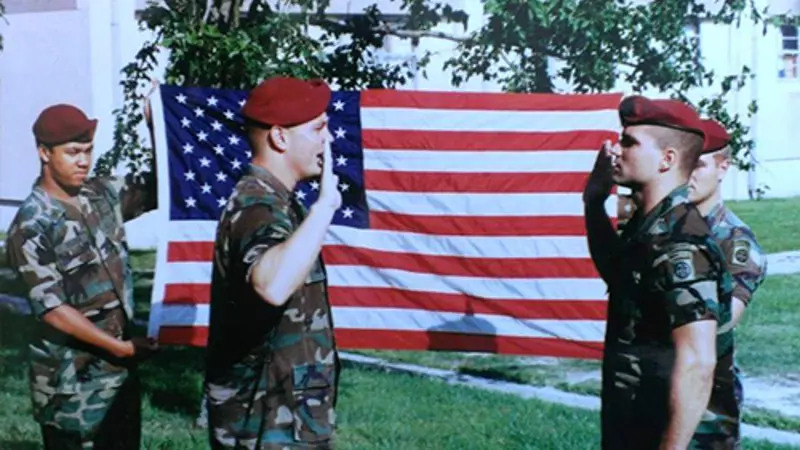
Inspired by his father and grandfather’s service, Gowan knew he was interested in joining the Army after college. In May 1988, he was commissioned as a second lieutenant in the U.S. Army.

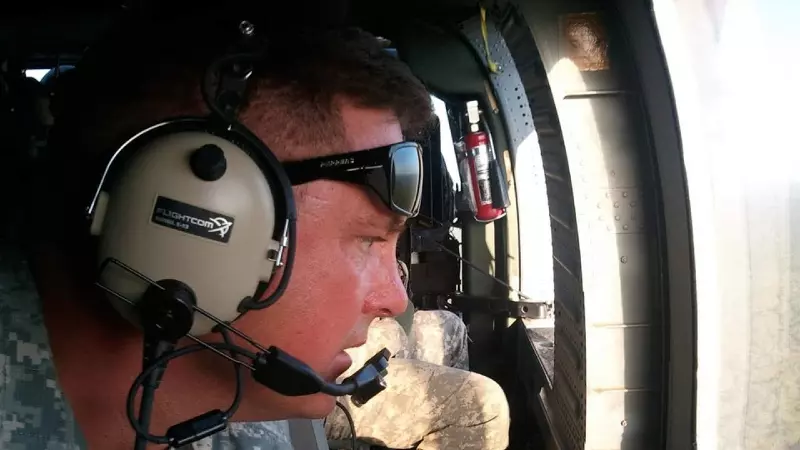
Gowan’s 25-year military career took him all over the world. His first major assignment was in Germany at the tail end of the Cold War. Serving as a nuclear weapon technical operations officer, Gowan witnessed the toppling of the Berlin Wall, the reunification of East and West Germany, and the dissolution of the Soviet Union. Gowan took on various roles at bases throughout the United States, Korea, and Kuwait, earning jumpmaster status and commanding an artillery battery for the 82nd Airborne Division along the way.

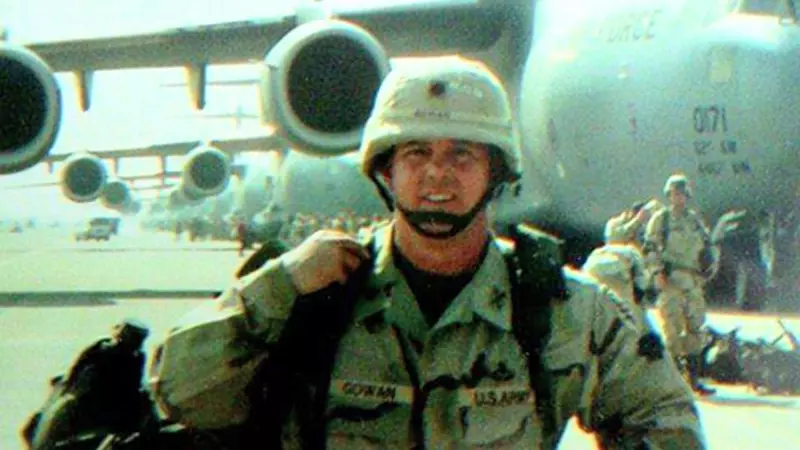
By the time of the 9/11 attacks, Gowan was a seasoned officer. The historic events that followed, including the U.S. invasions of Afghanistan and Iraq, marked a momentous shift in his career. By 2003, Gowan was serving his first tour in Iraq.

“My military career was bisected by the events of 9/11. Everything became focused on supporting combat operations in Iraq and Afghanistan” said Gowan. “The second half of my career was very serious and intense. I saw a lot of casualties and fatalities in the men and woman I was providing support to.”
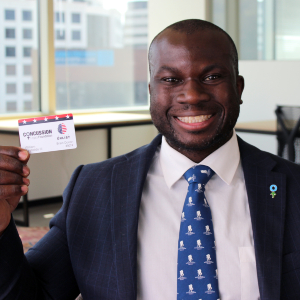
It was a new chapter in Gowan’s service and a life-changing experience. He remained committed to the Army and redeployed to Iraq in 2007 as part of a surge in U.S. Military presence before taking a post in Afghanistan in 2009. Gowan witnessed and personally experienced significant brain trauma throughout his career until retiring in 2014.

Common Brain Trauma in Military Service

Gowan knew about concussions from sports, so he was able to recognize their hallmark characteristics during military training and deployments.

At U.S. Army Airborne School at Fort Benning in 1989, for instance, Gowan landed hard during the final training jump before graduation.

“When I stood up, I was seeing double,” said Gowan. “I knew something was wrong, but I didn’t seek medical attention because it was my final jump of Airborne School. I recovered quickly enough to just move on, put it behind me, and head to Germany for my first duty assignment.”
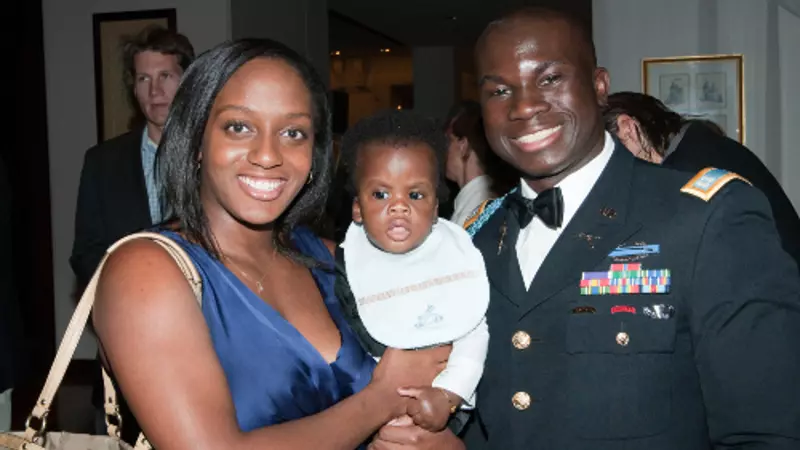
Shaking off rough impacts was the norm. In fact, hard landings were common enough in the Airborne community that they have a saying about it: “feet, butt, head.” When a landing went wrong, usually your feet hit first, then your butt, then your head. The saying is a common reference among paratroopers to help brush off rough landings, which were often unpredictable, uncontrolled, and forceful.

Some jumps go off without a hitch, like the time Gowan completed a midnight jump onto an airfield in the mountains of northern Iraq with the 173rd Airborne Brigade, and some don’t. Even less technically challenging jumps can go wrong. Gowan’s daytime jump with the 82nd Airborne Division at Fort Brag in 1997, for example, was a comparably routine jump. At the time, Gowan was a battery commander leading a training mission. When he landed – feet, butt, head – he recognized another hallmark concussion symptom in himself.

“I remember thinking oh, boy, that was bad,” said Gowan. “As I regained awareness, I tried to speak, but I couldn’t because my speech was temporarily slurred. My first thought was that I knocked out all my teeth or broke my jaw, but when I felt they were intact, I realized it must be the hit to my head.”

Gowan felt like he didn’t have the luxury to pursue medical aid because he was in charge, so he proceeded with the mission. Gowan recovered quickly, completed the mission, and moved on. In hindsight, Gowan wishes he’d told the medical team.

Now that Gowan is retired, he wonders about the cumulative effect of these and several more traumatic incidents and how they impact his life today.

“I have concerns about the long-term effects. I have some memory issues and I have been diagnosed with PTSD,” said Gowan. “When you’re in a combat zone, you see and experience things that you can’t shake even if you want to. It’s hard to draw a direct line from a concussion or traumatic experience to later changes in functioning but the uncertainty, or the possibility, is hard to wrestle with.”

Gowan is familiar with Chronic Traumatic Encephalopathy (CTE) and knows that sub-concussive impacts, impacts to the head or body that don’t cause obvious concussion symptoms, can bring substantial long-term complications.

“I was on the delivering-end of mortar rounds in trainings, but I was on the receiving-end of mortar fire in Iraq. It’s hard not to worry about those blasts now,” said Gowan. “I was in Basra for just a few days in 2007 as part of a JSOC [Joint Special Operations Command] leadership recon and we got hammered by repeated mortar shelling. One blast in particular was so great if felt like my teeth were going to blow out of my head.”

Today, we understand better the risks soldiers who operate artillery, mortars, and anti-armor weapons are exposed to from concussive blasts and know TBIs are happening often. According to the Defense and Veteran Brain Injury Center (DVBIC), 414,00 TBIs were reported among U.S. service members between 2001 and late 2019.

“We know it’s a problem. The military has been studying this and working to minimize risks, but it is a big concern,” said Gowan.

Military training also comes with significant risk for injury. Servicemembers are asked to prepare for realistic situations.

“Military training is inherently dangerous,” said Gowan. “Whether you are training in vehicles, parachute jumps, combat simulation, or land navigation you tend to get banged around. You suffer trauma to various parts of your body.”

Retirement has given Gowan time to reflect on his own injury history, the servicemembers he worked alongside, and what the military community can do to prevent the worst outcomes of cumulative brain trauma.

Observations in a Combat Theatre

Beyond his own injuries, Gowan witnessed large scale combat and casualty trends in Iraq and Afghanistan after the introduction of improvised explosive devices (IEDs).

Gowan finished his first deployment in Iraq right as IED attacks were becoming more common. Initially dubbed “roadside bombs,” IEDs were a bigger problem when Gowan went back in 2007.

“That was how the enemy seemed to be most effective fighting against U.S. and coalition forces,” said Gowan. “When I was there in 2003, we didn’t have ‘up armored’ Humvees. As IED casualties became more common, the Army adapted.”

Beyond his own time in combat theaters, Gowan learned that a close friend from early in his military career at Fort Bragg was injured in an IED attack, losing both of his legs. Another servicemember close to Gowan, one of the ROTC cadets he mentored as an instructor at the Virginia Military Institute, suffered a severe TBI from an IED in Afghanistan.

“I know of a lot of exceptional men and women that were wounded and suffer from the effects of TBI. The issue hits very close to home,” said Gowan.

A 2017 study on post-9/11 veterans showed explosive blasts were the leading cause of reported traumatic brain injuries in Iraq and Afghanistan. Regardless of injury source, it is a staggering fact that 414,000 of the 2.7 million total troops deployed to Iraq and Afghanistan have been injured by TBI. Considering not all TBIs are reported, the proportion is likely even higher.

“I came into contact with a lot of people who were real heroes,” said Gowan. “I’m no combat hero and would never represent myself as such, but I was in close proximity to those men and women in support operations. I’ve seen and still feel the weight of their sacrifices.”

A New Mission After Retiring

Gowan is grateful for his military career. Now, on the other side of service, Gowan is passionate about finding ways to improve the lives of service members impacted by brain trauma. That passion led him to Project Enlist. The goal of Project Enlist is to accelerate critical research on TBI, CTE, and PTSD in military veterans.

Gowan is giving back by pledging to donate his brain to the UNITE Brain Bank. This gesture helps to raise awareness about the need for research and directly contributes to scientific breakthroughs in our understanding of military brain trauma.

“I’m an organ donor. I believe it’s a good thing to help other people after you’re gone,” said Gowan. “So, when I heard about being a brain donor, it was a natural thing for me. There’s still so much we need to learn about the effects of trauma and sub-concussive blasts.”

Gowan is recruiting other veterans to support Project Enlist because he feels the urgent need for this research. Many veterans, like Gowan, are also former athletes with previous brain trauma.

“I think about how so many military service members are also former athletes.” Gowan said. “I have an interest in the TBI, CTE, PCS, and PTSD interplay because this issue is a huge piece of the quality-of-life puzzle for me and for them. I know a lot of folks who are still struggling. It feels good to do something about it and know that we can do more than just endure.”

Veterans, even former military service members with asymptomatic exposure to brain trauma or no history of brain trauma at all, can support Project Enlist by pledging to donate their brain like Gowan has. The Concussion & CTE Foundation also offers personalized support to veterans fighting the effects of concussions or suspected CTE through the Concussion & CTE Foundation HelpLine.

“Everything we do in the military is about improvement. How do we perform our mission better? How do we make a process more efficient, or safer?” said Gowan. “This mission is an extension of the same mentality. It’s a great opportunity to support veterans when they’re out of uniform and, hopefully, improve life for the generations that come after us.”

Lt. Col. Gowan is a brain pledge and peer mentor for the Concussion & CTE Foundation HelpLine. Gowan spread the word about the Foundation and Project Enlist with the Institute for Veterans and Military Families (IVMF) in June 2021. Watch the interview here.

Army Captain Pledges Brain to CTE Research

Posted: August 30, 2021

Retired U.S. Army Captain William Reynolds III has many titles: veteran, 2016 Invictus Games Captain, father and husband. He’s a survivor, who was gravely injured by a detonation device while in the line of duty. He’s also a Project Enlist brain pledge devoted to improving outcomes for his fellow veterans.

Reynolds’ military career began when he was a young cadet at the U.S. Military Academy in West Point. He was a Division I gymnast for four years before being commissioned in 2002 into the U.S. Army infantry. Eventually, he was deployed overseas and commanded small platoon units in Iraq and Korea.

His passion for service started when he was a young child.

“As a first-generation American, I was quick to recognize the opportunities I was afforded in this country,” said Reynolds. “I had so much gratitude and wanted to find a way to give back, so I became involved in a lot of civic and community engagements, either through scouting or church involvement. And that fueled the desire to go into service.”

Reynolds served in the U.S. Army for seven years. He can’t recall exactly how many blast explosions he’s been exposed to but estimates the number to be around two dozen. The most significant one occurred when his troop was ambushed in Baghdad and he stepped on a remote detonated IED. One of his legs was nearly blown off as he fought not to lose consciousness.

As it happened, Reynolds says he didn’t have time to consider the physical nature of his injuries or the possibility of brain trauma.

“The sensation from a blast is much different in a combat scenario, because your first feeling is the rush of adrenaline,” he said. “Making sure you’re all together, checking on your unit, doing the initial battle damage assessment. There’s really no time to think about, are my ears ringing? How does my head feel?”

Through the flurry of activity, the first two thoughts running through Reynolds’ mind were: I’ve failed my unit, and I don’t think I’m going to survive.

A team of combat medics who were tending to other casualties nearby happened on Reynolds and were able to give him proper care before medically evacuating him to a nearby treatment facility. There, he required intensive surgery and blood transfusions due to multiple severed arteries and musculoskeletal injuries. But that was only the beginning – over the next six months, Reynolds would go under the knife 12 additional times as doctors tried to salvage his limbs and get his leg back to a functioning state. In the end, they decided to amputate it to give him the best quality of life going forward. Altogether, his full course of treatment required an astounding 26 surgeries.

Although Reynolds was eager to get back to his responsibilities and his platoon, he quickly realized the physical and mental recovery would take much longer than he may have hoped.

“At first, I had lofty goals of returning to duty, but reality set in and I knew that would not be happening any time soon, and definitely not in the same capacity,” said Reynolds. “So I really set my sights at what was possible, such as being able to take more steps daily and seeing if I could stand for the whole day. Then it became trying to walk around the mall or not having to use a cane or assisted device – basically inching forward little by little.”

In the military, a convalescent leave is a free period of time after a major trauma an active member of duty can use to focus solely on treatment. For Reynolds, this was a godsend and something he is grateful for. He used the time to work with a physical therapist on basic movement and stay in touch with his troop.

From there, Reynolds continued his rehab through recreation, even picking up skiing. The liberation of picking up new, fun activities was thrilling – he started in a seated ski before eventually skiing upright with one leg and then finally with the use of a prosthetic. He credits his athletic background from college as key, as it instilled in him a training mindset and the desire to keep getting better.

While the visible injuries were healing, Reynolds also had to deal with the invisible ones – the persistent brain injury symptoms he noticed with activity. Reynolds has found any rapid or strenuous movements immediately lead to headaches. He realized how easy it can be to hide brain injury symptoms and suffer in silence.

“With any brain injuries, if you’re talking well and answering questions adequately, and it doesn’t seem like there’s any mental deficit – you pass the ‘screening test’, if you will,” he said. “People won’t necessarily know an event can cause headaches or there are scenarios where you can lose your balance at any time.”

Also essential to Reynolds’ recovery was the patience and support of his family. They stayed by his side during his treatments and made important medical decisions on his behalf. When he was out of the hospital, they made sure he had time to take care of himself and gave him the inspiration to realize his full potential both as a person and as a professional. His advice to caregivers? Find a way to give your loved one space and support throughout recovery.


“I really appreciated how my wife ensured that I had the right time to take care of myself,” said Reynolds. “Whether it was emotionally, through recreational things that I pursued personally, through athletic endeavors that I did with my friends, making sure I had that time to kind of have the emotional wellbeing side of the house. Then also pushing me to do the more mundane kind of treatment medical checkups that you need to do that we all tend to put by the wayside.”

Reynolds continues to embody the value emblematic of all Veterans: to serve others. One of the commitments he made is pledging to donate his brain to the Concussion & CTE Foundation and joining the organization’s Veteran Advisory Board as a way of giving back and ensuring future generations have research to help them. Reynolds became the first military veteran to pledge his brain 12 years ago, and he was honored at the Foundation’s annual gala in 2009. He says he’s impressed with the research progress made since his groundbreaking pledge.

Reynolds sees his involvement in Project Enlist as another level of service in retirement. He calls it a simple yet meaningful way to support research and improve care for those who need it most. He encourages fellow veterans to get involved.

“I would absolutely encourage all veterans to pledge their brain to Project Enlist,” said Reynolds. “This is just another way to honor that longitudinal research that can be done on any effects that we’ve suffered throughout our service so that we can not only improve VA care, but improve all care, for any veteran.”


Reynolds knows there are still many service members and veterans who are unaware of the research being done in this area. Some have experienced countless blast injuries and don’t realize the far reaching and lasting effects that can appear later in life. He sees the effects of PTSD and TBI in fellow veterans. But he is hopeful we are moving in the right direction to provide better diagnoses and care.

And to those veterans suffering from continued effects of a brain injury, Reynolds emphasizes the importance of hope.

“The body is great at adapting,” said Reynolds. “And at some point you’ll learn how to cope with those effects and overcome them.”


Servicemembers and veterans interested in pledging to donate their brain to Project Enlist can click here to get started.

If a veteran you know has passed way and the family is interested in brain donation, please instruct them to call the 24-hour UNITE Brain Bank emergency brain donation pager at 617.992.0165.