Paul Theriault was a longtime hockey player and coach, spending a decade with the Oshawa Generals of the Ontario Hockey League and a season with the NHL’s Buffalo Sabres. Late in his 60s, he started experiencing paranoia, hallucinations, and anxiety. Theriault passed away in January 2024 at the age of 73. His brain was donated to the UNITE Brain Bank, where researchers diagnosed him with stage 4 (of 4) CTE. Below, Paul’s widow Janice shares his Legacy Story to emphasize the need for player safety in all levels of hockey.
Fierce on the ice, gentle off it
I’ve started to try and tell Paul’s story numerous times. I somehow feel through writing this, it’s the last bit of him I can still hold on to. The last bit of him that’s mine. He would want it shared, though. He would want the game of hockey to continue in all its glory. He would want others who share his passion for the game to know how multiple brain injuries — or a single traumatic brain injury — can cause drastic damage and be life changing.
I met Paul Theriault in the fall of 1969, the first day of our sophomore year at Lake Superior State College in Sault Ste. Marie, Michigan. We had chemistry and felt an immediate connection. By the end of our first date, we both knew we were in deep.
Paul asked me to come to one of his hockey games and wait for him afterward. He had a scholarship to play for LSSC’s newly developed program. At the time, I was a novice in appreciating the sport and its charged atmosphere. The fights definitely put me off, but not enough to stop dating him. Eventually, I began to understand what happened on the ice was not a reflection of Paul’s gentle spirit. And so began our lifelong journey with hockey.

The first game of Paul’s senior year against Michigan Tech brought incredible excitement to Pullar Stadium. The noise from the fans was deafening. During a full-speed breakaway, he was tripped and ran headfirst into a stationary goal post, causing a fracture above his left eye. Paul’s helmet came off and the back of his head hit the ice. He was out.
The crowd stayed silent as the team doctor went to Paul’s aid. After a few terrifying minutes, he was able to skate off on his own. He was immediately transferred to the hospital and remained there for the next week, but it was a life-changing injury.
Unable to finish school that year, Paul was a lost soul, trying to deal with headaches, sensitivity to light, loss of short-term memory, and no recollection of what had taken place. His father took him to a neurologist in Marquette, but this being 1972, there was little knowledge of the long-term consequences. However, Paul knew that the game he loved to play was behind him.

Post-playing career
Paul returned to school the following year as an assistant coach for the LSSC varsity team and head coach for the JV team. Both squads had great years, and his future career was becoming evident. After graduating, Paul earned a fellowship to complete his master’s at Western Michigan University by working with their hockey program.
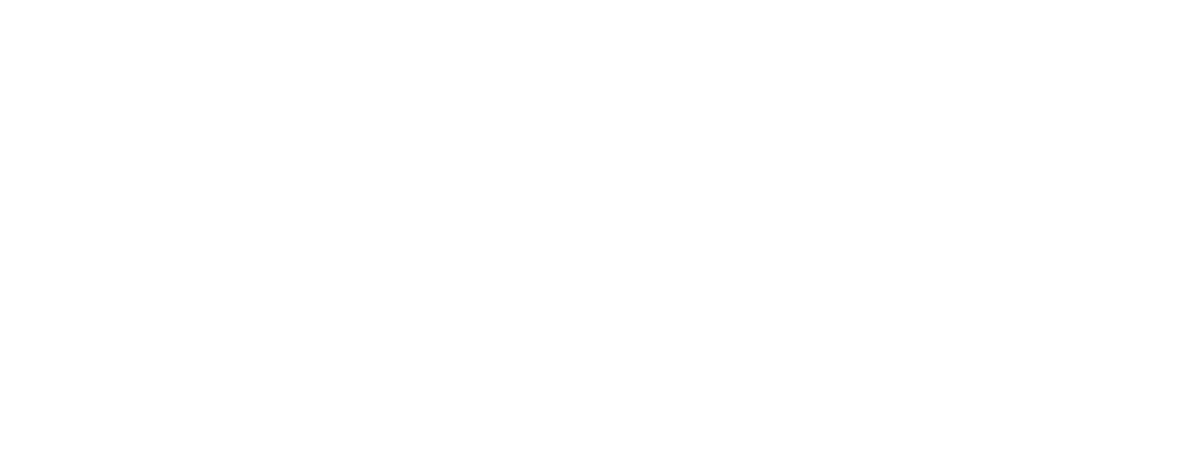
We were married in 1976, seven years after our first meeting in the basement of Brady Hall. I’d finished my degree and was teaching at an elementary school. This afforded Paul the opportunity to become an unpaid coach of the Soo Indians, a local junior “B” team with a mix of players from Sault, Michigan and Sault, Ontario. He had resounding success and knew he’d found his niche. The headaches, memory issues, and sensitivity to light continued, but he managed through them.
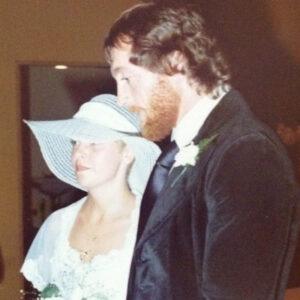
When the Soo Greyhounds, a junior “A” team in Sault, Ont., fired their head coach after a disappointing start, they reached out to Paul. He accepted the job, and with a number of future NHL players on the roster, he helped salvage the season and stayed on for another year.
From there, Paul took over the Oshawa Generals for a decade of success in the Ontario Hockey League, including two trips to the Memorial Cup and several coaching awards. He was in his element, guiding players both on and off the ice — as much of teacher as a coach for many young men. Still, the headaches remained.
In the spring of 1989, I became pregnant. Paul was thrilled. The New York Rangers offered him a job coaching their farm team, the Flint Spirits. After much soul-searching, we decided it was the right move for that time in our lives.
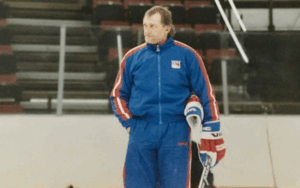
From the moment our son John-Paul arrived that December, we looked at hockey differently. An offer to coach a team in Northern Italy, with fewer overnights and a 36-game schedule, seemed perfect for us. He signed a contract for one year, but we ended up staying for six. Championships and a well-balanced family life was the perfect recipe.
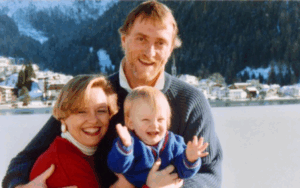
Ted Nolan, a former player and coach of the Buffalo Sabres, contacted Paul in the spring of 1997 with an offer to join him as an assistant coach. Together, we made the hard decision to return stateside. Coaching in the NHL had been a longtime goal and here was Paul’s chance.
Once again, Paul was successful and the Sabres finished atop their division. However, a contract dispute and the inner workings of pro hockey put an end to his NHL tenure. Paul returned to Jr. A hockey and Italy for some years before taking his final coaching job with the Nippon Paper Cranes in Hokkaido, Japan, where he won the West Asia Championship.
Declining health
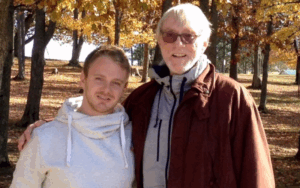
By this time, Paul’s behavior started to noticeably change. Though he knew he wasn’t always himself, he quietly went about bringing a Jr. B team back to life at Pullar Stadium. He bowed out of coaching when it became clear his mental state was deteriorating. That team, the Soo Eagles, is still playing today — a lasting legacy for Paul.
On a visit to southern Ontario in 2010, a former player and friend noticed Paul’s state and arranged for him to see a concussion expert at the University of Toronto. CTE was mentioned, and the doctor recommended we go to Mayo Clinic. There, doctors determined he may be dealing with the possibility of CTE, Alzheimer’s, and dementia. For the next five years, we worked with the team at Mayo but nothing slowed Paul’s decline.

Later in the year, we reached out to the Boston University CTE Center to discuss brain donation. Paul had developed aphasia, and while he couldn’t speak to groups about the dangers of concussion, he could pledge his brain to research. By 2012, I retired to care for and spend time with Paul.
Former Oshawa Generals players and Paul’s college teammates held “Tribute to Turk” golf outings in 2012 and 2014 to raise money for his medical expenses. The impact he had made as a player and a coach shone brightly. He was a well-loved man.

The winters are notoriously long in the eastern Upper Peninsula of Michigan. Paul hated the cold, so we went to Florida for a couple months every year to escape the snow. I had business cards made for Paul’s pocket giving my contact information should he wander. By 2015, his decline was to the point we could no longer head south.
During Paul’s last two years at home, he experienced paranoia, hallucinations, anxiety, and fear. He couldn’t express himself and, I believe, soothed himself with constant humming. Fortunately, he wasn’t violent nor suicidal. He simply didn’t know the state he was in.
Paul was always good-natured and positive, and he remained that way even late in life. By 2017, caregiving had become incredibly difficult for me, and my own health was suffering. We realized this couldn’t continue. After much persistence, I was able to get Paul into my first choice for long-term care at the Finnish Resthome, a nonprofit in Sault, Ontario.
It was the most difficult day of my life. Leaving Paul there nearly broke me.
There was enough of the old Paul left to woo the staff and he quickly became a favorite, even while cursing them during showers and changing clothes. They gave him his best days for seven years, though his behaviors early on were difficult. But with proper medications and a compassionate staff, he didn’t act that way for long. Once I felt complete trust, I was so grateful for the professionalism and empathy shown to us both. I still think of those people every day.
When COVID hit, the home was shut down for months. Once I was allowed to visit again, I needed to show proof of a negative COVID test before crossing the Canadian border. Donning my protective covering and mask, I could only see Paul for a short period of time. I learned that in my absence, he’d stopped walking and was in a wheelchair. He also needed assistance to eat. I would wear my perfume in the hopes he’d recognize me and enjoy listening to Bocelli together. Sometimes, I felt he did.
Paul’s Lasting Legacy
In his final years, Paul only existed, a shell of himself. He was always a very healthy man in tremendous shape, and his body simply refused to give in. I advocated endlessly for Medical Assistance in Dying to be expanded to dementia patients. Family and friends prayed for him to be set free. On January 3, 2024, Paul’s journey on Earth came to an end. His brain was donated to the UNITE Brain Bank shortly after.
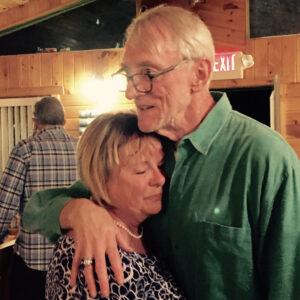
In February 2025, we had a virtual visit with BU CTE Center researchers who informed us of Paul’s diagnosis: stage 4 CTE. We pray the donation of his brain helps advance research to eventually diagnose CTE during life. We hope it raises awareness of the need for proper concussion protocols through all levels of hockey. We also call on the NHL to acknowledge the harm players put themselves in with every game.
Finally, I would like to address the impact of CTE on families. The mental and physical health of caregivers — whether they are children, spouses, or parents — are affected as they watch a loved one slowly slip away. Economic changes take place. Isolation becomes part of the process. It’s a very long journey, even after the person is gone. Grief is not linear. I can’t wait for the day when we no longer have to worry about this terrible disease.
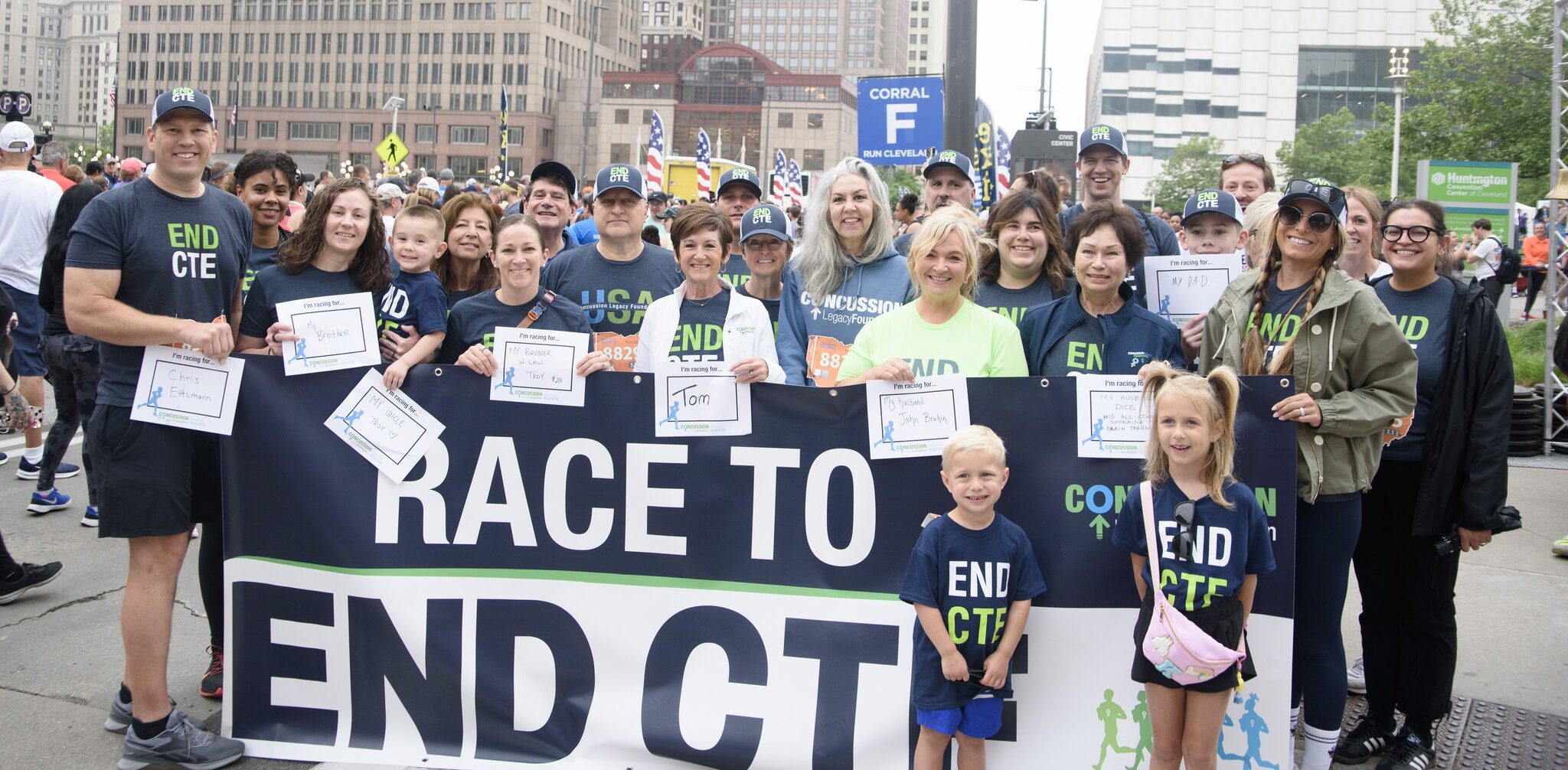
Through education and prevention programs, and research with our Global Brain Bank partners, we’re working tirelessly to End CTE.

Those struggling with suspected CTE aren’t the only ones who need support. View tools and resources for CTE caregivers.