Jim Yost grew up in a football family in Chicago’s southwest suburbs. He earned a scholarship to play safety at the University of Iowa, but knee injuries and three major concussions cut his career short. Decades later, the healthcare technology executive began experiencing tremors and difficulty with word finding in addition to a sleep disorder he’d battled for years.
Jim credits his wife Caroline for her relentless pursuit of answers about his symptoms, which finally led to a doctor explaining the likelihood that Jim is living with CTE. Together, they are sharing their experience to encourage families on a similar journey to self-advocate, to maintain hope, and to know they are not alone.
For Jim Yost, life has always revolved around football.
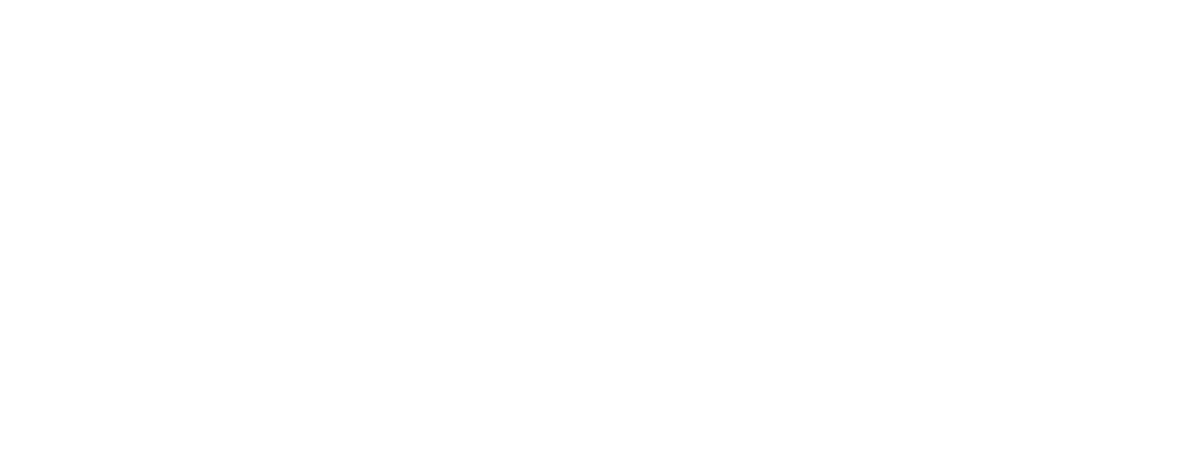
A coach’s son, Jim played youth tackle football in Lockport, Ill. and grew to become a Division I prospect. Though college coaches sent letters and scholarship offers throughout his senior year of high school, the hard-hitting safety had decided long before that he would first play for his father Jerry, who had extensive success as the head coach of nearby Joliet Junior College.
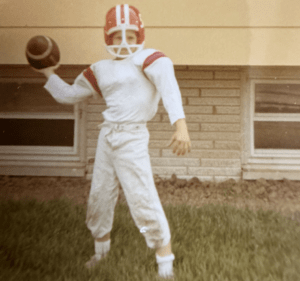
From All-State in high school to All-American in junior college, Yost’s football accolades continued to attract coaches’ attention nationwide. He visited universities on each coast but decided to continue his career at the University of Iowa, whose home and away games were all within driving distance for family in the Chicago suburbs.
Jim was thrilled to play for future Hall of Fame coach Hayden Fry, but his Iowa career became a series of haunting what-ifs. Injuries to each knee cost him his first two seasons, but three major concussions would ultimately cut his Hawkeyes career short.
“You can imagine how bad it must have been, because that was 1984,” Yost said. “Back then, all they used to do is wave ammonia under your nose and tell you to get back in there.”
After his third concussion of the 1984 season, he watched from a hospital bed as a doctor called Coach Fry to advise that this was the end of Yost’s playing career. As a young man whose sole focus in life was to play in the NFL, Yost says he wept for a week straight, shattered by his circumstances.
“To this day, I dream at least twice a week that I’m playing or I have an extra year of eligibility,” he said. “It still literally haunts me.”
“You’ve got something, but I don’t know what it is.”
Though he could no longer play, Yost remained with the Hawkeyes as he completed his degree, joining the team for memorable bowl game trips to Southern California, Jacksonville, and Atlanta. He was so enamored by Atlanta that he decided to move there after college.
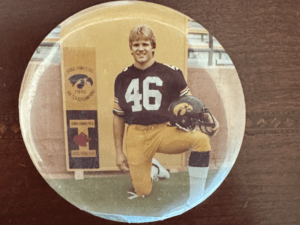
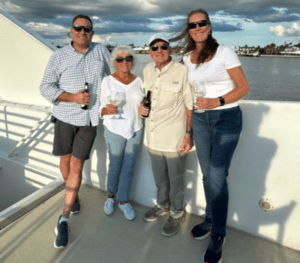
Jim found success as a healthcare technology executive, but football remained a big focus in the family. From the start of his relationship with his wife Caroline in 2013, the two spent many Saturdays tailgating and rooting on Jim’s son Zander, who played safety at Georgia Southern.
A few years after his son’s final snap, Jim started to grapple with what he thought could be consequences of his own football journey.
Around the time he turned 60, Jim and Caroline noticed he would sporadically struggle with word recall and started experiencing mild tremors. Jim had also acted out his dreams each night for years, seeming at times to be unconsciously fighting someone or something. Jim and Caroline only recently learned of the potential link between REM sleep behavior disorder (RBD) and traumatic brain injury (TBI).
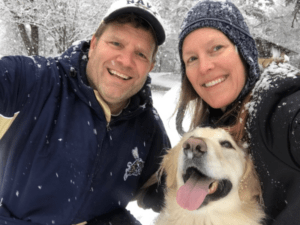
While a sleep study confirmed the RBD diagnosis, the Yosts’ quest for answers about Jim’s newer symptoms proved extraordinarily frustrating. One Atlanta neurologist ruled out Parkinson’s Disease following a DaTscan, but otherwise provided little actionable guidance.
“He basically said, ‘Yeah, you’ve got something, but I don’t know what it is,’ Caroline recalled. “’It’s not diagnosable, so I’ll see you in a year.’ I thought to myself, ‘That’s unacceptable and not what I’m going to do.'”
As a cancer survivor and the daughter of a doctor, Caroline learned not to accept “We don’t know” as a final answer while navigating the complex healthcare system. As football fans, she and Jim had learned a bit about Chronic Traumatic Encephalopathy (CTE) over the years, so they were surprised when multiple Atlanta clinicians told them they couldn’t determine if Jim’s symptoms were related to brain trauma from football. Every appointment seemed to end with a doctor telling Jim there wasn’t much they could do to help.

Jim says in more than 12 years together, he and Caroline can count on one hand the times they had raised their voices at each other. So, when he would catch himself getting more easily aggravated, he felt even more urgency to learn what was troubling him.
Knowing there must be someone who could provide answers, Caroline was not going to give up.
Finally, someone who ‘gets it’
Forced to expand their search for experts beyond Atlanta, Caroline contacted the Concussion & CTE Foundation HelpLine and signed Jim up for the foundation’s Research Registry in May 2025. They quickly learned about three CTE studies for which Jim was eligible, and he eagerly enrolled in all three.
Jim was determined to find a clinician with insight into his symptoms and excited to contribute to cutting-edge research. He and Caroline headed south to Gainesville, Fla., where they first met with Dr. Breton Asken, a Site Principal Investigator for the DIAGNOSE CTE Research Project.
The initial part of the study involved Jim answering a lengthy list of questions from Dr. Asken, followed by a clinical evaluation by Dr. Michael Jaffee, the director of the University of Florida Brain Injury, Rehabilitation and Neuroresilience Center.
Impressed by the amount and specificity of questions and tests, the focus of the evaluation, and the compassionate approach of Drs. Asken and Jaffee, Jim finally felt heard and understood. The UF team seemed to have a true grasp of his experience, his symptoms, and his concerns.
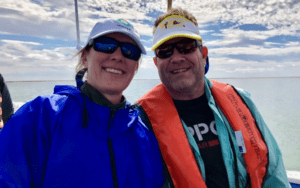
“Even though we’re Georgia Bulldog fans, we hang out in Gainesville now,” he said. “When I left, I didn’t feel alone at all.”
While CTE is currently only diagnosed post-mortem, UF doctors explained to Jim in October 2025 that based on his football experience and his symptoms at his age, it is likely he is living with CTE.
“It was heavy,” Caroline says. “Honestly, I’m still processing it, and I know Jim is, too.”
Through his discussions at UF, Jim had come to understand he had likely sustained at least 50 concussions playing football, in addition to thousands of additional impacts that did not lead to immediate symptoms. Lovingly called a “big teddy bear” by his wife, Jim does not worry about becoming aggressive or violent. His biggest concern with suspected CTE is not knowing whether he can maintain his own high standards of caring for his family.
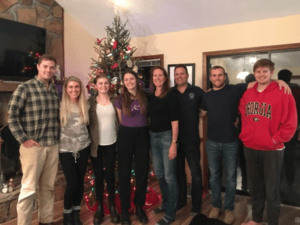
“That is my purpose: being a husband and father,” Jim said. “The thought of not being a significant help and inspiration in their lives is extremely difficult for me.”
A new community, a renewed purpose
Jim says Caroline is the ultimate care partner — a true empath. She said her own experiences inspire her to help others avoid the roadblocks she has overcome.
“I believe thoroughly in advocacy,” Caroline said. “I’ve been doing that very actively on the cancer front, and I’ve had lots of people tell me that it’s made a difference in their own journey, and it gives me hope to help other people.”
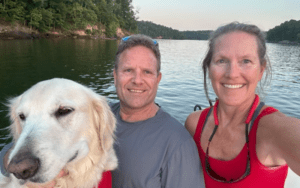
While she has vast experience navigating healthcare, Caroline says supporting a partner with suspected CTE is still very new.
“Part of what’s hard for me is that we don’t know the direction this is going to go,” she said. “There have been times when I’ve gotten frustrated with Jim, and I haven’t understood the difficulties that he was having. We’ve gotten a lot more open with some of the things he’s been dealing with.”
Though Caroline has a close friend caring for a spouse battling Alzheimer’s disease, she had never met anyone facing suspected CTE. Searching for guidance, she decided to join a Zoom meeting with the Concussion & CTE Foundation’s CTE Caregivers Support Group, which meets the third Tuesday of each month.
While members of the group were helping loved ones at different stages with different needs, Caroline says it was refreshing to be in a room with people on a similar journey.
“The conversation was just proof that it’s a safe space for people to talk about what is hard right now,” she said. “I need community. It’s just part of my being.”
Guided by their faith, which Jim says is “not a crutch but an iron lung,” the Yosts are taking one step at a time, continuing to self-advocate, and looking forward to helping others navigate life with suspected CTE.
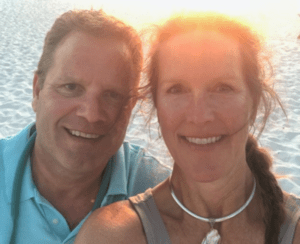
Jim said he was astonished by the depth of CTE knowledge he found in Gainesville and within the Concussion & CTE Foundation. He and Caroline joined the foundation’s Advisory Board At Large in 2026, committing to advance research into CTE diagnostics and treatments and to raise awareness for the need to train the medical community on treating suspected CTE.
In a life defined by football, Jim says this is no time to retreat to the sidelines.
“I have an opportunity to make a difference in tens of thousands of people’s lives,” he said. “I’m at a point in my life where that’s more important than anything.”
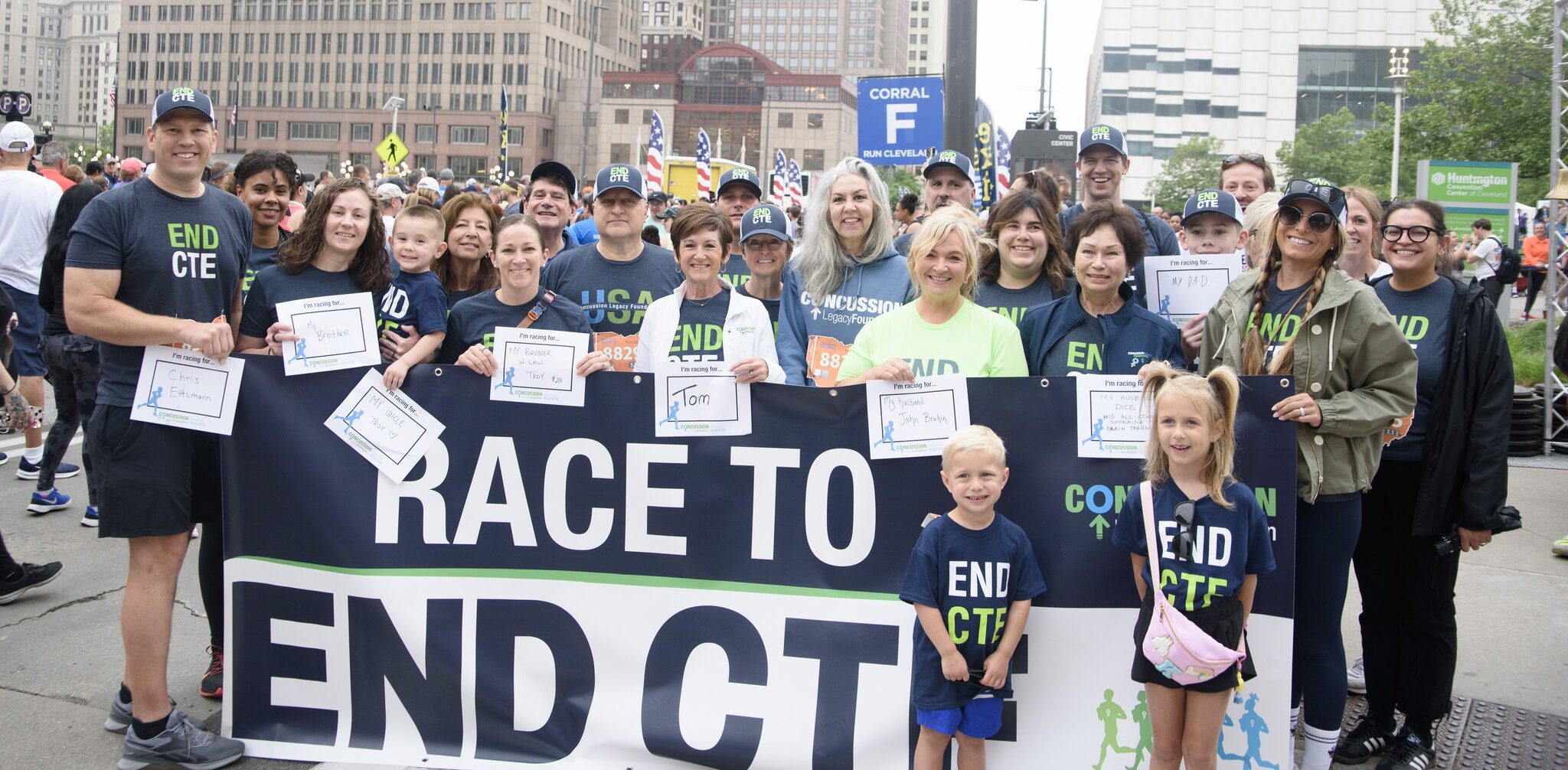
Through education and prevention programs, and research with our Global Brain Bank partners, we’re working tirelessly to End CTE.
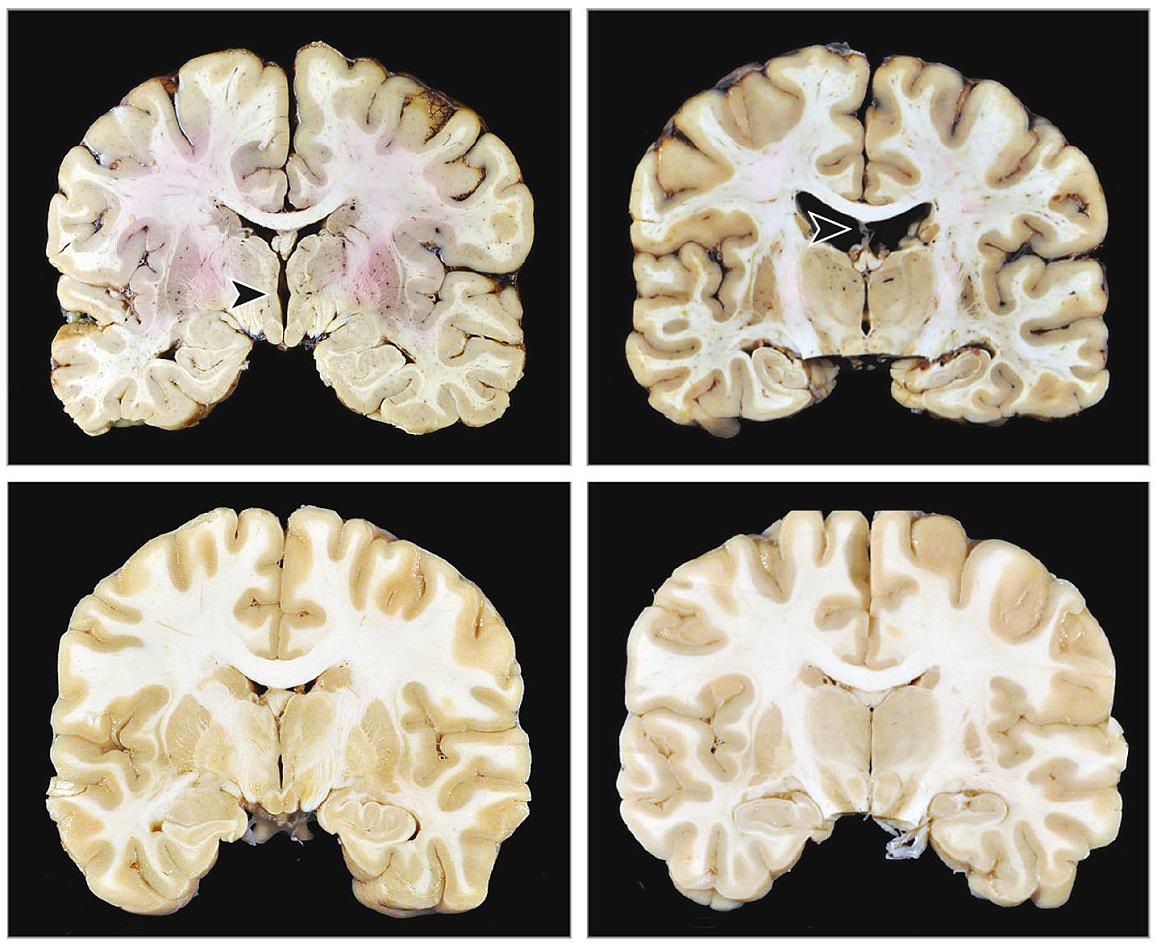
Learn about symptoms, risk factors, and what causes the neurodegenerative disease Chronic Traumatic Encephalopathy (CTE).