
James Rahal
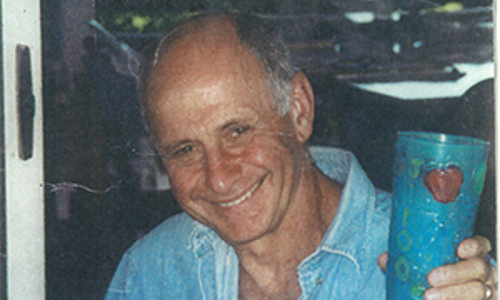
Jim played high school football in Belmont, MA. At the beginning of his senior year he sustained a concussion which left him in a coma for two days. Although that ended his football-playing days, he went on to play baseball for Harvard during his undergraduate years, and was a lifelong recreational tennis player.
Jim’s professional work was in academic medicine. He served as chief of Infectious Diseases at both NYU/VA Medical Center in Manhattan and New York Hospital/Queens from the early 1970s until just a few months before he died. He developed an international reputation for his original clinical research in his field.
In 2002 he underwent neurosurgery for a brain tumor, which was diagnosed as Rosai-Dorfman Disease, an extremely rare condition. Although he returned to work and functioned well for several years, he began to decline; it began with a seizure in 2008 and then subtle, but increasingly apparent, changes in mood and affect, as well as difficulty with mobility.
Although his death was attributed to complications from Rosai-Dorfman Disease, his wife Barbara contacted Chris Nowinski and Dr. Robert Cantu at the Concussion & CTE Foundation, asking them to consider his case because of his high school football concussion history, as well as two or three head injuries he had sustained in auto accidents as an adult.
Patrick Risha
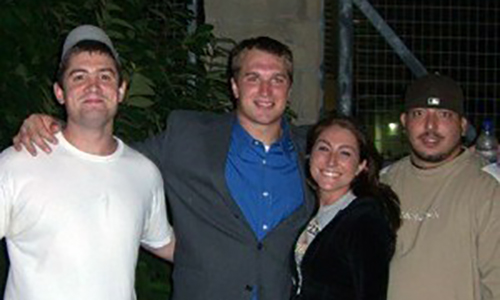
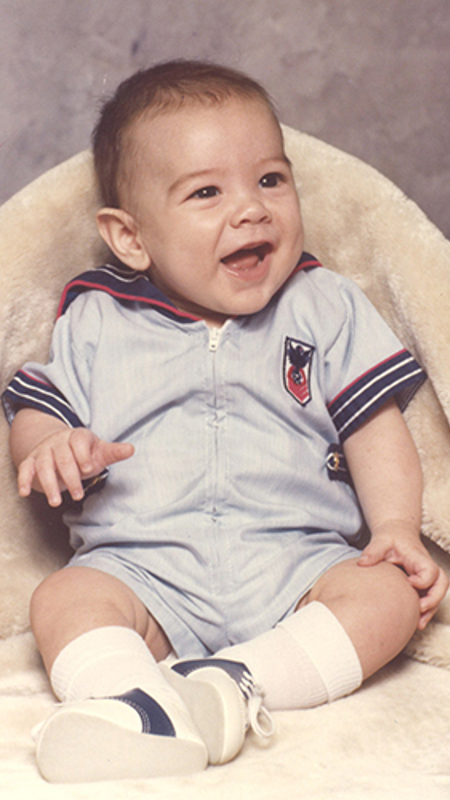
When Patrick was born on December 15, 1981, he was instantly attentive, happy and immediately seemed so knowledgeable about the world and his place in it.
So much so, that we were driven to take this wise little bundle to the window and show him the morning horizon of Pittsburgh and the big world beyond. He seemed so at ease with everything. Patrick would go on to be successful in just about everything he tried. We remember his music teacher telling us he was gifted at playing the Saxophone. We remember his writing teacher saying he was a gifted writer. He was multiplying in kindergarten, but he was multiplying touchdown scores. Football was his greatest love at the time and made the beautiful gleam in his eye shine even brighter.
Patrick’s dad was a high school football coach. As a child, Patrick got opportunities to be with “coach” in the locker room, on the sidelines and he developed an immense love of the game. He valued studying it, watching it, but mostly playing it. He started playing for the Elizabeth Forward Mighty Mites team when he was 10. While he did not have immediate success, the wonderful thing about Patrick was that he could excel in just about anything if he wanted it badly enough. He worked hard, he listened to his coaches and he learned to be a great team member. As a gifted athlete, Patrick also played basketball and baseball in grade school reaching the playoffs in both sports.
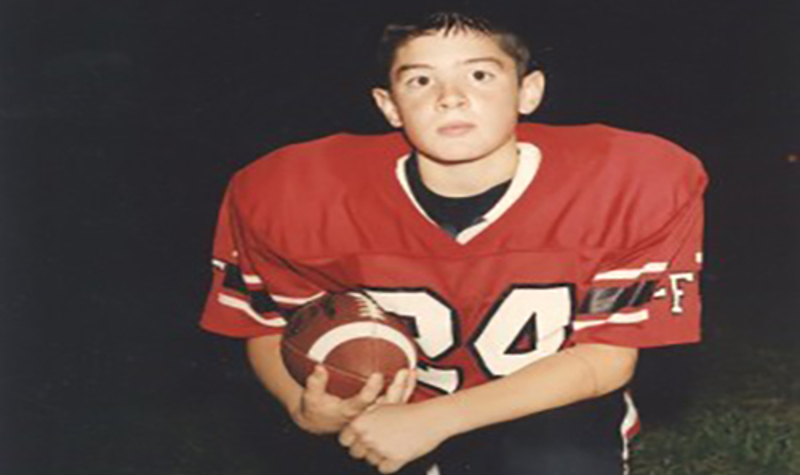
By the time he reached Elizabeth Forward Middle School he developed into a running back for the football team. He was also playing on defense. He was good enough to be bused to the High School to play in a few JV games. His 9th grade football team won the Keystone Conference Section Championships. He continued playing baseball as well, becoming a fantastic base runner and catcher. His team won the Suburban Pony Central Division Baseball Championship. He was such a fun athlete to watch. He played sports with enthusiasm, joy, and tremendous effort and when he joined the track and field team his 400-meter relay foursome made it to the Pennsylvania AAA Championship Meet.
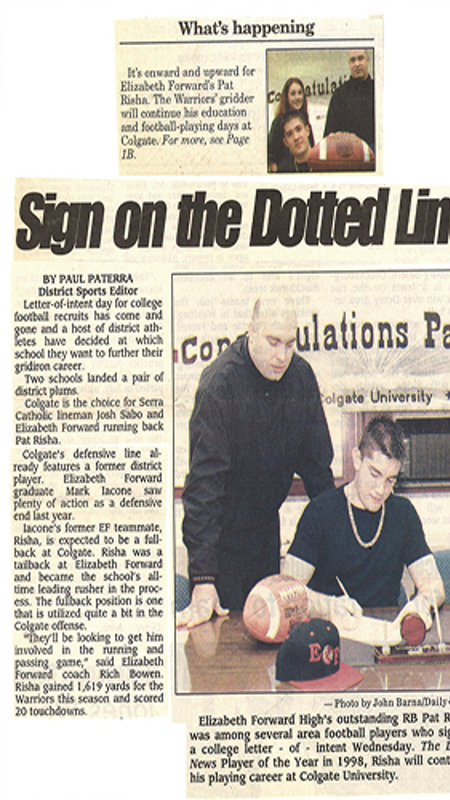
Football really took hold of Patrick during his high school career. He considered football a test of courage and a rite of passage for a young man growing up in Steeler Country in the football rich Mon-Valley. He became a record-setting star player for the Elizabeth Forward Warriors. He played strong safety for the defense. On offense Patrick rushed for nearly 4000 yards garnering school records for most career yards, touchdowns, and attempts, for most season yards, touchdowns, and attempts, and for most game yards. He was awarded the 1999 Tribune-Review Terrific 25 (from 129 schools), the 1998 Daily News Most Valuable Player, the 1998 and 1999 Pittsburgh Post-Gazette Fabulous 22, the 1998 WTAE Athlete of the Week, and the 1998 Fox Sports Athlete of the Week. He was the team Captain for two years and loved inspiring his teammates to play as hard as possible and be good sportsmen. His coach nicknamed him “The Horse” and he became known for never letting the first hit take him down. The papers announced: “Warriors Ride Risha into the WPIAL Payoffs,” which they succeeded in doing both years. He was just a courageous kid playing a man’s game. He was exceedingly brave as he took brutal poundings as every opposing team keyed in on him. As a member of the ELI-MON Honor Society he continued enduring constant battery on the field to keep his dream of an Ivy League Education alive. He gave up baseball to concentrate on football, track and field and to maintain Honor Roll status. During high school he also wrote for The Warrior Newspaper and placed second in the Social Studies Fair.
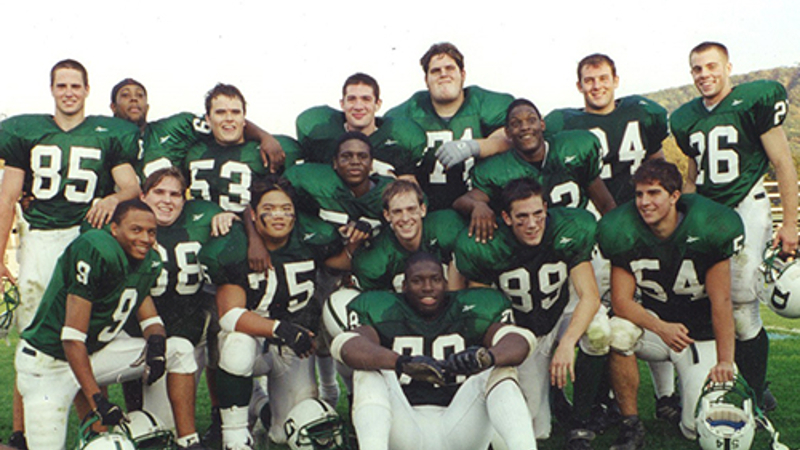
Deerfield team
In his senior year, Patrick accepted admission to Colgate University, but then in the summer he had second thoughts and decided to continue his quest for the Ivy League. As a result, he enrolled in Deerfield Academy in Massachusetts as a post-graduate student to further improve his academic standing and play more football. He made lifelong friendships at Deerfield and was the star of the football team. The student body would cheer “RISHA” as he rushed the ball down the field. The following year he accomplished his dream and headed off to Dartmouth College in Hanover, New Hampshire. His future was so bright and full of promise.
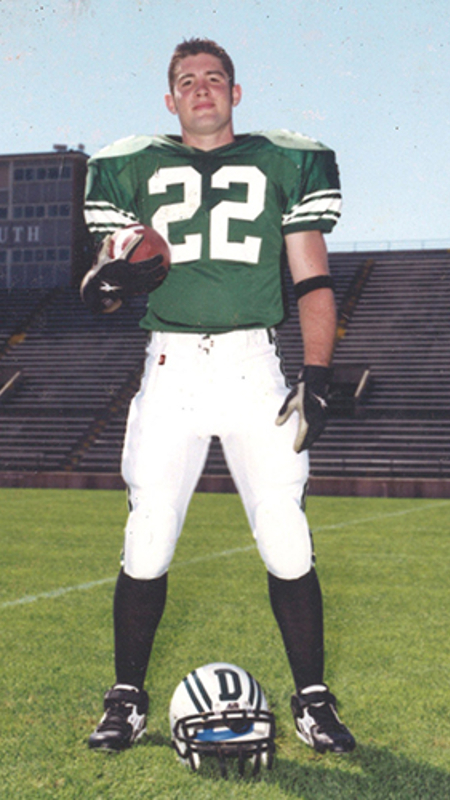
Patrick at Dartmouth
At Dartmouth he was a three-year letter winner in football. He “started” for two years, despite missing a year due to injury. As a freshman running back he averaged over five yards per attempt. He also became a football film junkie and analyst and loved breaking down plays, games and techniques. He was a member of GDX fraternity and was thankful to have so many great friends to call brothers. In fact one of his GDX brothers became a brother-in-law when he introduced his sister, Amanda, to Rich Walton. Patrick was always so protective of “sissy” and maybe in his amazing way made sure she met the perfect guy. At Dartmouth he majored in Government and looked forward to starting a professional career.
After college, Patrick returned to Pittsburgh to work and help his father who was in failing health. They were best friends. Unfortunately Patrick’s CTE symptoms were beginning to become more prominent and he had a hard time settling into a career. The father and son loved and supported each other until Pat Sr. passed away unexpectedly on October 23, 2010, two days after the birth of Patrick’s son Peyton Jordan Risha (named after athletes of course), who was born on October 21, 2010. As Patrick struggled more and more each day with his CTE symptoms and the sudden loss of his father, the one bright light in his life was his son. Unfortunately Peyton had Patrick in his life for such a limited time, but Patrick did everything he could do to secure Peyton’s future. Patrick’s love will always surround Peyton and when Peyton smiles you can see that same “Patrick gleam” in his eye.
Although so much of Patrick’s life focused on football, he was much more than a football player. He was a devoted son, loving and protective brother, great friend, and the most loving father a child could ever hope for. It is hard not to remember the pre-CTE Patrick who loved watching movies and sports, betting on silly things with friends, eating enormous meals, playing video games for hours on end, golfing, and making people laugh until they cried. He made an impression on everyone he met. He was kind to every person he encountered and could make any one feel important. His heart was huge and he was extremely generous and loyal.
His friends from Deerfield and Pittsburgh wrote:
“There was no one else quite like him. I loved his big smile. He always had a crazy story to tell and I always enjoyed being in his company. He so loved his son, family and friends more than anything in the world.”
“His happiness was contagious and he had the ability to light up any room.”
“The most loyal friend.”
“Patrick was a very generous and caring man.”
“I remember the eulogy he gave to his father that brought tears to everyone’s eyes. I remember his heart, his toughness, and how happy he was to be a father.”
“Patrick was kind and generous to all…when my father passed away, he was one of the first to show up at my door to see what I needed, what he could do or how he could help make it better.”
“He never backed away from a challenge and always competed with dignity.”
“Larger than life, a heart as big as Texas. He loved his family and he loved Peyton.”
And his Dartmouth friends wrote:
“While upperclassmen were usually dismissive to freshmen, Pat was always nice to freshmen running backs and included us in the group. He would drive us to meals and hang out with us at GDX. It may sound insignificant, but it meant a great deal to a bunch of young guys who had just moved away from home for the first time.”
“Pat was one of the funniest people I ever met. He would crack jokes in the meeting room and it made things bearable in lots of ways. He would bust everyone’s chops, including our Coach’s. He was a great character and a fine man.”
“He injected a special kind of energy into situations. He kept life interesting and was a real force of nature.”
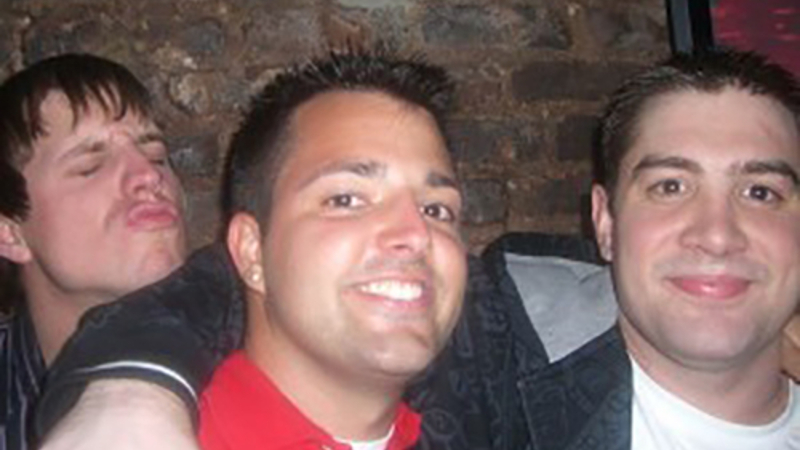
“He was highly intuitive (actually one of the smartest people I’ve met) and knew that he could cause issues at times, but he also had your back in a way few other people could.”
“There is no one more genuine than Pat, he told you how it was and the world needs more of that. He was a true individual and I will always remember him as a hard nosed football player and more importantly a great friend.”
“Even as a freshman, he was probably one of the toughest guys in the league to tackle with a ball in his hand. He obviously was a skilled player, but his toughness made him a great player.”
“Pat was loyal. Pat didn’t let everyone in, but when he did and gained your trust, he would do anything for you.”
“He was an amazing big brother and would do anything for his sister, and as a result, he drives me to be the best big brother that I can be to my younger sister. “
“Pat would always make sure I was taken care of, he would let me borrow his truck, buy me dinner, or hook me up with a fancy suit when we had a frat house formal.”
“I think the biggest thing I respect about Pat is that he was a leader not a follower. He did what he did because he wanted to and never did things because it was the ‘cool’ or ‘trendy’ thing to do.”
“At Dartmouth Pat liked to play the role of a ‘tough, blue collar’ football player from Pittsburgh. As a linebacker who frequently butted heads with him in practice I can attest to him being one of the toughest guys I’ve ever known. He wanted to be remembered as that guy, but I mostly remember Pat as being creative, funny, and loyal.”
“He never seemed to forget people and was a real force of nature.”
“Pat turned ‘brother Casanova’s’ lines into a Top Ten joke at our weekly meetings and that will go down as one of the best moments of my time at Dartmouth. He had a room of 60 guys with the attention span of about 3 seconds hanging on every syllable. It was one of many brilliant performances he had over the years.”
“While he liked to play pranks on guys and joke around, everyone knew that he was fiercely loyal and loved all the guys on the team.”
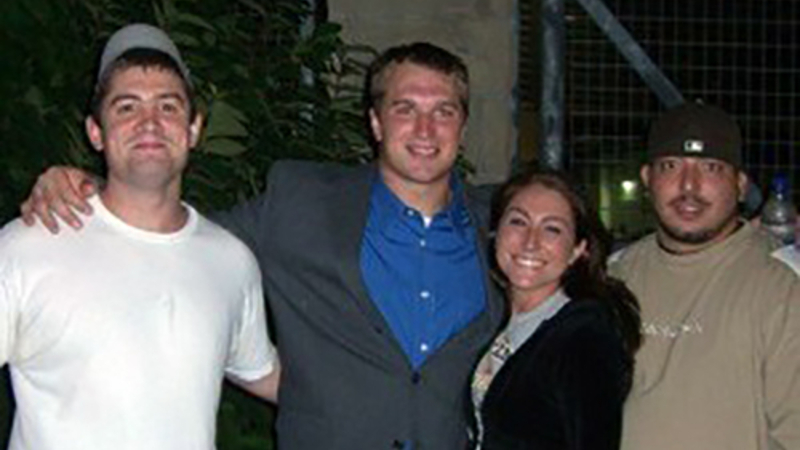
“Pat was a man who accepted people for who they were without judgment. He did not tolerate other people judging his family, friends, or himself and in turn he would not judge other people.”
“Pat had a huge heart and would fight for the people he loved. Without questions, he would give you the shirt off his back, the keys to his car, and would sacrifice his own well-being to help you solve your problem.”
“For those of us who truly had the opportunity to get to know Pat, we knew a man who was creative, funny, sensitive, accepting and above all loyal to his friends and family. He made a profound impact on my life and how I view relationships. He was a man who I am proud to have called a friend.”
“You could always count on Pat being around to talk to. Whether it was a question of some importance or just to shoot the breeze with, Risha would always open his door and talk with you. I can remember many good and hilarious conversations we had together up in his room.”
“Patrick was a great addition to the fraternity and I feel fortunate to have known him. I can still remember his laugh and a certain fire in his eye and his huge smile. He will be sorely missed.”
“Risha always thought about the younger guys and helped us feel like we were all a family.”
“He was always a very funny and unique character that everyone loved having around.”
“My favorite memories by far are the little ones, the little conversations that we would have over a beer while he dominated me in ‘Madden.’ The topics were often very random and I was always stunned by how much he knew/cared about such little things. Pat was just a loyal friend. About as loyal as any person that I have ever met.”
One of Patrick’s Dartmouth classmates said he had to sing a Jack Johnson song for extra credit in one of their classes. The last lyrics of the song were:
“Things can go bad
And make you want to run away
But as we grow older
The horizon begins to fade away…”
Patrick is no longer here to tease us, hug us, or help us, but in many ways his heart and love are all around us. We lost him much too soon to a disease that was created by his hard work, determination and will to succeed despite tremendous obstacles, and his efforts to please his friends, family and schools. No one sought success and friendship more than Patrick but CTE took all that away and left him with a brain that was failing him at every turn and changing his essence of love and caring.
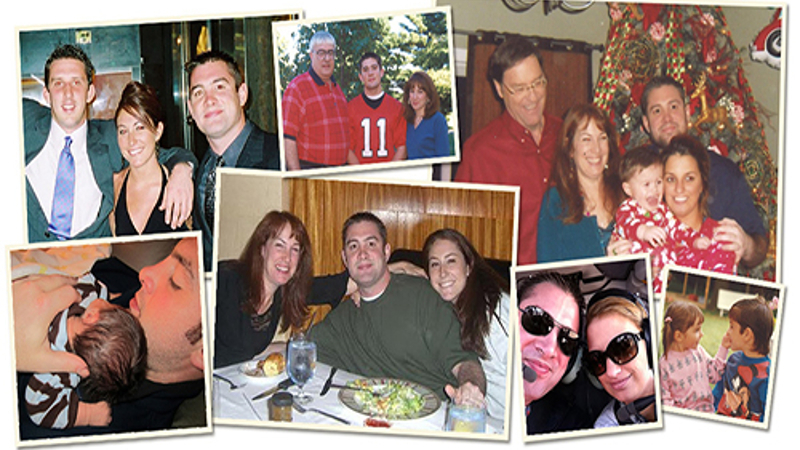
Patrick left behind a wonderful legacy of being true to self, loving, protective, caring, and loyal. Sadly, CTE was eroding all that made him so special. Even the special glint in his eye was hard to find in his last few months. Suicide is a tragic yet common result of CTE and it worked its way into his brain as it has done so many others. However, it never took away his soul. We will always have that. Patrick’s son, Peyton, will always have that.
This was not the life we wanted for Patrick, but we accept his sacrifice and know he is guiding us to help others in new ways and with great purpose: to save other young minds from the devastation of CTE and to prevent this heartbreaking loss in others.
Read the New York Times article on Patrick Risha here.
Cooper Robbins Jr.
I am grateful to the Concussion & CTE Foundation for this opportunity to write about my father’s life after playing high school and college football. I enrolled him in the brain injury study when he was 81 years old. I was confident that Cooper Robbins Jr was a good man, and I wanted validation that he was not himself when he developed signs of dementia with behavior disturbance after the age of 70. He died at the age of 83, and sure enough, he was diagnosed with full-blown severe Stage IV CTE. On the phone call with results of the study, the researchers told me that he had done remarkably well, considering the extent of his brain injury.
My brothers & sister have been determined to remember him as the loving father that he was for most of his life, and we hold on to memories of the good times that we had together. His story is a testament to the resiliency of the human brain, as well as his remarkable strength of spirit. He was good-natured and kind-hearted up until his death, in between the episodes of behavior disturbances during his later years. Before describing some of the subtle, and later, more obvious signs of his brain injury, here is some background.
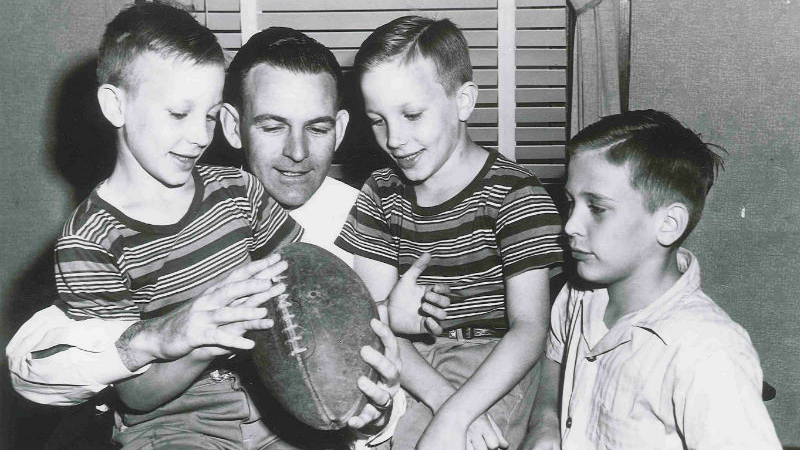
Cooper Polk Robbins, Jr. was born March 17, 1932 in Fort Worth, Texas, to Cooper and Elizabeth Robbins. His father, “Pop,” coached football at Northside High School & then Diamond Hill High School. The family moved to Breckenridge, Texas, when Cooper Sr. became Head Coach for the Breckenridge Buckaroos. Cooper Jr. played football with his twin brothers Ronald & Donald Robbins. Cooper Jr. played linebacker on defense and center on offense at Breckenridge High. Cooper Jr. was called “Tuffy,” as he was a real tiger on the football field. Here is his brother Ronald’s account of one football injury. “During the Graham game in high school his senior year, he made the player in front of him angry and the guy hauled off and slugged him in the mouth! They didn’t have face guards then. The blow knocked out Cooper’s four front teeth! He ran off the field with blood running down his jersey. Doc Payne grabbed the cleat pliers and pulled out the remnants of the four teeth. Ma Robbins nearly had a heart attack. She came running down from the grandstand and onto the sidelines, but the deed was done. The NERVE! Pulling out her boy’s teeth by the roots, and with dirty cleat pliers at that! Undaunted, Tuffy played the rest of the game!”
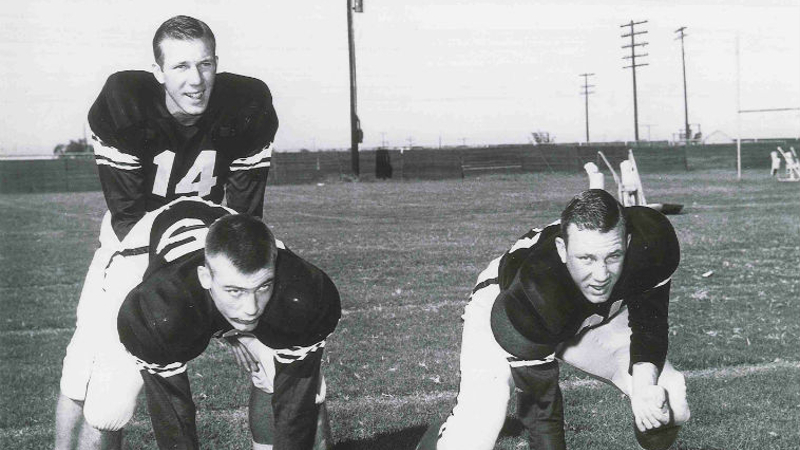
Cooper Jr. was an Eagle Scout, earning bronze and silver palms. He taught “Indian lore” and taught “Indian dances” at Camp Billy Gibbons for several summers. He was one of four Boy Scouts from Breckenridge Texas who went to the 1947 World Scout Jamboree in Moisson, France. After that, he joined the Sea Scouts and earned the rank of Quarter Master. He was also a promising drama student, winning a statewide award for his performance in Our Town.
After graduating from Breckenridge High School, Cooper Jr. enrolled at Texas A & M and was in the “A” Athletics Company in the Corps of Cadets. Cooper received a Fish Numeral and two Varsity Letters in football. Again, quoting brother Ronald, “Cooper Jr. didn’t have a football scholarship when he started at A&M. He had to earn it. He was the toughest 153-pound linebacker anyone had ever seen. When he tackled a guy, he didn’t just hit. He would tackle the player and hang onto him for dear life until help arrived. Also, he couldn’t see worth a hoot, so he wore thick goggles to be able to see the enemy. But the goggles would fog up and at times he would fiercely tackle the wrong man! His toughness paid off, and by the start of his sophomore year, he had earned a scholarship. ” He was a ‘red-shirt’ one year, so he could play football his senior year, because his architectural degree required 5 years to complete.
Cooper Jr maintained lifelong friendships with his teammates from Breckenridge Broncos & Texas Aggies. Here is an account from his teammate Walt Hill: “One of my fondest memories of Cooper is his love for football and competition. On the football field he was center and linebacker, and although undersized for those positions, there was no one tougher than Cooper when it came to getting the job done. Cooper had lost some teeth in earlier years that had been replaced with a permanent bridge, and on the first day of practice they were all capped and beautiful. After about the third scrimmage or so, all the caps were gone and only the studs were left, which embodied the way he played the game. At the end of the season he’d return to Breckenridge get the caps put back on and in returning to practice the next year, the process would start all over again.”
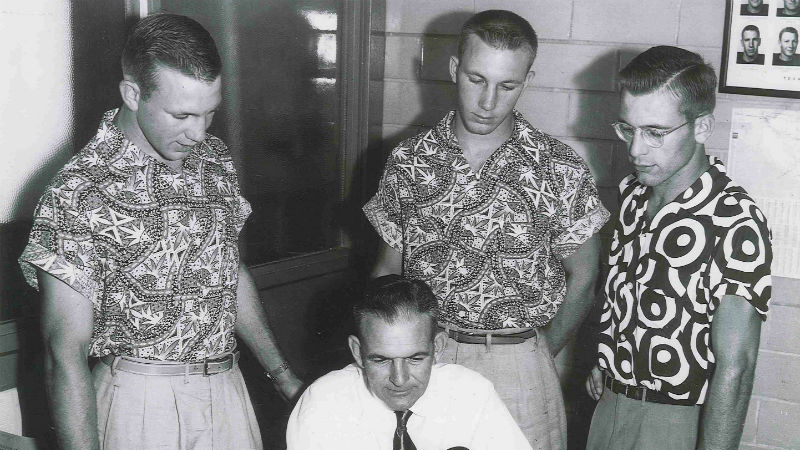
Cooper Jr. graduated with a Bachelor of Architectural Construction degree, but was not commissioned in the USAF due to poor vision. He entered the construction industry and was a cost estimator and superintendent during his career.
Cooper Jr married Batty O’Bannon in 1953. He was a loving father to their 2 daughters and 2 sons. Betty passed away in 1963. Cooper Jr met & married Sara Lynn Leck in 1964, and celebrated their 51st wedding anniversary on April 17, 2015. Coop & Sara lived in Odessa, Midland, Morgan’s Point Resort at Lake Belton, and College Station. They both enjoyed being active church members. Sara cheerfully organized family get-togethers for the holidays. Coop & Sara attended many class reunions, for Breckenridge High School, Wink High School, and A & M Class of ’53.
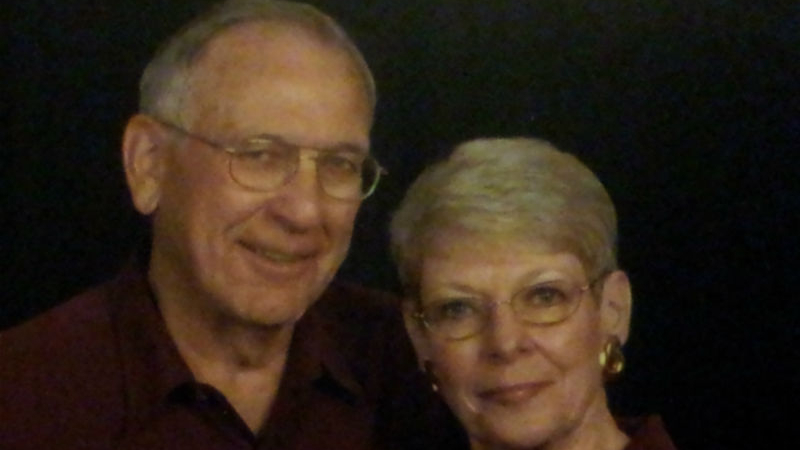
The signs of chronic traumatic encephalopathy are just now being discovered, so it’s difficult to know how his brain injuries contributed to how he lived his life. As a young widower with four children, Cooper Jr. was stoic in his grief, with quiet determination and a strong work ethic. If he had headaches, he did not complain. He did suffer with chronic sinus congestion and a runny nose. He was a perfectionist, both at home and at work as a construction cost estimator. His son Bill remembers hearing that Cooper Robbins was “legendary” and no one wanted to bid against him for a job, because he was so accurate, if you got the job, you had miscalculated.
In his life and work, Cooper Jr voiced his frustration with others’ dishonesty, incompetence or substandard work of any kind. During his 40’s & 50’s, his work-related frustration grew at times, into seething anger and insomnia. He was treated for depression. His competitive team spirit devolved into a kind of hateful, “you’re either with us or against us” outlook on life. Cooper Jr retired at the age of 70, and moved with his wife Sara to College Station. He planned to be active in the 12th Man Foundation, The TAMU Letterman’s Association, and the Aggie Class of ’53. He & Sara became active members of Covenant Presbyterian Church. They enjoyed road trips & weekend guests at their home. Unfortunately, he experienced more frequent episodes of angry outbursts, poor judgment, and worsening memory. He withdrew from social activities, and pushed away dear friends & family members as he became more reclusive. He disowned his children. He continued to attend church on Sundays, where he was cordial when greeting friends, but unable to carry on a conversation. He had always been controlling, but eventually, he would not allow his wife Sara (or their cat) to leave the house. He insisted on managing their finances alone, and yelled at her if she questioned him. He loved to work in the yard, but he suffered from peripheral neuropathy, and developed a stiff shuffling gait that could freeze up making it impossible to move. At 81, he began to have visual hallucinations and delusions, with cognitive fluctuations. He developed incontinence but refused help with changing his clothes. Most of the time, though, Cooper Jr. was still good natured and kind hearted, as if his childlike self was intact with good social skills, until he was angered again. Sara passed away in 2015, and Cooper Jr was moved to Assisted Living with his elderly cat Minnie at his side. He passed away on January 19, 2016.
Thankfully, Cooper Robbins Jr’s legacy donation and personal story may help improve awareness & education to prevent, or at least decrease the risk of Chronic Traumatic Encephalopathy in young athletes. In the words of his friend and teammate Walt Hill, “He was a great team player and was loved and respected by everyone privileged to be his friend. He was truly admired by and an inspiration to everyone with whom he came in contact and while he will be sorely missed by his friends, Cooper will never be forgotten.”
Tim Roberts
Warning: This story contains mentions of suicide that may be triggering to some readers.
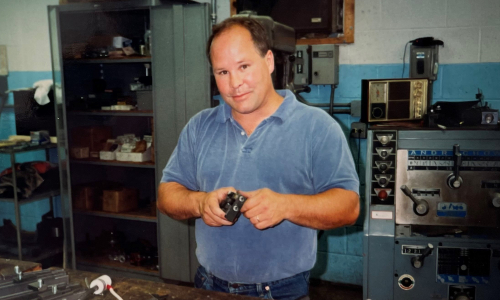
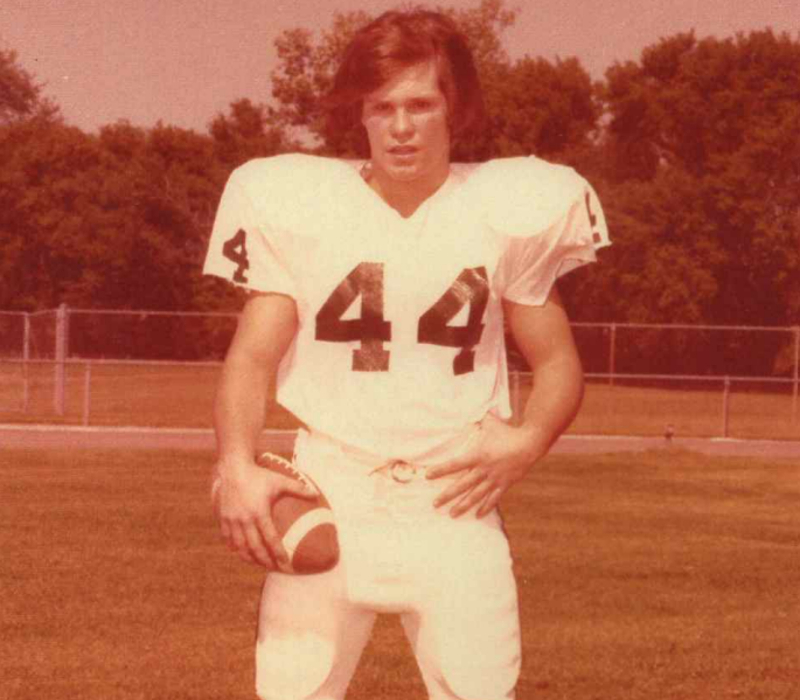
Tim Roberts was raised in Iowa and Illinois with three siblings. He began playing tackle football at age eight and rarely missed a practice. He was small compared to other football players but made up for it by being strong, fast, and aggressive. Tim continued to play through both junior high and high school in Elk Grove Village, Illinois, graduating in 1977.
Friday nights on the field with his teammates was Tim’s favorite place to be. He played on offense as a running back and on defense as a cornerback, almost never taking a break. He was all-conference and all-area for two consecutive years and an honorable mention for all-state. During his time playing football, Tim also experienced a handful of known concussions, one with complete loss of consciousness, along with many other hard hits. We know of one incident where he was unconscious after a play and left the field in an ambulance.
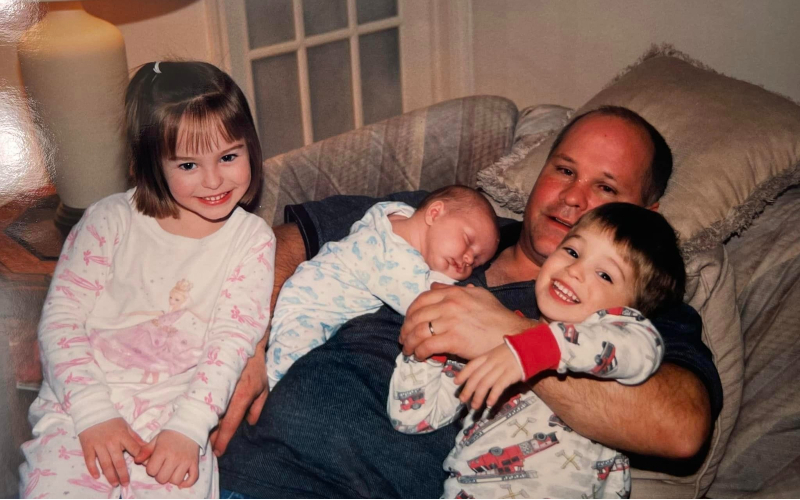
Tim was very social and made many friends in high school and college. He met his future wife, Liz, at the University of Tennessee. They were married in 1991 and had three children: Caroline, Thomas, and Jack. They were his absolute pride and joy. Because of them, Tim was generous, mischievous, and loved big family gatherings.
Intelligent and gifted at all things mechanical, Tim was an accomplished designer of custom manufacturing equipment. He also loved spending time boating, golfing, and was particularly fond of his dog, a husky named Nikki.
Unfortunately, over the years, we noticed several changes in Tim. He began to drink constantly and heavily, and he became short-tempered. Usually a terrific husband and father, he started to fail in that role, as well. On one particularly difficult weekend, things really fell apart. Tim threatened suicide, which alarmed our family, and several of us responded to help him.
As time went on, we became more alarmed about his alcohol abuse, aggression, and forgetfulness. His erratic behavior, combined with drinking, led to accidents, broken bones, and hospital stays. These difficulties cost him his marriage and damaged his relationships with his children. His world diminished, and he spent most of his final months with his devoted parents.
We suspected CTE even though he only played football through high school. We suggested it to his doctors, but none supported the idea.
Tim also developed renal failure secondary to a rare autoimmune disease approximately 20 years prior to his death. Eventually, he required dialysis and later a kidney transplant. Unfortunately, because of his inability to comply with medical advice, he was unable to receive a transplant. Eventually, Tim discontinued his sporadic dialysis treatment. Surrounded by family at the time of his death, Tim finally succumbed to the consequences of renal failure.
We decided to donate Tim’s brain to the UNITE Brain Bank, where Dr. Ann McKee diagnosed him with stage 4 (of 4) CTE. This is the first time CTE of this severity was found in someone who played only through high school. We had suspected CTE but were shocked and saddened to see how advanced it was. Tim paid a big price for playing football, across all aspects of his life.
We have since learned that Tim was the prototypical football player likely to develop CTE. He started playing at a young age, started on both offense and defense, was on the smaller side, and played to win.
The decision to donate a loved one’s brain to research is not taken lightly. We hope these findings increase awareness of the dangers of repetitive head injuries to athletes. We are so grateful to Dr. McKee, the BU CTE Center, and the Concussion & CTE Foundation for their ongoing research.
Dylan Rutherford
Luis Salazar

Warning: This story contains mentions of suicide and may be triggering to some readers.
Luis Gerardo Salazar was born on April 2, 1985 in Mexico City and moved to the United States when he was eight years old with our family. He was the middle of three children with one brother and one sister. He was very athletic from the time he was young. He started playing football when he was 10 years old, and he was also a very talented track and field runner in middle school. When Luis was in 7th grade, he attended the Junior Olympics in Florida and finished second in the nation for the 100-meter run.

He was always the captain of the football team wherever he would play. He was known for being the hardest hitter during drills, especially in the infamous “bull in the ring” drill.
At the time, nobody knew how dangerous it was to be hit in the head repeatedly. My parents started noticing my brother’s behavior change when he was in 8th grade. He had radical mood changes and would show signs of violence. On August 23, 1999, my brother took his own life at home. He was 14 years old.
We later found out that on the morning of his death, he had been challenged by the varsity football team at the high school he was set to attend in a month to do the “hit” drill and he beat them all. We also learned Luis had been violent in parties in the prior six months. If anyone would make him upset, he would get very violent, which was very unlike him. He was loved by his peers, teachers, coaches, and family. He was one of a kind. If I had a dollar for every time someone told me “Your brother was my best friend,” I would be a millionaire.

The main reason why I want to share my brother’s story is to help other families like ours. There might be families out there who have no idea why someone who is a great athlete, popular, and who has a lot of friends, would choose to take their own life. I know our family had no answers for a long time. I follow pro wrestling, and so Chris Benoit’s death opened my eyes to what CTE is and how it can affect people. I started reading about concussions and CTE and that’s when I finally knew what had happened to my brother. I knew that his mood and entire personality changed because of the repeated hits to the head he suffered playing football. At the time he played, it was encouraged to be violent and hit hard. No one knew about the dangers of head hits.
Families need to be aware of the impact concussions and repeated hits to the head can have on their children. Studies have shown that people with concussion histories have an increased risk of mental health issues, including suicide. If we knew what we knew now, maybe we could have helped Luis get help and treatment and he’d still be here with us. My heart goes out to other former players like Luis who may be struggling due to the hits they took. Know you are not alone. Your family and friends love you and want you here with us.
If you are struggling to cope and would like some emotional support, call the Suicide & Crisis Lifeline at 988 to connect with a trained counselor. It’s free, confidential, and available to everyone in the United States. You do not have to be suicidal to call. If you’re not comfortable talking on the phone, consider using the Lifeline Crisis Chat at 988lifeline.org/chat.
Kurt Schmitz
Our whole life revolved around sports. We had a sport for every season, starting with soccer, then in later years football, wrestling, and baseball. My daughter was in volleyball, basketball, softball and dance. We played every venue in New Jersey, Pennsylvania, Connecticut, California and Alabama. Family life centered around sports, and our family shared wonderful times at practices, games, and recitals. I never imagined that sports would be responsible for my worst nightmare – life without one of my children. I want to share my story with you in the hopes that it will bring awareness and maybe help other families who have lost young ones. I will speak through my son’s own words as written in his many texts to me, as seen in italics. It is not my pain that I want to show you, but rather my son Kurt’s.
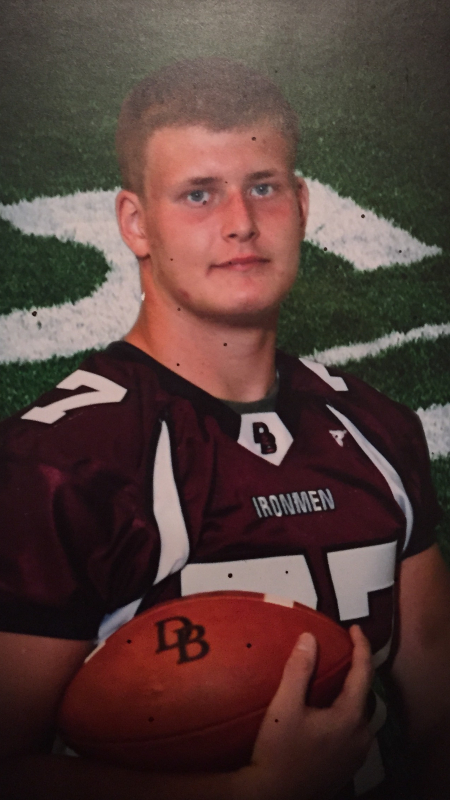
Growing up in New Jersey, Kurt saw the football stadium at Don Bosco High School and there was no turning back. He looked me right in the eyes and said, “This is where I want to go to school.” The 7AM to 10PM day included grueling hours of double session training. His junior year, he broke his leg in three places and missed the entire season. But senior year he worked twice as hard and earned his spot at left tackle on the varsity football team. That season marked Bosco’s sixth straight state championship and played a team from Alabama to win the National Championship. Kurt’s outstanding play earned him four full scholarship offers, finally accepting the University of Richmond, never losing sight of a dream to play professional football one day.
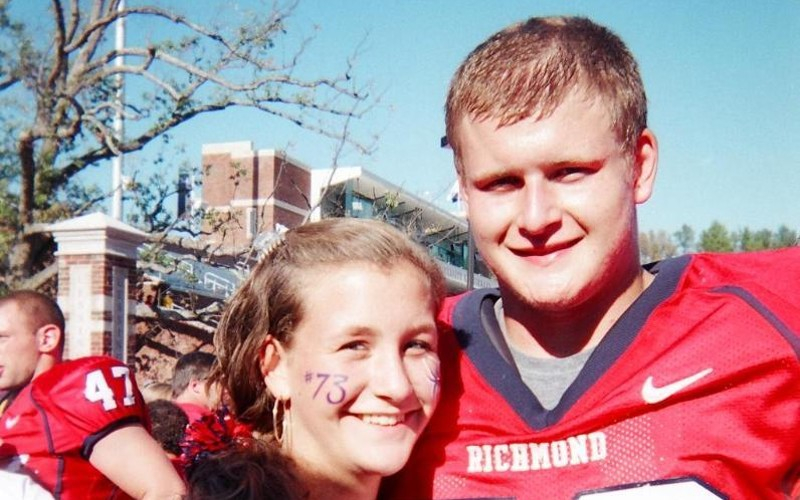
Kurt experienced leg and ankle injuries that sidelined his play. Determined to get healthy, Kurt rehabbed steadily through the winter until spring training. Then in August of his freshman year, he sustained his first concussion. Kurt was so eager to play that he lied to his coaches and started five games as a freshman without ever giving the concussion its proper rest. “Whatever, I’ll get healthy this year and punish next year.” His normal process of rehab to get through the next season started once more after his freshman year.
The next year he moved to center and thrived at his new position. “Good to go.”
At a practice the following August, Kurt took a hit which forced him to go to the hospital. When asked where he was, he responded, “Out on the field for a fun day having fun.”
Kurt loved the sport deeply, but it was not kind to him. The text messages began around this time and they were heartbreaking: “I just hate sitting in my room when all my friends are doing things I can’t do. And I don’t know anymore – Dr. White obviously thinks it’s migraines but I don’t know. I never friggen had a migraine in my life and this sh*t only started after last semester. Can’t get through one class without a headache.”
My son’s “invisible” injuries were compounding and his health was in decline. Kurt was given a medical redshirt, but this time there was no rehab. His headaches sidelined him from football and made it impossible for him to perform in school as well.
After an attempted workout over Christmas break, he called me and was frantic. His head was spinning, he was vomiting, his left arm had gone numb, and he was having difficulty swallowing. He tried so hard to fight through it, but enough was enough. In February 2012, I brought Kurt home to be evaluated by a neurologist in New York. He agreed to the visit and quit football before any further damage was done.
Kurt was devastated and decided to take a leave from school for the rest of the semester to try to get healthy. We tried several avenues to get answers for what was happening to Kurt, one being a psychiatrist.
“I’m gonna start seeing the psychiatrist again. I’m convinced I’m different from these concussions. That’s what upsets me. I know I just feel I’m different and I hate not being able to control it. Love you.”
No matter what Kurt was feeling, he always ended his text messages with “Love you.”
We thought he recuperated well enough to return to Richmond and finish his last two years. However, instead of bouncing back, his decline rapidly continued, and we ached for him and the emotional pain he was in.
“I can’t believe how much my life is just different in one year. I want to crawl into a hole and never come out to see the time of day. I changed. I’m different and I just ruined the best thing to ever happen to me. I can’t play football anymore and I’m just so depressed idk what to do. I honestly give up.”
“I’m just scared I kinda am messed up from my concussions like ever since freshman year when I got the first bad one. My emotions in general and thoughts have been just so different, and I tell you I’m good and great cause I am compared to where I was, but I truthfully don’t know if I’ll ever be the “same” me I guess you could say. Mom I was in a bad place after that 4th concussion diagnosed and God knows how many I got at Bosco on top of them. I don’t think I’d actually get any better. And that’s why it kills me cause the thing I love something that was seriously a part of me has ended and negatively affected my health and there was nothing I could do about it therapy wise. I honestly step back after saying something and I cry cause I can’t believe what I just said or thought and it destroys me cause I just never never was like this. I’m sorry for being so bad and immature. I promise I’m getting help as soon as the doctors get on campus. Good night – I love you. I never meant to be a bad person.”
Kurt passed away on November 30th, 2014 from a heart condition caused by high blood pressure. I made sure that his brain was studied at the UNITE Brain Bank in Boston. There, researchers did not find chronic traumatic encephalopathy (CTE), but they did find possible signs of trauma. To me, football unquestionably impacted how Kurt’s final years played out.
Do you know what it feels like to be a mom and receive these messages of despair? The texts left my husband and I unspeakably and unthinkably devastated. As parents, we feel the need to guide, nurture, and protect our children. But we were helpless in this situation, unable to heal our son. Parents are meant to help their children, and I felt unending guilt for not intervening earlier and stopping him from playing football. I kept thinking, “What if I had only known?”
I am telling my son’s story to all the parents out there who need to know and understand how life-threatening concussions can be. Had I known, I would have been able to guide my son better or would have helped him understand that what he was feeling was not from immaturity or being a bad teammate or worse yet, from the ADD he was incorrectly diagnosed with during this process.
Kurt was the salutatorian of his 8th grade class. He graduated high school with a 98.2 grade average and was a mathematical wizard. All those characteristics disappeared because of the many hits he took on the field. At that time, neither I, nor the physicians who treated Kurt, were fully aware of the full repercussions of concussions, and how each one needs to be treated with the utmost care. I hope that this story can create that awareness that we never had.
I read that NFL Commissioner Roger Goodell insists that football is safe, and that “there’s risk in life.” However, I wonder if he would feel the same way if his daughters sent him messages like the ones Kurt sent me. The work and dedication of the Concussion & CTE Foundation informs us that “pushing through” concussions could bring about serious complications, even death, from brain trauma. How can we deny the findings that Dr. Ann McKee brings forth with each brain she examines? We cannot continue to believe that a devastating brain injury can only happen to our children if they go pro. Have you ever viewed the donors page website and seen the ages of the Legacy Donors? Look and see how many there are that never played at NFL level. My son never had the chance to graduate college. He passed at the age of 22 and suffered for three years prior to his death.
I shared my son’s text messages because they reveal the excruciating emotional and physical pain he was in. He loved the brotherhood bonds he created with teammates in every sport he played. But, given the choice between death and leaving a sport before the damage was too far gone and destroying his life, I know what his choice would have been. Kurt loved life too much and his family even more. Had he known what this led to, he would have walked away after the first bad concussion and enjoyed everything else he had worked so hard to achieve.
I am in favor of sports — they were integral to our family and we loved those shared experiences. My plea is to increase concussion education and awareness. Concussions happen in sports, and every family at every level needs to understand the dangers and treatment protocols. The excitement of competition pales in comparison to the pain of losing a child. Parents need to be educated, and then educate your children. At the end of the day when the game is over and the tailgate parties end you can be left with a broken child who needs your help more than ever.
Please consider Kurt’s story and how it might apply to the role sports play in your family. Consider making a donation to the Concussion & CTE Foundation so that they may further advance the understanding of traumatic brain injury and the impact it can have. The work they are doing is so important. They have been a constant source of support for my family. Because of them, you won’t have to tell a story like mine because now you know more than I did.
Brent Simpson
Nathan Stiles
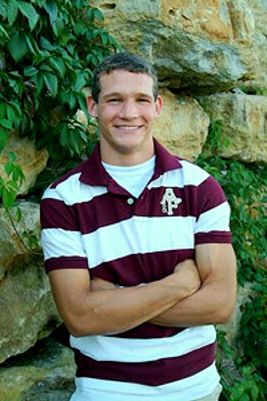
Nathan Stiles wanted to keep playing
SPRING HILL, Kan. — The first time Ron Stiles thought something might be wrong with his son Nathan, the boy was sprinting toward the end zone on a 65-yard touchdown run.
Dad couldn’t have been more proud. In his son’s final game of his senior year, the 17-year-old captain and homecoming king, a selfless soul who seemingly everyone looked up to, had broken loose for the longest touchdown run of his life. But some 20 yards before Nathan reached the end zone, Ron Stiles saw something unusual.
“It looked like something had hit him, like he was about to trip over his own feet,” Ron said. “It was strange. Something just didn’t look right.”
A few plays later, on defense, Nathan missed a tackle that led to a touchdown. “It just didn’t seem like him,” Ron said. But no one else seemed to notice. Not Nathan’s Spring Hill Broncos teammates. Not his coaches. Not even his mom, who told her husband to stop picking on their son.
But a few minutes before halftime, the kid known as “Superman” awkwardly walked off the field, screaming that his head hurt. An assistant coach grabbed Nathan and asked a string of questions: What’s your name? Where are you? What are your parents’ names? What school do you play for? With tears filling his eyes, Nathan answered every question correctly. As the coach turned to find a trainer, Nathan attempted to stand. But he fell to the ground, unconscious.
Immediately, a trainer ran over. Paramedics were called. A doctor from the opposing sidelines was summoned. Ron and Connie Stiles sprinted to their son’s side.
“He didn’t look good. His eyes were closed. He wasn’t responding. I knew it was serious,” Connie said. “But I kept thinking he would just wake up.”
The coaches urged Connie to talk to her son in hopes that he would respond. She hoped the memory of his favorite chocolate-covered snack mix might help.
“I kept saying, ‘Come on, Bubby. Come on. I’ll make you puppy chow if you wake up. You love puppy chow.”
For a brief second, Nathan raised his left arm. Then it fell.
He never moved his body again.
The decision to play
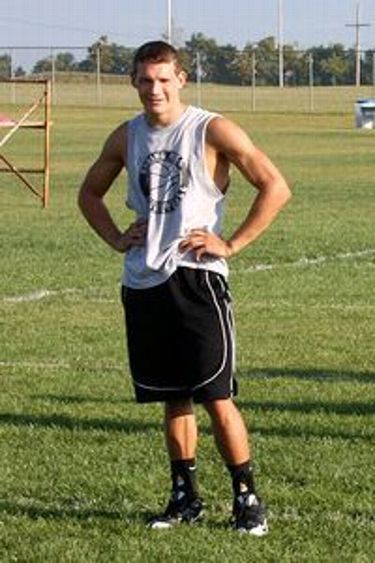
It was a few minutes before 5:30 on that summer morning in August when Nathan burst into his parents’ room to wake up his mom. Two-a-day football practices were starting, and Nathan couldn’t play until one of his parents signed a form acknowledging that they were aware of the symptoms and potential dangers of a concussion.
It was the first year that Spring Hill required a signed form to play. Given the added attention to concussion safety nationally, as well as recommendations from the Kansas State High School Activities Association, the Spring Hill School District decided that no form equaled no play.
It was just like Nathan to wait until the last minute. As smart and detail-oriented as he was in the classroom — a 4.0 GPA, a member of the National Honor Society, a Kansas Honors Scholar — he was just as absent-minded outside of it. He drove his mother crazy by losing his cell phone and his iPod. Passengers in his silver Dodge Intrepid were often nervous because he didn’t always pay attention to the road.
And so Nathan stood there that morning, handing his mom the Spring Hill Concussion Information Form. It began, “A concussion is a brain injury and all brain injuries are serious.”
“He was like, ‘Mama, Mama, sign this. I need you to sign this so I can go play,'” Connie recalled. “So I glance at the paper and it says something about concussions, blah, blah, blah. I knew there were new guidelines. I had heard about the form. So I signed it, gave it back to him and went to bed. I didn’t think twice about it.”
With concussion awareness at an all-time high, it was a scene that was surely replicated in homes all across the country last summer. Issues surrounding return to play, second-impact syndrome and even a potential connection between head trauma and ALS has put everyone from NFL commissioner Roger Goodell to Pee Wee parents on high alert. The story won’t go away. This week, the talk is of University of Texas sophomore running back Tre’ Newton quitting the sport after suffering a concussion Nov. 6. On the other end of the spectrum there’s Pittsburgh receiver Hines Ward, who criticized Steelers trainers after they refused to let him return to last Sunday’s game against New England following a suspected concussion.
On the morning Nathan handed his mom that piece of paper, he wasn’t thinking about any of this. He had no idea what was ahead. He had no clue that two months later, he’d be diagnosed with a concussion. Or that 10 days after that, in his second game back, he would find himself unconscious on the sideline, fighting for his life.
The Stiles family has lived in Spring Hill, a fast-growing community 35 miles southwest of Kansas City, forever. Both Ron and Connie’s great grandparents attended Spring Hill High. But on that night, Nathan would go from a kid people only knew in town to a nationally-recognized example of the potential for disaster after a brain injury.
Suddenly, the sentence on the concussion awareness form that read “all concussions are potentially serious and may result in complications including prolonged brain damage and death” referred to him.
And Nathan wasn’t even sure he wanted to play football this year. Basketball was his sport. Despite his chiseled arms, broad shoulders and reputation as a tough guy, he was a softy. He was the first one at church each Sunday morning so he could hug the elderly ladies as they arrived. He would sit at the kitchen table each morning and, in between bites of Cheerios and hot water, wrap his arms around his mom and tell her he loved her.
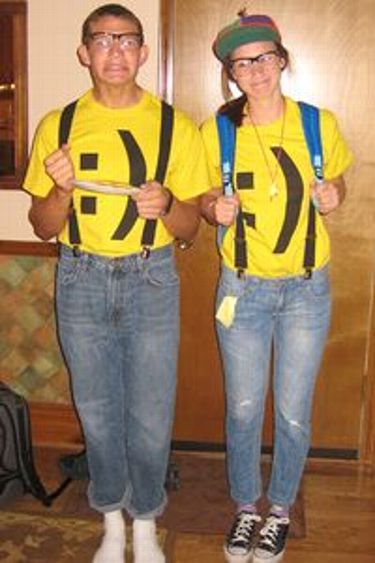
He didn’t do drugs. He didn’t drink. He didn’t believe in premarital sex. From the age of 9, he embraced God, religion and the importance of spirituality. While other little kids would watch cartoons on Sunday mornings, Nathan would watch preachers. “And then he’d tell me which ones were good and which weren’t,” Connie said. “Who does that?”
He was a jock. He was a nerd. He was churchy. “And yet he still fit in with us bad kids,” joked Adam Nunn, a close friend. “He was just like one of the guys. Only way, way better. The kid would do anything for anybody.”
Nathan hated attention. He refused to ever buy a letterman’s jacket. When a youth basketball coach once asked Nathan’s team why they couldn’t “be more like Stiles,” he fumed.
“He just loved his buddies,” his dad said. “And he never wanted them to ever be hurt or upset or embarrassed about anything.”
When those buddies decided to play football this fall, Nathan joined them. But three practices into the season, Nathan broke his hand and needed a plate and six screws to piece it back together. When he couldn’t practice, he ran sprints on the sidelines. His friends said he even lifted weights when doctors told him not to.
“He was a competitor. He always wanted to win,” said Eric Kahn, one of Nathan’s closest friends. “He was the type of guy who would always suck it up. If he was injured, he’d fight through it and see if it would just go away. And then if it didn’t, maybe he would ask somebody for help.”
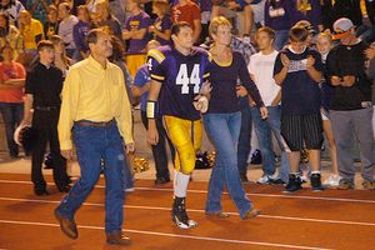
So it was surprising for Connie on the morning of Oct. 2 when her son mentioned that his head hurt. The night before, she and Ron had joined Nathan on the field as he was named homecoming king. After the game, a 17-0 loss to Ottawa, Nathan went out with his friends. Everything seemed normal. Except that comment the next day.
At practice three days later, in his first contact drills since the game, Nathan complained to his coaches about his head hurting.
“Every time he made contact, he said he got a headache,” coach Anthony Orrick said. “So I immediately told him right there he was done for the day.”
The next morning, a trainer from the school called Connie and suggested she take Nathan to see a doctor. Connie took him to the Olathe Medical Center, where Nathan underwent a series of tests, including a CT scan. The doctors found nothing, Connie recalled.
“They said he was fine, probably had a concussion,” Connie said. “They told him ‘Take two [naproxen] in the morning and two at night and go see the doctor next week.'”
When he visited the family doctor the next week, Nathan confessed he was still having occasional headaches. So the doctor suggested he sit out another week. Seven days later, after Nathan passed a series of tests and said he was headache-free, the doctor cleared him to return to the field. But Nathan wouldn’t do so without the approval of his mother. “You need to be OK with this,” he said to her. “Are you OK with this?”
She wasn’t. Connie hadn’t wanted him to play in the first place. During his sophomore year, he broke his collarbone in a precarious spot under his neck that was a mere inches from severing an artery and potentially killing him. Then there was the broken hand. And now a concussion. Connie thought of a story Ron had told the children’s ministry one morning at church, in which God sends three boats to rescue a drowning man and the man refuses to get in all three boats, thinking God himself will save him. The man eventually drowns.
“I told him, ‘Nathan, this is your third boat,'” she recalled. “‘God sent you three boats. You’re going to drown. Don’t play. Just don’t play.'”
But Nathan insisted he was fine, and Connie didn’t see any abnormal behavior. Nathan was staying up late, finishing his homework and had just earned a 93 on a big calculus test. He wanted to finish the season with his friends. And with only two games remaining, one against Osawatomie, the other one-win team in the area, Connie assumed her son would be safe. So she reluctantly told him he could play.
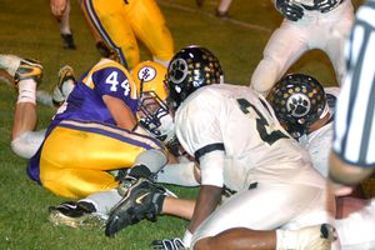
On Friday, Oct. 22, Nathan returned to the field for Spring Hill’s game against undefeated Paola. Ron and Connie watched nervously in the stands as their son absorbed several hard hits, including one in the beginning of the game that they said noticeably stunned him.
“But after that game, all he said was how great he felt,” Ron said. “He was so happy. He said, ‘That was a lot of fun. They got me there for a minute, but I’m OK. I had a blast tonight.'”
‘I told him I would miss him’
The television in the surgical waiting room at the University of Kansas Medical Center was tuned to Home and Garden Television. Connie Stiles would have it no other way. Nathan had been airlifted from Osawatomie’s Lynn Dickey Field, and she and Ron had made the one-hour drive to the hospital, where doctors informed them their son’s brain was severely swollen and hemorrhaging. He would need four-hour emergency surgery to stop the bleeding, slow the swelling and, hopefully, save his life.
So while Nathan was in surgery, the easy-on-the-nerves home and garden network it would be. As the Stiles waited, friends, family and teachers began overflowing three hospital waiting rooms. At first, nurses urged the crowd to keep out of the hallway. But they eventually gave up. In each of the waiting rooms, crowds of people kneeled on the hospital floor, praying to God to save Nathan.
One hour into surgery, doctors realized their task was impossible. Nathan’s brain was so swollen that it had stopped telling his heart and lungs what to do. He had been living on 50 percent oxygen for as long as two hours. Even if he were to live, his life would never be the same.
The doctors told the Stiles family there was nothing more they could do. “It’s in God’s hands now,” one surgeon said.
“The news started out bad and got worse,” Ron said. “I knew it was serious. But I never imagined I’d be driving home with a dead son.
“But no matter what we said or what we did, it didn’t matter. God was calling him home.”
Not everyone accepted Nathan’s fate as easily. Ron said he had never seen the family’s pastor, Laurie Johnston, so upset.
“She thought we were going to pray that boy back to life,” he said.
Said Johnston: “I was mad. I was angry. Here I was, the shepherd of their family, and I couldn’t protect their sheep. To me, this wasn’t going to happen. I wouldn’t let it happen. Not Nathan. Not someone who had so much left to give this world. But at some point I realized, it was out of my control.”
As the clock crept past 2 in the morning on Oct. 29, Nathan was still alive. But his future was bleak. Ron and Connie decided it was time to start saying goodbye. They made the decision to allow each of Nathan’s friends go in to his room in groups of four to do just that.
It took almost an hour and a half. With each group, Nathan slipped farther and farther away. Just before 4 a.m., the last group walked in. They were Nathan’s closest friends.
“When I saw him
I just saw him earlier that day,” said Kahn, who kicked for Spring Hill and also played on the soccer team. “The last thing he ever said to me was ‘Win state.’ But seeing him in that bed
my best friend
looking like that
I told him I would miss him. And basketball wouldn’t be the same.”
Handling the grief and the guilt
Handling the grief and the guilt
The morning Nathan died, the phone rang in the office of Gary French, the superintendent for the Osawatomie School District. It was Ron Stiles.
“I was a bit nervous when it was him,” French said. “I had no idea what to expect.”
But Stiles wasn’t calling to complain, criticize or do anything else negative. He called to say “thank you” for the way Osawatomie handled his son’s crisis. He asked how the kids and the coaches were doing and if there was anything he could do.
“Here this man had just lost his son and he was worried about everybody else,” French said. “It was an amazing display of faith and humanity. It was inspirational.”
A day later, when word got back to Stiles that some of the Osawatomie kids were teasing one of the football players, calling him a “murderer” because of one play in which they thought he had collided with Nathan (he hadn’t), Stiles called French again.
“He told me he had heard what was going on and wasn’t going to stand for it,” French said. “What could he do? Could he call the boy? Did he need to drive down? He wanted to talk to the kid.”
Within 15 minutes Stiles was on the phone with the player, telling him Nathan’s death wasn’t his fault. It wasn’t anybody’s fault.
In the three weeks since their son died, the Stiles family has spread that message to anyone and everyone who will listen. In a statement broadcast on each of the Kansas City television affiliates, Ron said, “We absolutely do not hold any bitterness to anyone for what happened.” He added that there will be no lawsuits. What happened to his son will be determined “by doctors and not lawyers.”
Everywhere they’ve gone since that night, Ron, 55, and Connie, 48, have tried to spread this message: to Nathan’s coaches, his teammates, his friends, a member of the officiating crew that night and even his girlfriend, whom the Stiles said battled feelings of guilt after not sharing that Nathan had felt dizzy one day after working out.
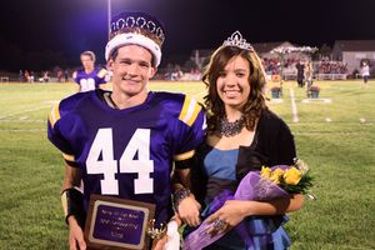
“My daughter told me that she was pretty much headed the wrong way with all of this,” said Susan Swope, the mother of Courtney Swope, Nathan’s girlfriend. “But when you see the way the Stiles have handled it you can’t help but do everything within your power to stay strong.”
Connie also met for an hour with the family physician who had cleared Nathan to play. The doctor declined to speak with ESPN for this story.
“He felt horrible,” Connie said. “He was in tears. He felt so bad. He told me he kept going through everything over and over and over and he didn’t see anything he would have done differently. He told me he had lost his faith in medicine.
“I said, ‘Please don’t feel that way. It’s not your fault. You’re a good doctor. We need more doctors like you.'”
Ron and Connie also met with some 25 members of the Osawatomie football team who showed up at a ceremony to remember Nathan. The parents explained to the tear-filled teenagers that the entire night was crazy, none of it made sense. Not the eye-popping 99-72 final score of the game, more points than the two teams had tallied in their previous 19 games combined. And certainly not what happened to Nathan. It wasn’t their fault, the Stiles insisted. Football did not kill Nathan. But the kids couldn’t stop crying. So Ron pointed to a giant picture of his son in the front of the room.
“I told them, ‘You see that smile my son has on his face?'” Ron said. “I want to see that exact same smile on every one of your faces right now.”
People in the community have marveled at the way the Stiles have handled this tragedy. But for them, it’s the only way. By telling everyone else that they don’t believe this tragedy is anyone’s fault, they’re telling themselves the same thing.
Because of course there are questions. Ron and Connie constantly replay the nightmare in their heads, wondering what went wrong. A couple of days after Nathan’s death, Ron was looking through his son’s car and found a piece of paper lying on the floor in front of the passenger’s seat. It was a concussion management handout the family doctor had handed Nathan after clearing him to play.
“I saw that and I just thought, ‘Oh, Nathan; oh, no,'” Ron said.
Was Nathan having headaches the entire time and didn’t tell anyone? Did he suffer a brain hemorrhage after the initial concussion? If he did, why didn’t that show up on his CT scan? What about the hard hits he took in the Paola game? Did that play a role in any of this? That night in the hospital, doctors explained to the Stiles that the location where Nathan was hemorrhaging was an “old bleed,” meaning it was a spot where the brain had bled previously.
“One of the doctors said he didn’t think we could just blame it on the CT scan, that they didn’t catch it or whatever,” Connie said. “And so I made the comment, ‘Do you mean I could have just found him dead in bed one morning?’ And he said ‘Yes.'”
The answers won’t come until the medical examiner releases the autopsy report and the official cause of death in the coming weeks. In addition, sports concussion expert Dr. Robert Cantu and his researchers from Boston University and the Sports Legacy Institute will be reviewing Nathan’s case and will share their findings with the family. Cantu has authored more than 325 scientific publications and 22 books on neurology and sports medicine, including a September article in the Journal of Neurotrauma about second-impact syndrome and small subdural hematomas, or brain bleeds. Though he had yet to review Nathan’s CT scan or paperwork, Cantu said last week that the case “had all the earmarks” of a brain bleed caused by second-impact syndrome.
But for now, we just don’t know. It’s possible that what happened that night had nothing to do with Nathan’s previous concussion. Or he might have suffered from a brain-related problem completely unrelated to football.
Just last week, Connie came across a magazine story that suggested anyone suffering from a brain injury shouldn’t take any non-steroidal anti-inflammatory medications because they might complicate clotting. Connie had found a nearly empty bottle of an over-the-counter anti-inflammatory shortly after Nathan’s death. Should he not have been taking it? Should she have put her foot down that day in the doctor’s office and told him no, he couldn’t play? Would it have even mattered? And what about Nathan’s role in all of this? Was he hiding something?
“Even if he was, what kid thinks, ‘Oh, I’m going to die from a headache?'” Connie said. “He’s a 17-year-old kid. They don’t think they’re going to die from anything.”
For now, Ron is trying desperately to shift his family’s energy and focus from “what if?” to “what now?” This past Saturday, he stood in front of the congregation at Hillsdale Presbyterian Church, held Connie’s magazine with the article about brain injuries in his hand and tossed it in a garbage can.
“That isn’t what we want to be about,” he said.
A life frozen in time
In the bed where Nathan used to sleep, the sheets still rest in the same position in which he left them that morning when he climbed out of bed and headed for school.
The shirts in his closet are organized by color. On his desk, a neon green cup has a drop of water on the bottom. And on a shelf at the foot of his bed, the purple and white crown of the homecoming king sits, its gold sequins changing the direction they shine depending on the light of day.
The room tells the story of a life frozen in time and a family that has been left trying to make sense of it all. According to the National Center for Catastrophic Sports Injury Research, 1.8 million Americans play football each year. And Nathan is the only one this season who is believed to have died from a football-related injury. Essentially, he is a statistical anomaly.
But tell that to Ron, Connie and his younger sister Natalie, who now live in a home without the plodding feet and shower singing of their son and brother. Tell that to the elderly ladies at Hillsdale Presbyterian, who miss Nathan’s arms wrapping around them every Sunday morning. And tell that to the not-so-popular kids at Spring Hill High, whom Nathan would say hello to and stand up for as if they were the most popular kids in school.
“I’m not convinced that he wasn’t some sort of angel,” Coach Orrick said. “I know people will have a hard time believing that, but when you look at the type of person he was you can’t help but ask ‘How can I better myself?’
“I’m not sure Nate wasn’t put here on earth to do just that — to change a lot of us for the better.”
To try to make sense of it all, to give them a reason to get out of bed each morning, the Stiles have dedicated themselves to making sure their son doesn’t die without a purpose. They fulfilled Nathan’s wish, allowing the donation of his bone and tissue to those in need. But beyond that, and beyond working with doctors and researchers to determine exactly what went wrong, they’re committed to achieving one of Nathan’s lifelong goals: helping his friends find God.
Nathan, who would have turned 18 on Nov. 2, had often talked with his mom about the concerns he had for his friends who were choosing the wrong path and how he wished he could somehow get them to ask life’s biggest questions. And so the Saturday morning after Nathan’s death, Connie was lying in bed when the idea hit her: The Nathan Project.
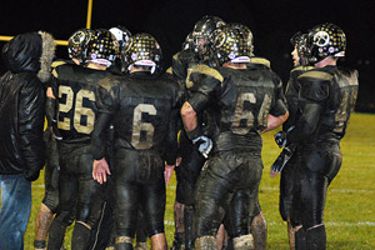
Instead of flowers or donations to fight cancer or feed the needy, Ron and Connie have used the money they received after Nathan’s death — more than $14,000 — to purchase study Bibles. And they’ve given those Bibles to anyone who will dedicate themselves to one year of Bible study. Faith, denomination, previous beliefs; none of it matters. They just wanted to people to explore and learn about God — for Nathan.
“I had to make sense of this insanity,” Connie said. “I had to give myself a reason this happened and do something. Otherwise I was just going to wither away and die.”
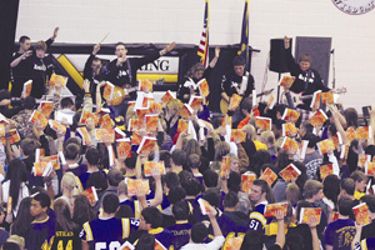
One week after Nathan’s death, at the ceremony attended by the Osawatomie football team and some 3,000 others, a stack of 1,000 Bibles lined the back of the Spring Hill gym. And after Nathan’s coaches, teachers and family spoke, after his mom sang and his band mates played a Christian rock song he helped write, Johnston, the pastor, invited anyone in attendance to grab a Bible.
Within a few minutes, two lines four to five people wide stretched the entire length of the Spring Hill gym. Nearly 650 Bibles were given out that night. Since then, the project has spread to other towns and gradually, other states. Ron Stiles has started a Facebook account, and he encourages people to reach out to him if they need somebody to talk to.
And at every Nathan Project event, Ron — who has size 10 feet — wears his son’s black Nike high-tops.
Size 12.
“I’m never going to fill those shoes,” he said. “But I’m going to do everything I can to walk in them.”
Wayne Drehs is a senior writer for ESPN.com. He can be reached at [email protected]. To find out more about The Nathan Project, visit Hillsdale Presbyterian’s web site, or search “The Nathan Project” on Facebook.