
Jim Mohr

Warning: This story contains mentions of suicide and may be triggering for some readers.
Jim Mohr grew up in Arcadia, California, in a very loving family. He was the youngest son of Ed and Janet Mohr. As a child, Jim spent his summers on Newport Beach, California where he developed his love for surfing and all water sports. Jim had the fondest of memories growing up in his family and considered them some of his best life experiences.
Jim started playing Pop Warner Football at the age of 8. An extremely gifted athlete, he excelled at this sport and quickly became a standout player. Jim LOVED the game of football. He loved the off-season weight training, practices and the camaraderie of his teammates. The combination of his raw talent, work ethic, and natural leadership abilities led him to be an exceptional high school player. Described by his teammates as a “one man wrecking ball who played with reckless abandonment,” Jim started his freshman year on varsity as both the running back and defensive back. He was also the punt receiver and played almost the entire game in every game in his four years at Arcadia High.
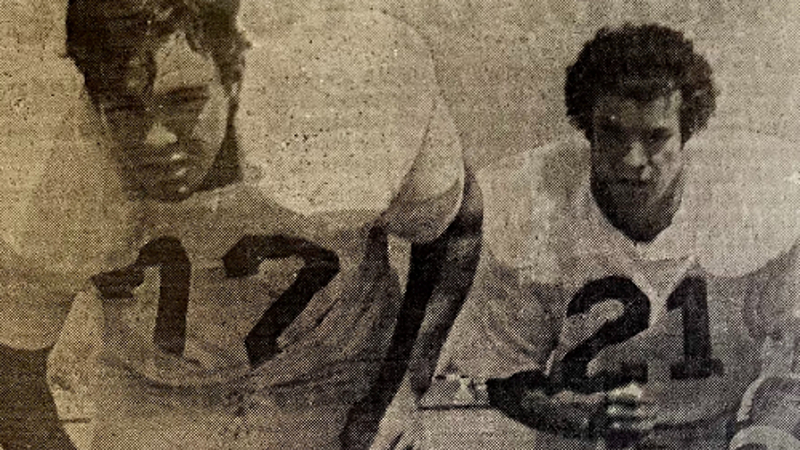
His accomplishments included being elected to the first team L.A. Times All-San Gabriel Valley football team in 1977 and 1978. In 1978, he scored 21 touchdowns, rushed for 1,322 yards and averaged 8.3 yards per carry. Jim was named by the L.A Times and the Pasadena Star as Running Back of the Year and All-San Gabriel Valley Defensive Back of the Year along with being selected Most Valuable Player in the Pacific League and named to the All-CIF First Team. Jim was selected to play in the Shrine All Star game, and he was elected co-captain by his teammates with John Elway. He started at both running back and defensive back, helping the North defeat the South 35-15.
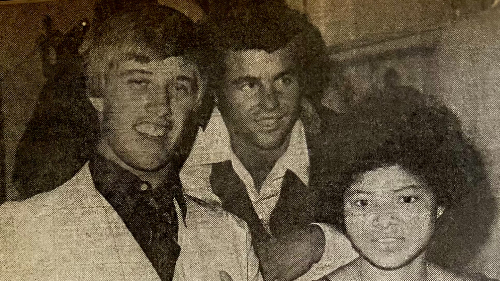
Jim went on to play running back, defensive back, and punt returner for Northern Arizona University until he suffered a knee injury requiring ACL reconstruction surgery which ended his football career in his sophomore year. After graduating with a degree in finance, he moved to San Diego to begin his financial advisory career and founded the Mohr Financial Group in 1984. His genuine care for helping people, attention to detail, and unparalleled work ethic led to a very successful career. For almost four decades, Jim worked tirelessly as a financial planner to care for his beloved clients’ needs. Every day, he led by example through his dedication, work ethic and knowledge.
I met Jim in 1986. My co-worker, who was his college football teammate, introduced us. I was taken by his handsomeness, charisma, and understated confidence. I thought Jim came to our office to see his friend so I was surprised when a few weeks later he called to ask me out on our first date to the Huey Lewis and the News concert. We were instantly smitten and were married a year later!
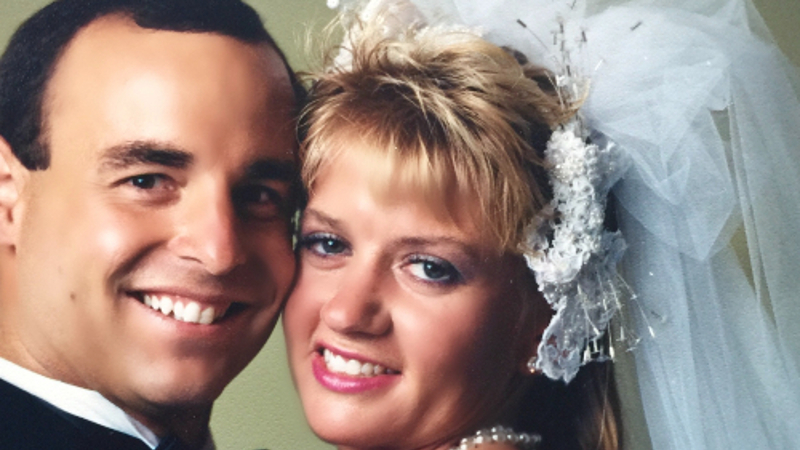
Life with Jim Mohr was my biggest gift. I loved his passion for life, his abundance of energy, his love for adventure, his genuine kindness, compassion, and his warm laugh! As disciplined of a worker as he was, he had the ability not to take himself too seriously and made sure he scheduled in plenty of fun!
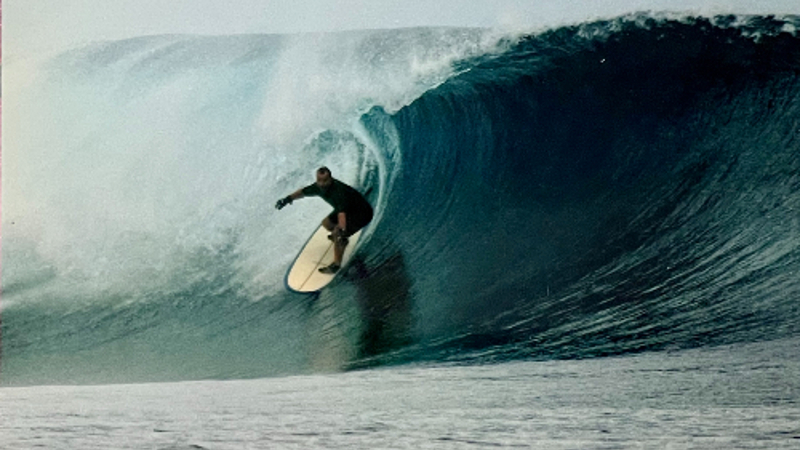
Jim loved the beach and was happiest surfing, body boarding and scuba diving. We were able to travel often and spending time with friends was important. Jim was the friend who would make sure to stay in touch with his high school and college friends and would be the organizer of their yearly reunions. He loved his annual boys surfing trips to Samoa, Fiji, Costa Rica, and Nicaragua where he was known to get barreled on a long board in the 10-14 footers acting like it was nothing! He was crazy brave.
We were blessed with three beautiful children; Michael, Kaitlin and Patrick. Raising our family was our biggest joy. Jim was very active with the kids and made sure his relationship with each of our kids was his top priority while running his business. Some of my fondest memories were all the neighborhood whiffle ball games and beach activities he organized for the kids. Jim was not only a father to our children, but as they grew up, he became a best friend and mentor as well. He was their rock and provided a supportive space as they faced life’s challenges. Our kids remark how he taught them to work hard and have a little fun, but more importantly he showed them how to treat everyone with love and kindness. Jim had a genuine way of making everyone he interacted with feel special and loved, a quality we all aim to embody in his absence. We were lucky to have such close relationships with our kids and make very happy family memories throughout the years!
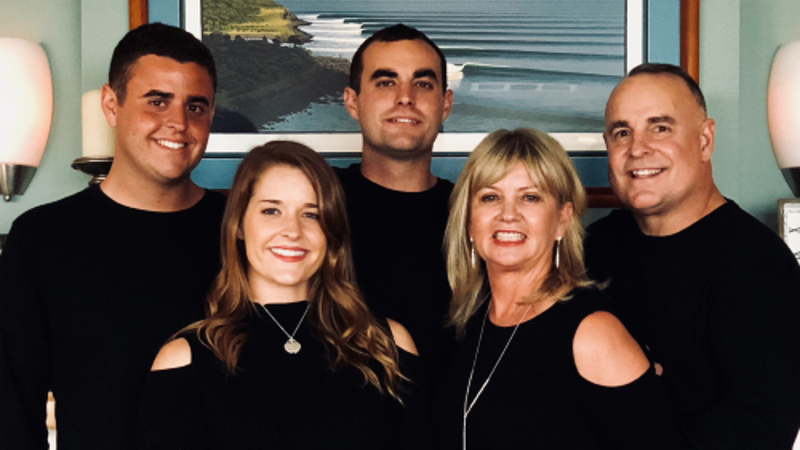
In 2018, Jim and I were at a sweet spot in our lives where we were enjoying the fruits of our labors. Our children were adults and were thriving in their own lives, Jim was successfully in the process of transitioning his practice to our oldest son who had been working with him for the past several years, and we just bought a second home at the base of the Sierra Nevada mountain range near Lake Tahoe, Nevada. We were looking forward to enjoying all the activities that come with retirement: skiing, hiking, biking, travelling and future grandkids! Life was very happy and good.
It was in October of 2018 when Jim’s anxiety and insomnia became more frequent than in the past. We had just returned from Nevada and Jim was back in the office seeing clients. I distinctly remember one day seeing a frozen look of despair on Jim. I had never seen that look before on him. I asked what was wrong. Jim said, “I don’t know what’s wrong with me. I get this gripping feeling of anxiety that comes out of nowhere and it’s a terrible feeling.”
Thinking the cause was situational, I told him I was sure it’s the stress of coming back to work and getting back into the work routine. I shared how I was feeling stress about that as well. Jim had an annual checkup scheduled and his doctor prescribed an anti-depressant for the anxiety. I thought this was too aggressive a treatment, but Jim asked me to support him on this decision because he wanted to give it a try.
In December of 2018, Jim said he was feeling great. 2019 was a very happy year. Our daughter got married and we were enjoying our time in Nevada setting up our new home and enjoying all the fun activities of Lake Tahoe. Life was very happy and good… until 2020.
We started a big landscape remodel project in January 2020. Jim was very excited about this and poured his energy into all the details of the planning process. He would get up early and work all day with the crew. It was a labor of love for him. Everything he did, he gave 100 percent. I started to notice that Jim was having a difficult time remembering details that were discussed even with writing them down. Jim took frequent and detailed notes his whole life, but now he was slow in actually writing the notes.
On Mondays, we would have a morning meeting with the contractors. Jim was slower in his speech delivery and in his note writing so I offered to be the note taker. He shared with me how he was having a hard time understanding all the details of the project. He kept saying he was overwhelmed and felt confused. Thinking it was situational, I told him that I was confused with all these details as well but we will learn all the new systems we were installing. Looking back, I realize that in years prior, Jim never was confused about home improvement projects. He loved all the details and enjoyed every project.
A situation occurred that I felt was a “light switch” moment. The irrigation system we installed was having a water pressure problem. It was a frustrating situation, but Jim’s reaction was so uncharacteristic of him. Jim was a “there’s no problems only solutions” type of man. He came inside, hugged me and sobbed. I was stunned at his reaction. Jim was not afraid to show emotion, but this was not the reaction I was expecting.
The world then went into lockdown due to COVID-19 and his anxiety only intensified. Normally the voice of calm reason, he was feeling intense worry about the situation. Jim was experiencing severe insomnia which seemed to amplify the anxiety. His facial expression seemed to be in a constant state of worry. The whole world was in a state of anxiousness due to the pandemic, so I hoped his intense anxiety was situational.
Jim told me he thought he had early onset of dementia or Alzheimer’s Disease. He was worried about his constant state of confusion and memory loss. Having seen Jim’s beloved dad struggle with Alzheimer’s, I didn’t think that was the case because Alzheimer patients don’t know they are losing their memory. Jim’s symptoms of memory loss, confusion, anxiety, and insomnia worsened. The week prior to Jim’s death, I don’t think he slept more than two hours. I remember waking up and seeing a look of frozen horror on Jim’s face. I will never forget that look as it haunts me to this day. That was the face of severe suffering.
I began to realize there may be more to these “situational” symptoms. A few days later, Jim shared with me that as he was driving, he had to pull over because he didn’t know where he was or where he was driving to. He shared how he was fighting to control his feeling of anxiousness and it took him about 10 minutes to figure out where he was. That was when I realized I needed to pay attention and get some help. Jim agreed it was time to schedule an appointment with the doctor. I told Jim I was there to support him 100 percent.
Two days later, on May 10, 2020, Jim died by suicide. My family and I were devastated and shocked. He left a heartfelt letter which provided much insight on how he was struggling with depression, anxiety, memory loss, confusion, and pain.
Our oldest son, Michael quickly voiced his suspicions of CTE, and our family was in agreement to have his brain studied. Jim shared with Michael a few years earlier how he was worried he may suffer from CTE in the future due to all the times he “got his bell rung.”
Researchers at the UNITE Brain Bank diagnosed Jim with Stage 3 (of 4) CTE. I cannot express how grateful I am to the Brain Bank study and to the Concussion & CTE Foundation. The CTE finding helped me understand why Jim suffered the way he did before his death. When I was waiting for the findings, I found it so very helpful to read other Legacy Donors stories. I found similarities and differences in how CTE symptoms present. Those stories shed light on a subject I was unaware of and yet living with in plain sight. Jim hid his symptoms until he couldn’t hide them anymore as CTE took over.
So many times after hearing someone died of cancer, I see “After a brave fight, they lost the battle to cancer.” I believe all victims of CTE fight a brave fight. It’s just a battle that ultimately feels like it can’t be won at this time. As family members affected by CTE, we can help to prevent the battle. We can keep telling the stories of our loved ones.
Jim Mohr loved the game of football and he would want to save the game. Jim once said, “Living with constant anxiety is horrible and I hope none of you experience it.” Tackle CAN and SHOULD wait if we want to reduce the risk of CTE among football players.
Shawn Moore
Duquan Myers
Greyson Newman
Eustace Oakley
Mark O’Neill
Mac Parkman
Warning: this story contains mentions of suicide and may be triggering to some readers
Mac Parkman was a vibrant human being who embodied the best attributes humanity and God find endearing in this world. Warm, funny, witty, kind, compassionate, calm, loyal, and caring are just a few of the characteristics that can be used to describe this wonderful young man. He brought so much warmth and sunshine to everyone he touched, yet he was a tough competitor… a true peaceful warrior until he left this earth.
Mac was born on March 10, 2003 in Albuquerque, NM, to a loving, blended family. Mac spent his first six years growing up in the foothills to the west of Tijeras, NM. As the “new” kid in the family, he was welcomed warmly by his mom and sisters while his father was overseas participating in the invasion of Iraq. As a newly knit family that had never raised a son or brother, he brought so much love into their lives and brought them closer together with his presence, a gift that the family shares to this day.
Mac was a quiet boy, always wanting to do things and physically active from the start. Track, baseball, karate, and skiing with his dad were his early activities. He loved being active and with his friends, especially when they would eat out in great places like Blakes, Sadie’s, and Hooters afterwards. He was quick to learn and active all the time. Mac enjoyed an early introduction to God at the local Prince of Peace school where he was loved by teachers and students alike, except for a short period where he was known to tackle the other five-year-old kids.
In 2009, Mac moved to Woodland Park with his family and was enrolled in Colorado Springs Christian School system. He lived on a ranch surrounded by forests and became part of the wrestling team in first grade with almost the entire first grade class. He was one of the only kids to continue wrestling. Mac loved the sport and the camaraderie and continued participation until his passing. He had several very close friends, Nathan and Parker, that would attend “cookie church” with him as the local Methodist church had a very elderly congregation that loved to bake. He loved having his friends over to play games, jump on the trampoline, shoot air guns (or real guns on his dad’s range), play tag, and camp out. We could hear them wrestling and bumping around upstairs well into the night.
Due to his father’s business activities, Mac fell in love with new places and was always on planes with his dad and family going all over the U.S. and the world. Everywhere he went, he would always want to experience the local culture, food, and sightseeing. He visited Costa Rica, the Hawaiian Islands, Egypt, Finland, Australia, New Zealand, Tahiti, and the UAE. On those trips he rode camels, entered the Great Pyramids, hiked mountains and glaciers, went ziplining, kayaking, scuba diving, snorkeling, practiced skydiving in an indoor skydiving range, and even went skiing in an indoor ski simulator in the UAE desert. He was always interested in what was going on and had a thirst for adventure that never left him.
Mac was also a very active video gamer and loved to game with his friends, both in person and online. Over the years, gaming became one of his outlets. Competition and gaming was very important to him. He developed a close-knit group of friends who competed together and some of the best memories we have of Mac would be his whooping and yelling with his friends while they participated in Apex, Brawlhalla, and Grand Theft Auto.
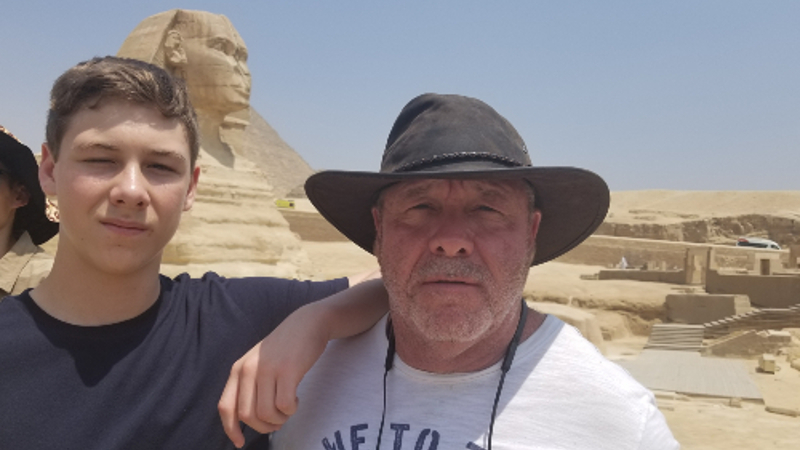
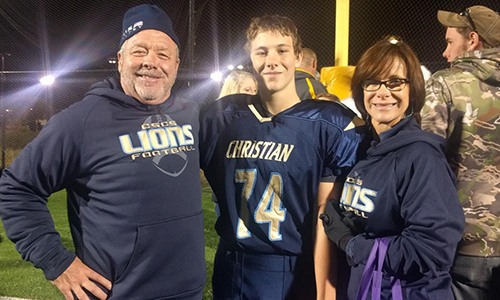
Most importantly, it was sports that defined who Mac was in his later years. While we knew he loved wrestling, Mac approached us about joining the football team in 7th grade. Of course, we encouraged Mac to be and do what he wanted to do, so he joined the CSCS middle school football team. With wrestling and now football, our family adjusted to a demanding traveling routine that stretched over 10 months of the year with practices, team dinners, and games. We relished every minute Mac was engaged in sports, as we always wanted to support him doing the things he loved. Mac continued this schedule all the way till the end of his junior year when COVID hit and all sports were stopped. This was hard on Mac.
Mac was the consummate team player who gave all he had for the team. While he never was the best player on the team, he always had the best attitude. He had heart, dedication and he really enjoyed participating. Mac loved those wrestling trips where he would be able to stay in a hotel with his teammates and hangout away from his parents.
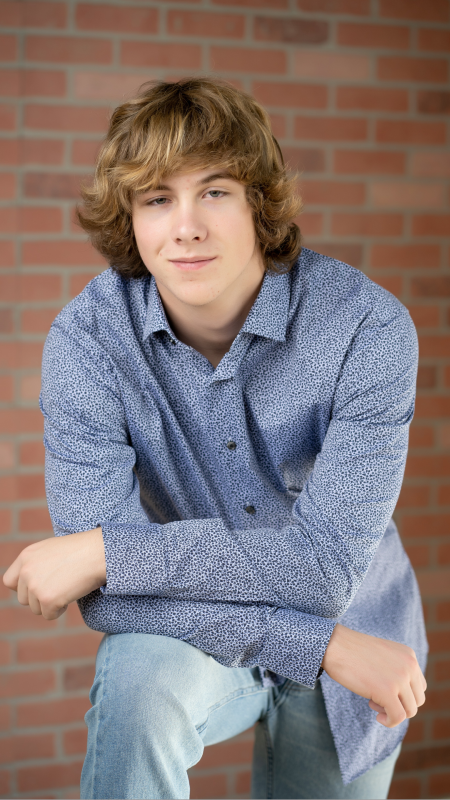
Mac experienced several high points in high school athletics. His football team went to the state finals and made the playoffs for the first time in years. He also made it all the way to the qualifier for the State Wrestling finals but lost out by one match. He worked hard, left a lot of sweat, and some blood, on the field. We were so proud of Mac. As his wrestling coach said, “it takes talent to win the first round, conditioning to win the second, but heart to win the third. Mac had heart.” He was a true team player and was loved by all his teammates. It was not hard to find out where Mac was, there was usually a group of young men laughing their heads off. Especially on the wrestling team, where the boys had such tight bonds.
Towards the last months of his life, Mac continued to shine as a family member. He spent time at the beach with his friends and his family in Florida and worked hard at school. He also spent a lot of time working out on his own or with friends at the gym. Mac was getting ready to join the Army to follow in his father’s footsteps. On the surface, everything seemed OK. We now know that, while to all of us Mac was…. well Mac, inside he was fighting a daily struggle with mental illness and depression and was determined not to let anyone know.
Mac was a kind, loving, selfless boy. We know he put everything he had into the fight against depression. We wish we knew he was suffering as much as he was, and we encourage anyone struggling with depression or suicidal thoughts to tell someone. Help is available and you are not alone.
We love and miss you every day, Mac.
If you are struggling to cope and would like emotional support, call the Suicide & Crisis Lifeline at 988 to connect with a trained counselor. It’s free, confidential, and available to everyone in the United States. You do not have to be suicidal to call. Suicide is preventable and help is available. If you are concerned that someone in your life may be suicidal, the five #BeThe1To steps are simple actions anyone can take to help someone in crisis.
Are you or someone you know struggling with lingering concussion symptoms or suspected CTE? We support patients and families through the Concussion & CTE Foundation HelpLine, providing personalized help to those struggling with the outcomes of brain injury. Submit your request today and a dedicated member of the Concussion & CTE Foundation team will be happy to assist you. Click here to support the HelpLine.
Michael Patrick
Eric Pelly
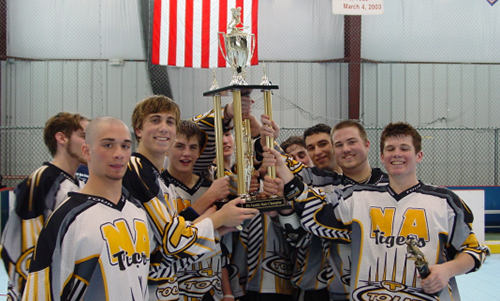
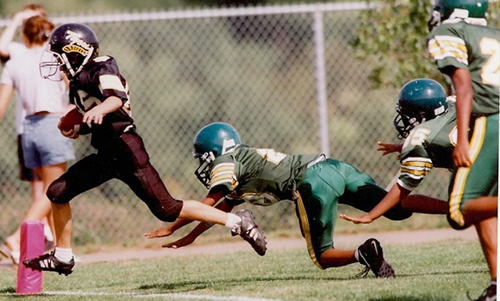
Eric was full of energy…an energy that propelled him and drew others to him. He had a gleam in his eyes, a smile on his face and a loud contagious laugh. Eric was fun; he brought life and laughter to any occasion. His passion for sports was evident from the time he was a young boy. Eric began playing in-line hockey at 6-years-old. Initially he played goalie, then the coach suggested that he play on the line because he was fast and a strong skater. Eric played on numerous hockey and tournament teams.
By Joan Pelly
Eric was full of energy…an energy that propelled him and drew others to him. He had a gleam in his eyes, a smile on his face and a loud contagious laugh. Eric was fun; he brought life and laughter to any occasion.
His passion for sports was evident from the time he was a young boy. Eric began playing in-line hockey at 6-years-old. Initially he played goalie, then the coach suggested that he play on the line because he was fast and a strong skater. Eric played on numerous hockey and tournament teams.
When Eric was 12-years-old, he wrote: “My favorite two sports are hockey and football. I like them because you get a lot of action. I’ve played hockey for six years and am getting tired of it. This year I finally convinced my parents to let me play football. I love football because you get even more action than hockey.”
Due to the summer time commitment, Eric decided not to play football in his junior year of high school. When the season rolled around he said “mom it’s killing me to not be on the field playing.” That’s when he became the self -appointed mascot and crowd instigator at the high school football games. He slathered his body with black and gold paint (his school colors) and draped himself with a black and gold stuffed snake. He could stir up a crowd (in a positive way)!
While always remaining active in hockey, Eric tried many other sports along the way. He swam, played baseball, soccer, basketball, track and cross country, volleyball, and football then found that he loved playing rugby.
Eric started playing rugby on the high school team but was quickly moved to the adult semi-pro team due to his passion for the game, intensity and speed. The physicality, the contact was one thing but there was something about the connection these guys had. After each home rugby match, the team would invite the opposing team to stay and join them for a cookout or pig roast at their clubhouse. They would gather there to watch the Steelers football games and the Penguins hockey games. The guys pitched in and worked to keep their field in pristine condition and the club house clean. Eric enjoyed that camaraderie.
Eric also enjoyed bicycling, skiing, snowboarding, water skiing, wake boarding, scuba diving, windsurfing, and four wheeling in a jeep wrangler. As you can see, he was active and adventurous.
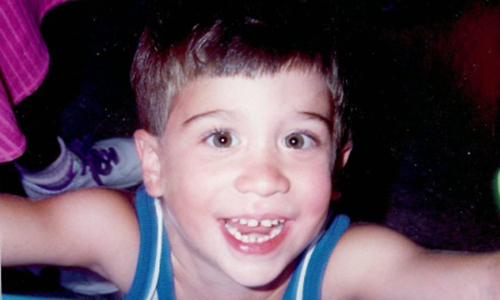
While Eric had that intense love for sports, he also had a passion for life. Family and friends meant a lot to Eric. Whatever anyone needed, Eric was ready and willing to lend a hand. He also cared deeply and was an intent listener; he had a way of making everyone feel that what they had to say was important and interesting. Eric was the son, brother, grandson, nephew, and friend that everyone loved to spend time with. He was the life of the party and always had an entertaining story or two to tell.
Faith was a huge part of who Eric was. Eric was an altar boy when he was younger, when he was a junior in high school he decided to teach 4th grade CCD (religious education). Eric managed to pack a lot into his days; he excelled academically, volunteered, and worked part time at the family business, all while playing on multiple sports teams and enjoying time with family and friends. He had a strong drive for success and passion for life itself. Anyone that knew him had no doubt that Eric could accomplish anything he set out to do.
The intensity with which Eric played sports resulted in three documented concussions; one each year for three consecutive years. The first one (in his sophomore year) playing football for his school team, the second one (in his junior year) from a pick up football game with friends and the third one (in his senior year) while playing rugby for the Pittsburgh Harlequins. That concussion received on September 30th 2006 during a rugby match was different than the others. Eric collapsed on the sidelines holding his head and groaning in pain. He was rushed to the hospital and remained there for two days. On the third day he was released and the only restriction he was given was “no contact sports for 3 months”. At that point, Eric asked if he could run and lift weights so he didn’t get out of shape. He was told that would be okay.
Eric was concerned about getting behind in his school work and pushed himself to go to school and get caught up on missed assignments. He was tired and had headaches but continued to do a little more each day. When I asked him how he was feeling and if he felt a little better each day, he said “yes.” He was released from the hospital on a Monday; one week later he went to the school’s work-out facility with a friend to lift weights.
Ten days after Eric’s rugby concussion and seven days after his release from the hospital…the day after he lifted weights…as we sat down to our family dinner and said our prayers, suddenly the unthinkable happened. Eric’s body stiffened with clenched fists, his eyes rolled back in his head and Eric collapsed with horrible sounds coming from his airway. We immediately called 911 and performed CPR until help arrived. He was taken to the hospital and pronounced dead. Eric’s brain had swollen and herniated, cutting off his breathing and heart rate.
We have since learned that Eric had sustained a head injury on September 16, 2006, just two weeks prior to the severe concussion on September 30, 2006. Eric was 18-years-old; he had recently been moved from the high school team to the adult semi-pro team. The team was driving from Pittsburgh, Pa. to Baltimore, Md. to play a match and return home that night. As I was making plans to go, Eric convinced me that I should stay home and spend the day with his younger sister. He said, “Mom, I’ll be fine, and I’m concerned about Jenna having to spend so much time at my games; spend the day doing something fun with Jenna.”
I understood what he was saying and I also understood that he was on the adult team and wanted to go with the guys. He was no longer playing on a high school team and nobody else’s mom was going to drive to Baltimore for the match. He wanted me to give him that freedom. As a mom that always worried about injuries, that was difficult for me, but I relented.
When Eric got home that evening, he was tired. He sat in the family room with us for a brief time and said he was exhausted, was going to shower and go to bed. Considering they had driven four and a half hours, played a physical match and drove another four and a half hours home, it made complete sense that he was ready to call it a day.
We were unaware that Eric had been removed from a rugby match ( just 2 weeks prior to the devastating head injury he sustained on September 30th) after a hard hit and was given ice to apply to his head on the sidelines. Eric did not tell us about that incident. It was only after his death that teammates told us about that head injury; they said, “Eric was out of it and slept the whole way home.”
Eric loved life, and I’m sure he never thought he could die from complications of a concussion nor did we (his parents). Knowing what we know now, he most certainly had other undiagnosed concussions and too many sub-concussive blows to the head to count: slamming into the boards in hockey, running full tilt into a block wall in basketball so that he could backhand the ball to a teammate keeping it in play, etc. Eric was very competitive; he was intense and aggressive in every sport or activity he participated in.
Learning that Eric’s brain showed signs of Chronic Traumatic Encephalopathy (CTE), deposits of abnormal, toxic protein, called tau) was shocking. For years we had enjoyed watching Eric give it his all as he competed in sports. He had so such passion and drive; it was fun to watch him. Eric thrived on the competition. Although I was always concerned about injuries, I didn’t know that damage could have been accumulating in Eric’s brain. All of the times that Eric accelerated and stopped quickly, his brain was hitting against the skull of his head.
I urge parents, coaches and players to become educated about concussions and sub-concussive head injuries. Never, never, never, let an athlete return to play with a brain injury that is not completely healed. No game is worth it. Emphasize this with your sons and daughters. It’s not “just a concussion”. They must understand that every head injury is serious and requires both physical and mental rest. The brain needs time to heal.
I am not trying to dissuade children from participating in sports. Playing sports has many advantages: physical fitness, confidence, learning to work hard, sportsmanship, trust and working together with teammates. All of these produce more than victories on the field-these skills are tools used in everyday life. I am promoting safer play, receiving proper care in the event of a concussion and gradual return to play when completely symptom free.
Information about concussions is much more readily available today than prior to Eric’s death. I am pleased to see all that Dr. Cantu, Chris Nowinski, Dr. Ann McKee, Dr. Robert Stern and the Concussion Legacy Foundation are doing to get the information out. Dr. Cantu’s book lists excellent questions to ask athletes following a hit or jarring of the brain.
You can read more about Eric’s story in “Concussed” by Keith Primeau and Kerry Goulet. Keith and Kerry were both professional hockey players who formed stopconcussions.com after retiring due to concussions. They work tirelessly to educate athletes, coaches and parents about concussions, emphasizing safe play and respect for oneself and the opponent, along with proper management of concussive head injuries.
It is important to our family to do everything we can to prevent a tragedy such as Eric’s from happening to anyone else. Each year, our family hosts an event to raise awareness and increase knowledge about concussive head injuries. It started as a basketball game among Eric’s friends and the teachers at his high school and has progressed to a basketball tournament with community involvement. Last year we had 34 teams compete. Kerry Goulet from stopconcussions.com captivated the attention of students, teachers, and parents with his entertaining way of delivering a very serious message.
On October 10, 2012, the 6th anniversary of Eric’s death, we showed Chris Nowinski’s “Head Games” documentary at the Harris Theater in Pittsburgh. That evening, a teacher/coach that has played in the Eric Pelly Memorial Basketball Game stated that because of what she had learned during our event, she had stood her ground and refused to allow a girl to return to a basketball game (after hitting her head) against all the resistance she received. Later that evening, the girl had a seizure and was hospitalized. Not allowing that girl to return to the game may have saved her life. It is with great pride that I say, collectively, we are making a difference.

For more on Eric’s story, read an article by MTV News here.
To learn more, please visit Eric’s website here.