Mike Jenkins

Mike dedicated his life to coaching, mentoring of teams and players, helping keep field maintained and safe. That was the dad in him, but there was so much more. He was always the person that if someone was in need of help or a sounding board, he was there. In his life he was placed in the position of administering CPR to someone in need. He would have given all he had to someone less fortunate.
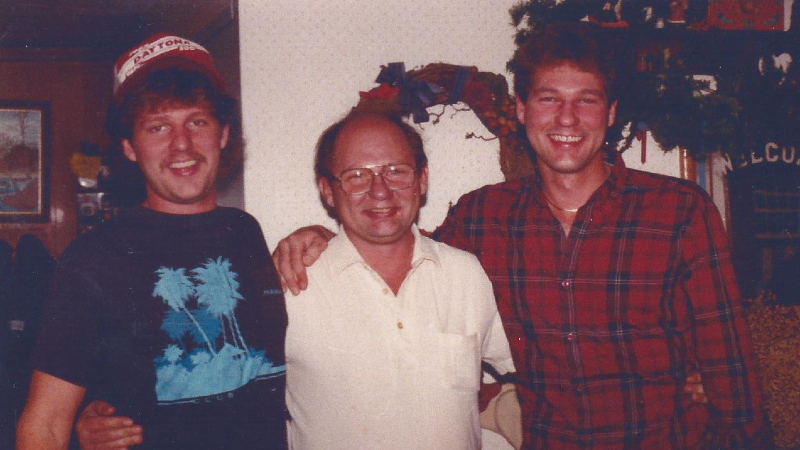
My name is Marcia Jenkins and I am Charles Michael “Mike” Jenkins’ Mother. I remember so clearly the day I answered the phone and the voice on the other end said “ just calling to let you know Mike will be playing pee wee football for the YMCA Packers.” He was seven years old. It only took a few practices to know he was born to play football and anything else that used a ball. “He was talented,” they said. He would start at quarterback. Over the years the teams he played with always were champs. Such a joy of his dad, Jack and me.

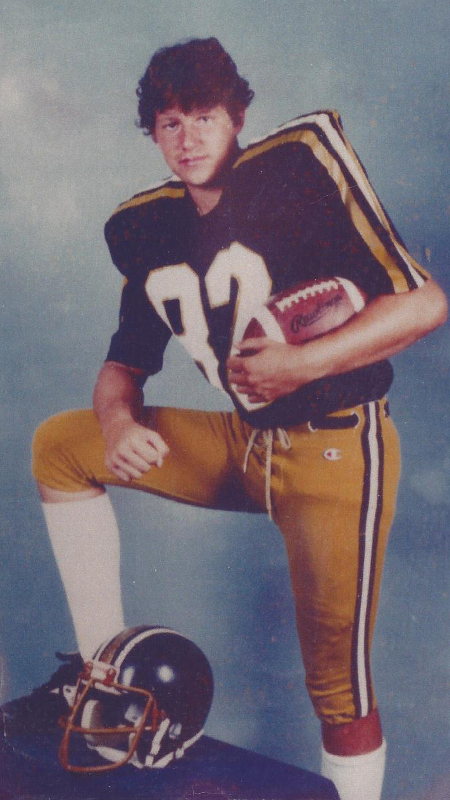
As he grew in size, strength and talent, so did the intensity of the games. By the time he reached junior high he traded Quarterback for tight end. He loved to run down the side line and leap for that touchdown pass. He was the starting tight end for Warren Central High School in Indianapolis from 1981 to 1983. Oh, how we all cheered. We were all so proud, including his girlfriend Kim and later in life his wife of 23 years. There was no way of knowing we were watching him travel down a path not to glory days of football, but the path that would someday lead him to glory…by the way of hell.

Mike put himself into everything he did, catching passes, throwing pitches, dunking basketballs, or racing motor bikes with his brother Rick. His wild and full-out life style got him the nick name “Crash.” Crashes in football fields, second base, doors, swimming pools and much more. Each one laying the foundation for concussions … if we had only known.

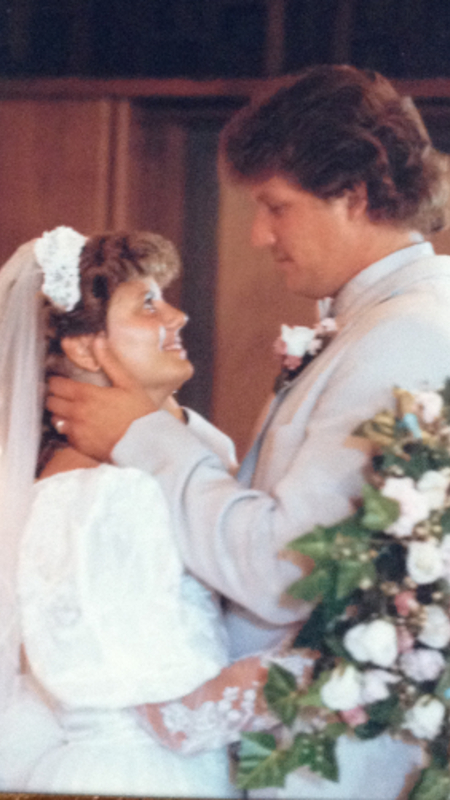
After graduating from Warren Central, he attended University of Indianapolis. In July of 1987, he married the love of his life, Kimberly Sue Basey. In the early days they enjoyed playing with friends on softball teams, waiting for the time there would be a new generation of players to come. In 1991 their first son, Kyle Michael, was born. The dream of every man: a “SON.” The tears rolled down his face. In 1994 their second son, Nicholas Michael, was born. He told me, “Mom I know why I am here. I am giving everything I have to these guys.” When Kyle turned five-years-old the merry-go-round of season to season, sport to sport started.
Mike dedicated his life to coaching, mentoring of teams and players, helping keep field maintained and safe. That was the dad in him, but there was so much more. He was always the person that if someone was in need of help or a sounding board, he was there. In his life he was placed in the position of administering CPR to someone in need. He would have given all he had to someone less fortunate. On the day he died, he was playing ball with Jas, the boy next door, and mowed that same neighbors grass. Jas’ dad, Jim, was dying of cancer at age 45.

Now that I painted this beautiful suburban picture of the “happy ever after” family, things begin to change some subtle, others so obvious.


Kim Jenkins, wife of Mike Jenkins

I am Kim Jenkins and Mike was my husband, best friend and father to our two boys, Kyle and Nick. We met back when we were in elementary school and I believe it was love at first sight. We dated off and on, but started dating for the final time in August of 1982 and got married July 25, 1987. We were married 23 years prior to his death. Mike loved me and the boys more than anything and would do anything for us. There would be times though that Mike would have anger outbursts and would say things to me that I know was not him talking, and later he would tell me that he hated himself and wanted me to hate him too; that he didn’t feel good enough for me and that I deserved better than him.

Mike struggled with alcoholism and did everything he could to beat it, but just wasn’t able to and that was the main reason why he hated himself. Mike would ask me what was wrong with him that he couldn’t beat it. I just wish we had known then what was going on in his brain that was causing it because maybe then he would not have hated himself and could have handled it or found ways to deal with it.

I am so glad Mike got to meet our granddaughter before he died. Jayda was born on March 23, 2011, so she was only a month and a half when he passed away. He would lay on the couch with her on his chest while she slept. He loved her dearly. I know she sees him at times. She has told me that he is funny and makes her laugh. She has some of his characteristics, so I know he also lives on in her and it makes me feel like he is still here with us through her.

Mike was the type of person that would give anyone the shirt off his back to help them though. Mike would try to help our friends out when they would have problems. Mike would talk to them to help them any way he could. Our neighbor, Jim, who was the same age as Mike was diagnosed with cancer and Mike took over doing their yard work and helping with his young boys. The day Mike died he had gotten their youngest son off the school bus and was watching cartoons with him when I left the house. He had been out with their other son doing yard work and spending time with him.

Mike had had multiple concussions over the years but his last one in February 2011 when he fell on the ice was totally different. After that concussion Mike got sick about every other week with post-concussion symptoms and couldn’t figure out what was wrong that made him so sick. Mike missed lots of Nick’s high school baseball games that year and he was the type of father that never missed a game no matter how he felt. Mike was like a different person after that fall. There were times that I could be talking to him and it would be like he wasn’t even there, he would have a blank look in his eyes. There was one weekend that he didn’t even get out of bed. After his death we found out that he ran into a friend that he had known since childhood and didn’t even know him at first. Upon talking to coworkers of Mike’s we also found out that he was acting different at work, too. He was being combative with co-workers and he was not like that before. One of his friends that was also a coworker was riding with him on his route and he spaced out at the wheel of his semi and the friend had to grab the steering wheel to keep them from crossing the center line.

The day Mike took his life I will never forget it. I was so totally shocked because I never expected it. I had talked to him just a few hours prior to that and he was talking about Mother’s Day, which was coming up that weekend. He had told Kyle he was going to fix them dinner on the grill and even had the meat thawing to cook as Nick and I were at the high school working in the concession stand for baseball. Mike had even called me up there and asked if we needed any help in the concession stand.

Nick, son of Mike Jenkins

My name is Nick Jenkins and I am the son of Mike Jenkins. My dad was always my biggest role model growing up. He always worked so hard and would do so much to give me and my brother everything we wanted growing up. I learned so much from my dad while I was growing up. From having a good work ethic, to playing sports, and most importantly how to properly treat people around me. I was always close with my dad throughout the years, but the thing that brought us closest together was playing sports. Pretty much everything I learned in basketball, baseball, and football was from my dad. I can remember back to my first year playing football. I was the quarterback for my little league team just like my dad. I remember spending countless hours in the driveway going through all of the plays and working on my footwork so I would be prepared for the games. We also spent countless hours playing basketball one-on-one in the driveway. I can still hear him giving me pointers on my shot when I play basketball today. Out of all the sports I played, the sport he worked with me the most on was baseball. Baseball was always my best sport growing up and my dad was always there to practice with me whenever I wanted to go out in the yard and work to make myself better. He would throw me batting practice, catch for me when I wanted to pitch, and hit me ground balls and pop flies. The thing I loved most about my dad was no matter how he was feeling or what was going on he would almost always be at my games. Up until he had his last concussion I could count on one hand how many of my games he missed prior to that. There is one game that comes to mind that he missed. I was 13 at the time and I was pitching that game. It was probably the worst game I had ever played. My coach ended up taking me out after 20 pitches because I couldn’t throw a strike. The next day when we had another game my dad was there and my coach started me pitching again. I ended up throwing a complete game shutout and got the game-winning hit. Just the presence of my dad being there made me perform so much better. It was definitely tough on me losing my dad, but the way I look at it now is he is always with me and looking over me.


Kyle, son of Mike Jenkins

My name is Kyle and Mike was my dad. My dad helped mold me into the man I have become today. When I talk about him I feel like I am almost talking about myself. I wish I had realized that we were so much alike before he passed. He was a truly selfless person whether he knew you or not. My dad got his greatest joy out of helping others, because that is what he was sent to do. One time he gave CPR to a man at a NASCAR race who’d had a heart attack and it saved his life. Dad was a straight forward man and would give you a straightforward answer to any question. The only thing he ever lied about was his own problems, because his biggest fear was disappointing his family. What some people didn’t know, and I don’t think he even knew, was that the problems he had made him the man that he was. My dad had a high expectation of himself and failure at anything was hard on him. Whether he was at work, working around the house, or being a father he did everything to the best of his ability. He was a great family man and was always there for me and my brother when we needed him. I miss him every day, but I am proud of my father for who he was and who he helped make me become.

“Only in Death Shall I Achieve Peace”

Rick, brother of Mike Jenkins

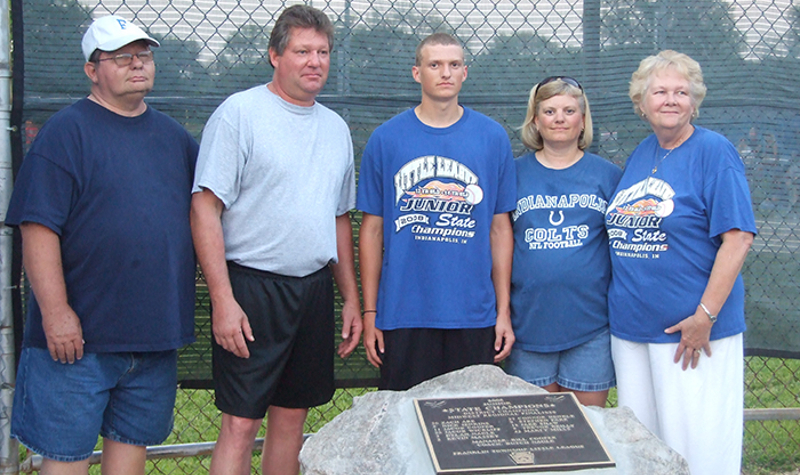
My name is Rick and Mike was my brother. Mike and I were not the kind of brother’s that talked all the time or spent a lot of time together. We were the kind of brothers that were always there for each other, no matter what. On Easter Sunday 2011 after having dinner together, Mike couldn’t remember how to get back to my home, I live in the neighborhood we grew up in. I believe it was at that time that I realized we were in real trouble. It was the last time I saw him. He died a few days later.

I had heard about CTE prior to that but never thought it would hit so close to home. I really don’t know what I would have done had it not been for Boston University and their results. It really brought comfort to know that it was not my Mike that did that to himself that day; that it was something else going on in his brain. Since his death I have learned so much about CTE and the things I have learned have made me realize that Mike had been suffering with symptoms of it for years and we never knew it. I just hope that someday they will be able to find a way to diagnose it in someone and be able to come up with some kind of cure or at least help for anyone who is diagnosed with it.

I miss Mike so much, but I know he is watching over us. He comes to us at important times as a Cardinal and I cherish it more than anything.


Suicide is preventable and help is available. If you are concerned that someone in your life may be suicidal, the five #BeThe1To steps are simple actions anyone can take to help someone in crisis. If you are struggling to cope and would like emotional support, call the Suicide & Crisis Lifeline at 988 to connect with a trained counselor. It’s free, confidential, and available to everyone in the United States. You do not have to be suicidal to call. 

If you or someone you know is struggling with concussion or suspected CTE symptoms, reach out to us through the CLF HelpLine. We support patients and families by providing personalized help to those struggling with the outcomes of brain injury. Submit your request today and a dedicated member of the Concussion Legacy Foundation team will be happy to assist you.
Claude Johnson

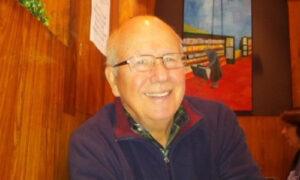
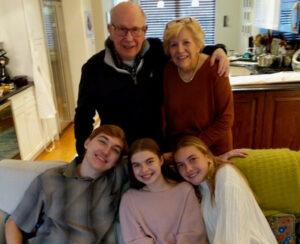
Claude Alton Johnson, proud son of Boone, N.C. and pride of Morristown, N.J., beloved husband of Tina, proud father of Christopher and Kathryn, died on July 5, 2022, after a long wrestling match with dementia. Unlike his matches as a cadet, this was one he could not win.

Claude was the son of Ola and Hal Johnson and grew up with his four siblings in the Appalachian Mountains. He was a fierce wrestler in high school, becoming state champion before joining the Army as a cadet. As a four-year letterman on the team, he wryly said he, “won more matches than he lost!”

Claude was one of the kindest, most warmhearted, adventurous, fun-loving, and caring people we knew. He loved life, and the ladies universally loved his soft, inquisitive Southern drawl, which he used to the fullest. A classmate once told Claude he thought it was great their Southern accents allowed them to bamboozle people.

During his freshman year, Claude met the love of his life, Tina. They were married at Holy Trinity Chapel at West Point in November 1968. Claude proudly served in the Army for five years as an Air Defense Artillery and Adjutant General Corps officer, and he received the Bronze Star Medal for his service in Vietnam. He spent a year in the Replacement Battalion at Long Binh. As the Liaison Officer to a refugee village outside Saigon, Claude was able to see many classmates and friends who came into the country or were going home during that year. On weekends, he would take “volunteers” (all the beer you could drink!) to work there. During their tenure, they built a school and endeared themselves to the residents. For his work, locals even gave Claude a gold medallion inscribed “Our Benefactor” and presented him with a proclamation calling him “Man of Our Hope.” The most difficult part of the assignment was the day he left Tina and his newborn son Christopher, who was only three days old at the time.

Claude’s subsequent corporate and entrepreneurial careers in data management and operations research afforded him even more exposure to the world. With his immense thirst for new experiences, travel was a real tonic. He lived by the ethic that a stranger was simply a friend he had not yet met. Millionaire or homeless, it never mattered; all received the same treatment. Claude just loved people. He was a selfless, honorable man who left a mark on everyone he met.

Claude had a special gift. His quick wit was wrapped in an enigmatic and wry sarcasm, often befuddling listeners as to whether Claude’s expression was simply inane or brilliantly astute. He loved the role, and it endeared him to everyone. In business as well as in the Army, he diffused situations with humor and charm.

Adapting to any situation was Claude’s specialty. Whether in a new position or in a new location, he was on it instantly. Through military and civilian assignments, he moved 15 times. It was always an enriching experience for him. His only mistake was presuming he had to own a house wherever he moved, even with several relocations within a year! Claude often said it was like witness protection but being allowed to keep your own name. His real estate advice was jokingly, “Buy high. Sell low!”

Claude had intense pride and love for his family: Tina, his wife of nearly 54 years; son Chris (Jenn) Johnson, and daughter Kathryn (Bill) Gates as well as three adored grandchildren, Hunter and Payton Johnson and Emily Gates. Besides being with the grandkids, volunteering and gardening were Claude’s true joys.

His volunteer efforts ranged from coaching high school wrestlers to working in soup kitchens. After retiring and living in Florida, he spent several hours a week at a local nursery. Other days, he and Tina worked in a school program assisting needy districts. Upon returning to Morristown, N.J., he volunteered at the Frelinghuysen Arboretum, where he was recognized as Volunteer of the Year. They also spent many happy hours at nourish. NJ, a community soup kitchen. Truly a Renaissance man, he would de-stress by creating masterful works of art in needlepoint!

As a result of his athletic endeavors, Claude selflessly and generously elected to donate his brain to the UNITE Brain Bank, where researchers diagnosed him with stage 3 (of 4) CTE. We hope his contribution will aid in the development of a blood test to isolate CTE and other dementia contributors, as well as effective drugs to combat them.

We will forever encounter Claude in our memories and our hearts. We will find him as he always was: clever, kind, caring, gently mischievous, and fiercely devoted to family and friends forever. He was easy to love…and still is.

Tom Johnson

On the morning of February 8, 2015, I received the call from Tom’s wife. She told me Tom was gone. At first, I thought she meant he had left. I guess in a way he did. He left in the middle of the night and escaped the demons that haunted him during the latter years of his life.

Tom was the youngest of my three boys. He grew up in Brockton, Massachusetts, which is known as the “City of Champions” because boxing legends Rocky Marciano and Marvin Hagler grew up there. Tom’s father left our family without notice when Tom was only three years old. Despite growing up in a single parent home, there was no shortage of love from myself and his two protective older brothers, John and Dave. Tom and his brothers were gifted athletes at an early age and played baseball, football, basketball and several other sports. As a single mom working multiple jobs, I was thankful for athletics to keep them busy and largely out of mischief. I could never have envisioned Tom’s gift for all sports, particularly football, would contribute to such a marked demise in his quality of life and a premature death. It’s a parent’s worst nightmare, and I will always struggle with this guilt.

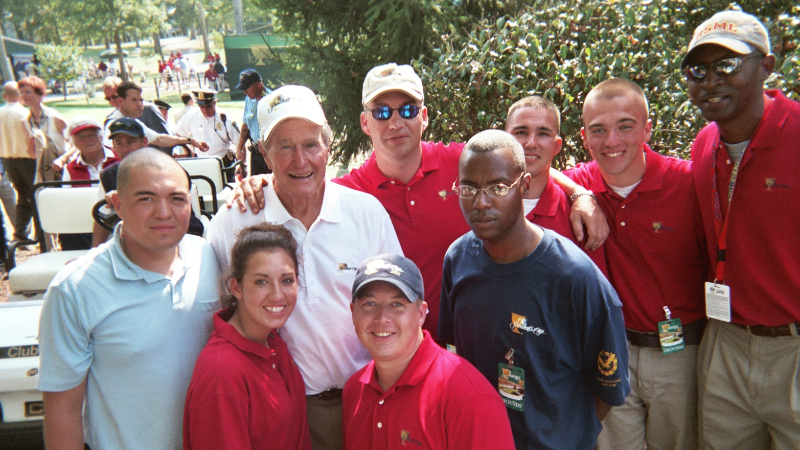
In addition to being a gifted athlete, Tom was an outstanding high school student, a member of the National Honor Society, and a very well-liked person. The combination of his athletic and scholastic talents made him stand out to his friends, teachers, teammates, and to his renowned high school football coach, Armond Colombo. Tom had strong beliefs about right and wrong, and he developed many lifelong friendships growing up in Brockton. Tom was an unconditional friend and his friends’ battles were Tom’s as well. His confidence and lack of pretense enabled him to converse with a homeless person just as easily as he could with President George H. W. Bush, who he met while attending the President’s Cup golf tournament.

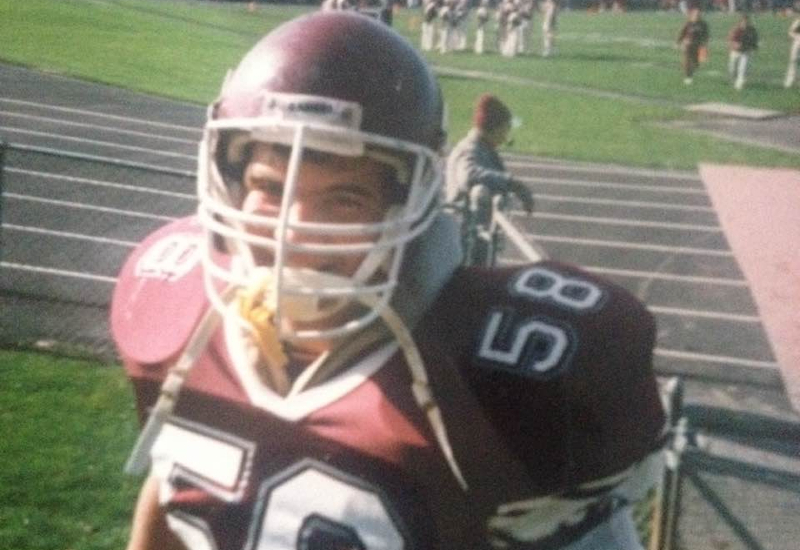
Tom played on the varsity football team as a freshman and was a star player each of his four years. This was a significant achievement considering the rich football history at Brockton High. The team went on to win three Massachusetts High School Super Bowl’s during the four years he played, losing only one time in his four seasons. Tom was co-captain and team MVP his senior year and named to the Enterprise All-Scholastic honors and selected to the Shriners All-Star team. Posthumously, Tom was inducted into the Brockton High School Hall of Fame in 2015.

Tom occasionally played fullback, but his primary position was middle linebacker. Tom loved battles, and at this position, he could outsmart, anticipate and use his speed and strength to tackle opposing ballcarriers. “It’s a gridiron war,” he and his teammates would often say. His teammates gave Tom the nickname “Captain Crunch” because he played with such reckless abandon to ensure his helmet connected with the ball carrier. Back then, Brockton players often compared helmets to measure who had collected the most dents and scratches throughout the season. The more damaged the helmet, the better. Tom’s helmet was frequently the most damaged.

During his high school football career, Tom suffered many “bell-ringers,” as they were called then. These were frequent, and not taken seriously by Tom, his teammates, or any of us. During one game against a team from New York, Tom suffered an especially serious concussion and was taken by ambulance to the hospital. Despite being diagnosed with a concussion on Saturday, he was back at football practice on Monday. During Tom’s high school years, 1985-1988, concussions weren’t newsworthy or ever a deterrent to sports.

Tom was offered several scholarships from various colleges and universities. He decided to attend Colgate University in Hamilton, New York. He played less in college than in high school, primarily due to a poor relationship with his coaching staff. In a game against Army his junior season, he suffered another serious concussion. He was not examined and diagnosed until several days after the impact and was sidelined for the next game. Soon after, people close to him noticed escalations in certain behaviors and we became concerned with his mental health.

Tom was always excitable and prone to fights, but after that concussion he became more erratic and he frequently escalated minor conflicts. He began drinking more often and acting out in ways that occasionally resulted in property damage and fights. At one point during his senior year, he was asked to take a leave of absence from school after an unprovoked altercation. Previous attempts by a girlfriend to get him to engage in therapy at school counseling sessions were short-lived. When Tom came home to be with his family for that year off from college, he told us about a traumatic incident that occurred during his childhood. After that admission, he willingly participated in therapy sessions and seemed to be on a great track as he returned to Colgate to complete his senior year and graduate in 1993.

After college, Tom moved to New York City and became an assistant specialist on the American Stock Exchange with the prominent firm Spear, Leads & Kellogg. He was considered such a prodigy at auction market trading that he was assigned to support one of the ASE’s busiest and most high-volume stocks: Motorola. After several years in New York, he realized how much he missed his family and friends and decided to move back to Massachusetts where he found work with Citigroup in their analyst program.

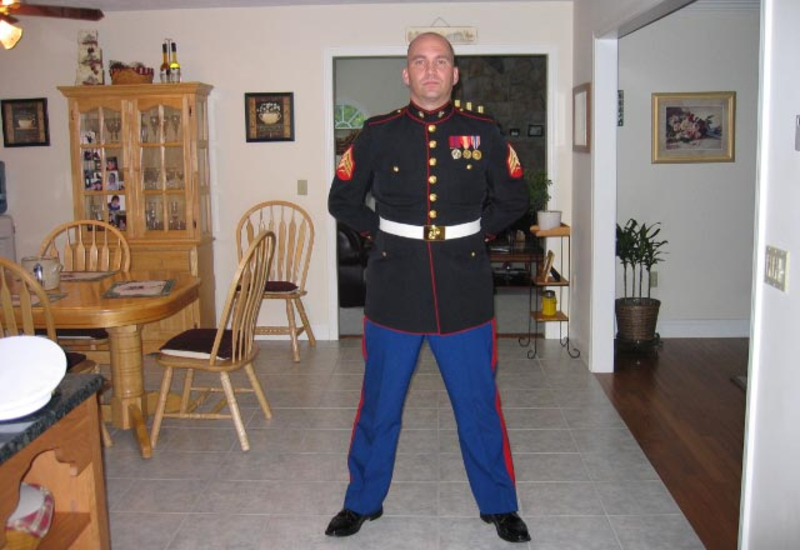
It was after a trip to Ground Zero to volunteer after the events of September 11, 2001 that Tom surprised everyone with his decision to enlist in the Marines. No one could have stopped him; he was incredibly determined to serve his country. In 2002, Tom departed for boot camp at Parris Island, NC before being deployed to Iraq. He served honorably on special operation tours and was awarded several commendations, including a Global War on Terrorism Service Medal, the National Defense Service Medal, and a Medal of Good Conduct.

Tom was discharged in 2006. Despite his commendations and awards, Tom was severely affected when he came back home. His behavior was erratic and irrational, his drinking was excessive, and his tendency to resort to violence escalated. He no longer resembled the incredibly loving son, brother, uncle, and friend we all knew. We were all concerned for him.

His condition grew worse with each passing year. In 2007, Tom attempted to take his own life. He was taken to a local hospital and then transferred to the Brockton VA Hospital for observation and treatment. He remained there for two weeks. He worked hard to convince his treating psychologist that he would be OK with outpatient therapy and he agreed to go to AA meetings. He seemed to be getting the help he needed and returned to spending time with friends and family. For these reasons, we saw the attempt to end his life as an aberration and not something we would ever revisit again.

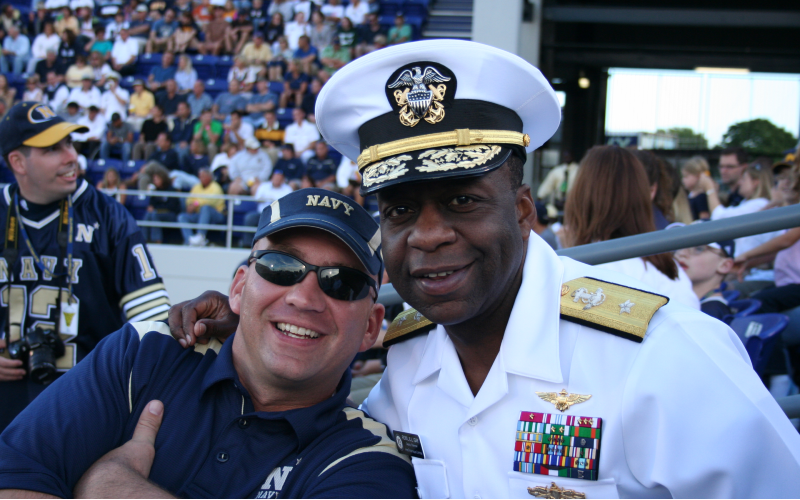
Soon after, Tom received a job offer to work at the Naval Academy Prep School (NAPS) in Newport, RI. For a few years at NAPS, he was at his happiest professionally and seemed to be on the most positive trajectory. He worked as a system engineer and volunteered as an assistant football coach, mentoring kids who he truly loved. He also obtained a Master’s in Science Communication from Stayers University in Virginia. All seemed to be going great for Tom and I had never seen him happier.

The changes began to creep into our lives so slowly it’s difficult to pinpoint exactly when they began. Perhaps the first blow can be tied to when the chain of command at NAPS changed and Tom was informed his position and coaching role would be eliminated, along with his assistants. He was living away from home, so I did not see him enough to notice any day-to-day issues. Following an altercation at his brother’s home, he admitted himself to a drug and alcohol rehabilitation facility on Cape Cod. He maintained a position with NAPS, but they were now aware of his struggles and were initially very supportive to his illness.

Next, Tom bought a home in Middleboro and invited his fiancée and her son to live with him. They married shortly afterwards. Over the next two years he and his wife participated in AA programs, but would continuously relapse, rehab, and relapse again. He lost his job and his home life was volatile and unstable. For a while, Tom was very open to receiving help. Around this time though, he became more rigid in what treatments he would participate in. He did try a long-term rehab program at the VA where he was diagnosed with PTSD. Doctors also considered a bipolar diagnosis and he was given medication. At that time, no one knew the true cause of his suffering.

A physical altercation then led to jailtime for Tom. After he was released, he seemed to lose all enthusiasm for life and his fighting spirit. An athlete who loved engaging in physical activities no longer cared about exercise or maintaining a healthy lifestyle, allowing his overall health to deteriorate. Most notably, he cut off communication with lifelong friends and family, essentially anyone who was trying to help him help himself. His lifetime of sociability and gregariousness contrasted with his devolution into reclusive behavior. His close relationships with his two older brothers whom he idolized became contentious, fraught with tense accusations, and even violent.

In December 2014, Tom called me crying to say he believed he was dying. We had the Middleboro police go to his home and escort him to the Bedford VA hospital. Tom called me after arriving to thank me for saving him, but he asked that I not visit since he had a lot of thinking to do. Sometimes that conversation haunts me. I questioned whether I should have overruled his request and gone to visit him. I was entirely unaware that he left the hospital and the program he was enrolled in until I received the call that he had died. Though I told him countless times during his difficult years, I never got the chance to tell him then how proud I was to be his Mom. I never got to remind him how I still loved him to the moon and back and always would.

During the final years of Tom’s life, he did his very best to tackle the mental pain and anguish he suffered like he had when he was a football player. He would often complain of excruciating headaches and say how he couldn’t rein in painful, rambling thoughts. We attributed the symptoms to Tom’s tendency to overthink or to his alcohol abuse. Even when he didn’t appear to be trying, Tom was fighting an internal battle with his entire being, a battle within that was unwinnable – mentally and physically. There were times when we thought he was getting better, but it wouldn’t last. None of the numerous hospitalizations or stays in rehab facilities to recover his life could bring Tom back to a place of calm or equilibrium. His life became what he described as an unrecognizable, living hell.

A few times when I went to his side and held him, he would ask me to please pray with him and his prayer was always the same, “Mom, please ask God to bring me home. I don’t want to live like this anymore.”

At the time Tom passed away, our family knew very little about CTE until his brother-in-law, Kevin Haley, notified us about the Concussion Legacy Foundation. He suggested we donate Tom’s brain to be studied for Chronic Traumatic Encephalopathy, or CTE. We decided to donate his brain, and about a year later, researchers at the UNITE Brain Bank diagnosed Tom with CTE.

I will always be extremely grateful to Kevin for providing this information and helping us complete the brain donation process. Learning about CTE has changed our lives and aided us in our grieving process. Gaining an understanding of what was happening within my son’s brain helped us understand those years where we could not comprehend his changes. We just wish we had known sooner, before it was too late to make a difference for Tom. The most important thing now is to continue the work and to expand the awareness for other families experiencing what we did and provide them with hope, and measures they can take for someone they love.

I want to extend my heartfelt thanks to Lisa McHale and Dr. Ann McKee and the entire research team for their painstaking diagnosis and patient explanation of the pathological findings. For me, my family and everyone else who loved Tom, the CTE diagnosis helped explain the devastating effects on Tom’s life and greatly assisted us in healing from his death.

Tom is missed every single day, but no longer are our memories fixated on the events of those traumatic final years because we’ve been blessed with an ability to understand what caused them. We now remember Tom as he was before he began to experience the symptoms of CTE. The son, brother, uncle, friend, and person he was is the memory that will forever live in our hearts.

If you or someone you know is struggling with probable CTE, or lingering concussion symptoms, ask for help through the CLF HelpLine. We support patients and families by providing personalized help to those struggling with the effects of brain injury. Submit your request today and a dedicated member of the Concussion Legacy Foundation team will be happy to assist you.
Ron Lorentzen


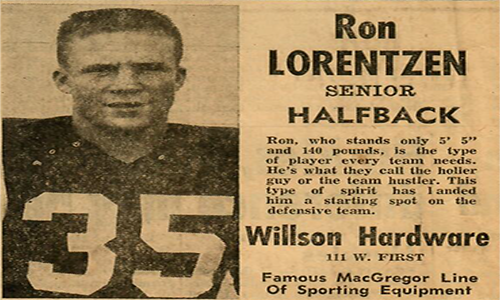
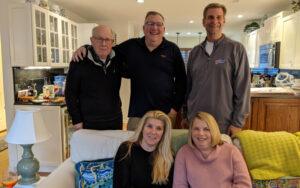
Ron Lorentzen played middle and high school football in Port Angeles, Washington. He went on to become a cheerleader at the University of Washington and served as a Seabee in the Vietnam War. Around 2002, Lorentzen began to struggle with his memory and other neurological issues. He died on September 16, 2019 at 75 years old. After his death, his brain was studied at the UNITE Brain Bank, where researchers diagnosed him with Stage III (of IV) Chronic Traumatic Encephalopathy (CTE). His first wife Sandy wrote his Legacy story to share how CTE afflicted Ron in the hope his tragedy can prevent future cases of the disease.


Our big question now has an answer – Ron suffered from Chronic Traumatic Encephalopathy (CTE), Stage III (of IV). Thanks to the VA-BU-CLF Brain Bank, I also realize there was no saving him. The timebomb had been ticking for perhaps a decade before we met. Unanswerable questions remain. Could we, would we, have lived differently, knowing middle and high school football would be his undoing? Comparing Ron’s fate to most others in the Legacy Donor Gallery’s Youth and High School section, so many dying in midlife or early adulthood, and worse, in their teens, I find a new definition of lucky. At least Ron got to live out seven decades, albeit often in poor health.

Back in 1966, two quarters before college graduation, his life was upended by skipping a second ROTC reserve weekend to study for finals. He wound up in boot camp three weeks later and then the Seabees, attached to a Marine construction battalion on the Chu Lai and Phu Bai military bases in Vietnam.

After two eight-month tours of duty, Ron returned to the classroom. We met then and married a few months later. He was funny and kind. Getting acquainted, he spoke little of Vietnam, more about his happy high school years, mostly on the football field as a defensive linebacker and offensive halfback. He was voted honorary co-captain and was admired for going all out, winning the inspirational player award twice.

Off the field, he had been involved in everything; named Boy of the Year by a civic club, junior class president, homecoming royalty, and parent student council member. Too small of stature to play college ball, he joined the University of Washington cheerleading squad and served as pledge chairman for his fraternity. He brought home two medals from the war, both awarded to him for diving competitions in the Olympics of Hue, imperial city on the Perfume River. On separate outings, I watched him save a toddler from being swept into the ocean, and a young man he noticed floundering in a river’s eddy.

With the war and college now over, everything seemed possible. Ron landed a job at a Seattle advertising agency and then segued into broadcasting, eventually becoming a producer. We discovered classical music, theater, and art galleries. He developed new talents such as drawing freehand pen and ink replicas of buildings, calligraphy, constructing furniture, and remodeling. He built a darkroom in our apartment and became a fine photographer.

Symptoms of ulcerative colitis began by age 30. In 1999 his colon was removed, and miraculously his gout disappeared too. He anticipated, at last, a life free of pain. A biopsy performed during the surgery revealed primary sclerosing cholangitis, an inflammatory condition of the liver diagnosed in children and adults. More than 75 percent of people with PSC also have colitis, and a liver transplant is the only cure. He gave no thought to this new potential death sentence. By then, we had gone our separate ways. He had become a San Francisco TV talk show producer and married the host.

They were retired, living in wine country with a summer home on the Russian River when Ron’s CTE symptoms surfaced in 2002. He awoke one morning confused, suffering from what ER notes described as “global amnesia, an episode of sudden transient memory loss and lightheadedness.” Quizzed on examination, he got the year wrong, he couldn’t remember the president’s name or recall three objects after five minutes, but he was able to correctly interpret a proverb and count backwards from 100 by sevens. A few months later, he felt lightheaded on the golf course. Seven months after that, he experienced what was diagnosed as a complex partial seizure and prescribed an anti-convulsant. From then on, Ron’s life became a maelstrom of emergency room visits for neurological symptoms that came and went, a battle with alcoholism and a dissolving marriage.

In 2011, Ron’s niece Jennifer began inquiring about his well-being. She learned divorce papers had been filed and after a third in-patient rehab, Ron was transferred to a Santa Rosa group home. Recently fired for slipping Ron liquor, a female staffer was continuing to ask him for money by phone. Unwilling to let this be his fate, we decided to go rescue him.

To sort things out, Ron moved in with Jennifer and her family in Arizona. As his health continued to decline, he needed more help, so after a few months he moved to a group home in Scottsdale. There he remained. Cloistered from life itself, he easily maintained sobriety, rarely left his bedroom, and talked to Jennifer and me by FaceTime. We spoke 20 times a day in his last two years. During our divorce so many years before, we said maybe we could be happy together again when we were old, and in a way, that’s how things turned out. It mattered not that I lived far away, had a new partner and a daughter. To us, divorce seemed a technicality when it came to the vow of in sickness and in health.

In February of 2019, the group home called to say Ron was losing weight. By July, hospice was suggested. Never one to complain, he remained his usual sunny self on FaceTime, so this alternate reality felt more like a dream. When Jennifer and I visited in August, he was subdued but seemingly comfortable. We held hands, talked about the upcoming election, about old times, and listened to our favorite music. I asked where he thought we should donate our bodies when our time was up. For him, the Boston University Brain Bank was the obvious choice since he had mentioned many football concussions. After games, Ron said he would sometimes wake up on the school bus heading home with no recollection of coming off the field.

Do people know they are about to die? If Ron did, he did not let on. Two months before, perhaps he had an inkling. One evening he said he thought we should separate. Since we lived in different states and almost never saw each other, I asked why. In the preceding months, Ron’s speech had become somewhat garbled and I would often ask him to repeat himself. He explained he thought my mind was so much deeper than his. Maybe he was having trouble following some subject I had blathered on about in a previous conversation. But he called again twenty minutes later and again said we should separate. Was it his way of letting me know we soon would? Maybe it meant nothing. His final evening over a stretch of several hours, he called 50 times and then we said good night. At 3 a.m., he went to the bathroom, returned to his room, and died in bed. I’m comforted by the idea that until his final minutes when he vomited blood, Ron may have thought it was a night like any other, and if he was in pain, he didn’t know it was his last.

His life was exuberantly and tragically lived. Knowing that his fate might now help improve the lives of others with CTE, or better still prevent the condition, would give him great satisfaction, and in that, there is solace.


Julian Merlino


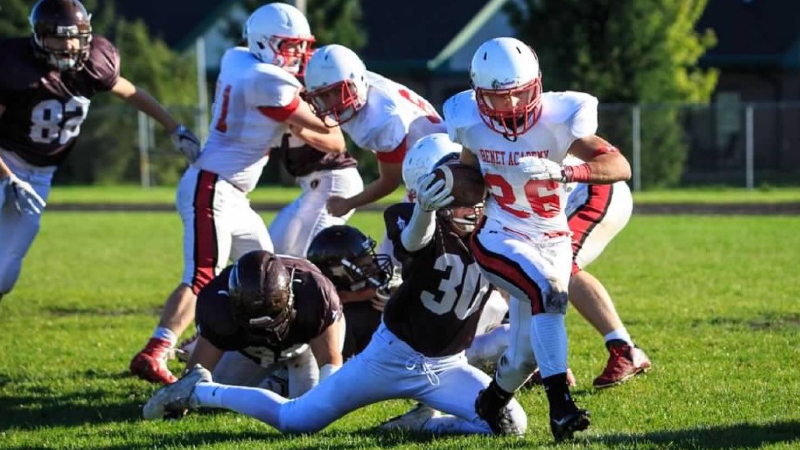
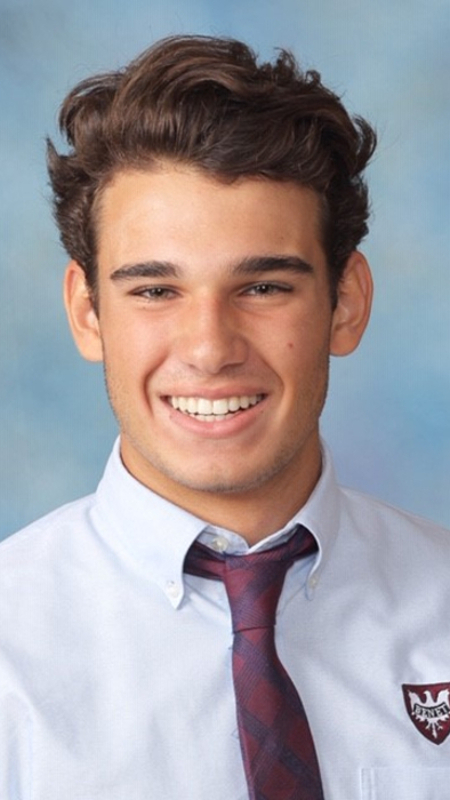
Julian Alexander Merlino loved dancing hip hop from the time that he was 5 years old. As a young boy, Julian was diagnosed with depression and anxiety, which made him feel shy and insecure. Whenever he danced hip hop on stage, his fears would disappear. Little did he know, his years of dancing hip hop would be a great transition into playing football. Julian began to play football in the 7th grade.

Unfortunately, during the first game, he took a helmet-to-helmet hit and was concussed. He was out for several games and missed numerous days of school.

In 8th grade, Julian suffered another concussion. This one kept him out for two weeks and the remainder of the season.

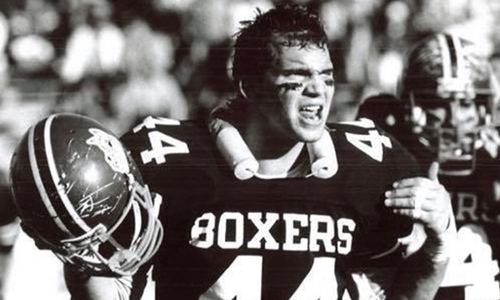
He played for almost two more seasons as a running back — #26. Julian was a beast on the field. During his freshman and sophomore years playing football, Julian never complained of concussions, probably because he knew that if he was concussed one more time he’d be out of football for good. However, Julian’s friends would notice that he was visibly shaken and unwell after games.

During his sophomore season, Julian began to miss football practices and school. He began losing interest in his greatest passion. His behavior became aggressive and he was irritable. Two months later, on December 30, 2017, Julian took his life at age 15.

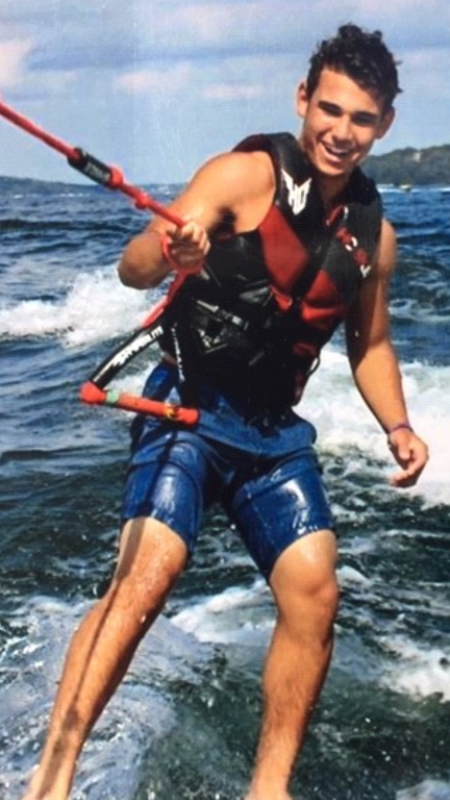
Julian loved spending time with his family, girlfriend, and friends. He enjoyed discovering the newest hip hop music. When he wasn’t in his hometown during the school year and playing football, he enjoyed endless summer days boating and surfing on the lake with friends. He was a jokester and prankster. Julian is missed terribly by his family and friends.

In search of some answers and to help others, Julian’s family donated his brain to the UNITE Brain Bank. Julian was the youngest brain donor in the history of the Brain Bank.

A message of hope from Julian’s parents and sister:

We want anyone reading this who may be feeling chronic debilitating pain, desperate, lonely, or depressed to know that things will get better! Don’t let your struggles define you! Reach out to a friend, family member or coworker.  You are loved! With help and support you will feel well again. You are not alone! Don’t give up hope!

Julian’s mom, Elsa, is a mental illness and suicide support advocate for families who have lost a child or family member to suicide. Elsa personally writes letters of hope to others who have suffered the unimaginable. It’s a simple gesture to let these moms know they are not alone. When suffering from suicide grief, it means the world to these moms and family members that they are not alone.

Suicide is preventable and help is available. If you are concerned that someone in your life may be suicidal, the five #BeThe1To steps are simple actions anyone can take to help someone in crisis. If you are struggling to cope and would like some emotional support, call the 988 Lifeline at 988 to connect with a trained counselor. It’s free, confidential, and available to everyone in the United States. You do not have to be suicidal to call. If you’re not comfortable talking on the phone, consider using the Lifeline Crisis Chat at www.crisischat.org.

If you or someone you know is struggling with lingering concussion symptoms, ask for help through the Concussion & CTE Foundation HelpLine. We provide personalized help to those struggling with the outcomes of brain injury. Submit your request today and a dedicated member of the Concussion & CTE Foundation team will be happy to assist you.
The Merlino family would also like to bring awareness to the Depression and Bipolar Support Alliance (DBSA). The vision of the DBSA is for wellness for people living with mood disorders (depression and bipolar disorder). Their mission is to provide hope, help, support, and education to improve the lives of people who have mood disorders.