Jason Franklin


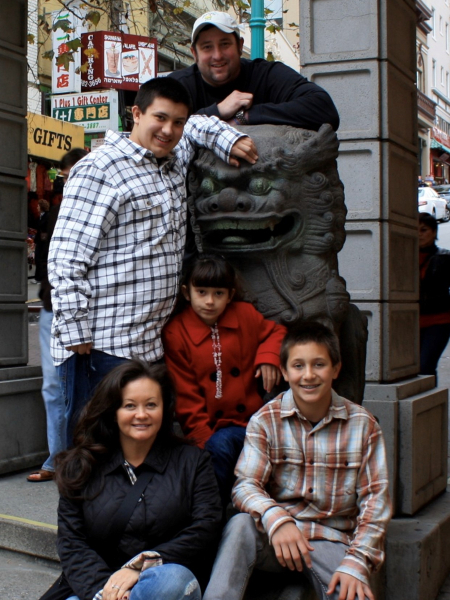
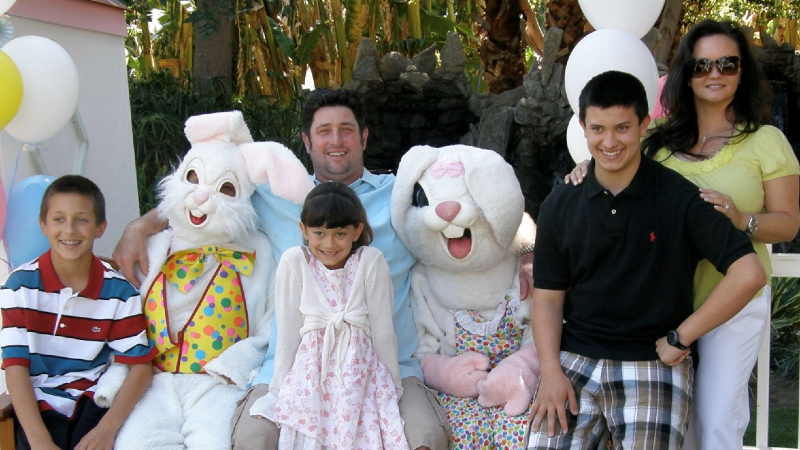
It had been a tough four months. Something was going on with our only child Jason, and we did not understand it. Our happy, popular, life of the party, college football-playing kid was suddenly experiencing all sorts of “crazy” emotions and physical reactions. Rage, depression, paranoia, sleeplessness, and severe headaches. He was closing himself off from friends. What was causing this? What should we do? As the issues progressed, he moved away from us in Southern California to Arizona. But we did everything we could to continue to help him. He came home the weekend of June 30 and then again the weekend of July 4. On that second weekend, he seemed to be doing a little better. He even got a gap in his teeth fixed. Then on the night of July 14, 2018, just five days after he left to go back to Arizona, our doorbell rang. It was a police officer. She told us our son was found dead in his bathroom in Arizona. It was the end of our lives. Our only child was gone and with him, our future. A future without my son, without grandkids, without the dreams I had that were so deeply woven into the thoughts that swirled in my heart and mind.

The happiest, funniest person I knew

Jason Garrett Franklin was born May 6, 1992, in Los Angeles, California. He came into this world the happiest baby bringing joy to everyone around him. He didn’t cry much. He just laughed and smiled. Everyone told me how lucky I was.

Jason was the most social person I think I have ever met. He and I shared the gift of gab and the desire to entertain and engage everyone we met. Jason entertained everyone constantly, whether it was one on one or in crowds. He had his goofy impressions, crazy dance moves, amazing stories, and hysterical high-pitched laughs.

His vice principal at Chaminade College Preparatory School in Los Angeles told a story about how whenever he would have a prospective family walking with him around Chaminade, he would seek Jason out. Jason would introduce himself and spend the next several minutes telling them about the school, the teachers, the students, you name it. I am sure he convinced many a family to bring their children there. He could truly talk to anyone about anything.

Sports and football

Jason loved sports. He played so many, but baseball and football were his favorites.

He played baseball from the age of two through 18. Like everything else Jason did, he jumped right in to T-ball. He had no shyness at all. He walked up to the four and five-year-old’s in the program and introduced himself. In the outfield Jason would jump up and down with the same joy and happiness he maintained throughout his life.

During Jason’s final year of youth baseball, his 13 year-old all-star team made it to the Pony World Series before losing 1-0 to Puerto Rico in the finale. Jason was crowned the World Series batting champion.

In high school, Jason played for the Chaminade Eagles baseball team. He loved his teammates and had the greatest time in the dugout motivating and inspiring them.

Baseball was great, but Jason fell in love with football. He believed it was a better fit for his personality. He loved the camaraderie, the importance of working together as a team and the thrill of making big plays. I loved to watch him play, but I was always afraid he would get hurt.

Jason had such joy and excitement on the field. He’d boisterously rejoice every time he made a big play. Half the time he would get warnings by officials to manage his celebrations, but light reactions were not in his nature. Jason’s high school teammates loved his halftime speeches. Only they know what he said, but I am sure he was motivational and made everyone smile in the face of any second half adversity.

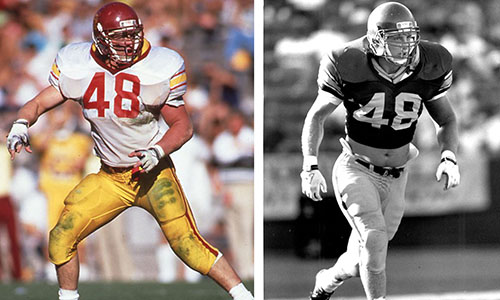
Jason received scholarship offers from small schools to play football, but he wanted to be a part of something bigger. He chose to walk on at Arizona State University after being contacted by a linebackers coach. We supported his decision as we saw how much it meant to him to be a Sun Devil and play in the Pac-12. It was his dream come true.

At ASU, Jason’s personality was on full display. His natural charm landed him roles in front of the camera as a host and entertainer with shows such as “Franklin Knows Best.” He created his own blogs, “Pregame at Franklins” and “Excuse My Moderation” where he discussed his opinions on all sorts of subjects. “Franklin Knows Best” was my favorite. It was a feature show on NBC 12 Sports in Phoenix. It was Jason at his best, coaching a girls’ powder-puff football team, interviewing kickball players, trying out for the Phoenix Mercury practice squad, riding in a supped-up car on a track, dressing up and throwing axes at the renaissance fair. The station put him in many bizarre situations, and he was hysterical every time. You can see examples of Jason’s work at www.jasonfranklin55.com.

At ASU, Jason was a scout player for much of his career. Most scout players quit because they get inferior equipment, they aren’t respected by the coaches, and they take abuse with little shot at playing time. But Jason did not quit. Jason knew his job was to make the team better. There was no glory in it for him. It was about his team. Of course, Jason was not completely selfless. He did yearn to be recognized for his efforts. He was ecstatic when he earned a scholarship from ASU in his junior season.

“There are no words that I can explain. All the work we have put in. All the hours. Some of these guys, they get their school paid for. We did it voluntarily because we love this game,” said Jason at the time. “To be a walk-on on this team for as long as we have, you got to look at it as a game and you got to love this game or else you won’t survive.”

Our last football memory with Jason came at Jason’s last ASU football banquet following his final season. During the banquet, the various MVP’s were named. Then the Glen Hawkins Award for Scout Player of the Year was announced. We could tell from the speech that the award winner was going to be Jason and our family became extremely excited. When they named Jason as the winner, we stood up and cheered and then to our utter amazement we saw the entire ASU football team stand up and cheer more for Jason than they had for any other player that night. It was evident how my son was beloved and respected by his teammates.

The injuries

Jason was lucky with injuries in his youth and high school football career. That luck changed in college.

Jason suffered one concussion during his first couple of years at ASU. Then in August 2014, just after receiving his scholarship, Jason suffered a severe concussion. At the time, a company named TGen had been placing sensors in football helmets to track the impact of concussions through blood and urine analysis. After Jason’s concussion, he was told it had been the worst hit they had recorded. They also noted his blood and urine counts were the highest they had seen in any athlete after a concussion.

Jason was taken out of play for about a week. A week later, he was put back in and almost immediately sustained another concussion. We’ll never know if this was really a new concussion or further damage associated with the original concussion. He was taken out again for a couple of weeks. Once again, right after he was put back in, he sustained a third concussion. After this last concussion, he was really hurting. He was taken out of play for about a month.

After the third concussion, I was concerned the team should not let him play again and he went to see his team neurologist. The team neurologist indicated Jason had passed all the tests and was clear to play. The decision was up to Jason. Of course, Jason wanted to play and so it was. He played two more seasons after that. To this day, I believe the doctor and coaches should have stopped Jason from playing again.

Jason’s friends noted his personality changed for about six months after this series of concussions. In fact, Jason also noted this in a Cronkite School News documentary and in an ESPN special on concussions.

Jason’s last four months

It was Easter Sunday 2018 when we first really noticed an issue. We took Jason to brunch. He hardly ate anything. He seemed very agitated. Our conversations with him over the next several weeks were very difficult.

Then on April 29, things seemed to completely go off the rails. We were going to Jason’s house in Arizona to meet him for lunch. When we arrived, we discovered he left the house through a window in the bathroom. He did not arrive back home until about 6 p.m.

We came back when we heard he was home. We found multiple neighbors standing outside around the house. Jason came running out of the house telling me his roommate had a gun and was trying to kill him. The police were called. They believed Jason was suffering from some sort of psychotic episode and suggested we take Jason to the hospital immediately. We tried to persuade him but he refused to seek help.

We took Jason back to our house in California. He ate a little and then went to sleep. Not too long afterwards, Jason woke up and started saying his dad was going to kill him. He said he heard us talking. He started to get more and more agitated. He was enraged and telling us he would kill us first so we couldn’t kill him. We kept telling him that we loved him and would never hurt him. Given Jason’s size and strength, I knew we could be at risk, so, I dialed 911. The police talked to Jason and decided to put him on a 5150 hold, which is a three-day hold to ensure a person is not violent or suicidal.

The day after Jason was released from the hold he decided to go back to Arizona. I tried to stop him, but he was determined to go.

About three weeks after Jason returned to Arizona, he began having headaches and started hearing siren-like sounds in his head. He went to the hospital, but doctors could not detect any issues.

In early June 2018, we noticed Jason was spending less and less time on social media and stopped all of his blogging and video activities. He was also not returning calls to his old producer who was trying to get him to start the “Franklin Knows Best” segments again. He stopped responding to e-mails. He missed one of his best friend’s weddings. We talked with him consistently during this time and even drove to Arizona a few times. But he continued to say he was OK.

“I’m just a little tired,” he’d tell us.

Our concern grew as we saw his agitation and anger level growing. Jason was seeing a psychiatrist, but the psychiatrist said he saw no signs of mental issues other than normal growth concerns for Jason’s age.

Jason returned home to California for both the weekend of June 30 and over the Fourth of July weekend. He seemed more withdrawn than ever and would get lost in long, blank stares. He was not sleeping well. He was having memory problems. He had no money and couldn’t remember how to get more money out of his bank account. He would go for long walks to try and calm his head.

He returned back to Arizona on July 9. A couple of days later he cancelled a date with a girl via an odd, nonsensical text. On the evening of July 13 he went walking at 11:00 p.m. and did not return until sometime the next morning on July 14. After returning, his roommates said he seemed fine. Both of them left the house and sometime after they left, Jason took his life. According to the toxicology report, Jason had no drugs or alcohol in his system at the time of his death.

The diagnosis

After Jason passed away the coroner in Arizona, who was familiar with Jason’s history, recommended we donate Jason’s brain to Boston University to be analyzed for Chronic Traumatic Encephalopathy (CTE). It was at that point that everything started making a little sense. Could this have all been a result of injuries he sustained playing football?

Dr. Ann McKee, Director of the UNITE Brain Bank, performed the brain pathology analysis. She found Jason was suffering from Stage 2 (of 4) CTE with nine CTE lesions throughout multiple parts of his brain.

When Dr. McKee did the initial Coronal dissection, she noted Jason had something called a Cavum Septum Pellucidum (CSP). It had deteriorated along with the space present between the two sides of his brain. CSP is one of the distinguishing features of individuals displaying symptoms of CTE.

The CTE damage was mostly in the frontal lobes of the brain that control impulse, judgement, violence, aggressive behavior, depression, and suicidality. Dr. McKee indicated the disease was advanced and shocking for a 26 year old. The pathology report showed the nine CTE lesions in Jason’s brain were easy to see and were found in the motor cortex, superior frontal cortex, inferior frontal cortex and dorsal and lateral frontal cortex. Dr. McKee noted that Jason had probably been suffering for longer than we were aware.

Football is now a conundrum for me. We have always loved to watch the sport. But, given that football was a major contributor in my son’s death, how can I still love and watch this game?

Jason loved the sport of football from the core of his being and he would be devastated if he found me trying to do things to end the sport. So, as I begin my search for a new purpose in life, I have to keep in mind both what my son would have wanted me to do against my own feelings about the game and its impact on our family. I am certain that I will work to seek changes in football, especially by advocating for youth athletes to play flag football instead of tackle football. I will also support those who are trying to better understand, diagnose and treat CTE and, of course, I want to help further enhance concussion protocols, hit counts, treatment of scout players, and advocate for better rules regarding forcing medical retirements.

I vow to do all of this, but to work to eliminate football entirely, that I cannot do. It would break my son’s heart.

A way to move forward – I Got You Day

Jason lived his life trying to make a positive difference to everyone he met. His vibrant personality allowed him to command every room he was in. He loved people and was always there for his friends and family.

It was important for us to honor Jason’s life through positivity. One of Jason’s favorite sayings was “I Got You.” He used it all the time for so many positive reasons. In honor of Jason, we decided to celebrate his birthday of May 6 each year as “I Got You” days. Each May 6, we will spend the day trying to help others and trying to show them that there are people out there who “got them” and are there to help get them through their day.

Our first “I Got You” day was in 2019. Our family delivered clothes, food, personal care items and toys to homeless shelters, to homeless people we encountered on the streets, to animal shelters, to food banks and to children’s hospitals. We asked our friends and family to help spread the “I Got You” spirit and they delivered beyond our expectations. We will continue “I Got You” day every year and promise it will grow and grow.

Jason, dude, I will miss you and love you for the rest of my life. I promise to keep your spirit alive until we are reunited. Just know, “I Got You.”

Suicide is preventable and help is available. If you are concerned that someone in your life may be suicidal, the five #BeThe1To steps are simple actions anyone can take to help someone in crisis. If you are struggling to cope and would like some emotional support, call the 988 Lifeline at 988 to connect with a trained counselor. It’s free, confidential, and available to everyone in the United States. You do not have to be suicidal to call. If you’re not comfortable talking on the phone, consider using the Lifeline Crisis Chat at www.crisischat.org.

Luke Frey

As a child, Luke loved anything that was blue, and it just so happened his favorite animal was a lion. One Sunday while watching football with the family he discovered the Detroit Lions and became enamored with Barry Sanders and the game of football. He spent the rest of his life dedicated to the game, and he told everyone he “bled Honolulu Blue.”

Luke was a great all-around athlete from a young age, playing baseball, soccer, basketball, ice and street hockey, running track, and of course football. He played wide receiver, tight end, safety, and wherever else the coaches needed him. Later in his career, he focused on kicking. He was a four-year Varsity player for the Fair Lawn High School Cutters, and he went on to join the team at Pace University, where his football career ended.

During his life Luke suffered numerous injuries, and a majority of them were to his head. He was eight years old when he suffered his first concussion while rollerblading. The next two happened during junior football, the second of which involved him being taken off the field in an ambulance. Two more concussions came in high school, the first by sliding in a high school baseball game and another from a hard hit during a football game. His final concussion took place in college and ended his playing career for good. When he lost football, he started to lose himself.

This could not have come at a worse time. The loss of football was followed by the loss of our father, a man of many hats. Among his roles were the Superintendent of Parks and Recreation, a Board of Education member, basketball and baseball coach, and his favorite role: dad. Our dad always found ways to give back to the community and his family. Losing a parent is hard enough, but when you lose someone who believes in all the potential you have in this world and who you idolize more than anything, you succumb to the negatives in life. Luke sunk into a depression, left school, and dealt with frequent headaches and the frustrations from short-term memory loss.

After losing himself and the opportunity to play the sport he loved so much, Luke turned to coaching. He volunteered to coach a Pee Wee football team in his hometown’s football association. This brought a light to Luke’s eyes we hadn’t seen since he had to give up playing the game himself. Luke chose to coach because he knew if he could not play, the next best thing would be to educate the younger generations about a game that meant so much to him. Not only did Luke coach these kids, they would reach out to him during the offseason just so they could get a workout in or spend time with him at the fields. When Luke stopped being involved in the town’s football association, he began to lose himself a bit more.

Luke was always the happy-go-lucky, funny, charming, class clown with a heart of gold. He was liked by everyone and would give you his last dollar. He was full of love and laughter and brought joy to those around him. He was both a brother and best friend to his three sisters and did everything with his family.

But over time, he became more depressed and angry. He had difficulties comprehending what he was reading and would have to reread a paragraph multiple times. He would have to rewind the same scene on the TV over and over until he could move on to the next. He could go from being calm to punching a wall within seconds when something suddenly set him off.

This led him down a dark path in which he chose to self-medicate to ease his headaches, help him sleep, and stop the voices he was hearing that told him he was worthless. Self-medicating led him to harder drug use and eventually he started sleeping all day, couldn’t hold a job, and broke relationships with those closest to him. He finally hit rock bottom and went to rehab. He cleaned himself up for a few years and then relapsed before going back and getting sober.

Luke then met his amazing fiancé Emily and became a dad to Meadow. Meadow became his reason for living and he was his happiest being a dad, even if it was for a short time.

Even when he was happy, Luke told us all that there was something wrong with him. Always a football fan and reading every article and watching any documentary that pertained to the sport, he learned about CTE and researched it further. He felt he had some of the symptoms and was frightened for his future. He always made it known to his family that he knew he was not long for this life and that if something should happen to him, he wanted to donate his brain tissue for CTE research. He wanted to be a part of the research, to help find a way to show its effects, to help prevent it, to help find treatments, and most importantly to help those who love sports be able to play them safely.

During his final days, our family discussed his wishes and called Boston University to see what steps needed to be taken before we lost him. I like to believe that donating to the UNITE Brain Bank was Luke’s last wish and it was my job to help him achieve it. On January 3, 2019, Luke passed away of a stroke. He was 31 years old.

Thirteen months after his death, we learned Luke was diagnosed with Stage 1 (of 4) CTE. While there are still many questions and possibilities about whether or not his diagnosis helped contribute to his mental health issues, his drug use and his death, it is reassuring to know there was something that may have changed him from the boy we knew. I felt a huge relief and closure for Luke, knowing that he was right, that he knew his body and knew this could be why he chose to donate, and that he wanted his legacy to be one that could help bring awareness to young athletes like himself.

We hope if anyone takes anything out of Luke’s story it’s to know how much he loved his friends, football, and his family with everything he had. We also want others to not give up on loved ones who’ve suffered from concussions and head trauma. They are invisible injuries with effects that are hard to quantify. We do not know what they are going through mentally, how they’re thinking, how they’re feeling, or what type of pain they are suffering from. We need to stop pushing them to get back to their sports before they are healed enough to do so. Concussions aren’t to be taken lightly. What should matter is the health of each athlete.

-Written by Katie Frey (sister) on behalf of Joan Frey (mother), Maggie Quinn (sister), Kasey Frey (sister), Emily Costello (fiancé) and Meadow Frey (daughter)

Luke also leaves behind his nephew River Frey and nieces Peyton Quinn and Reese Pinsdorf, brother in laws John Quinn and William Pinsdorf, and his Aunt and Uncle Kathleen and Peter Drozd.

He was predeceased by his father George Frey, and a local scholarship is given each year in their honor for young athletes who have dedicated their time to coaching, working, or volunteering for the community.

George and Luke Frey Memorial Scholarship
28-06 Madison Terr
Fair Lawn, NJ 07410


Matthew Garver, DVM

Dr. Matthew Garver was a star athlete at Wayne Community High School in Iowa. He participated in the Shrine Bowl and went on to play college football at Kansas State University where he graduated in 1990 with a doctorate in veterinary medicine. As an offensive lineman, he faced repeated head trauma on the field at every practice and game.

Dr. Garver was determined and kind. He was a leader in his community and an amazing dad. He built his veterinary clinic from the ground up and made it a flourishing practice. Often, it seemed as though there was nothing that he could not accomplish.

But later in life, Dr. Garver began experiencing early symptoms of CTE, including erratic emotions, impulsive decision-making, and eventually memory loss. After his death in 2021 at the age of 55, he was diagnosed with stage 2 Chronic Traumatic Encephalopathy (CTE) at Boston University’s CTE Center.

Dr. Garver’s family’s wish is that his story brings attention to the disease and makes others aware they are not alone.

Matt Gee

Matt Gee won. Habitually.

He set national records in high school. He won two Rose Bowls in college. He married the girl of his dreams. He ran a successful business. He once entered a raffle to win a car at his son’s high school football game and guaranteed his wife he would win the prize. And he did.

As a kid in small town Arkansas City, Kansas, Matt dominated in whatever he tried. He played both ways as a fullback and linebacker on the football team. He wrestled. He played varsity basketball and baseball. In 1987, he threw the javelin a nation-leading 243 feet and one inch.

A five-star talent, Matt intended to stay close to home to play for college football powerhouse Oklahoma University. But on a track invitational at the USC’s Memorial Coliseum, the USC football coaching staff approached Matt about playing football and throwing javelin there. He was hooked and enrolled at USC in the fall of 1987.

Matt thrived in Los Angeles. He was one of two freshmen to make USC’s travelling roster for the Trojans’ 1988 Rose Bowl team. The other was USC’s wunderkind freshman quarterback Todd Marinovich.

Matt had a magnetic personality and did just as well socially at USC as he did in football.

“He would walk into a room and it would be like Norm on Cheers,” Alana Gee, his eventual wife said.

Matt’s sophomore season ended with another Rose Bowl victory for the Trojans. He met Alana over homecoming weekend that year.

“I instantly liked him,” Alana said. “He was kind. He was sweet. He was just genuine.”

Alana had graduated from USC the previous year and was weary of dating someone five years her junior. But Matt’s persistence won out and the two were inseparable from then on.

Matt was named one of USC’s captains his senior season in 1991. He led the team in tackles and had his eyes set on playing in the NFL. But an injury late in the season held him out of invitational games and lowered his draft stock. He made camp with the Los Angeles Raiders but was one of the team’s last cuts.

He lost his shot in the NFL. But even when Matt Gee lost, he kept winning. An insurance agent recruited Matt and several other college football players to work for him out of college. Matt adjusted to a new industry as easily as he did everything else in life.

“He looked at business as a competition,” Alana said. “He was a disciplined leader and hard worker.”

Matt’s success led him to start Matthew Gee & Associates, his own insurance agency in Simi Valley, California, in 1993. He and Alana married the same year. Their son Tucker was born in 1994, then Tanner in 1996, and Malia in 2000.

The business flourished but there was always enough time to pour his heart into his kids’ activities. Coach Gee made sure everybody played, had fun, and learned their sports’ fundamentals. He was known to wager buzzing his hair off if the team could accomplish a major goal.

Tucker was born with Asperger syndrome and had different interests than the rest of the family. Matt adapted and took Tucker on trips to museums across the country.

Matt and Alana were co-pilots in marriage. They completed each other’s sentences. Alana imagined a future with Matt taking Tucker around the world and enjoying life as grandparents.

“I would say to myself, ‘I can’t believe I’m living this life. I’m so fortunate,’” Alana said. “Because he was such a good man.”

Matt Gee rode a remarkable winning streak for his first 44 years of life. But he was about to enter a fight he had already lost.

He started playing tackle football when he was in third grade. Matt made 210 career tackles at USC, including 97 in his senior season.

Alana remembers Matt coming home from practice at USC often detailing how he got his “bell rung” but felt like he needed to fake being alright to maintain his standing on USC’s loaded depth chart.

On May 2, 2012, Matt and Alana were at breakfast in Simi Valley. His phone was blowing up. Junior Seau, Matt’s teammate for two seasons at USC, and a family friend of Alana’s, had died by suicide. The news rocked Matt in a way few things ever had.

Neither of them could understand. What happened to the sweet, spirted Seau they knew?

In January 2013, Seau’s family announced he had been diagnosed with CTE. Around that time, Gee slowly became a stranger to his family. He was now irritable, angry, and prone emotional outbursts.

For their first 25 years together, Matt and Alana were peas in a pod. Now, Alana’s mere presence in a room could set Matt off.

Alana had firsthand experience with anxiety through managing Tucker’s challenges with Asperger’s. She could not believe it when easygoing Matt was now noticeably anxious.

“I’m not right,” he often said to Alana.

His personality changes coincided with declining physical health. He was born with Klippel-Trenaunay Syndrome which gave him a large port-wine stain birthmark on his left arm and caused issues with his circulation.

During this time Matt became increasingly impulsive. He could no longer control how much he ate or drank. The increased consumption exacerbated his many afflictions.

Matt’s health problems were compounding on him and confounding to Alana.

“What really got me was he could do anything he put his mind to,” Alana said. “If he wanted to be the best athlete, he was the best athlete. If he wanted to be the most successful businessman, he could do that. But he couldn’t stop the drinking.”

One year, Matt was in the hospital for a total of 152 days. Giving up on Matt was never an option, but with three children in three different schools, Alana needed help. She hired someone to stay with Matt 24/7 and relied on her family to help with the children.

Matt’s cognition was slipping too. He struggled remembering things and appeared delusional at times. Initially, Alana rejected the notion that Matt’s severe downturn could be related to CTE. CTE can only be diagnosed after death and Alana was focused on finding more immediate solutions.

“I was always the fixer,” Alana said. “I couldn’t help him because I didn’t know what was going on. It was horrible.”

Around 2017, Matt started to show progress. His drinking was under control and he was regularly going to therapy. But on days where he appeared out of sorts, Alana would test Matt to see if he had been drinking. He was completely sober every time.

In December 2018, Alana followed through on a longstanding promise to take Tanner skiing. This would mean leaving Matt alone for the first time in years – a daunting proposition, but he had been sober and in good physical health of late. While she was away on the three-day trip, Alana received a call from Malia that something was off with her father. Before Alana could make it back to Simi Valley, Matt Gee died in his sleep on December 31, 2018. He was 49 years old.

Coroners found Matt had alcohol in his blood when he died. When they called Alana and asked to release his body, she demanded his brain be studied for CTE at the UNITE Brain Bank.

In addition to Junior Seau, two of Matt’s USC linebacker brethren and dear friends died in their 40’s. Their brains were not studied for CTE, but Alana saw an opportunity with Matt’s brain to provide answers for not just her tragedy but others as well.

“I know that’s what Matt would have wanted me to do because he was such a helpful, loving guy,” Alana said.

In March 2020, Brain Bank researchers told Alana that Matt was diagnosed with Stage II-III (of IV) CTE.

“I was crying so hard I couldn’t breathe,” Alana said. “It was like five years of relief after knowing in my heart that wasn’t him.”

The news also relieved the Gee children, who now had an explanation for what happened to the devoted father they grew up with. The symptoms of CTE help explain the 180-degree turn Matt’s cognition, behavior, and mood took in his last five years.

Two years after Matt’s death, Alana takes solace knowing she left no stone unturned trying to support Matt’s health. Looking to the future, she has a set of wishes to protect other families from experiencing what her family endured.

Chief among them is a way to identify CTE in living people. Diagnosing patients in life would open the door for research on treatments and a cure for the degenerative brain disease.

As researchers work toward a diagnosis, her second wish is for a protocol for physicians to manage the symptoms former contact sport athletes may experience at every stage of the disease if they do in fact have CTE. If Matt’s doctors considered his possible CTE from the beginning, they could have been better equipped to manage his impulsivity and addiction.

Alana took over Gee & Associates. As hard as she fought for him in life, she now works diligently to preserve Matt’s legacy through the agency he built and by sharing who he was before and after symptoms of CTE interrupted his life.

“Matt’s good was beyond good,” Alana said. “There are a lot of guys out there with CTE that are being blamed for a lot of things. They need vindication.”

After Matt’s diagnosis, Alana spoke to Sports Illustrated for a story on Matt and other fallen USC linebackers in the hopes her tragedy would help someone else. You can read that story here.

Bill Geisdorf

William “Bill” Geisdorf III came home from his second straight day of testing at the Sarasota Memory Clinic. He was completely dejected. Bill was a retired history teacher known for his rigorous current events assignments but was now struggling to complete the alphabet. He was once the life of the party but now was withdrawing from social situations because he couldn’t communicate like he once could. The man who dreamed of captaining his own fishing boats was now lost at sea.

“I felt like we were being robbed,” his widow, Donna Geisdorf said. “Our happily ever after was not to be.”

Bill and Donna attended Drexel University in Philadelphia in the 1970’s after Bill spent a year at Valley Forge Military Academy. Bill played football for the Dragons. Before they met, Donna couldn’t help but notice his good looks and cool demeanor from afar.

“He was just the person you wanted to be around,” Donna said.

Donna and Bill were introduced through mutual friends on spring break in Miami Beach in 1971. They were inseparable ever since.

They shared a love for live music and saw countless shows in Philadelphia. They went to the requisite number of Grateful Dead shows to earn “Deadhead” status. Among their many favorite concerts were Crosby, Stills & Nash, Jimmy Buffett, James Taylor, and several of Bill’s favorite Motown groups.

Donna never cared for football, but she took notice whenever the sport injured Bill. She remembers a couple of Bill’s concussions, including one where he woke up in the hospital afterwards.

The two married in 1975 and moved to a rural section of Sarasota, Florida, in 1977. They had three children together, William “Will” Carl IV, Rachel, and Emma.

Bill was a world history teacher and a football coach, first at Cardinal Mooney High School, then at Riverview High School in Sarasota. Students adored Mr. Geisdorf for his lessons, classroom theatrics, and his readily available life advice. Players loved him for his ability to command authority without ever being mean or condescending.

Donna describes Bill as a wonderful father who had unique relationships with each child. He loved wrestling and playing with Rachel, who was born with Down Syndrome. He coached her Special Olympics basketball teams as passionately as he coached his high schoolers.

“His family was his whole world, the center of his universe,” longtime friend Con Nicholas said about Bill. “He was such an outstanding husband and father.”

Bill and Donna retired simultaneously after 33 years of teaching in 2010. In 1996, Bill obtained his captain’s license. Born in Ocean City, New Jersey, he frequently fished with his father and had a lifelong affinity for the sea. He dreamed of spending some of his retirement as a charter fisherman.

“Land sucks,” he would often joke to whoever shared a boat with him as they returned from a day of fishing.

But a year after Bill left the classroom, he began repeating the same questions to Donna multiple times a day. The repetition was infrequent at first and Donna thought little of it. But Bill’s confusion soon crossed the point of concern.

During a doctor’s appointment, Donna handed Bill a pen to sign a form. He looked down at the paper and then back at Donna. He shook his head. He couldn’t remember how to write his name.

“That was shocking for me,” Donna said. “I can remember feeling devastated for him, for both of us.”

After some researching, Will thought football may have something to do with his father’s rapid decline. Bill thought the same while he was still cogent enough to research CTE. He raised the possibility of having CTE to Donna in the early 2010’s.

Losing parts of Bill saddened and angered Donna. Knowing Bill’s problems were potentially due to repetitive head impacts from football only increased her frustration.

“He was checking all the boxes for CTE the more I read about it,” Donna said.

Donna quickly and unexpectedly became Bill’s caretaker. She learned plenty of “hacks,” as she calls them, for managing life with Bill. She learned not to argue with him. She learned the importance of a short leash. Through an Alzheimer’s Disease support group, she learned for instance that on trips to see her family in upstate New York, she needed to wait to use the restroom until she was on the plane with Bill. Telling Bill to wait outside the terminal restroom may have proved disastrous.

They took walks at Benderson Park by their home in Sarasota. There, Bill’s love of the ocean came through when he would fill his pockets with the shells that lined the park’s walking path.

They visited Rachel at work at Goodwill. Donna always allowed Bill to buy one thing whenever they went. Eventually, he began choosing picture frames. In all their time together, Donna never knew Bill to like arts and crafts. But suddenly, he was ornately gluing his collected shells to the picture frames from Goodwill.

Despite having lost so many of his faculties, Donna saw a different Bill whenever he worked on the frames. He loved gifting the frames to his friends, family, and doctors. Donna thinks he felt fulfilled by creating an attractive product for others and that the crafting improved the quality of his life.

“Creating these beautiful frames was comforting to him,” Donna said. “He would just relax and let go with it.”

But the frames became less and less tidy as time went on. Bill eventually lost the concept of what a frame was for when he glued shells over the glass.

Bill was diagnosed with dementia when he was just 62 years old. No longer able to care for him, Donna had to move him into a memory care facility nearby. He soon earned a reputation for running around the facility’s square concourse. He possessed much more physicality than most of the other residents who were 20-30 years older than him. Bill’s physicality and increased agitation eventually became problematic and resulted in injury to other residents. After 11 months, the facility asked Donna to find a better fit for Bill.

By the time he moved in to his second facility, Bill had lost most of his communication skills, causing his nurse to put him on hospice care. For most of his life, Bill was a sturdy 6’0” and 190 pounds. By the time he was at his second facility he was down to just 120 pounds.

He was rapidly deteriorating in every capacity, but the right song could bring a glimpse of the old Bill out again. Donna ensured Bill’s iPod was playing 24/7 at both facilities. Hearing The Temptations, The Four Tops, Buffett, or any of his old favorites could move Bill to dance, as best he could, much to the delight of his nurses.

Bill died on April 22, 2019. He was 69 years old. After his death, Donna arranged to follow through on Bill’s inquiry about his own CTE by donating his brain to the UNITE Brain Bank.

Dr. Ann McKee conducted the pathology report on Bill’s brain. Dr. McKee told Donna that Bill’s brain had undergone tremendous atrophy. The severely reduced size of Bill’s brain indicated to Dr. McKee that Bill was severely impaired when he died. Dr. McKee diagnosed Bill with Stage IV (of IV) CTE, severe Alzheimer’s, and some developing Lewy Bodies that may have affected his mobility.

Given the concurrent diagnoses, Donna asked Dr. McKee an important question. If not for football, would Bill have developed Alzheimer’s Disease?

While Dr. McKee couldn’t definitively answer the question, she informed Donna how CTE can often open the door for other neurodegenerative diseases like Alzheimer’s.

Will spoke at his father’s funeral to an audience that included many of Bill’s former players, teammates, and coaching buddies. Donna was proud of him for offering a referendum on youth tackle football and for sharing the horrors of his dad’s twilight years.

“If your kids insist on playing high risk sports like football,” Will said in his eulogy. “At least make them wait until high school.”

“I know it was hard for a lot of them to hear,” Donna said. “A lot of them are thinking, ‘Oh, wow. It happened to this guy. It could happen to me.’”

Bill loved football. But after he learned about CTE, Donna believes he would have pushed children towards individual sports and away from tackle football until they were old enough. Will’s son and Donna’s only grandchild is six years old and is quite the golfer.

She keeps in close contact with many of the women whom she attended Alzheimer’s support groups with when Bill was alive. Like Donna, many of them are now widows. Donna knows support groups aren’t for everyone but strongly recommends them to anyone whose partner is suffering from possible CTE.

“I really enjoyed going to support groups,” Donna said. “Because I always came away with a new perspective or I would come away feeling like I had helped somebody else.”

Donna still lives on the land she and Bill purchased in 1977 and in the community where Bill was a fixture. Frequently, a cashier will take a second look at her credit card before handing it back to her.

They ask if she’s related to the Mr. Geisdorf.


Daren Gilbert

Daren Gilbert was born October 3, 1963 in San Diego, CA. The Gilbert family relocated to Compton, CA, where Daren attended Emerson Elementary School, Ambassador Christian School in Downey, CA, and graduated in 1981 from Dominguez High School in Compton. Daren obtained his Bachelors of Science in criminal justice from California State University Fullerton and later received his Master’s Degree in Education Administration from California State University of San Bernardino.

In high school, Daren played both basketball and football. Football became his passion and he earned a full ride scholarship to Cal State Fullerton. He started in every game for three seasons and was the team’s co-captain. The CSUF Titans won the PCAA Championship in 1983 and 1984, played in the Cal Bowl in 1983 and the undefeated 1984 Titan team was inducted into the CSUF Hall of Fame in 2019. Daren was an all-star selection to play in the East-West Shrine game in 1985. That same year, the New Orleans Saints drafted him 38th overall. Today, he holds the record for the highest NFL draft round pick from Cal State Fullerton. Daren was a member of the first winning team for the Saints. Daren’s older brother, Darren Comeux, also played 10 years in the NFL and in 2009 his son, Jarron Gilbert, was drafted in the 3rd round by the Chicago Bears. All three are proud members of the NFLPA. After the NFL, Daren devoted his life to teaching and coaching. He coached several sports and positively impacted the lives of many youth in Southern California.

What happened to my best friend? A Wife’s Story

Daren had various struggles throughout life after playing in the NFL. Married 36 years, we worked diligently to solve most problems. Daren developed many tools to function in life. We were working with The Cleveland Clinic, Boston University CTE Center, and the NFLPA – The Trust to develop strategies to live a functioning life with CTE. COVID caused new problems. Many of the tools we were using were greatly impacted by COVID and Daren began to change into a different person.

COVID had a drastic impact on our relationship. The restraints of being confined and not following his daily routine made him angry and difficult to live with. I became scared and concerned. Most of his acts of anger were directed towards me and he didn’t remember doing the act after it occurred. My best friend turned into a stranger. Soon the CTE behavior consumed him. This began a downward spiral into a dark world. Daren was a beautiful person murdered by CTE.

On Thursday, August 4, 2022, at home, Daren suddenly and unexpectedly transitioned from this life to eternity. Daren is survived by his wife of 36 years, Alayna McGee Gilbert, his children Jarron Gilbert (Cassandra) and Kourtney Gilbert, and grandchildren Londyn, Jayda and Amari Gilbert, and Laila Criscione. Daren was a great human and will be greatly missed by all.


Peter Grant

The Damage Done

Peter Grant ’83 played interhall football for Notre Dame’s Grace Hall. Dave Duerson, a classmate and casual acquaintance of Grant’s from the dorm, was an All-American defensive back and an 11-year NFL veteran who won two Super Bowl rings. Their athletic careers could not have been more different.

But Grant and Duerson were alike in competitive passion. They played hard. And in the end, the game did not distinguish between them. It turned their intensity into an insidious, mysterious disease. Years removed from their last athletic collisions, they suffered a toll far worse than aching knees or arthritic hips, a loss impossible to repair or replace. They lost themselves and, within days of each other last February, their lives.


Collisions

Spero Karas ’89, the Atlanta Falcons team physician, talks about the intricate, delicate calibration of the brain in a way that suggests he keeps his in fine working order: “Brain cells communicate through ion channels, a normal flux of sodium and potassium and calcium, and then less implicated, of course, magnesium. There’s a fine balance of these as cells communicate with each other in the brain.”

To explain how a high-speed collision can jostle that communication into incoherence, Karas reduces it to a layman’s image: think of the brain at impact, he says, as a racquetball bouncing around a court. “You can imagine those cellular processes going haywire during a blunt-force trauma.”

That’s how someone suffers a concussion. When a collision generates g-forces strong enough to interfere with brain-cell functioning, the immediate effects are familiar: wooziness, confusion, slurred speech. “There’s still no treatment for it, there’s still no medication, there’s still no really firm diagnostic tool,” Karas says. “There’s very much still that we don’t know.”

Doctors do know that a player should never return to competition until the symptoms have subsided and an objective level of neurological functioning has been restored. Computerized testing before an injury occurs, now common at all levels for athletes in high-impact sports, establishes their baseline level of cognitive ability. After a concussion, they must return to that level before receiving clearance to play. This method identifies subtle variations in memory, orientation and reaction time that observation alone might miss, which helps prevent debilitating injuries to vulnerable brains that can occur if players return too soon.

But there’s another hazard, more difficult to identify, and possibly more dangerous: the cumulative effect of hit after hit after hit that never causes a diagnosed concussion. “Linemen might take a thousand, fifteen-hundred hits to the brain every season. That’s the nature of the position,” says neuropsychologist Robert Stern, co-director of Boston University’s Center for the Study of Traumatic Encephalopathy — the “brain bank” that investigates trauma-induced disease. “They may not complain of any symptoms, or few symptoms, or irregular symptoms.”

Nothing, in other words, that keeps a player off the field. Yet each collision could be contributing to the development of a degenerative condition with far worse consequences. Chronic traumatic encephalopathy (CTE) is the contemporary term for the disease forensic pathologist Harrison Stanford Martland identified in 1928 as dementia pugilistica. Punch drunk.

Repeated blows to the head can lead to this mental state that causes symptoms similar to — and, Stern says, often diagnosed as — Alzheimer’s, Parkinson’s, Lou Gehrig’s disease or the more general term, dementia.

Neuropathologist Ann McKee examines brains donated to the research center, which now has more than 70 from deceased football and hockey players, boxers, and military veterans who experienced combat trauma. On thin slices of the brain stems, McKee identifies the pathology that distinguishes CTE from those comparable diseases. An accumulation of the protein tau inhibits brain-cell function. The condition progresses slowly, but nothing can detect CTE in a living patient. More and more cells die and, depending on the areas of the brain affected, memory loss, mood or behavioral changes offer the first indication of a downward spiral that no treatment can prevent.

A fog

Before she got to know him, Dave Duerson’s future wife, Alicia, feared him. He played with such ferocity that she couldn’t imagine him acting any other way. Their first meeting dispelled that notion, and they stayed together for more than 25 years. “He was so sweet and kind,” Alicia told The New York Times. “He could leave the game on the field and go back to being Dave.”

For more than a decade that included Super Bowl titles with the Chicago Bears and New York Giants, he left the field and went back to being a loving husband and doting father to the couple’s four children. But sometimes just getting home after games was a challenge. In interviews after his death, Alicia recalled driving him because he felt too foggy to be behind the wheel himself.

Tregg Duerson ’08 doesn’t remember much about his father’s “Double D” football persona but recalls him “sleeping like a whole day” to recover from the physical punishment of NFL games. To Dave Duerson, the symptoms — dizziness, nausea, headaches — were routine. With some rest, he was ready to go again.

One report estimated that Duerson suffered 10 concussions, a number that sounds low to Tregg, given his dad’s aggressive reputation and the era when he played. “I think it was a much different culture than today.” And that number doesn’t even account for the untold number of normal hits that he just slept off.

Questions

Repeated blows to the head — whether or not they are severe enough to produce concussions — are a known cause of CTE, but those collisions alone are not enough to trigger the disease. Otherwise every former athlete in a high-impact sport would be debilitated later in life.

A growing body of research, especially the identification of CTE in 14 of the 15 deceased professional football players who donated their brains to Boston University’s study, has stirred public concern. And it’s not just pros, the people who exposed themselves to the risk for decades dating back to youth football. At age 21, University of Pennsylvania defensive end and team captain Owen Thomas committed suicide. His parents donated his brain, which had the telltale buildup of the protein tau associated with CTE. An anonymous, deceased 18-year-old high school football player is the youngest person ever shown to have the disease.

Stern notes that the prevalence of CTE among his center’s subjects reflects, in part, a self-selected group whose mental problems gave them or their families an incentive to seek a posthumous explanation. Still, 14 out of 15 professional football players is a startling statistic, especially for a condition all but absent among the general population. Although the victims have a history of repeated head trauma in common, the underlying susceptibility — why them and not their teammates? — remains a mystery.

“Are some people genetically more prone to developing the disease? Is it things like the age at which someone starts getting their head hit, or the overall duration of the exposure to brain trauma? Or the repetitiveness without rest in between hits?” Stern says. “We just don’t know any of those answers.”

Multiple hits

Katie Grant ’11 can only imagine her father as a high school athlete. If Peter Grant played football and hockey anything like he competed against his son, Zachary, “I’m sure he was very intense,” Katie says with a laugh.

He must have been. By his own account, Grant suffered seven concussions, including two that put him in the hospital. Once he was carted off the field, unconscious.

The specifics of the injuries — the circumstances, the severity, the length of recovery — have been lost in the retelling and the vague recollections of family and friends. “We also don’t know,” Katie Grant says, “if he took the full amount of time to heal after them.”

That’s a crucial piece of information. Using an individual’s baseline results, doctors today determine when players can return based on computerized, objective measurements. In the late 1970s, when Grant played high-school sports, identifying how many fingers a trainer held up might have been enough. “Now what’s important is screening, avoiding a second injury to a compromised brain,” Karas says. “That’s where the catastrophic, irreparable damage occurs.”

It’s possible that Peter Grant suffered that kind of irreparable damage before he even graduated from high school.

Long-term fears

Tim Ridder ’99 remembers his concussion and its aftermath the way most people might recall their 4th birthday party. “Remembering,” he says, “is kind of a funny word to throw in there.” From a video of his sideline evaluation and recollections of family and friends — but not from memory — he has cobbled together an account that has become the story.

During a preseason practice as a ND freshman offensive lineman in August 1995, Ridder suffered a concussion on one play and, unaware, returned to the line of scrimmage for the next. After the snap, he never moved from his stance. Assistant coach Joe Moore barreled toward him, raging. But when Moore got there, he found Ridder dazed and in tears, and summoned the doctor.

Longtime Notre Dame sports-medicine specialist Dr. Jim Moriarity went to work, with a camera recording the examination for teaching purposes. In addition to answering Moriarity’s questions, Ridder follows the doctor’s finger with his eyes, touches his nose, and wobbles trying to put one foot in front of the other like a drunk driver failing a field-sobriety test. “I think at that point I told them I had won the Blue-Gold game on my own,” Ridder says, “and I had never even been a part of the Blue-Gold game.”

He hadn’t even officially enrolled as a student. Freshman orientation was the next day, but instead of attending the event, he somehow ended up on the other side of campus, where a friend found him. Over the next week, he called home four times to tell his parents he had suffered a concussion. Not only were they aware of the injury, but Ridder’s father was at the practice when it happened.

Now 34 and a middle-school principal in Leadville, Colorado, Ridder thinks about the potential long-term effects of his “one and only” diagnosed concussion that kept him out about six weeks. All the hits from a football career that included two years in the NFL already reveal their residual aches in his knees and shoulders. He can live with those things. “I don’t want my brain to be the thing that happens early,” Ridder says.

Even that threat — memory loss, dementia, mood or behavioral changes — comes with a sense of culpability. “I did this to my body,” he says. “I had a lot of fun doing it; I knew what I was getting myself into.” Then he reconsiders the thought. “Maybe not completely,” he says, but common sense suggested what science has begun to establish — the correlation between repeated hits and mental decline later in life. Ridder remembers a professor telling him that if men were meant to play football, they wouldn’t have to wear an exoskeleton.

He thought more about the physical consequences then, conscious that his body could absorb only so much punishment without retaliating. That awareness shaped the message he delivered to children about the importance of education: “I’d say, ‘Your body falls apart, but your brain doesn’t. Take care of your brain because that’s what you’ll have going for you long after your body breaks down.’”

Moving forward

After he retired from the NFL, a champion with a charitable heart who had received the league’s Man of the Year award for humanitarian work, Duerson’s professional success shifted to a new arena. His business aspirations were at least as grand as anything he pursued as an athlete — and he paid his dues like a rookie to achieve them. After retiring from football in 1993, he became a McDonald’s franchisee, which requires months of training that includes working in a restaurant. “A year before that, this guy was in the NFL,” Tregg Duerson says. “That’s saying something. He was very hard-working no matter what he did.”

After owning three McDonald’s franchises, he bought a majority stake in meat-supplier Fair Oaks Farms and later started Duerson Foods. He remained involved in NFL labor issues and became a Notre Dame trustee. In business, he was the same ambitious, charismatic success story he had been in football. Even then, whether he recognized it or not, the damage already had been done.

Crash test

Helmets don’t help. Not enough, anyway. Most current models are not designed to protect against concussions at all. They are meant to prevent skull fractures — and they do. “But the head still moves around inside the helmet,” neuropsychologist Stern says, “and the brain, more importantly, still moves around inside the skull. That’s what causes brain trauma.”

A Virginia Tech study — sort of a crash test for football helmets — released a star-rating system in May, the first comprehensive consumer safety information ever published on the industry. As if to illustrate how little had been previously known, the NFL’s most widely used helmet — the league does not mandate what players wear — finished next to last in the study.

There have been improvements. New helmet models absorb more g-forces before they reach the brain; this could reduce the number of concussions. But no current technology can prevent them. Says Stern, “Equipment is not the answer — or it’s not the sole answer.”

As Stern and others continue to pursue research breakthroughs, they know this much: Eventually, some of the people exposed to the thwack of helmet on helmet, over and over again, will get sick. “The key to how to help prevent CTE, or at least decrease the risk,” Stern says, “is to reduce the overall exposure.”

That means less hitting in practice, a precautionary tactic beginning to gain traction. The new NFL collective-bargaining agreement limits contact in offseason workouts and regular-season practices. At the college level, the Ivy League has imposed the most stringent hitting restrictions yet. The rule, implemented this season, allows tackling, or contact of any kind, only twice a week. Current NCAA regulations permit five full-contact practices.

Loving life

There is a history of depression in Peter Grant’s family. In his early 20s, he was diagnosed with bipolar disorder, which he managed for decades with medication. He was open about his condition with his wife and three children, but it was controlled so well that nobody else would have known. “He was always his usual self,” Katie Grant says.

Outgoing and active in his West Bridgewater, Massachusetts, community, Grant chaired the town finance committee, served on the Bridgewater Savings bank board and coached kids’ sports. An accountant with an undergraduate degree in business, he built a career in finance and operations for The Boston Globe and later worked as a media consultant. “He loved his job and the media business in general,” Katie Grant says.

She describes all her father’s interests that way. He loved to talk, he loved to read, he loved to travel. He especially loved Notre Dame. That influenced his daughters. Katie graduated in May and younger sister, Chrissy, is a senior. (Their brother, Zachary, is in high school.) The memory of her dad’s animated campus visits makes Katie laugh. “It was almost too much.”

A sporting chance

Tim Ridder’s torn. He believes safety should be a priority, equipment and medical treatment should be state-of-the-art, and athletes should have as much information as possible about the risks of participation. On the other hand, he loved playing football, and he would hate to see the sport suffer if reasonable precautions could be put in place. “We have to make sure we’re not creating another Rome,” Ridder says, “where there are gladiators dying on the field depending on whether Caesar gives a thumbs-up or thumbs-down.”

Some former players believe that’s how they were treated. Claiming the NFL mishandled concussion treatment and concealed evidence for decades about the long-term effects of head injuries, in July a group of 75 former players sued the league. The NFL vowed to fight the suit, but its approach to head-injury awareness has changed in recent years.

A league medical committee formed in 1994 produced reports downplaying the ramifications of multiple concussions. A 2007 pamphlet informed players that “current research with professional athletes has not shown that having more than one or two concussions leads to permanent problems if each injury is treated properly.”

The message shifted before the 2010 season with locker-room posters describing the threat of depression and dementia, new rules about concussion treatment, and a $1 million donation to the Center for the Study of Traumatic Encephalopathy. “It is the hot-button item in the NFL,” Karas says. “It’s probably what we spend the most time on in our disability meetings. What is the NFL but a large corporation that employs thousands of people? And being able to characterize the amount of injury and potential disability and getting these guys back safely is the number-one medical issue in the NFL.”

Duerson’s fall

Duerson understood football-related disability as well as anyone could without medical training. And he knew the horror stories all too well.

Part of a six-member panel that evaluated retired players’ disability claims, Duerson heard about the suicides and the substance abusers. He listened to stories about wild personality changes — violence, irritability, depression.

Duerson could sense himself unraveling in similar ways. At first, he made offhand comments about his brain, expressing concern over symptoms he already felt and fear of how they might progress. His children never knew about those worries. “He was a very prideful man,” says Tregg Duerson, who had never heard of CTE before his father died. “He would not have had that conversation with me.”

But unmistakable changes in personality and judgment altered the course of Duerson’s life. The patient man and prudent executive his family knew began to lash out in profane explosions and make bad business decisions that led Duerson Foods into financial peril. “He always had a very strong temper,” Tregg Duerson says, but in retrospect, he can see how the disease intensified that trait. “I think toward the end of his life, his temper was more quick — he was easily agitated.”

Duerson’s personal problems splashed into the newspapers in 2005, when he was arrested after pushing Alicia against a wall at the Morris Inn on the University campus. He pleaded no contest, resigned from the Notre Dame board, and soon he and his wife were divorced. Everything seemed to be falling apart because his personality had changed in cataclysmic ways that he feared with chilling prescience.

Mental collapse

In December 2009 something changed. Medication that had controlled Peter Grant’s mental illness for more than two decades stopped working. He became lethargic and withdrawn. Depressed.

Grant’s doctors adjusted the dosages, to no avail, and searched in vain to explain alarming mood changes. Home for Christmas that December, when her father’s new symptoms surfaced, Katie Grant thought he was preoccupied with work. When he visited Notre Dame two months later for Junior Parents Weekend, she recognized the depth of his depression.

His usual enthusiasm for a trip to South Bend vanished. “He just sat in the hotel room, didn’t want to do anything, didn’t even want to walk around campus,” Katie says. “It was a 180-degree transformation from anything I had ever seen.”

Through the summer and into the fall of 2010, it got worse, still without explanation. He had manic episodes — not sleeping, running around, talking incoherently. “Really sort of out of his mind,” Katie says. One episode in October left him hospitalized for two weeks. After his release, he remained unstable. Alternately manic and depressed, Grant would claim to be feeling all right on his better days, “but it was a lot worse than he was letting us know.”

There was no violence or anger, just withdrawal and forgetfulness. A dinner conversation would disappear in the fog of his mind, and when the subject came up again a day or two later, he would be upset that he hadn’t been told about it before.

That change was especially jarring for Grant’s family, who counted his intelligence and sharp attentiveness among his most notable characteristics. He was always on top of things. The difference could not have been lost on Grant himself, either, and they imagine that the frustration of his prolonged mental descent took an untold toll.

“I definitely think he felt hopeless,” Katie says, “that he just wasn’t going to get better.”

Duerson felt the same way. His financial problems reached their nadir in 2010, when he filed for bankruptcy and Alicia sued to collect unpaid child support, seeking assets that included his NFL Man of the Year award. By then he lived in Sunny Isles Beach, Florida, a family vacation destination where he moved full-time. In retrospect, he might have moved there to retreat from life as he felt his ebbing. Duerson’s friend Ray Ellis told the Miami New Times, “He didn’t want to crumble in front of an audience.”

Legacy

On February 8, Peter Grant committed suicide. Nine days later, Dave Duerson shot himself in the chest, a report that reverberated around the country because of the reason he did it that way: to preserve his brain for CTE research.

Both the Grant and Duerson families donated the brains. Grant’s showed a mild level of CTE, Duerson’s much more advanced. Announcing the findings in Duerson’s case, the neuropathologist McKee displayed slides showing extensive damage to areas that affect “judgment, inhibition, impulse control, mood and memory.”

There’s solace in the CTE diagnosis for both families, insight into the torment that led Grant and Duerson to take their own lives. Beyond the emotional comfort, Stern says, their donations establish a legacy of medical evidence that transcends their own tragedies. Uncertainty still surrounds the disease. Players are left to wonder whether they will suffer a similar fate, or if hints hidden in the brains of previous victims will reduce the impact.

Jason Kelly, a former sports columnist for the South Bend Tribune, is an associate editor of the University of Chicago Magazine. His most recent book is Shelby’s Folly: Jack Dempsey, Doc Kearns, and the Shakedown of a Montana Boomtown. Email him at [email protected].