Early Football History
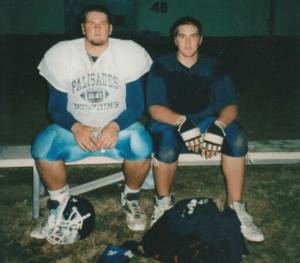
My two sons, Geoffrey and Mitchell, first laced up their football cleats as 14-year-old high school freshmen, respectively in 2000 and 2003. They skipped youth football. Why?
First, they exceeded Pop Warner weight limits. Second, studying for their bar mitzvahs took precedence. When they entered the fray, CTE wasn’t on the radar; first evidence of the disease was published in 2005. There was nothing to discuss. No need to have a conversation with my wife or the boys to evaluate the potential risks of playing the sport.

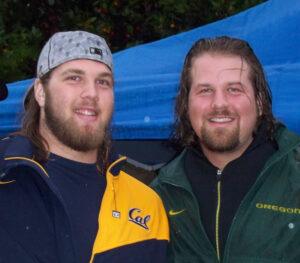
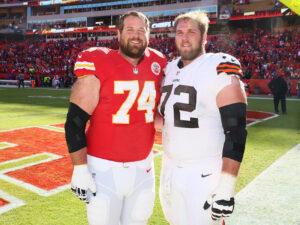
Much has changed in the intervening decades. Geoffrey and Mitchell have concluded successful NFL careers and have done so without suffering any diagnosed concussions — at least to my knowledge. As I share in my memoir, “Raising Giants: My Extraordinary Journey with TWO NFL Sons,” I’m not sure I’ve been privy to all the injuries suffered by the guys. For now, I’m going to continue believing, maybe naively so, that fortunately neither suffered a concussion during their playing days. But that doesn’t mean they were able to avoid all the nonconcussive impacts which inevitably occur with any contact sport.
On the other hand, I’m sure I experienced a concussion. I was 17 years old, playing in a high school basketball game, when I elevated to snatch a rebound. My legs were cut from underneath me by an opponent. I fell to the unforgiving wooden floor, landing on my back while also slamming my head on the hardwood. It hurt like hell. As I recall, that was the end of my playing time that night.
The 60-minute ride on a rickety old bus back to school was excruciating. My head was pounding the entire time. When I finally arrived home, my parents called a doctor. They were advised to wake me every two hours for evaluation. That was it. Today, I would be placed in some sort of concussion protocol because, no doubt, I had my “bell rung” that night.
Mitchell took a very proactive approach to protecting himself during his college and NFL careers. I’m sure those who have watched football have observed the slapping of helmets by teammates as a congratulatory gesture for a good play. Mitchell made it crystal clear that this didn’t fly with him, both by verbal warnings to his teammates but also, if needed, quickly shifting his head out of the way of the oncoming whack.
The football community, from the NFL down through the ranks, has taken steps aimed at reducing head trauma and thus possibly the instances of CTE. But are they all helpful?
- The NFL outlawed head slaps during play.
- Concussion protocols have been established to prevent players who may have suffered a concussion from participating until independent medical professionals deem them healthy to do so.
- Targeting penalties, primarily enforced in the NCAA, involving helmet-to-helmet contact, can lead to ejections and possible suspensions.
- Kickoffs in the NFL have been modified to prevent concussive downfield hits. Unfortunately, that backfired. Concussions during the season increased by more than 4x as compared with the previous season.
- Specialized soft-shelled helmet covers, known as Guardian Caps, have been promoted by the NFL to reduce concussions. But even the co-founder of Guardian Sports, the manufacturer, offers, “No helmet, headgear can prevent or eliminate the risk of concussions…”
What Parents Need to Know
So, here’s the $64,000 question of the day, as implied by the title of this piece: What would we do today if confronted with a decision about letting our boys play football? I’m not sure I can objectively answer that question.
First, I have history that would be hard to ignore. Second, would I have two genetically mutated athletic sons who yearned to play the sport? It would be almost impossible to ignore the incredible experiences of the 20 years spent immersed in the boys’ football careers.
Here’s how I would address the question.
Accept that CTE is real and here to stay.
My kids would not play youth tackle football under any circumstances! Geoffrey has been very vocal about this when asked about my grandson playing as a youngster: “Not a chance.”
I concur. Their bodies are simply not strong enough for all the contact, particularly their necks attempting to hold up those helmets or preventing their heads from banging off the field. NFL helmets weigh between 4 to 6 pounds and those used by youth are not much different.
In many cases, youth football coaching does not do enough to protect children. While likely well-meaning, many youth coaches do not teach proper techniques that would reduce potential trauma to the brain and body.
Most importantly, youth brains are still in their formative years. The helmet-to-helmet contact is not good for developing brains and studies have shown youth athletes are experiencing hits with force equaling those playing in college or the pros.
High school participation is where the rubber meets the road.
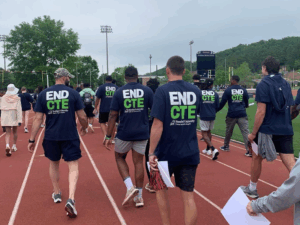
No longer can this decision be made in a vacuum. There’s way too much information available about the potential harm of playing football to ignore. Parents, please spend as much time as necessary to thoroughly investigate before any decision is made. The Concussion & CTE Foundation offers programs and resources which are a great place to start:
If parents conclude, after a thorough evaluation, that it’s okay for your child to play football, then you have another very critical decision to make: Do you involve your him or her in the process?
This is a very personal choice. Is the child mature enough to understand the long-term risks and contribute to the decision-making process? Or, does the onus fall strictly on the parents, who are surely more capable of considering all options and their ramifications?

Are there alternatives if the determination is to stay away from traditional football? Of course. There are other sports that don’t require the same physical contact as on the gridiron. Flag football is becoming a popular substitute, employing many of the same strategies and takes advantage of the same skill sets as seen on a football field. The Summer Olympics will debut flag football competition in 2028. But flag football may not satisfy the aggressive urges quenched by traditional tackle football.
This story isn’t intended to be a comprehensive commentary about the game of football, about CTE as a disease and/or the connection between the two. It’s one parent’s reflection and introspection. Conditions and knowledge have alarmingly changed since our family set out on our journey some 20 years ago.
And more is being learned every day. A recent study highlights the rapid pace of what’s now known about brain trauma:
- NFL players under 50 are 42x more likely to die from ALS than the general population.
- NFL players are 4 times more likely to die from neurodegenerative disease than the general population.
And for the first time ever, CTE was diagnosed in a 15-year-old teenager. Previously, 17 was the youngest. And what’s most tragic about this news? CTE can only be diagnosed in those who have passed.
So what’s the purpose of this effort? Simply to implore parents possibly heading toward a similar journey as ours to adhere to the proverb “Let the buyer beware” (otherwise known as “caveat emptor”). Step into this world of football with eyes wide open.
Lee Schwartz is a member of the Concussion & CTE Foundation’s West Coast Advisory Board and author of the book, “Raising Giants: My Extraordinary Journey with TWO NFL Sons.” Learn more about Lee and read his other blog posts here.