
Jeff Winans
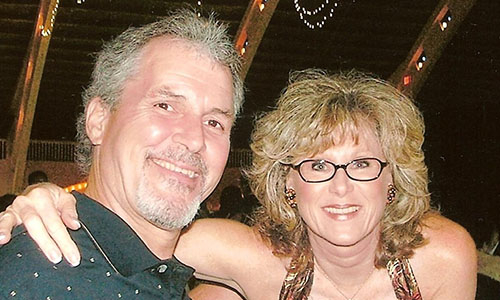
Beloved husband, father and friend
Jeff was 6’5”, well built, and extremely handsome, reminding me of a Greek God with his curly black hair, deep brown eyes and a sculpted black beard. His smile and laugh were infectious and would brighten up any room. He was born in a small agricultural town in North Central California called Turlock, where melons, turkeys, nuts and wine were their major source of income. Blue Diamond Almonds and Gallo Winery’s corporate offices were just up the street in Modesto.
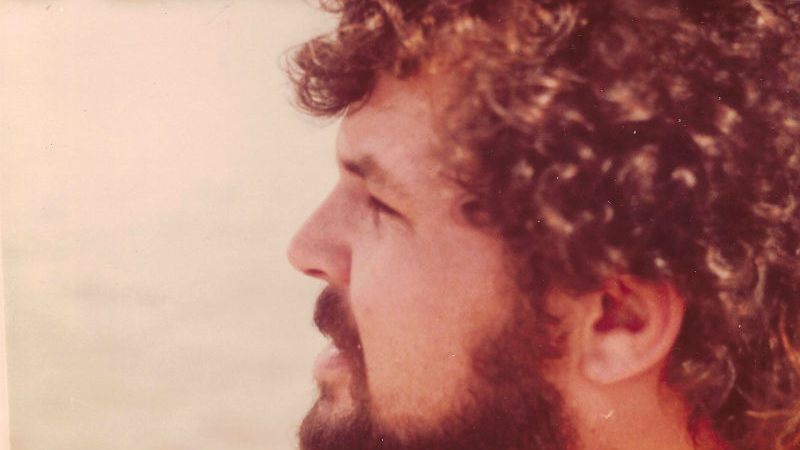
His father, Glen, had a local State Farm agency and his mother, Janice, was a homemaker. He grew up with two older sisters, Shari and Sandra. Everyone knew everyone in Turlock. Jeff excelled in sports, playing basketball, football and track at Turlock High School. Upon graduating from high school in 1969, he went to Modesto Junior College in Modesto, California, where he became the only six-letter winner in basketball and football. The college also claimed, in 1993, at his induction into their Hall of Fame, that he still held the record for the most unpaid parking tickets.
In his second year at Modesto Junior College, his lifelong dream came true. He was offered a scholarship to USC in Southern California to play football for Coach John McKay.
His first year at USC was a real eye opener, especially coming from a small agricultural town. He struggled with his academics and the big city life. However, in his second year there, he came to life on the field and was moved to first string. That year, he received the 1972 “Most Improved Player” award from Coach McKay.
His USC football team went on to become National Champions, winning the Rose Bowl in 1973 against Ohio State. Thirty three percent of the players were drafted to the pros. Jeff was second round draft pick (#32) and went to the Buffalo Bills. He played six seasons with the NFL. He loved the game and had a strong connection with his teammates.
Jeff started nine games in 1973 as defensive tackle. A torn ACL took him out for part of the season. In 1976, Jeff was traded twice, first to the New Orleans Saints where he played only three games, and second to the Oakland Raiders with Coach John Madden. At that time, Madden decided to move him to offensive guard. An unexpected trade took him to Tampa Bay in 1977.
Jeff fit in well at Tampa and McKay (his former USC Coach), kept him at offensive guard. December 12, 1977, after being 0-26, the Bucs won their first game against New Orleans. Jeff was back on his game but it was short-lived. In 1978 he sustained major back, neck and more head injuries–forcing him to sit out the rest of the season.
The first time I saw Jeff, he was visiting some of his friends from Buffalo at the apartment complex I lived in in Clearwater, Florida. My roommate introduced us at a local bar June of 1979. We started dating and in August during an exhibition game, his foot was injured and he was waived by the Bucs. A few months later he was picked up again by The Oakland Raiders. By that time Jeff and I had fallen in love and he asked me to go with him.
Our move back to California was an exciting one and we took up residence in Modesto. Jeff worked very hard and was back on track but in the 1980 Season, Jeff was injured with a crushed ankle. The Raiders went on to win Superbowl XV. July, 1981, after refusing to sign a waiver on his ankle and back, Jeff’s career as a professional football player ended. It was a crushing blow for him and I was thrown into the role of sole support of the family. Our talk of marriage was hard for him because he wanted to be able to support me the way he had in the past. Two months later a long weekend trip to Reno to see Smokey Robinson turned out to be a surprise wedding that he had been planning for months. We were married December 19, 1981.
He was offered a job at Modesto Junior College, but embarrassed after three days, he had to quit. His headaches, depression and physical injuries from football took a toll on him. His Sleep insomnia became worse. He started seeing a psychologist, and we worked through the next few years. In 1984, things were looking up so we decided to try and have a baby. November of 1984, Jeff sustained a life threatening gunshot accident while we were moving and wasn’t expected to live. A few days later the blessing came when I found out I was pregnant with our only child Travis, born August 2, 1985, our greatest blessing.
After multiple surgeries, infections and bankruptcy, the fall of 1988, we decided to move back to Florida. A few years later, Jeff’s right leg below the knee was amputated. He met Michael Reith with St. Pete Limb and Brace who fitted Jeff with a prosthetic and Jeff started volunteering with Mike, talking to other amputees. It was the first time in a long time I had seen Jeff so excited.
In 1992, he founded Day For Our Children, Inc., a 501(c)(3) to help abused, neglected kids and families who fell thru the government cracks or whose children needed surgeries that insurance companies wouldn’t pay for. A year later, he brought Outback, GTE wireless, Continental Airlines and ASI Building Products on board as major sponsors. We didn’t know how to raise money, but Jeff knew golf and he started some of the first Celebrity Golf Events in the Tampa Bay area. We met Tom and Lisa McHale at a fundraising event in 1993. Lisa and I have recently shared those photos and reflected on those wonderful times. In 1996 he became President of the Local NFL Alumni Chapter and was able to recruit more former players in the area to join. He was an excellent president and I was so proud of him. But his headaches and back and arm pain, numbness, and insomnia continued. It was more than he could handle and in 1998 I took over as President of the foundation.
Our son Travis started high school in 1999 and like his Dad, excelled in basketball. Travis was Jeff’s everything and he was able to work with him on his game and he was a wonderful father. By 2001, I was noticing more memory lapses, which I attributed to the prescription drugs he was on. Conversations we would have he didn’t remember which would turn to anger and frustration. His decision making and spending got out of hand and he began overdrawing our accounts. In 2002, he decided to get help and was diagnosed with Manic Depression/Bi-Polar and Borderline Personality Disorder. The Doctor put him on Lithium and Wellbutrin XL. It seemed to work for a while, and then he became more erratic with obsessive compulsive behavior making sure everything was in its place at all times. For a few weeks at a time, I would have my loving Jeff back and the loving wonderful man I knew. Then without warning, he would explode. He would have to write everything down four or five times. He would make plans and then stiff people. He became a recluse except for only a few close friends.
We separated in October, 2005, and he moved back to California. We stayed close and I still worried about him all the time. April, 2007, our son Travis decided to move out to California to finish school and play football. I was so happy that he and Jeff could be together again and the family bond began to reignite.
May of 2007, I was housesitting at my girlfriend’s home and came upon a TV show called HBO’s Real Sports with Bryant Gumbel. Bernie Goldberg was interviewing a young man named Chris Nowinski, author of Head Games, about his advocacy work raising awareness of the devastating consequences of sports concussions.
As Chris described the symptoms and long-term side effects of multiple concussions and repetitive hits to the head, a large knot in my stomach took me back to the deadly emotions over the years that at that time, had taken my marriage to a point of no return. I began to question if the emotional and behavioral problems that Jeff had been experiencing most of our married life were not what I thought they were, but possible after effects of his eleven-plus concussions and repetitive hits to the head, from playing professional football. I needed to know more about these concussions, so I found Chris on the internet and emailed him. Within twenty-four hours, he emailed me back and we set a time for a phone conversation a few days later. I told him about our story and that people have no idea what the families go through. He encouraged me to come to Washington DC for the Press conference and hearings. I was shocked to find so many other families going through the same thing.
Over the next three years, I became a sponge learning about concussions and I knew it was God that directed me to that HBO channel because if it hadn’t been for Chris’s interview, I never would have thought that Jeff’s problems could have been attributed to concussions.
In 2010, Travis moved back to Florida and Jeff and I started to re-kindle our romance. I was able to get Jeff into rehab at The Summit Recovery Lodge in Utah, June 2010. It was there Jeff found his spirit again. February 2012, Jeff flew here for a visit. He decided to make the move back to Florida. Travis was so excited to have his Dad back here. We both missed the family unit and our love for each other was stronger than ever. October 2012, on a two week visit with him in California, we decided to tell Travis we were back together and made plans to remarry, March 2, 2013.
But God had a different plan and on December 21, 2012, he took Jeff home. He was the love of my life; a kind, sensitive, loving man and my best friend. I know when he passed there was love, peace and joy in his heart. My goal now is to educate, promote the research and help as many families as I can. It’s an honor to share our story and I want to thank Chris for all the hard work and forming the Concussion & CTE Foundation. Together we are one.
To learn more about Jeff and Brandi’s story read Brandi’s memoir, The Flip Side of Glory, on Amazon, Kindle and Nook.
Dennis Wirgowski
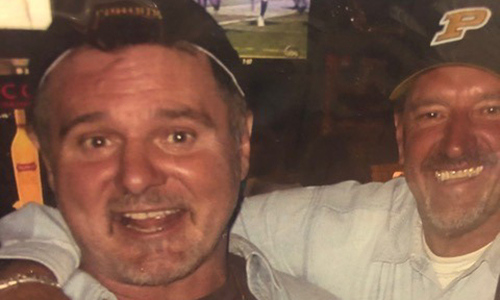
Superman
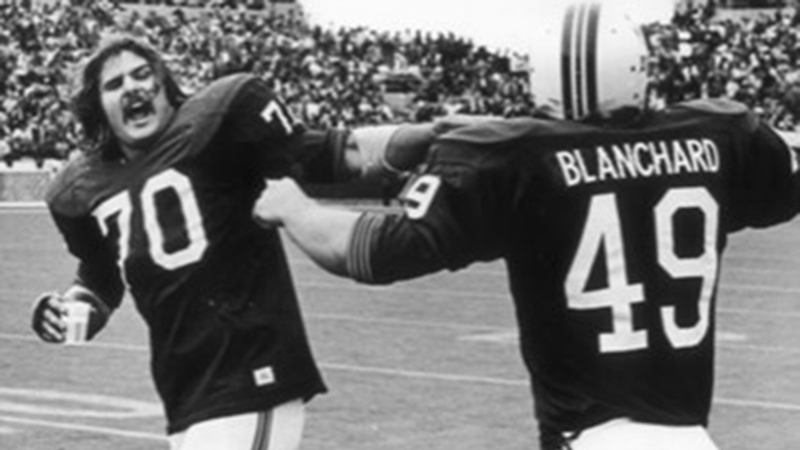
If it was a goal of Dennis Wirgowski’s, it was getting done. Born in Bay City, Michigan in September 1947, Wirgowski was an outstanding natural athlete made even better by a devout work ethic. Wirgowski had the talent to go far in baseball, basketball, track, or whatever sport he settled on. But Wirgowski’s best sport was football. His tall and bricklike frame made him a tremendous lineman.
Wirgowski accrued many nicknames in life. Some of them were easy products of his name. Denny. Wirgo. Others, he earned.
Opponents trying to block Wirgowski simply bounced off him while at Bay City Central High School. Len Hoyer of the Detroit Free Press likened Wirgowski’s discarding of opponents to that of Clark Kent’s discarding of evildoers. Dennis Wirgowski was dubbed “Superman.”
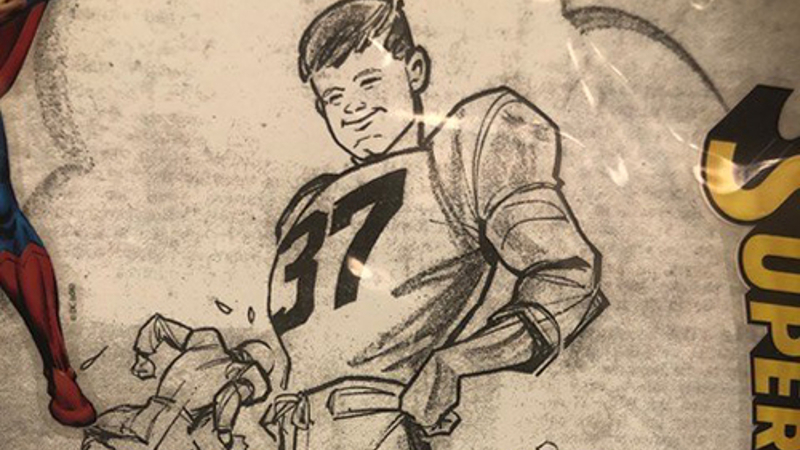
After a prolific high school career, including an undefeated Michigan Class A State Championship run in 1965, Superman chose to attend Purdue University. Wirgowski’s winning streak traveled with him to West Lafayette and the Boilermakers finished 8-2 in each of his three seasons with the team.
He was selected in the ninth round of the 1970 NFL Draft by the Boston Patriots. He played three seasons there before being traded to the Philadelphia Eagles where he played for one season. In 1974, he tried out for the Cleveland Browns but was cut before the season started. Injuries forced the Browns to call Wirgowski for another shot, but he declined and retired from football at age 28.
Nuts
After a brief stint living in California, Wirgowski moved back home to Michigan. He earned a teaching degree and worked as a warehouse manager for Stevens Worldwide Van Lines.
Wirgowski teamed up with a friend named Denny Nusz to start Backstreets Bar, one of Bay City’s first sports bars. The name Nusz lent itself to the nickname “Nuts,” which became Wirgowski’s catchall word. He said “hey Nuts” to Nusz or any bar patron whose name he couldn’t remember. Over time, Nuts stuck as another of Wirgowski’s nicknames.
Wirgowski owned Backstreets in a financial sense, but he owned every room he walked into with the power of his spirit. He had a gift of connecting with anyone he met and could make them laugh effortlessly.
At Backstreets and other local bars, Wirgowski’s gregarious personality was on full display. He was infamous for offering to treat anyone and everyone to lunch at nearby Bell Bar. It just so happened their lunch would be the bar’s already complimentary meat snacks.
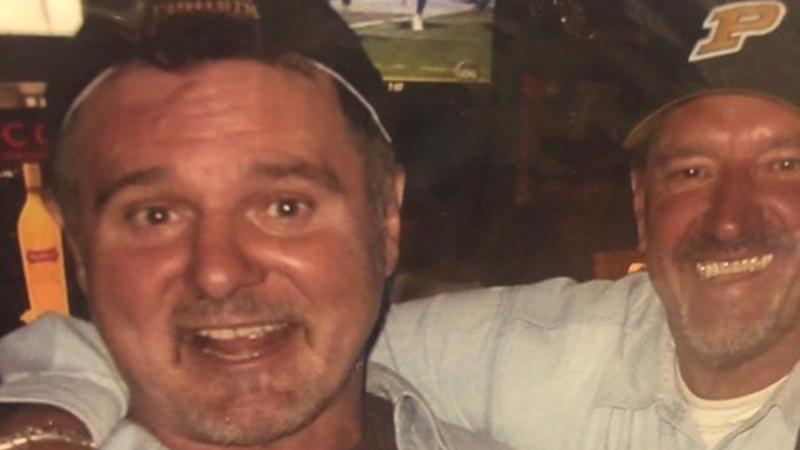
Wirgowski did open Backstreets’ cashdrawer to sponsor local sports teams. One of those teams was a local softball team, which starred a young woman named Bethany Stewart.
Many bargoers were starstruck by Wirgowski’s celebrity status – but Bethany wasn’t fazed. She preferred his sense of humor, competitive nature, and the way he commanded a room. The two started dating shortly after meeting.
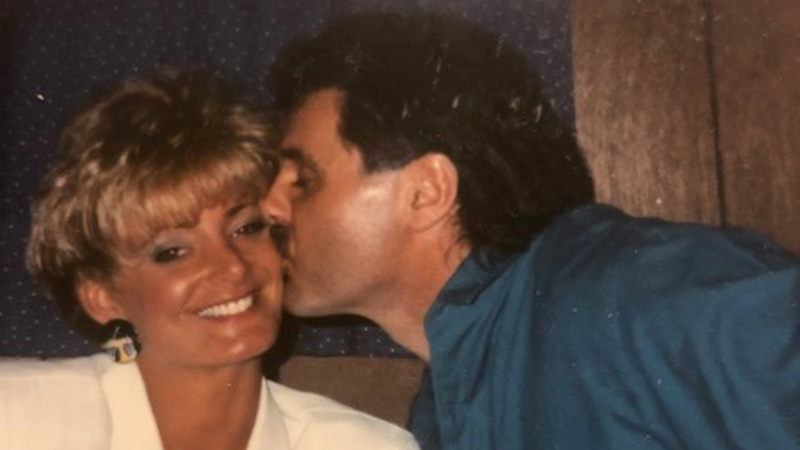
“He had this larger than life personality,” she remembers. “He was the life of the party. He could talk to anybody like he’s known them for a million years.”
Dennis and Bethany enjoyed playing sports, long walks, and traveling. In their travels, the scenery changed but Nuts was still Nuts. During a trip to Boston, his old neighbor appeared and the two talked for hours. In Florida while stopped at a red light, Dennis admired the motorcycle in the next lane over. He and the motorcyclist chatted like old friends through several green light cycles.
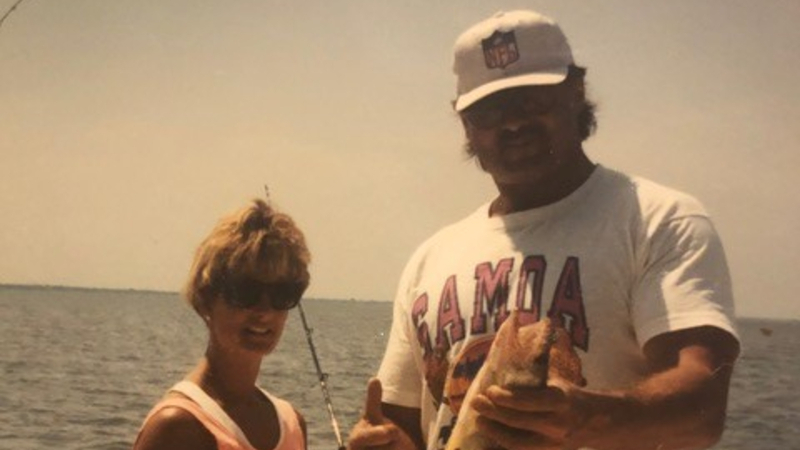
After several years of dating and engagement, Wirgowski and Bethany married at a courthouse in Port Huron, Michigan and enjoyed a honeymoon along Cape Cod, Massachusetts.
A different Dennis
The Dennis Wirgowski Bethany fell in love with was incredibly happy-go-lucky. Nothing bothered him. But by his 50’s, Wirgowski became more easily agitated. Bethany saw his mood change from one day to the next.
“His tolerance for things was really short,” Bethany said. “He would get so angry and his temperament was just different. His reactions to things was so irrational.”
The reactions were irrational, but initially harmless. Eventually, they became dangerous.
One day while on his bike, a young motorist drove over a puddle that splashed Wirgowski. Assuming the driver did it on purpose he erupted, and physically attacked him. Police intervened and came to the Wirgowski’s house to inform Bethany.
“He’s riding his bike in the rain,” Bethany said. “I told him I don’t think the kid intentionally drove by you to splash you, but he had that paranoia that people were out to get him.”
It became The World vs. Dennis and paranoia colored Wirgowski’s later years. Something as simple as a mandate to switch his cable boxes from analog to digital could lead to an anxiety attack.
Wirgowski and Bethany loved walking their dogs Coco, Barkley, and Zoe along the beach. One day a neighbor almost hit the dogs with her car. The run-in enraged Wirgowski. He was left banging on the neighbor’s door until the police tore him away.
Wirgowski was not without remorse for his actions. He wrote the neighbor an apology letter the next morning, a testament of the dime-turning his mood could take. Enraged then gentle. Paranoid then sane.
Around this time, Wirgowski began to see similarities between his story and those of other former NFL players he read about in the news. He collected news clippings about Junior Seau and other former players affected by the degenerative brain disease CTE. Wirgowski heartily empathized with one article which described playing football as running into a concrete wall at full speed.
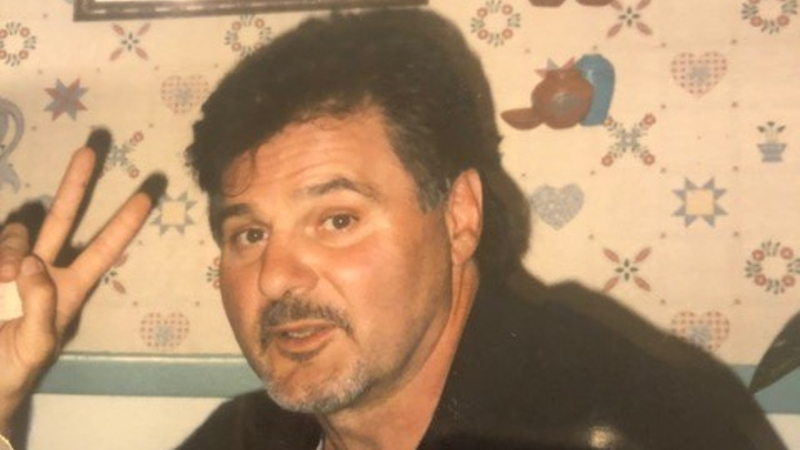
Bethany repeatedly encouraged her husband to seek help. She was finally successful in September 2013 when Wirgowski agreed to see a therapist. He was stoic upon his return from the visit, offering no details to Bethany.
She asked if he had told the therapist about his football career. Wirgowski insisted that wasn’t important. Bethany, an ER nurse, reached out to the therapist and disclosed his football career and his new hobby of clipping news stories in confidence. The disclosure got back to Wirgowski, causing him to explode on Bethany. He never sought help again.
Perfect storm
On January 25, 2014, Bethany woke up to hear Wirgowski shoveling their driveway. When he came back into the house, he told Bethany he loved her and walked back out the front door.
Later that day, Dennis Wirgowski took his life. He was 66 years old.
Wirgowski’s suicide devastated Bethany, Dennis’ family, and their community. She couldn’t escape the guilt of not acting sooner.
“I knew he was sad, I just didn’t know he was suicide sad,” Bethany said. “Being a nurse, I felt like not only a failure to my profession, but also to my husband, and to his family, because I had lived with him.”
Bethany says she and Wirgowski’s many close friends missed signs to get him help. She counts the news clippings, the depression, and his personality shift as calls for help that he wanted to talk to someone. She sees his outrage over her contacting his therapist as his worry that Bethany was connecting the dots that he was contemplating taking his life.
At the same time, Wirgowski’s impulsivity may have shrouded any potential warning signs.
The day before his death, Dennis called Bethany to make sure she got his prescription for an antibiotic filled so he could get his teeth cleaned.
Five months prior to his death, Wirgowski fell off his bicycle and broke his hip. He had surgery to replace the hip and worked out every day for four months to rehab. His diligence paid off and his hip healed.
“Why would somebody rehab that hard and then take their life?” wondered Bethany.
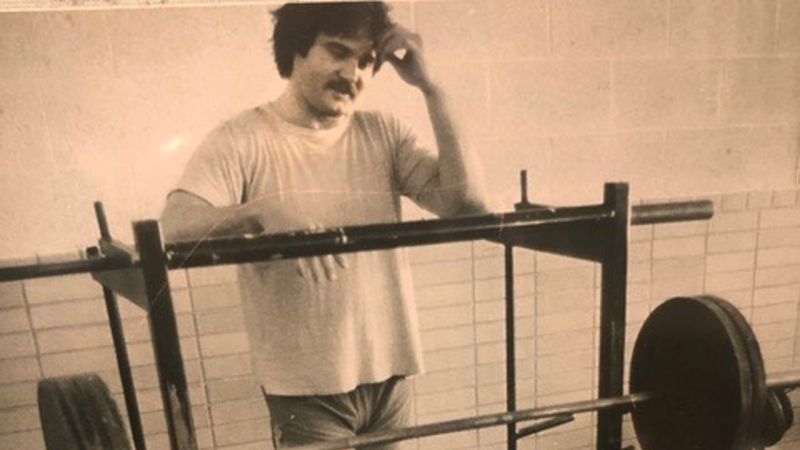
With his recovery from hip surgery, Wirgowski had once again conquered something he set his mind to. But was then devastated to learn his knee would also need replacement.
“There were a lot of things for that perfect storm for him to want to take his life,” said Bethany.
The American Foundation for Suicide Prevention says there is no single cause for suicide. It most often occurs when stressors and health issues converge to create an experience of hopelessness and despair.
Knowing her husband needed help, Bethany wishes she had asked him one question.
“It just will probably, always traumatize me that I didn’t ask that little question, ‘Are you thinking of suicide?’” Bethany said. “Because learning what I know now, that’s what people want you to ask. I have it in my mind if I would have asked him, he probably would have broken down and told me.”
Relief
After Wirgowski took his life, Bethany looked through his email. She found he had been corresponding with a former NFL player who was a vocal advocate for concussion awareness at the time. Bethany emailed the player to inform him that Dennis had taken his life and the player informed Bethany about the option to donate Dennis’ brain to the UNITE Brain Bank in Boston. She immediately agreed.
Researchers at the Brain Bank diagnosed Wirgowski with Stage 2 to 3 (of 4) Chronic Traumatic Encephalopathy (CTE).
Bethany felt relieved by the results. The diagnosis helped to explain Wirgowski’s personality changes and bizarre actions. Still, Bethany knows she only saw the tip of Wirgowski’s symptom iceberg. He had efforted to hide his struggles from her.
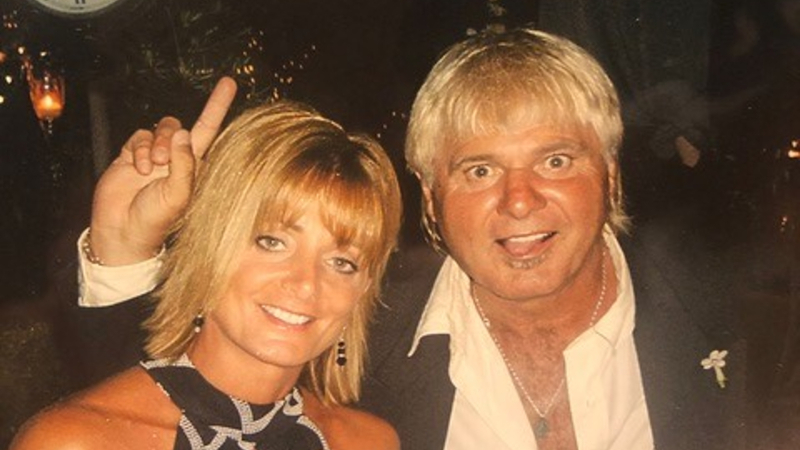
Those with CTE can experience symptoms such as depression, rage, and suicidal thoughts, but we still need to know more about why these symptoms occur. Research is ongoing at the Brain Bank to uncover the relationship between CTE pathology and psychiatric symptoms like depression and suicidal ideation.
Looking forward
Wirgowski’s suicide launched Bethany into suicide advocacy. She and other impacted families participate in Midland, Michigan’s Walk for Hope, an annual 5K walk that promotes suicide awareness.
She met Barb Smith, founder of the Barb Smith Suicide and Resource Network. Barb helped Bethany tremendously in the months following Wirgowski’s death. Bethany became a safeTALK trainer to educate others on how to talk with someone who may be suicidal. Barb contracts Bethany to give safeTALKs to those in need.
“I was an ER nurse at that time for 17 years, and I only knew suicide from a distance and never had any type of formal training on what to recognize or what to ask,” Bethany said. “You don’t have to fix anything. You just have to realize how to identify it. And people aren’t always as direct as we would like them to be. And that’s why you have to read into what people are trying to say to you.”
Bethany also helps run an annual football camp in her husband’s name. The camp is a free, one-day event for local children that focuses on football skills as well as mental well-being of young athletes. Last year, camp attendees heard the Concussion & CTE Foundation’s Team Up Against Concussions speech about the importance of speaking up for a teammate who is showing signs of a concussion. Local coach Dick Horning gave the speech and connected its message to his late friend Wirgowski.
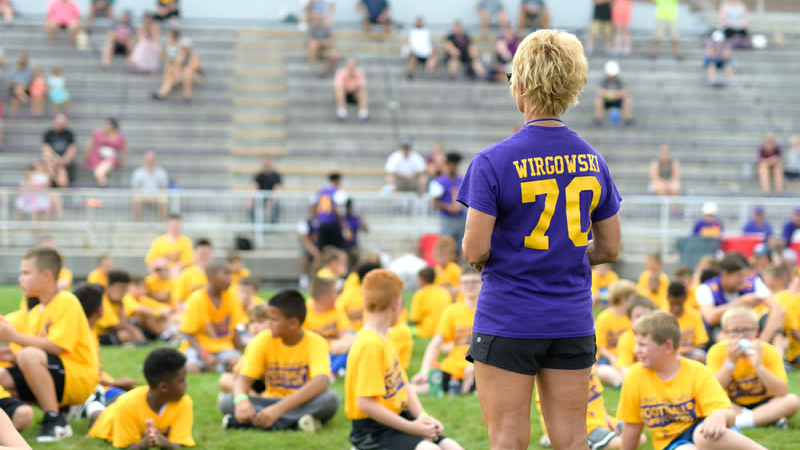
“The whole speech was amazing. There wasn’t a dry eye in there,” said Bethany.
Six years after Dennis’ death, Bethany’s grief and “what-ifs” persist. But so too does the image of her Superman, smiling, laughing, and talking sports with a Nuts at the bar.
Suicide is preventable and help is available. If you are concerned that someone in your life may be suicidal, the five #BeThe1To steps are simple actions anyone can take to help someone in crisis. If you are struggling to cope and would like some emotional support, call the Suicide & Crisis Lifeline at 988 to connect with a trained counselor. It’s free, confidential, and available to everyone in the United States. You do not have to be suicidal to call. If you’re not comfortable talking on the phone, consider using the Lifeline Crisis Chat.
If you or someone you know is struggling with lingering concussion symptoms, ask for help through the Concussion & CTE Foundation HelpLine. We provide personalized help to those struggling with the outcomes of brain injury. Submit your request today and a dedicated member of the Concussion & CTE Foundation team will be happy to assist you.
Edward Wolf
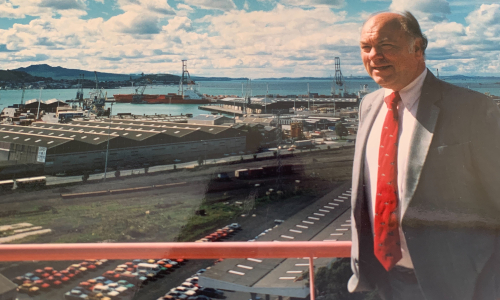
Ed was a man of many talents who excelled both academically and athletically. He held an impressive list of accomplishments in his lifetime, both on and off the field. He was a minor league baseball player, a four-sport varsity letter athlete, a member of the Army National Guard, and was inducted into two local halls of fame.
Born in 1939, Ed’s love of sports began when he started playing football in grade school and continued to play through high school and college. He was first team all-city for football, but his athletic accomplishments did not end there. During his time at Deer Park High School in Cincinnati, Ohio, he lettered in four sports: football, baseball, basketball and track.
Ed then attended the University of Cincinnati where he continued his athletic career and lettered in football and baseball. He was a member of the Sigma Alpha Epsilon fraternity and the Sigma Sigma honorary fraternity.
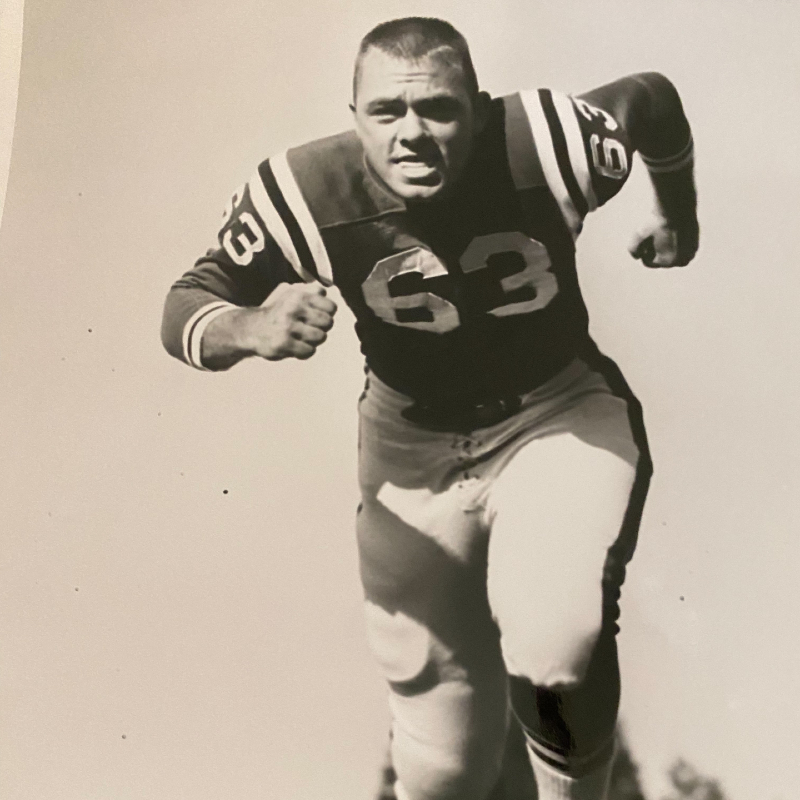
He later signed with the Houston Colt .45s, a minor league baseball team, and was a catcher for two years. His years of playing sports and childhood concussions led him to experience many head injuries. After his time in the minor leagues, Ed was in his twenties and gravitated away from sports. He joined the National Guard and proudly served for six years. We met during our college years, married, started a family and Ed began his career. He pursued his MBA at Lake Forest Graduate School of Management and led a successful career in executive sales and marketing. He was the director of the Port of Wilmington. He traveled the world and enjoyed the challenge of this multi-faceted, but politically vulnerable job. In the ’90s, Ed reentered the job changing pattern. We had relocated many times to Kentucky, Illinois, Florida, Delaware, and back to Cincinnati for his retirement. It is difficult to pinpoint but somewhere in this history was the onset of the symptoms. I remember his comment, “I just can’t seem to find the right situation where I can be all that I want to be. Something seems to be blocking me, something seems to be getting in my way.” Overall, Ed did not appear to be conscious of the challenges of CTE.
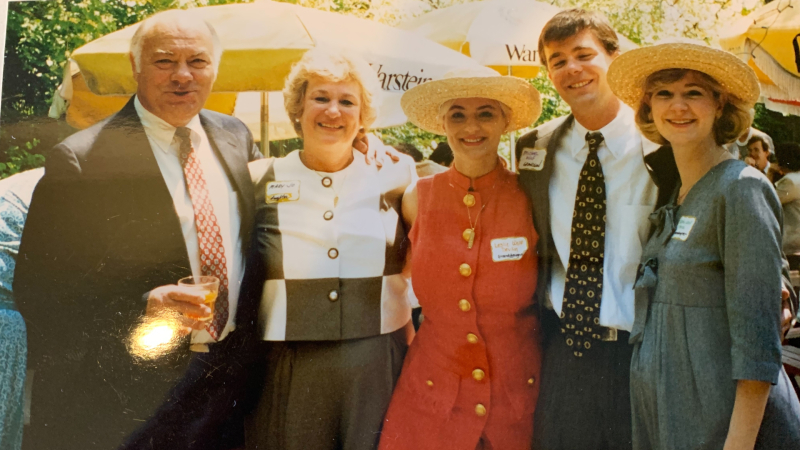
Looking back, inexplicable behaviors seem to form a profile indicative of the disease. In his later years, Ed displayed cognitive impairment with the inability to problem solve or strategize. He loved to sing and was a member of his local chorus. But after two years he could no longer participate. The effects of the disease took its toll in many ways.
We were fortunate because the slow onset of symptoms meant it did not have a great impact on our family life while raising our children. Looking back, I remember he experienced some agitation and depression, and it was in the last two decades of his life that we noticed changes in his personality and behavior. He was a humorous guy and relished the role of loving father and coach for the kids’ baseball, soccer, and softball teams. His daughter Leslie relates, “He was the dad who was always there, and that presence gives much joy to the memories of our childhood and adult life.”
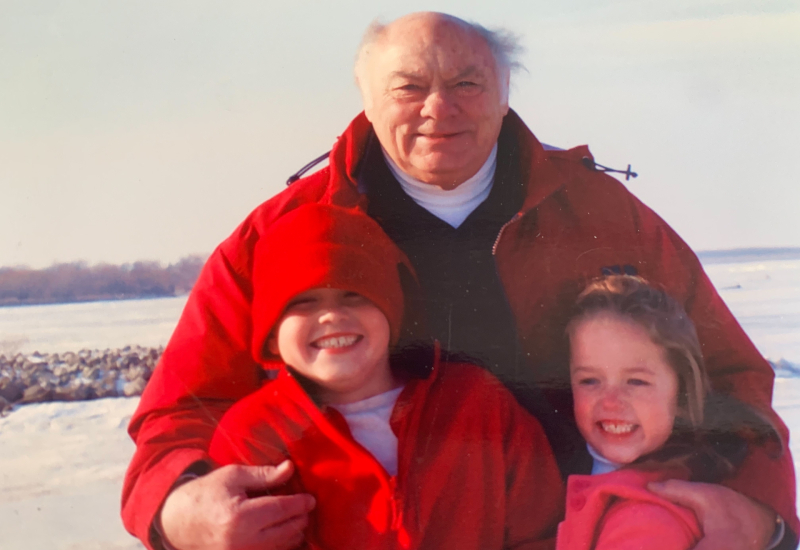
Ed was an all-around good man. The impact of the disease was irrelevant to that goodness. He had many friends and loved and cherished his three children, five grandchildren and his grand dogs. These relationships brought him much joy throughout his life. The times Ed spent with his family were the times when the symptoms and challenges he experienced from CTE seemed to be minimal. It felt like a true gift to know that despite the changes happening to Ed, his family meant so much to him.
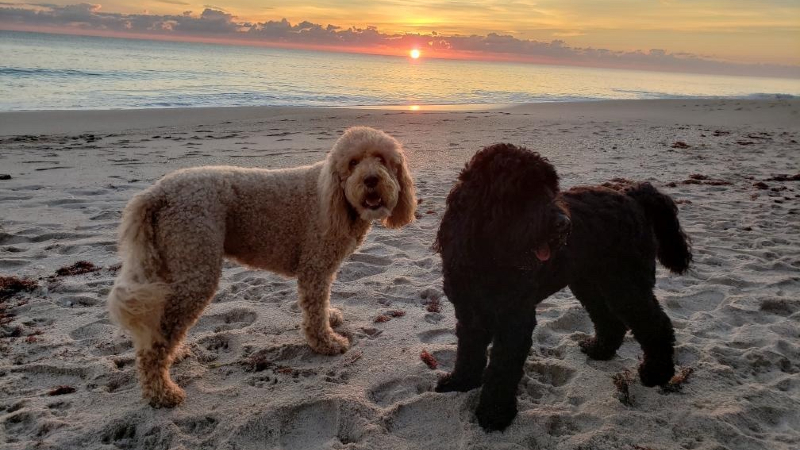
During his life, Ed worked with a neurologist who helped us narrow down the cause of the dementia and we knew CTE was a high possibility. In retrospect, it is clear how much of his behavior was likely caused by CTE and it is hard for families to watch the demise of a loved one and not know what is happening to them.
A few years prior to Ed’s passing, our daughter, Wendy, discovered the Concussion & CTE Foundation and the UNITE Study at the Boston University CTE Center. She registered his willingness to participate and made the brain donation possible. Though his CTE diagnosis wasn’t a surprise, it was difficult for us to accept.
For him, the playing of the sports, the recognition of his abilities, the joy that he got, the commitment, the determination that he had, seemed for him to be the reward that he remembers. The actual outcome and the price that he paid for that, I don’t think he was ever cognitively aware.
It is important that athletes know the risks of sports from an early age. Our family is happy to know that Ed’s final contribution and legacy are part of crucial CTE research. There are so many famous athletes that have contributed, and it was just very exciting that our guy, his brain, was just as valuable. That made us feel that this was his very best contribution that he could make.
Adam Wood
Nate Woodring
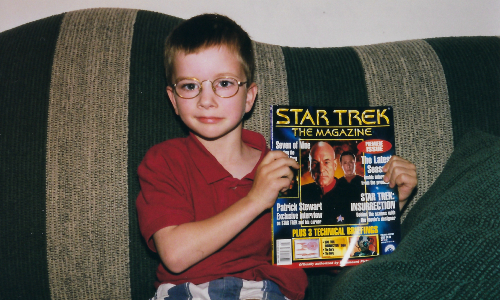
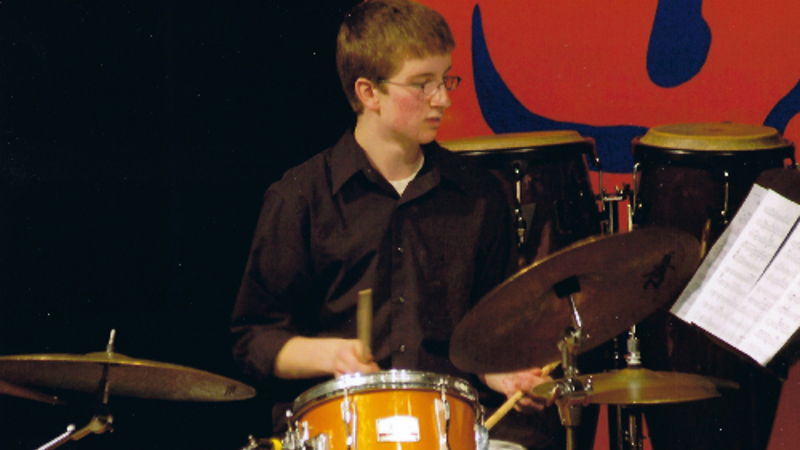
As a child, Nate was smart, happy, determined, motivated, always striving to be his best – and passionate about the things he loved. He could tell you everything about giant squids when he was five (“they have eyes the size of dinner plates”) and knew the story lines of every Star Trek Next Generation episode when he was in grade school. In fourth grade, he found his passion when he started playing drums with the school band.
Nate was a kid who never had to be told to practice. To the contrary, we had to ask him to stop playing the drums so he wouldn’t bother the neighbors, though we suspect they didn’t really mind hearing his music, especially as he got older. In high school, Nate was inspired by his band director to participate in the jazz program, which helped set the trajectory of his career path. Nate was a dedicated and talented musician, a deeply spiritual person, and an Eagle Scout. He was influenced by great jazz masters like John Coltrane to give his all with music. In his personal journal, he wrote, “I believe my music comes from a higher power.”
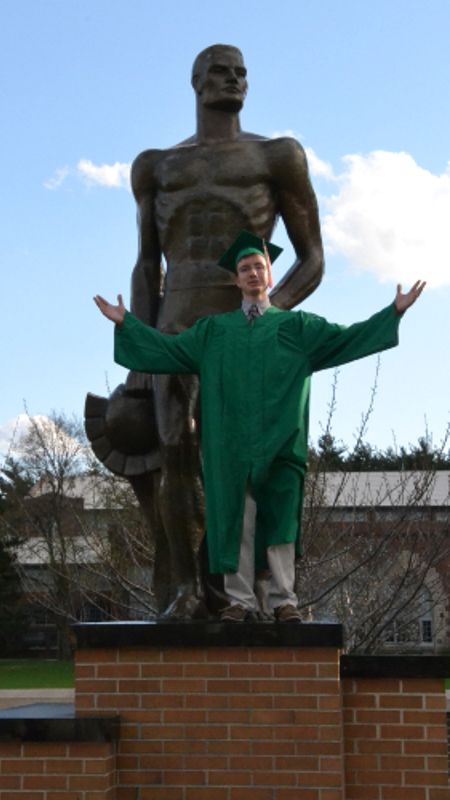
Nate went on to Michigan State University to major in jazz studies, and graduated in 2014. To all who knew him, Nate was a musician. He worked summers playing jazz at the Grand Hotel on Mackinac Island in Michigan for several summers, including the summer after he graduated. Shortly after, he earned a spot in a cruise ship band, and worked as a drummer in the Mediterranean for four months, coming home in March of 2015.
When Nate arrived at the airport upon returning from the cruise ship gig, the young man we welcomed home at the airport was not the Nate we knew. It was a testament to his internal will that he had even been able to navigate the trip home. He was nearly catatonic, had difficulty speaking or answering questions, and could barely eat or function. At the ER the next morning he was diagnosed with major depression with psychosis and spent ten days as an in-patient in psychiatric care.
Nate came home after his hospital stay, and during the following fourteen months, he and we did everything we could to help him with the tools we had. Bob changed the way he did his job and mostly stayed at home, to be with Nate and help in any way possible. While we were shocked and blindsided when Nate came home from the ship, in retrospect, we realize that his mental decline had begun earlier, as evidenced by what we thought was seasonal affective disorder each fall at college. His symptoms always appeared to go away shortly after onset, and didn’t seem cause for great concern.
For those diagnosed with depression, there are many methods for improving one’s state of mind including exercise, medications, and therapy. Nate doggedly tried them all, but nothing seemed to help. He was plagued by intense anxiety, memory loss, and what we realize now were symptoms of dementia. Along the way he became suicidal, and we eventually realized we couldn’t keep him safe at home. Three weeks before he died, Nate moved to a therapeutic farming community – a move we all felt was the best solution, given what we knew at the time. We still believe a therapeutic community is the right answer for many young people suffering from mental illness – but Nate never got better. Early on May 20, 2016, before sunrise, he ran out into a two-lane state route and was killed by an oncoming pickup truck.
As Nate’s parents, we did the things you do when you lose a child. We told his brothers, his sister-in-law, his grandparents and the rest of the family that he had taken his own life. We wrote an obituary, planned a funeral, began grieving, and tried to adjust to the new reality thrust upon us.
For Bob especially, the lack of explanation of a cause of Nate’s illness was a nagging presence, and he had accepted the reality that he might never have any answers. There was no history of mental illness in our families, and Nate’s severe symptoms were dramatic and unresponsive to treatment. There were three different diagnoses for his condition, every conceivable medication was tried, and nothing helped. There were many questions and no answers, either while he was alive or after.
We know now, three years later, that there is much more to Nate’s story.
Ever the sports fan, Bob read a Sports Illustrated article about Tyler Hilinski, the Washington State quarterback. It was difficult to get through the article because Bob knew the ending. Tyler had taken a hit in a game that changed his actions and personality, eventually ending in suicide. His parents had his brain analyzed and found that he had CTE. At that moment, Bob thought about Nate playing youth football from ages 11 through 14. Even though it seemed so long ago, Bob felt there could be a connection given the way Nate approached football, and everything else in life.
Bob immediately started a web search and found an article on the Concussion & CTE Foundation website about CTE. In that article he saw that repeated hits to the head before the age of 12 may make the brain less resilient to disease. The article also described symptoms of CTE, which include depression and problems with thinking. At that moment Bob realized that CTE symptoms may have been what Nate had been experiencing toward the end of his life. All of a sudden, we went from no answers to possibly every answer about Nate. In the proceeding days, Bob spoke with several medical professionals that all completely agreed with his conclusions.
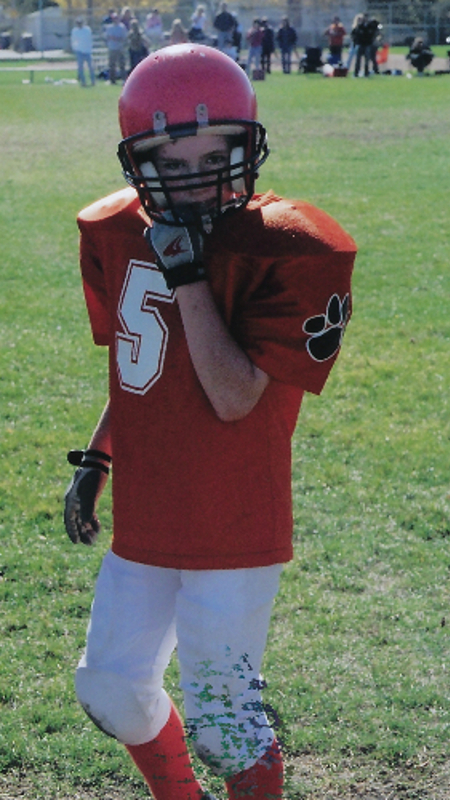
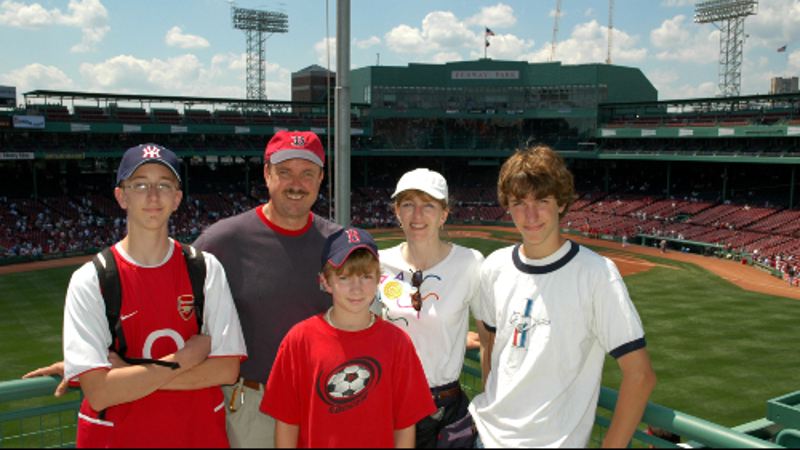
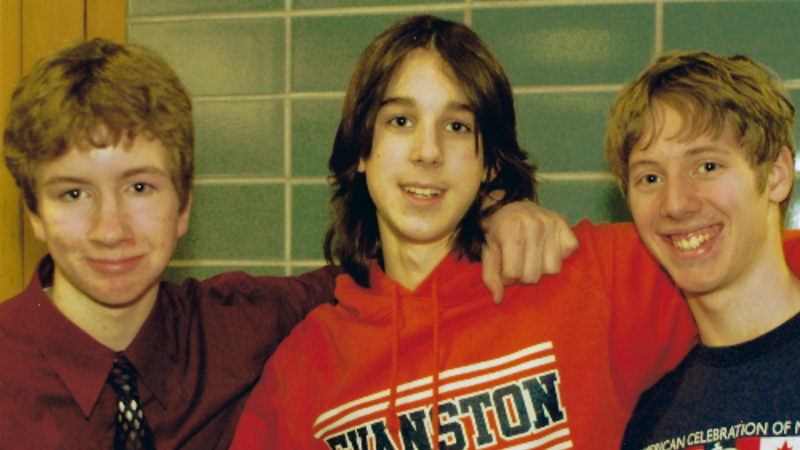
Nate was one of the smaller kids on the team but he played with a lot of heart and determination. In 2004, at age 12 and in 7th grade, Nate received a trophy as the most improved player on the team. The coaches loved his intensity and the way he took on anyone, regardless of how big they were. He played linebacker and fullback on a primarily running team, which meant he was hitting someone on most every play.
Most Evanston Junior Wildkit Football players end up going on to play for Evanston Township High School. Nate played through his freshman year, age 14. He also played in the marching band which was an extension of his real passion: music. At the beginning of sophomore year, Nate had to choose between football and marching band and he chose the path of music – despite pleas from his coach to stay with football.
Nate excelled at his craft as one of the best drummers in the area. He became a great musician and jazz aficionado. Nate has inspired us to develop a love of jazz. We are proud of the way Nate approached life and are grateful to have found some sense out of a senseless situation.
We will never know for sure if Nate had CTE. We can’t be certain because his brain was not studied after death. But we suspect it based on Nate’s symptoms and other, similar cases. Former youth athletes have been diagnosed with CTE after death following exposure to head trauma at young ages. Athletes like Joseph Chernach, who was found to have Stage II CTE at age 25, and Kyle Raarup, who was found with Stage I CTE at age 20, are examples to consider alongside Tyler Hilinski.
As Nate’s parents, we bore witness to his struggle and we’re convinced that exposure to brain trauma at a young age, and subsequent CTE, caused his symptoms. Our conviction drives us to fight so that more people know the risks associated with exposure to brain trauma.
We hope to leave a legacy of helping others and we believe, for now, the best approach will be to attempt to convince parents that there is no reason to let their children play tackle football before the age of 14. The fact of the matter is kids don’t receive college scholarships in middle school, and exposing them to brain trauma at such a young age is not worth the risk. Given the popularity of football in this country it will not be easy, but we are up for the challenge. We did not have the knowledge of the consequences back in 2003, and we are ready to tell everyone Nate’s story. Our approach is simple. What do you love more – football or your child?
Suicide is preventable and help is available. If you are concerned that someone in your life may be suicidal, the five #BeThe1To steps are simple actions anyone can take to help someone in crisis. If you are struggling to cope and would like some emotional support, call the 988 Lifeline at 988 to connect with a trained counselor. It’s free, confidential, and available to everyone in the United States. You do not have to be suicidal to call.
Are you or someone you know struggling with lingering concussion symptoms? We support patients and families through the Concussion & CTE Foundation HelpLine, providing personalized help to those struggling with the outcomes of brain injury. Submit your request today and a dedicated member of the Concussion & CTE Foundation team will be happy to assist you. Click here to support the HelpLine.
Devon Wylie
Monsters
Beneath your bed
What’s real? What’s in your head?
Moon’s out
My mother’s house is empty
Come and find me now
Sweet heat lightning falls
Blue crack of light, and that’s all
Calling you to sing
– “Sweet Heat Lightning”, Gregory Alan Isakov
Uncoverable
It’s late in the fourth quarter and the Boise State football team is having their way with the Fresno State Bulldogs. It’s a shutout to this point, zero to a million. A lone figure paces at the 20-yard line, eyes forward, waiting for a rare punt on this hot Saturday evening in Fresno. The kick is aloft and lands smoothly into #7’s arms.
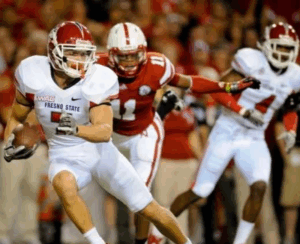
Without even looking, he evades the first defender out of instinct and covers five yards in a blink. In another flash, he accelerates to midfield, passing the rest of his opponents. The remaining Fresno fans erupt, cheering loudly as he reaches the end zone.
During his time playing football, Devon Wylie would command the attention of entire stadiums. At home games, fans would anticipate his lightning-fast reflexes and blazing speed every time he touched the ball. When he was a visiting player at places like the University of Nebraska, the crowd of 85,000 went silent as they watched him return a punt in a dazzling display of quickness, balance, and grace.
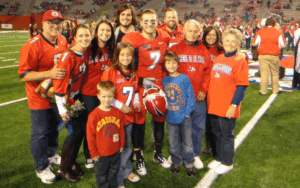
“Wiggles” and “Flash” were just a few of the nicknames used to describe Devon, highlighting his innate ability to move at incredible speeds. He truly was like a fearless flash that was brilliant and beautiful, impossible to not watch in awe. Yet also like a flash, he was gone too soon for those who knew and loved him.
Passion for Football
The natural athleticism Devon possessed was clear from an early age. He took up the rollerblading craze of the 1990s with abandon, skating half-pipes and handrails well beyond his years. At nine years old, he was landing 540-degree rotations with ease. On the trampoline, he learned to take this trick and alter the spinning axis on his side, a move called a misty flip that became his favorite stunt to pull off, rollerblading into pools, on a beach, or on the field.
As soon as Devon was old enough, he joined Pop Warner football, playing for the newly minted Junior Grizzlies in their inaugural season in Northern California, where he grew up. The offense was engineered around a slotback who ran in motion nearly every play; the fly sweep was their bread and butter. Coaches found the quick-footed blonde kid perfect for the position, which he would play all the way until graduation from Granite Bay High School.
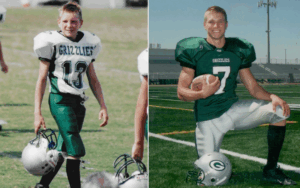
Not only was Devon great at football, but he was a talented track and field athlete as well, thanks to his gifted speed. He went to sectional championships for the 100-yard sprint in track at Granite Bay and held all-time records for the 40-yard dash both in high school and college. Fast was honestly an understatement; twitchy, explosive, and dynamic were all part of the framework that was Devon Wylie.
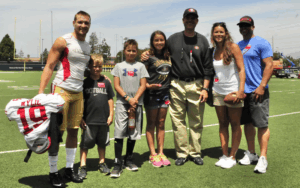
Scouts from USC, Wyoming, and Fresno State recruited Devon to play football at their school, and he ultimately ended up choosing Fresno State, where he played his entire college career. He participated at the 2012 NFL Combine, posting a top five 40-yard dash time among all receivers. Later that spring, he was drafted in the fourth round by the Kansas City Chiefs.
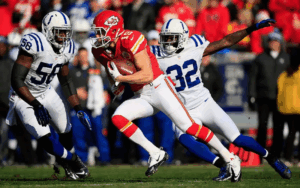
Devon spent two seasons living his longtime dream of playing in the NFL with the Chiefs and several other teams, and another season on practice squads after unfortunate injuries began to hamper his performance. He then finished his football career in the Canadian Football League, being utilized in many different positions to showcase his elite speed.
Love for Other Pursuits
Professional athletes often say retiring from their sport, particularly one as intense as football, leaves them detached, unanchored, and purposeless. Devon fortunately had other passions he pursued, primarily music. He loved to sing and play the guitar, mainly covers of groups such as Dave Matthews Band, Alice in Chains, Audioslave, and other mashups of 80s, 90s, and 2000s alternative rock and R&B.
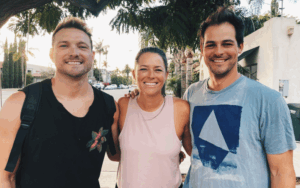
Self-taught, Devon had the ability to hear songs and put them into guitar chords on the spot. At Fresno State, he formed the band Splash with teammates, performing at parties around school and later even singing and playing the first dance for a best friend’s wedding. Funny, witty, and passionate, he was charisma personified on stage.

When football ended, the San Diego Reader featured Devon in an article for his performances at the 710 Club in Pacific Beach, where he was a mainstay of the open mic lineup. He also became involved in the local beach volleyball scene, where he thrived. Everyone at the self-titled Honey Hole Volleyball court had a Devon-appointed nickname; Griz, Tortuga, Shaman, all names he used to empower his friends and help overcome their insecurities.
Changing Behavior
Devon moved back to California to be closer to family and friends and began working in the athletic equipment industry. He never found satisfaction or purpose in his day job, soon quitting and never settling into another career.
It was around this time evidence of Devon’s diminished mental capacity was showing itself to those nearest to him. He frequently described feeling as if he’d had ADHD, forgetting conversations from the previous day. He appeared scattered and unfocused, struggling to do simple tasks for more than a few minutes. And while Devon was never officially diagnosed, those of us closest to him could tell he was suffering more than he’d let on.
Substance abuse also became a problem. Injuries were frequent throughout his football career: torn ligaments, broken bones, and repetitive head injuries were treated with high dosage prescription opioids, leading to addiction. The COVID-19 pandemic kept Devon isolated, stifling his outgoing and extroverted personality. It undoubtedly drove him into the recesses of his already compromised mental state.
In 2020, Devon had his first DUI and a spiral of addiction, declining health, and what was later confirmed to be CTE wrecked a bright star, an athletic, fun-loving, and charismatic uncle, friend, brother, and son. He struggled in his relationships as he lost touch with reality. Interventions by loved ones ensued, but to very little avail.
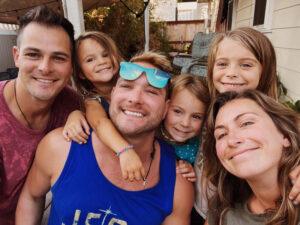
At the end of his life, Devon had severed most relationships and devolved into a hollow shell of his being. The smile and personality which brought so much joy to those around him was gone. He would send cryptic and scathing text messages to family members characterizing himself as victimized, abandoned, and worthless. On November 11, 2023, Devon Wylie was found dead at the age of 35. He’d been living homeless in a shopping center in Florida and overdosed from a combination of fentanyl, methamphetamines, and excessive alcohol.
Devon’s Legacy
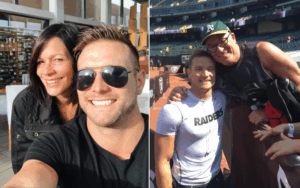
Word spread quickly about Devon, the untimely death of a young former NFL player. We were contacted by Dr. Chris Nowinski from the Concussion & CTE Foundation who asked if we’d be willing to donate Devon’s brain for study at the UNITE Brain Bank.
The discussion within our family was brief and we quickly agreed to do so. We wanted to help anyone and everyone who might find themselves in the same situation as us. We continue to hope that despite tragedy, Devon’s contribution to research can help find answers to prevent this horrible disease.
Upon conclusion of the study, Dr. Ann McKee of the BU CTE Center informed us of Devon’s diagnosis: stage 3 (of 4) CTE. Although hard to hear the news, we are thankful to know what was really going on with Dev. We would like to thank all the doctors and staff who helped walk us through this difficult process.
On behalf of our family, we ask that any athletes who’ve played football to please consider pledging your brain or participating in ongoing research. It is only through these continued studies that diagnosis during life, and one day, a cure for CTE may be possible.
Jay Wynkoop
Dennis Yanzick
Anthony Zahn
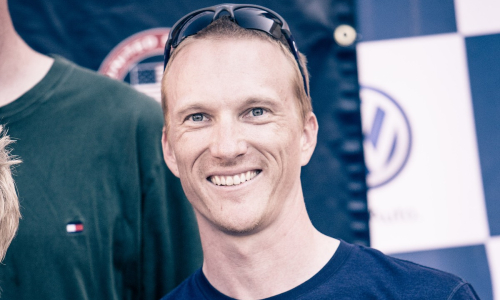
Anthony Cleverdon Zahn was born on October 14, 1974 in Riverside, California. He was diagnosed with a degenerative neuropathy called Charcot-Marie-Tooth (CMT) disease when he was 15 years old. CMT gradually reduced his strength and function in his lower legs and hands. Although CMT made walking, running, and most sports difficult for Anthony, he fell in love with cycling after reading about Greg LeMond’s 1989 Tour de France victory. Cycling was a perfect fit for someone with his condition, capitalizing on his aerobic ability while providing stability and security for his feet and ankles. In a sense, it gave him wings.
Anthony’s passion for cycling shaped much of his life from that time onward. He began competing in triathlon relays with friends and began going for long training rides and racing his bike on weekends. He worked in local bike shops, then opened his own shop — Anthony’s Cyclery — when he was just 22 years old. In addition to running the shop, he sponsored a competitive shop team, helping dozens of racers get their start in the sport.

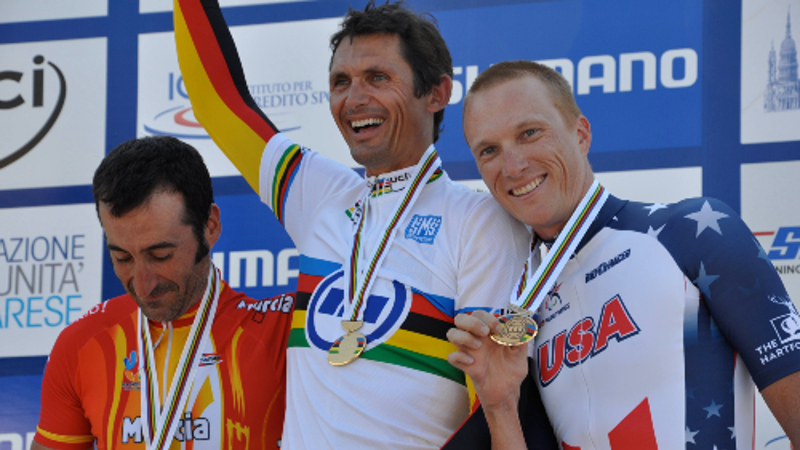
Confronted with the progression of CMT and inspired by another paralympic cyclist, Anthony transitioned to paracycling competitions in 2005. He quickly rose within the paralympic ranks, representing the U.S. at international competitions and earning a spot on the 2008 paralympic team in Beijing, where he won a bronze medal in the time trial. Over the course of his career, Anthony also raced in Australia, Colombia, Mexico, Canada, France, Italy, Ireland, and Spain, winning a bronze medal at the Paracycling World Championships as well. He also competed at the London Paralympics in 2012, completing both the time trial and the road race.

Throughout Anthony’s cycling career, he suffered around a dozen concussions in crashes, losing consciousness in several instances. In the last 10 years of his life, he found it more difficult to keep focus and to read long passages. Nonetheless, his passion for cycling continued even beyond his competitive days. He loved working on his own bikes, but he also jumped at the chance to perform repairs on friends’ bikes. He also took up coaching, helping cyclists of all abilities — including his brother, Patrick — to meet their fitness or competition goals. In 2018, Anthony completed one of his own long-standing goals to climb Mt Haleakala in Maui — over 10,000 feet of climbing in one day — with his brother, Patrick, wife, Liz, and crucial support from Mom and Dad.
In August 2020, Anthony passed away just three months after being diagnosed with pancreatic cancer. Because of the likelihood that his accumulated head trauma might lead to CTE, before he passed he selflessly decided to donate his body to research in the hopes that his accidents and the resulting cognitive impairment might provide valuable data for other concussion sufferers.
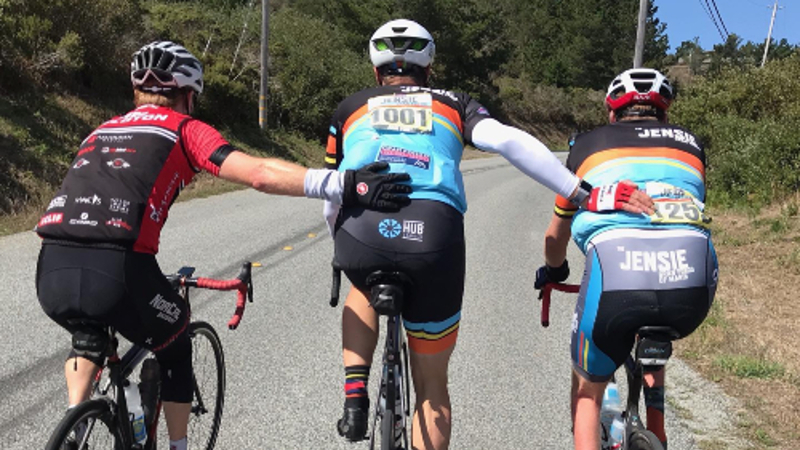
Anthony was a staunch advocate for brain safety in all aspects of recreation, especially at the youth levels. He was well-read on the link between football and CTE and was an ardent opponent of youth tackle football. His family honors his Legacy by continuing to stress brain safety. Those who bike past members of the Zahn family without a helmet on will hear about it. One of Anthony’s worst crashes came from a short ride to the grocery store when he was not wearing a helmet.
Anthony met all of his challenges with courage and grace. He was a superb athlete who gave his all in every event he entered. He was an engaged and conscientious coach and a generous sponsor. He was loved dearly by his friends, family, and wife, Liz.