Ken Haller
I’ll begin by saying that on October 13, 2008, I lost the first man I ever loved, my dad, William Haller. Less than three months prior on June 25, I also lost another man I loved with all my heart, my brother, Ken Haller. Needless to say, I wish I could go back in time, knowing all that I know now. My dad and brother were both diagnosed with ALS, but unlike my father and most ALS patients, my brother’s mind deteriorated quickly, as if he had some sort of dementia. We later discovered that Kenny also had chronic traumatic encephalopathy (CTE).
Let me start from the beginning…
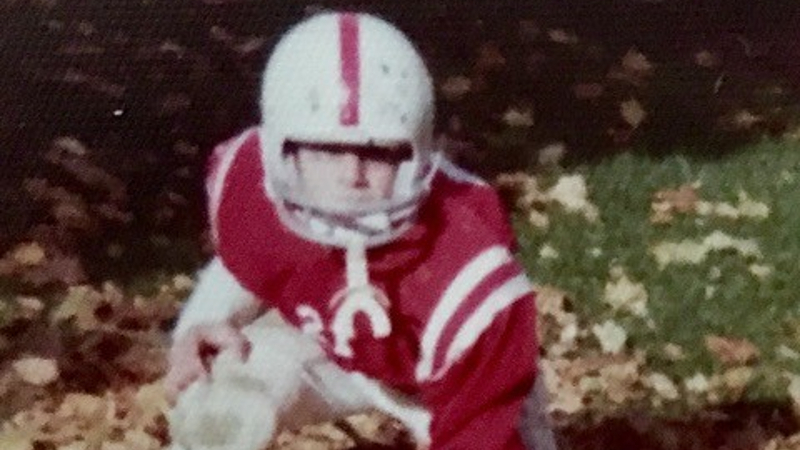
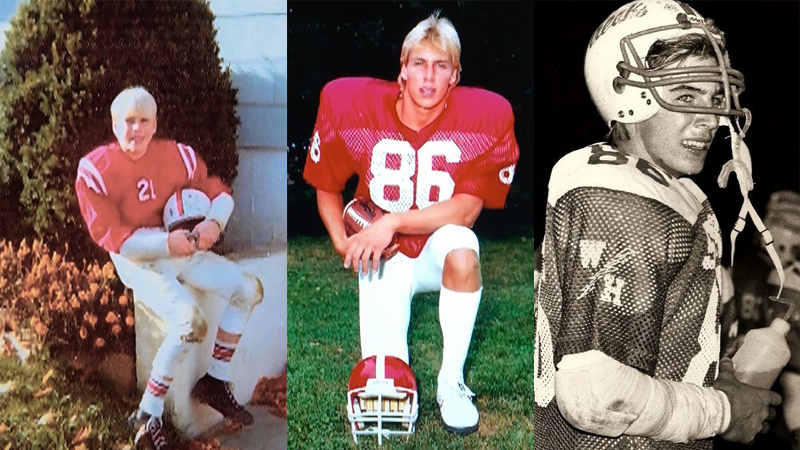
Kenny was the third born in our family, after my two sisters and two years before me, and since he was my dad’s first and only son, their bond was very strong. One could never live here on earth without the other. I tell myself that is the reason why their lives ended within three months of each other. As a toddler, Kenny had so much energy and had no fear, so as soon as he was old enough, my dad signed him up to play football. I’m sure my mom was delighted, since he needed an outlet for all of the energy he had. He played football from eight years old through his college years as a tight end. By the time he was a senior in high school, Kenny was 6’4”, built, extremely attractive, and the life of the party. He always had a sparkle in his eyes and loved life. Kenny had friends of all kinds, but his best friend was my dad. They spent as much time together as possible and truly enjoyed each other’s company.
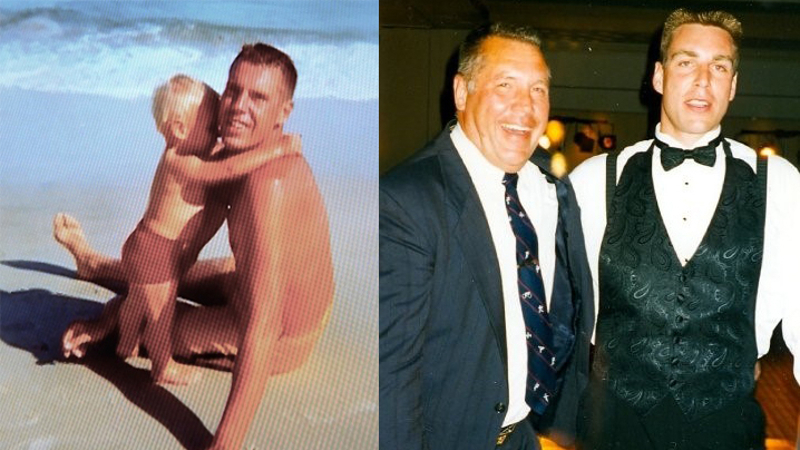
I can’t tell you how many concussions my brother must have had throughout his football years. At that time a player was expected to get right back in the game after they had their “bell rung.” It was always about the win and, in my brother’s senior year of high school, the team won the conference and we were all so proud. After college, Kenny had a career, got married and had two beautiful daughters. As time went on, his personality changed and when we look back now as a family, there were signs that something wasn’t quite right beginning in the year 2000, eight years before he died. He would act impulsively, make inappropriate remarks and poor choices. As time went by, these actions happened more often than not. Eventually, Kenny could not keep a job, his marriage deteriorated then fell apart, and he had to move into an apartment on his own. We thought this was best, since the only thing he focused on and wanted to do was see his daughters, and we all lived an hour away. It was about this time that my dad starting slurring his speech and exhibiting signs of what we later found out was ALS, most likely triggered by the stress of what was happening to Kenny, although we still didn’t know what was wrong with him.
A family member said that he was sure Kenny was doing drugs and at first I thought—well, maybe—but then I had that gut feeling again and it told me that it wasn’t drugs. My sister, Diane, took him to get drug tested and the results were negative. Diane was about a year and a half older than Kenny, and I have to say, she was his guardian angel. Since she was home raising four kids and did not work outside of her home, she had time while the kids were at school to take him to his doctor appointments, manage his prescriptions, do his grocery shopping, clean his apartment, etc. She was Kenny’s advocate and I really don’t know what our family would’ve ever done without her. Of course, my parents would also go with her as much as possible to help, because Kenny could be a handful. As time went on, my dad’s ALS got worse and Diane not only took care of every aspect of Kenny’s life, she also went to every one of my dad’s doctor appointments to take notes and advocate for him as well.
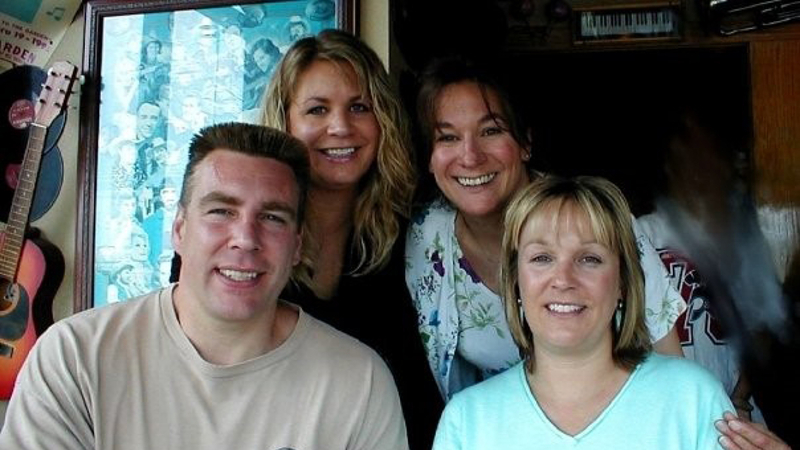
Over the next couple of months, the doctors tried to figure out what was wrong with Kenny. Was it Pick’s Disease, or some other kind of dementia? Nobody really knew, but after Kenny’s muscles in his arms started twitching uncontrollably, the doctor diagnosed him with ALS. I read everything I could about ALS and it never made sense that his mind was affected. Unfortunately, his memory got so bad that 10 minutes after visiting his daughters at their house on any given day, he would forget and drive right back again. He would also show up at their school just to see them.
I’ll never forget the day my sister received a call from the police who said that Kenny showed up at the school and if he shows up again, he will be arrested. My sister and parents immediately brought him to the psychiatric part of the hospital’s emergency department and by the time I showed up after work, he was sitting in a padded room. Unfortunately, the staff was left no choice but to put him there since he went to the nurse’s station, collected his bag of clothes and shoes, and tried to leave the hospital without permission. It was so heartbreaking to see him in this padded room, he seemed so alone, just looking around with no understanding of where he was and why he was there. They allowed me to go into the room with him for a short time and all I could do was put my arm around him and lean on my big brother’s shoulder, trying not to cry. It made no sense to ask him what happened, since I already knew his answer. He just wanted to see his girls—that was always his answer.
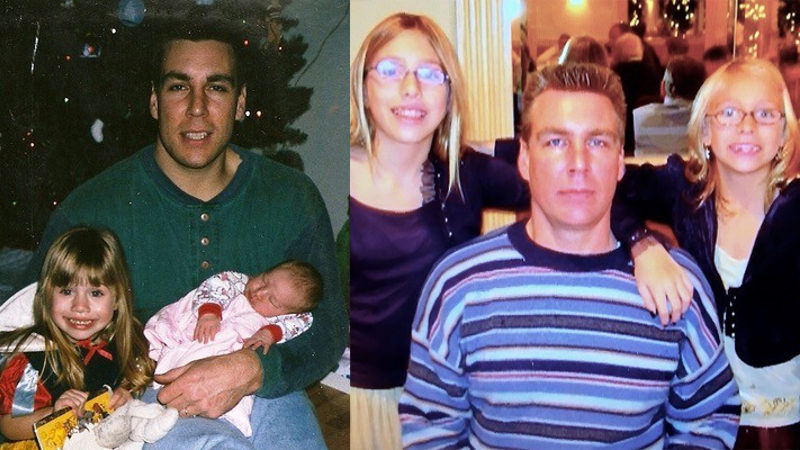
Kenny with his daughters Morgan and Cassidy.
It was at that moment that my sister, parents, and I made the decision that he needed to live in a nursing home in that area, so his daughters could visit him frequently. He no longer could live on his own. Thankfully, Diane, along with my mom, found Kenny a good nursing home. Of course, after moving into it, he was so determined to see his daughters that he got out through the window. They found him walking about a mile away. When asked why he left, it was the same answer, “I just want to see my girls.” After that, the nursing home staff removed the crank handles of not only the windows in his room, but practically every window on the floor. Even with his mind deteriorating and his muscles going to waste, he still won over the hearts of the nurses. I’m not surprised. He had a way about him.
On my visits, I would bring my little blow-up tub and try to fit his size 14 foot in it so I could give him a pedicure while Diane cut his hair. By the way, he didn’t like to wear shoes, even when he went outside in the locked courtyard, so just imagine what his feet looked like. I think I had to change the water a few times, but it’s ok, anything for my big brother. It was during those times that I’d notice some of his old personality showing up when he would put his foot in my face and smirk, something he rarely did anymore. By this time, Kenny didn’t talk much, never smiled, only wanted to eat candy, nothing nutritious, and watch Sponge Bob on TV. One of the saddest moments was when I realized looking at his eyes that the light had gone out, there was no more sparkle. It was just a blank stare. He was just a shell. The Kenny that I knew all my life was gone and it was so hard to believe. On June 25, 2008, my brother passed away at 44 years old and on October 13, 2008, my dad passed away at 72 years old.
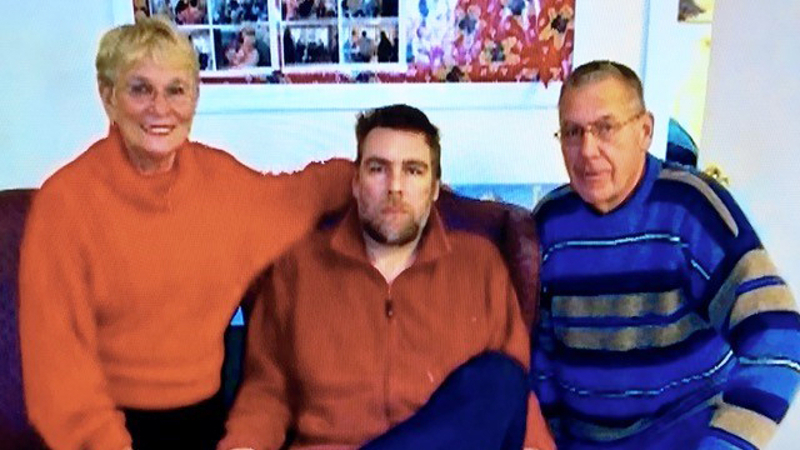
We were told that Kenny died from complications of having ALS, but I always had a gut feeling that it was something more. It was such a mystery. As a family, we decided to donate my dad’s and Kenny’s organs for ALS research. Approximately four years later, I was flipping through the channels one weekend morning and came across Chris Nowinski, the co-founder and CEO of the Concussion Legacy Foundation, on ESPN discussing a disease that I’ve never heard of before called CTE. I swear I was channeling my brother because I pretty much never watched ESPN, nor would I stop at that channel for any reason. As Chris was talking about CTE symptoms and causes, my mouth dropped to the floor and I just kept saying loudly, “That’s it! He’s describing Kenny.” Immediately, I called Diane and told her to put on ESPN and after watching, she agreed that he was describing my brother’s symptoms. Fortunately, I was able to contact Chris Nowinski, who put me in touch with Dr. Ann McKee, the director of the UNITE Brain Bank, and Lisa McHale, Director of Legacy Family Relations at the Concussion Legacy Foundation.
It took about two years, but we were finally able to convince the ALS research group who had my dad’s and brother’s organs to send Dr. McKee what she needed in order to conduct the research and hopefully find some answers. Two months later, we had the last of many conference calls with the Boston University research group and Dr. McKee confirmed that although Kenny did have ALS, it was secondary to Chronic Traumatic Encephalopathy (CTE). Mystery solved! Although my dad played basketball and did receive one concussion during his childhood, he did not have any signs of CTE and Dr. McKee confirmed that complications from ALS caused his death.
In researching everything I can regarding CTE, I’m convinced that, had my brother not played football, especially at a such young age, he may still be alive today to see his daughters grow into beautiful adults and one day walk them down the aisle when they get married, something that I know he longed for. So, then I ask myself, do I think Kenny would have played football had he known the risks? If he had known that his future would be would be giving up seeing his daughters, parents, sisters, and friends again? The answer to this question is “NO!” How do I know that? I know that because that’s how well I knew my brother. He was only two years older and since he and I were the youngest, we spent much time together and were a lot alike. There are so many more stories I could tell about Kenny and how he went from this proud, tall, muscular, all-star with a personality so pragmatic and fun to someone who didn’t care about hygiene or conversation and had no more light in his eyes, but I will save these stories for the book I’m going to write someday. Kenny’s story is certainly one that could be made into a movie.
As I said in the beginning of my story, I wish I could go back in time, knowing what I know now, because things would’ve made more sense. I will spend the rest of my life raising awareness about CTE and telling my brother’s story in hopes that it may save even one life and one family’s heartache. My advice to parents is to please reconsider if you’ve decided to enroll your child in collision sports like tackle football. Take it from me and my family, you never, ever want to watch your child’s mind deteriorate like we did. If you choose to ignore all of the evidence out there regarding CTE, please wait until they’re older and allow them to play collision sports only if it is their decision.
Not a day goes by that my family and I don’t think of my dad and Kenny, or that Mom doesn’t cry and we wish they were still here with us, but knowing they are together again on the other side gives us peace.
Our family is grateful for Dr. Ann McKee and the staff at the UNITE Brain Bank for all of their hard work and help in finding the true cause of my brother’s death.
William Haller
Darryl Hammond
Brent Hancock
Devin Hands
Walter Haney
Harry Hanna
Evan Hansen
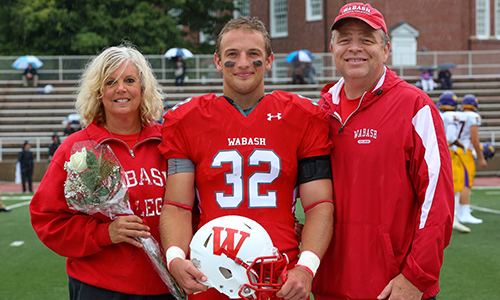
Evan Hansen was an all-conference linebacker and captain for Wabash College football. He worked hard to get good grades. He had a girlfriend. He was well-connected on campus. He was fluent in Spanish and after Wabash planned to work in healthcare in Latinx communities. It would be easy to forgive someone for believing Evan Hansen’s life was perfect.
But Hansen’s father Chuck has a different word to describe the final months of his son’s life.
“It was like an imperfect storm,” Chuck said.
Chuck and Mary Hansen first noticed their son’s athletic prowess when Evan confidently and stably walked across their living room. He soon became a crib escape artist, foreshadowing a life full of adventure.
Evan’s athletic exploits easily translated from the nursery to the field. In youth soccer, Evan’s advanced coordination and speed often led him to enter halftime with more than 10 goals to his name.
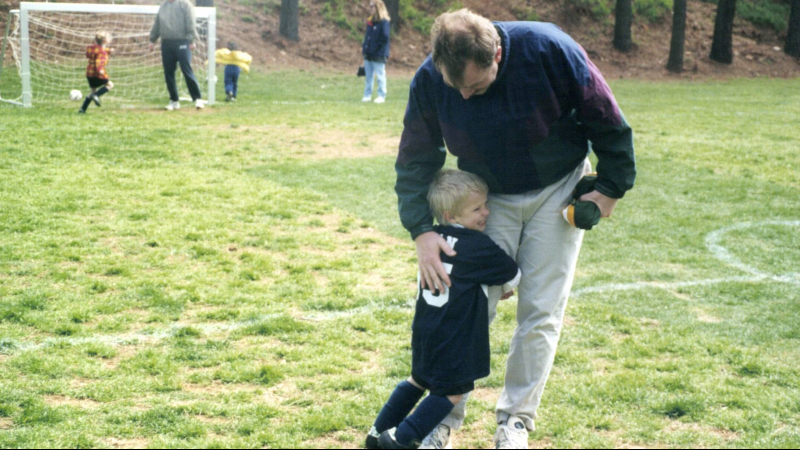
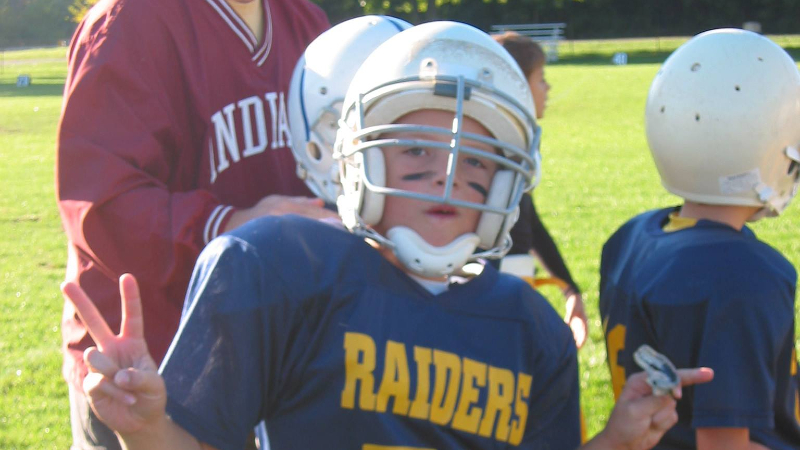
He started playing tackle football when he was in the third grade. His natural gifts and fearlessness immediately earned him a role as a do-everything running back and linebacker.
Mary says Evan was “all in” with whatever he did. Tackling was no exception. The family rarely saw a ballcarrier push Evan back for extra yards after first contact. Evan suffered one diagnosed concussion at Guerin Catholic High School when he took a knee to the helmet that left him unconscious on the field for upwards of ten minutes. Outside of the missed time from the concussion, Evan rarely missed a snap.
Many mornings after games, Evan clocked in to work the counter for Joe’s Butcher Shop in Carmel. With an enormous grin on his face, he greeted customers by first name as they entered the store.
“He was humble and unassuming,” Chuck said. “You would have no idea the night before he had 15 tackles and ran for 100 yards.”
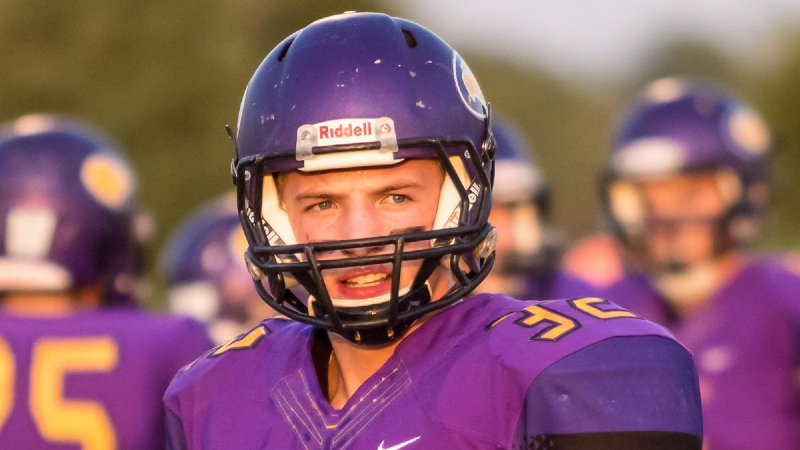
Evan’s generosity and kindness weren’t reserved for customers. The book of Evan Hansen is full of stories of service to others.
Evan once finished football practice and rather than going home to rest, stayed at school to encourage a friend who was competing in their first cross country race. The friend finished last by several minutes but crossed the finish line to see Evan as animated as if they had won the Boston Marathon.
After graduating from Guerin in 2015, Evan received a scholarship to play football for Wabash College, a Division III powerhouse. Hansen arrived on campus intending to study Biology and Spanish and, as he told his parents, “light it up” in fall camp so he could earn playing time immediately.
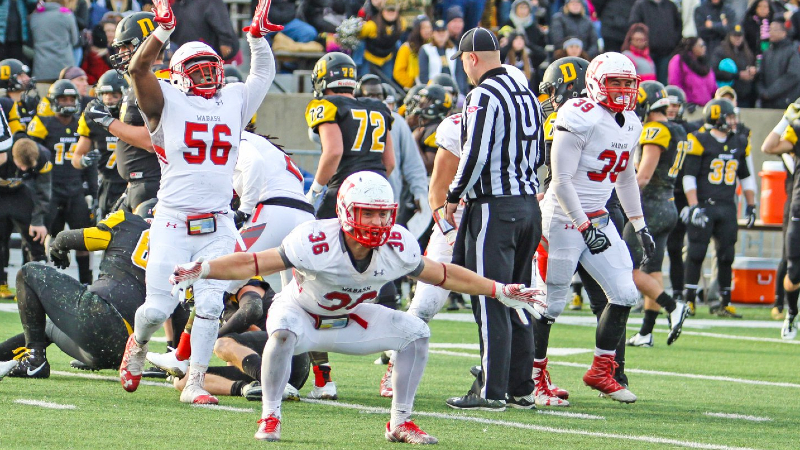
His star shone bright almost immediately. He quickly catapulted up the Wabash depth chart and became the starting middle linebacker as a freshman in 2015. He recorded 67 tackles for the Little Giants on their run to the Division III quarterfinals.
“His tackling was how he got noticed right away,” Chuck said. “When he saw a hole, he knew someone has to fill it.”
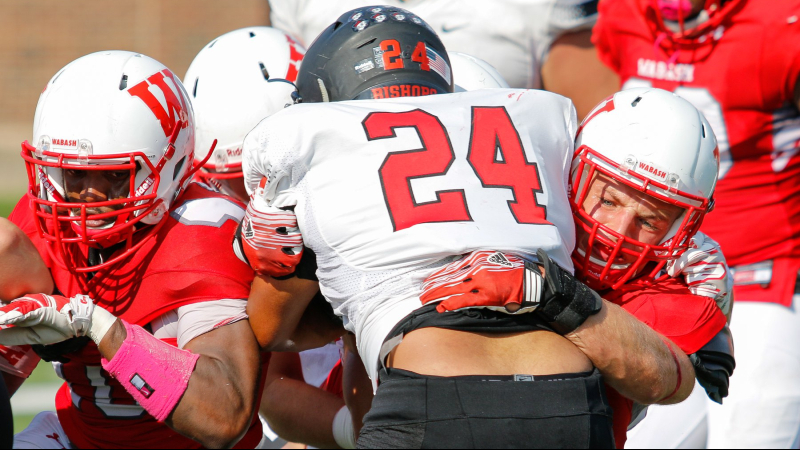
Evan recorded 209 tackles in his first three seasons for Wabash. He was never diagnosed with a concussion in college. In hindsight, the Hansens believe Evan had regretfully mastered the art of “shaking it off.”
“He had mashed fingers, knee injuries, back injuries and all kinds of scratches and bruises,” Chuck said. “For him to make a tackle and to feel a little dizzy or disoriented, I think he just figured that that was part of football.”
Evan was never at the top of his class by sheer knowledge alone; he had always been able to put in the work to achieve the grades he wanted. But after the fall term in 2017, Evan told Mary he was struggling emotionally and with his schoolwork.
“’I’m depressed and I have no idea why I’m feeling this way,’” Mary remembers Evan saying.
Evan’s admission shocked his family and those close to him. The Hansens responded by taking Evan to doctors who prescribed different therapies and medications to manage Evan’s depression.
Temporary relief came when Evan went abroad to Spain for his spring term in 2018. He thrived in Wabash’s pass/fail grading system for students abroad. His days were spent traveling and honing his Spanish. Mary joined Evan at one point in Europe and saw her son rejuvenated.
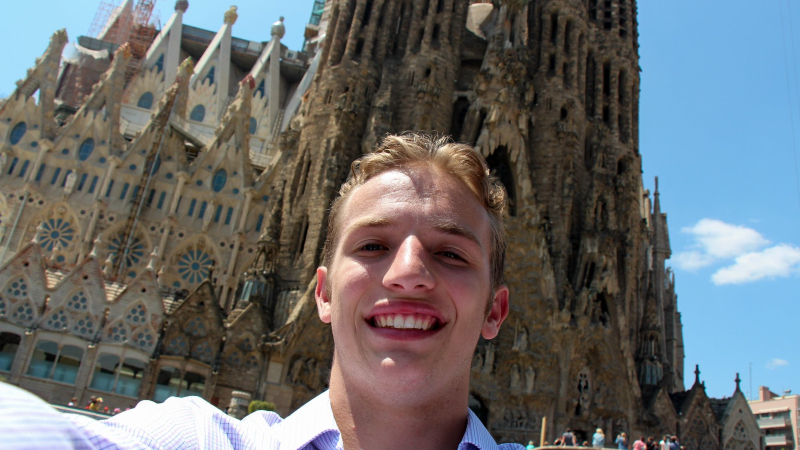
“I think our concerns kind of disappeared,” Mary said. “We thought he just needed a change of scenery and a little bit of pep in his step to finish his senior year.”
Evan returned to the U.S. and completed an internship as a translator for Mansfield-Kaseman Health Clinic near Washington D.C. before returning to Wabash. He was regularly seeing a therapist. He was on medication. From the outside, his mental health seemed managed.
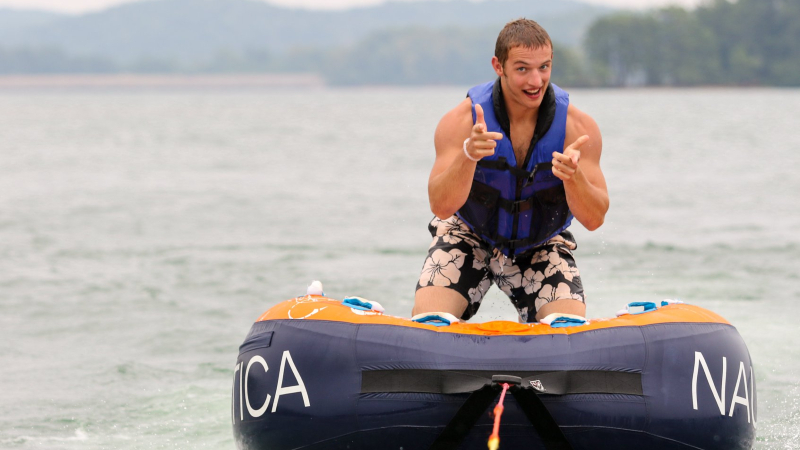
“But anytime you asked him about his treatments, the answer was, ‘I don’t think it’s helping,’” Mary said.
With Evan as a captain, Wabash opened their 2018 season with a win at Hiram College on September 1. They came home for Senior Day on September 8, winning 16-13 over University of Wisconsin – Stevens Point. Evan’s grandparents were in attendance. The family went out to a celebratory dinner afterwards. Evan went to a fraternity party that night.
The next morning, Evan attended Wabash coaches meetings and seemed like his normal self. It was the calm before the imperfect storm.
On Monday, September 10, 2018, Evan Hansen died by suicide. He was 21 years old.
Chuck and Mary Hansen sat at the cemetery in the days following Evan’s death when Chuck received a Facebook message from the Concussion & CTE Foundation’s co-founder and CEO Chris Nowinski, Ph.D. Nowinski asked the Hansens if they would donate Evan’s brain for CTE research at the UNITE Brain Bank. They obliged.
While the family awaited the diagnosis from the Brain Bank, the Hansens poured themselves into research about CTE. They learned the symptoms of the degenerative brain disease could affect a patient’s mood, behavior, and cognition. They learned repetitive, nonconcussive impacts, not concussions, are the driving force behind CTE. And they learned how the Foundation’s Flag Football Under 14 campaign aims to prevent CTE by avoiding the nonconcussive impacts from youth tackle football before the brain is fully developed.
In fall 2019, Brain Bank researchers told the Hansens their son was diagnosed with Stage 1 (of 4) CTE.
The news confirmed the Hansens’ suspicions. Evan had played 14 years of tackle football prior to his death, 10 of which he played on both sides of the ball. His mood and mental health had declined over the last year of his life, as had his ability to focus and excel academically.
Chuck’s storm analogy describes the confluence of factors surrounding Evan’s suicide. Evan had CTE, which could have contributed to his depression and impulsivity. But he was also on medications that may have affected his cognition. Before his death, Evan was scheduled to have bloodwork done as a first step towards finding depression medications that were more tailored for his genetic profile.
Chuck and Mary have been told by many how Evan had world-changing potential before his death. They can also close their eyes and imagine Evan as a loving husband, an amazing father, a championship coach, or a community leader someday. But they choose to focus on the future.
“We’re trying to help other people learn the dangers of potential brain injuries,” Chuck said. “We want to shed light on all the things we didn’t know about.”
Since Evan’s death, Chuck and Mary have been fundraising and raising awareness for mental health, concussion, and CTE. Among many ventures in Evan’s name, they started an internship at the Merciful H.E.L.P. Center in Carmel where Evan managed the Tools for School program as a summer intern. And in honor of Evan’s #32 at Wabash, they will be donating $3,200 each year to the Concussion & CTE Foundation. Their gifts will go towards CTE research and some of our programs that could have made a difference in Evan’s life: the HelpLine, Flag Football Under 14, and Team Up Against Concussions.
Losing someone who was as outwardly strong as Evan sparked a conversation about mental health at Wabash, in Carmel, and elsewhere. For football players and other youth athletes at risk for concussion and CTE, the Hansens think the conversation needs to be more a nuanced one.
“I try to tell people that if they are finding out their child is depressed,” Mary said. “Just make sure that whenever they talk with professionals, they tell them that they played tackle football and for how many years. That needs to be part of the discussion.”
Through his story, Evan continues to help others. A friend of the Hansens wrote to them saying how because of Evan’s tragedy, their grandson was going to stick with baseball for now.