A Team Effort Against Suspected CTE

For Jim Yost, life has always revolved around football.

A coach’s son, Jim played youth tackle football in Lockport, Ill. and grew to become a Division I prospect. Though college coaches sent letters and scholarship offers throughout his senior year of high school, the hard-hitting safety had decided long before that he would first play for his father Jerry, who had extensive success as the head coach of nearby Joliet Junior College.
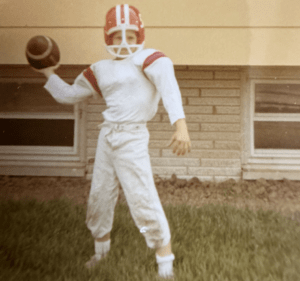
Jim Yost in his youth holding a football

From All-State in high school to All-American in junior college, Yost’s football accolades continued to attract coaches’ attention nationwide. He visited universities on each coast but decided to continue his career at the University of Iowa, whose home and away games were all within driving distance for family in the Chicago suburbs.

Jim was thrilled to play for future Hall of Fame coach Hayden Fry, but his Iowa career became a series of haunting what-ifs. Injuries to each knee cost him his first two seasons, but three major concussions would ultimately cut his Hawkeyes career short.
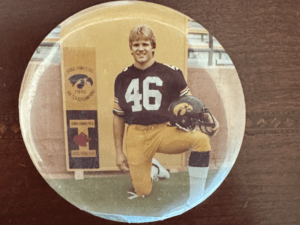
Jim Yost in a his University of Iowa football uniform

“You can imagine how bad it must have been, because that was 1984,” Yost said. “Back then, all they used to do is wave ammonia under your nose and tell you to get back in there.”

After his third concussion of the 1984 season, he watched from a hospital bed as a doctor called Coach Fry to advise that this was the end of Yost’s playing career. As a young man whose sole focus in life was to play in the NFL, Yost says he wept for a week straight, shattered by his circumstances.

“To this day, I dream at least twice a week that I’m playing or I have an extra year of eligibility,” he said. “It still literally haunts me.”

“You’ve got something, but I don’t know what it is.”

Though he could no longer play, Yost remained with the Hawkeyes as he completed his degree, joining the team for memorable bowl game trips to Southern California, Jacksonville, and Atlanta. He was so enamored by Atlanta that he decided to move there after college.

Jim found success as a healthcare technology executive, but football remained a big focus in the family. From the start of his relationship with his wife Caroline in 2013, the two spent many Saturdays tailgating and rooting on Jim’s son Zander, who played safety at Georgia Southern.
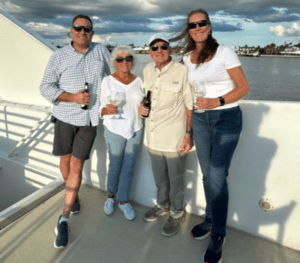
Jim and Caroline Yost on a boat with family

A few years after his son’s final snap, Jim started to grapple with what he thought could be consequences of his own football journey.

Around the time he turned 60, Jim and Caroline noticed he would sporadically struggle with word recall and started experiencing mild tremors. Jim had also acted out his dreams each night for years, seeming at times to be unconsciously fighting someone or something. Jim and Caroline only recently learned of the potential link between REM sleep behavior disorder (RBD) and traumatic brain injury (TBI).
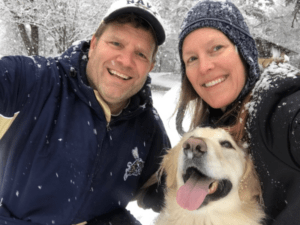
Jim and Caroline Yost with their dog in the snow

While a sleep study confirmed the RBD diagnosis, the Yosts’ quest for answers about Jim’s newer symptoms proved extraordinarily frustrating. One Atlanta neurologist ruled out Parkinson’s Disease following a DaTscan, but otherwise provided little actionable guidance.

“He basically said, ‘Yeah, you’ve got something, but I don’t know what it is,’ Caroline recalled. “’It’s not diagnosable, so I’ll see you in a year.’ I thought to myself, ‘That’s unacceptable and not what I’m going to do.'”

As a cancer survivor and the daughter of a doctor, Caroline learned not to accept “We don’t know” as a final answer while navigating the complex healthcare system. As football fans, she and Jim had learned a bit about Chronic Traumatic Encephalopathy (CTE) over the years, so they were surprised when multiple Atlanta clinicians told them they couldn’t determine if Jim’s symptoms were related to brain trauma from football. Every appointment seemed to end with a doctor telling Jim there wasn’t much they could do to help.

Jim and Caroline Yost smile in front of a building

Jim says in more than 12 years together, he and Caroline can count on one hand the times they had raised their voices at each other. So, when he would catch himself getting more easily aggravated, he felt even more urgency to learn what was troubling him.

Knowing there must be someone who could provide answers, Caroline was not going to give up.

Finally, someone who ‘gets it’

Forced to expand their search for experts beyond Atlanta, Caroline contacted the Concussion & CTE Foundation HelpLine and signed Jim up for the foundation’s Research Registry in May 2025. They quickly learned about three CTE studies for which Jim was eligible, and he eagerly enrolled in all three.

Jim was determined to find a clinician with insight into his symptoms and excited to contribute to cutting-edge research. He and Caroline headed south to Gainesville, Fla., where they first met with Dr. Breton Asken, a Site Principal Investigator for the DIAGNOSE CTE Research Project.

The initial part of the study involved Jim answering a lengthy list of questions from Dr. Asken, followed by a clinical evaluation by Dr. Michael Jaffee, the director of the University of Florida Brain Injury, Rehabilitation and Neuroresilience Center.

Impressed by the amount and specificity of questions and tests, the focus of the evaluation, and the compassionate approach of Drs. Asken and Jaffee, Jim finally felt heard and understood. The UF team seemed to have a true grasp of his experience, his symptoms, and his concerns.
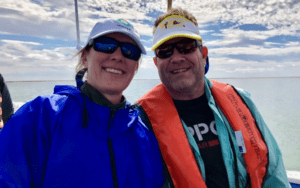
Jim and Caroline Yost on a boat in the sea

“Even though we’re Georgia Bulldog fans, we hang out in Gainesville now,” he said. “When I left, I didn’t feel alone at all.”

While CTE is currently only diagnosed post-mortem, UF doctors explained to Jim in October 2025 that based on his football experience and his symptoms at his age, it is likely he is living with CTE.

“It was heavy,” Caroline says. “Honestly, I’m still processing it, and I know Jim is, too.”

Through his discussions at UF, Jim had come to understand he had likely sustained at least 50 concussions playing football, in addition to thousands of additional impacts that did not lead to immediate symptoms. Lovingly called a “big teddy bear” by his wife, Jim does not worry about becoming aggressive or violent. His biggest concern with suspected CTE is not knowing whether he can maintain his own high standards of caring for his family.
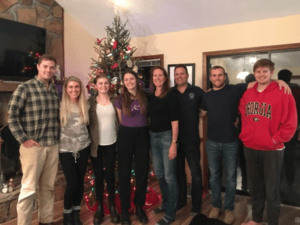
Jim and Caroline Yost with their family during Christmas

“That is my purpose: being a husband and father,” Jim said. “The thought of not being a significant help and inspiration in their lives is extremely difficult for me.”

A new community, a renewed purpose

Jim says Caroline is the ultimate care partner — a true empath. She said her own experiences inspire her to help others avoid the roadblocks she has overcome.

“I believe thoroughly in advocacy,” Caroline said. “I’ve been doing that very actively on the cancer front, and I’ve had lots of people tell me that it’s made a difference in their own journey, and it gives me hope to help other people.”
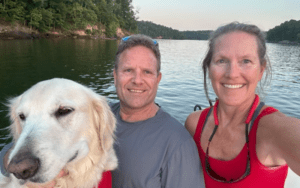
Jim and Caroline Yost on a boat with their dog

While she has vast experience navigating healthcare, Caroline says supporting a partner with suspected CTE is still very new.

“Part of what’s hard for me is that we don’t know the direction this is going to go,” she said. “There have been times when I’ve gotten frustrated with Jim, and I haven’t understood the difficulties that he was having. We’ve gotten a lot more open with some of the things he’s been dealing with.”

Though Caroline has a close friend caring for a spouse battling Alzheimer’s diseaseshe had never met anyone facing suspected CTE. Searching for guidance, she decided to join a Zoom meeting with the Concussion & CTE Foundation’s CTE Caregivers Support Group, which meets the third Tuesday of each month.

While members of the group were helping loved ones at different stages with different needs, Caroline says it was refreshing to be in a room with people on a similar journey.

“The conversation was just proof that it’s a safe space for people to talk about what is hard right now,” she said. “I need community. It’s just part of my being.” 

Guided by their faith, which Jim says is “not a crutch but an iron lung,” the Yosts are taking one step at a time, continuing to self-advocate, and looking forward to helping others navigate life with suspected CTE.
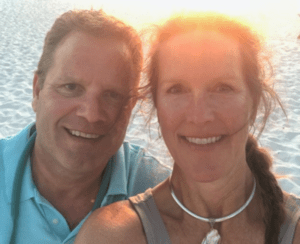
Jim and Caroline Yost on the beach  

Jim said he was astonished by the depth of CTE knowledge he found in Gainesville and within the Concussion & CTE Foundation. He and Caroline joined the foundation’s Advisory Board At Large in 2026, committing to advance research into CTE diagnostics and treatments and to raise awareness for the need to train the medical community on treating suspected CTE. 

In a life defined by football, Jim says this is no time to retreat to the sidelines. 

“I have an opportunity to make a difference in tens of thousands of people’s lives,” he said. “I’m at a point in my life where that’s more important than anything.”

A Former College Soccer Player on Keeping Hope After Concussions

Trying to Power through Concussions

By the time I was 20 years old, I had suffered seven concussions from playing soccer.

That’s not a number I ever imagined would define how I lived. Like so many athletes, I thought toughness meant enduring the pain. We push through pulled muscles. We train when we’re sick. We feel disappointed in ourselves if we take a day off. I believed loving the game enough meant I could overcome any health problems.

My third concussion in November of 2023 showed that wasn’t true.

It wasn’t just a hit to the head. I broke part of my neck and suffered a brachial plexus injury in my shoulder. An ambulance rushed me from the game to an emergency room, where doctors said my injuries were similar to what they see in motorcycle crashes. I will never forget the feeling of being unable to move my arms as shock flooded my body. Even now, it’s hard to fathom how one bad soccer tackle could cause so much damage.

Former soccer player Caroline Souza in a bed at the hospital

But my 15-year-old self’s love for soccer took precedence over everything else, including my health.

For months, I went through rehab, recovery, and training just to get back on the field. Looking back now, this period is around when I first started noticing changes in myself. But soccer was my whole life, and headaches weren’t going to stop me. When concussion number four occurred, I just kept soldiering on. If I overcame number three, I could get past this, too.

That mindset carried me all the way to my seventh and ultimately, final brain injury.

Making Dreams a Reality

Playing college soccer was always my dream. Both of my sisters played collegiately and I was determined to follow in their footsteps. When I signed that paper to play at Chico State, it was a happiness I had never felt before. All the difficulties of my past felt justified.

But walking the hallways my senior year of high school, I often felt off. Some days the headaches were so bad I sat in my car and missed class because I couldn’t bear the light or the sound of the bell. Still, I kept those struggles buried deep inside because what I wanted most was to put on a college jersey and play alongside athletes I admired.

Former Chico State soccer player Caroline Souza dribbling the ball on field

My first season of D2 soccer in 2024 felt like a culmination of all my dedication and sacrifice. My jersey was #3, a number I had used since I was three years old. I passed the fitness test. I practiced. I played substantial minutes. I scored my first and last collegiate goal. I made the travel roster. I did all of it while pushing myself further than anyone could possibly know.

I was happy and content. I complained about training some days, just like any other athlete. I took it all for granted, because I could have never imagined being done playing before graduation.

Then, on a cold March spring morning at practice, one final hit to the head brought my soccer career to an end.

This part is hard to write about because I don’t remember much. That final injury forced me to take a step back and truly reflect on the damage done to my brain. I found myself grieving not just the loss of soccer, but the loss of who I once was. I am not the same person anymore. My brain has undergone changes and I see the world differently now.

Some days the headaches are so severe I can’t open my eyes. Other days the brain fog makes me lose track of what I’m saying mid-sentence. I read a single line and immediately have to look away because the strain is too much.

But in spite of all these difficult moments, one thing has never wavered: my hope.

Living with Hope for the Future

Recently, I tested that hope in a way I never expected: running my first half marathon. It was harder than anything I’ve ever done since leaving soccer. But my goal wasn’t a fast completion time or receiving a medal. It was proof. Proof I could still push my body despite a brain injury. I finished in under two hours and have never felt so accomplished.

Crossing the finish line came with consequences; a migraine afterward, a reminder my body still speaks in symptoms. But I had prepared with intention. I listened, adjusted, and navigated my body’s limits without surrendering to them.

That race taught me strength doesn’t mean pretending nothing hurts. It means moving forward, aware and proud. My body and brain are different now though still very capable. If given the choice, I would do it all over again. Not because I ignore the pain, but because I honor the process it took to get there.

Former soccer player Caroline Souza smiles in front of the Golden Gate Bridge

I know I may never be the same and might live with these issues for a long time. Still, I refuse to give up on creating a new life and discovering the parts of myself that were overshadowed by being an athlete. My story doesn’t end just because soccer did.

I’m sharing my story not because I’ve yet recovered, but because I’m still fighting. I want to spread awareness about concussions, especially in soccer, where these injuries are too often minimized. When my doctor explained the consequences of continuing to play after my most recent concussion, it wasn’t a list any young athlete should have to hear. No game is worth a lifetime of pain without fully understanding the risks.

If you’re an athlete struggling and wondering if what you’re feeling is “normal,” please know you aren’t alone, and you aren’t weak. I still have to remind myself of this at times, because even now my brain tries to convince me otherwise.

During rehab, my trainer gave me an assignment. Before I could be cleared to return, he told me to talk to my loved ones and ask whether I should continue playing soccer or stop completely to prioritize my health and future. Every single one of them chose the latter.

Former soccer player Caroline Souza standing in front of the Golden Gate Bridge

They knew how much joy soccer brought me. They knew how determined I was to come back and how painful it would be to lose the game. Despite that, they still chose my health because they loved me for who I am, not for my athletic prowess. In that moment, I realized I wasn’t just a soccer player in their eyes. I was a daughter, a sister, and a friend. A person whose life mattered beyond the field.

You don’t have to be fully healed to remain hopeful. Whenever you have a positive day, let that hope become your whole personality. Shine brighter than you ever have. And during those tough moments, remember those better times. Reach out to the people who give you strength. Even if it seems far away, one day you’ll feel at peace.

Don’t give up on your future just because it looks different than what you might have planned.

Former soccer player Caroline Souza smiles while on a hike

As former soccer player Christen Press said on Instagram:
I let go of football before I felt ready. There’s grief in an unwritten ending, a story mid-sentence. But somewhere along the way, what felt like failure became freedom. If you’re in your own in-between—half shed, half holding on—be gentle. Growth doesn’t ask permission. It simply continues.”

Tim Zaniboni

Warning: This contains mentions of suicide that may be triggering to some readers.

A Lifelong Love of Athletics

My husband Tim was an athlete long before I met him. Even after his playing days were over, sports remained the heartbeat of his life.

Tim played hockey, baseball, and football, dedicating himself fully to each sport. The latter two carried him through college at Massachusetts Maritime Academy, and he went on to play semi-professional football after graduating. Athletics weren’t just games to him; they meant discipline, identity, brotherhood, and passion.

Legacy Donor Tim Zaniboni in his Massachusetts Maritime Academy football uniform

After Tim’s competitive years, he never stepped away from the grind. He served as an umpire, referee, and coach in both baseball and football. He poured his heart out and shared his knowledge with every young athlete who came his way, continuing his lifelong love for sports while mentoring the next generation. The field was where he felt most alive.

Legacy Donor Tim Zaniboni and his youth baseball team in uniforms

A Changing Relationship

I met Tim in 2020 and we were married in 2022. He was smart, deeply kind, and protective of the people he loved. His gregarious personality was only surpassed by an even bigger heart.

Legacy Donor Tim Zaniboni and his wife Dara on their wedding day

In 2021, Tim began experiencing seizures which occurred almost monthly for the following two years. On May 30, 2023, he had four seizures in a row, and I rushed him to our nearest emergency room. After being admitted, Tim underwent CT scans, MRIs and sleep studies, but we were never given clear answers as to the cause of these seizures. His medications were adjusted multiple times until they found one that helped. They didn’t stop entirely but became less frequent, about once every five months.

In November of 2024, some of Tim’s symptoms started getting worse, including paranoia, anxiety, and changes in his thinking. What had been subtle became more pronounced. I made the difficult decision to move out, but only seven minutes away, so I could be close if he needed me. We remained connected, speaking every day and seeing each other weekly.

Legacy Donor Tim Zaniboni with wife and friends on their wedding day

In August of 2025, we recommitted to working on our marriage, but Tim’s mental health declined rapidly and made that a challenge. Along with his paranoia and anxiety, he also developed auditory hallucinations and fell into a deep depression. In October, Tim was involuntarily admitted to a behavioral health hospital and diagnosed with bipolar disorder and OCD. He was prescribed Prozac and antipsychotic medications, but nothing seemed to help. He was hospitalized once again in November, with his treatments being stopped and adjusted.

For a little while, Tim seemed stable. Then we had to say goodbye to his dog, Cali. Her declining heart condition led to the heartbreaking decision to end her life. That loss deeply affected him, and his depression intensified.

Legacy Donor Tim Zaniboni faces the ocean on a beach

Tim was admitted a final time in January 2026 and discharged himself shortly after. Over the following weeks, he struggled profoundly. I tried to offer him hope: plans for me to move back in, getting a new puppy, rebuilding our life together. But toward the end, he withdrew from much of the world and isolated himself.

Legacy Donor Tim Zaniboni in his referee uniform with family

Suspecting CTE and Tim’s Lasting Legacy

Yet even then, Tim and I spoke every day. We continued seeing each other every week. I knew the man I loved was still there. He was fighting something heavier than any of us could see.

Tim often told me he suspected he had CTE. After one particularly severe seizure, he told me he wanted his brain donated to research. He wanted clarity; if not for himself, then for others.

The man Tim was at the end of his life did not resemble his true self. Tim was intelligent, funny, loving, and loyal. He was an athlete, coach, mentor, son, brother, uncle, godfather, stepfather, and my wonderful husband. Tim’s years of suffering do not define him. What he leaves behind is his dedication, unwavering passion, and warm heart.

Legacy Donor Tim Zaniboni coaches a youth athlete

Tim ultimately took his own life on February 10, 2026, at the age of 47. After his passing, I fulfilled his wish and donated Tim’s brain to the UNITE Brain Bank where it is currently under study.

By sharing Tim’s story, I hope to honor who he was and contribute to a greater understanding of how repeated head trauma impacts brain health and other behavior. If his donation can help bring clarity, awareness, or healing to another family, I know he’d be so proud to have this be part of his lasting legacy.

_____________________________

Suicide is preventable and help is available. If you are concerned that someone in your life may be suicidal, the five #BeThe1To steps are simple actions anyone can take to help someone in crisis. If you are struggling to cope and would like some emotional support, call the 988 Suicide & Crisis Lifeline at 988 to connect with a trained counselor. It’s free, confidential, and available to everyone in the United States. You do not have to be suicidal to call.

Are you or someone you know struggling with lingering concussion symptoms? We support patients and families through the Concussion & CTE Foundation HelpLine providing personalized help to those struggling with the outcomes of brain injury. Submit your request today and a dedicated member of our team will be happy to assist you.