
Marcus Alston was dedicated to football and felt destined to turn it into a career. He started playing at age 7 and spent the next decade-plus chasing that dream, from youth football through college, overcoming concussions, injuries, and setbacks along the way.
When football ended, Marcus faced a different kind of challenge. As he struggled with his mental health and searched for answers, he realized he wasn’t the only former athlete asking, “What’s next?”
Marcus has turned his experience into a positive, starting his own nonprofit to help others also lost and unsure about their futures. His Inspiring Story below is a reminder that healing isn’t just about recovery from injury. It’s about rediscovering who you are and finding purpose beyond the final whistle.
Earliest concussions
Since Marcus Alston was young, football was all he knew. He was a hardcore fan of the game, watching it, playing it, and dreaming of one day playing in the NFL.
Like many who grow up in the D.C./Maryland suburbs, Marcus picked up sports early. His parents divorced when he was little, so his stepfather, an Army Ranger, stepped in to raise and coach him. He began playing tackle football at age 7 and continued with the sport through college, 15 years altogether.
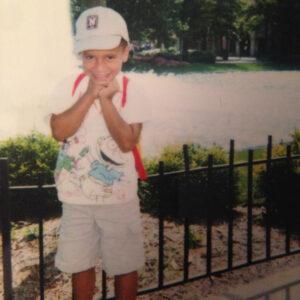
Marcus can still recall two concussions that have remained in his memory to this day: the first, when he was nine years old, in fourth grade. He was throwing a football around with a friend when they both decided to field a punt, causing them to collide heads. The incident required a trip to the ER for stitches.
The next occurred three years later, in seventh grade. Marcus’s school had recently implemented new turf fields; before that the team had been playing on grass. Marcus was playing quarterback and was hit on a play, hitting the ground. Instant whiplash.
Yet he was put back in the game for the next play.
“Rob, I can’t see!” Marcus says he shouted to his stepdad. He doesn’t remember what happened afterward.
Those are the only two injuries Marcus definitively knows were concussions, among potentially countless others that went undiagnosed.
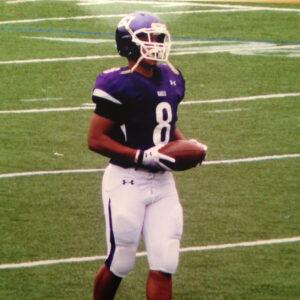
As Marcus kept improving, he joined the football team at an all-boys private school in Maryland. During his junior year, he transitioned from quarterback to tight end, earning All-State and All-Conference honors. Scouts came to watch his games, and he started getting recruited to strong programs, including Maryland and Temple. But his dream was always to play for the University of Florida.
Staying on the Field
The summer before Marcus’s senior year, he suffered a fracture in his foot during football camp and was sidelined for six weeks. Then, during the school’s homecoming game, unstable cleats led to a more serious Lisfranc injury. He had three surgeries and was told by physicians it could potentially be career-ending.
Recruiters Marcus had been in contact with suddenly went silent. He ended up going on a scholarship to Saint Francis University, in rural Pennsylvania.
One month into his freshman year of college, Marcus lost his paternal grandmother. Football, which had been everything his entire life, felt like a grind. He was three hours away from home and struggled with his transition at SFU. Everything was deteriorating at once and Marcus’s mental health plummeted.
For a while, Marcus sought help from the school’s counseling center. Nothing they suggested worked, so he coped with alcohol and marijuana.
“Sadly, college failed me in that regard,” said Marcus. “There wasn’t any sports-specific guidance, and no one could relate to my experiences.”
The situation came to a head Marcus’s sophomore year, when he got into trouble at school and his parents kicked him out of the house. For more than six months, he stayed with a friend. And topping it all off, Marcus tore his labrum, which required four surgeries over a span of two years. He missed the entirety of his freshman and sophomore football seasons.
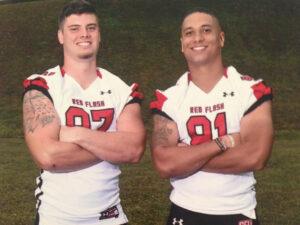
Going into his third year, Marcus attended his first fall football camp – with the junior varsity team. He had to shake the rust off and tried getting reacclimated to game speed but was never the same player as in high school.
In Marcus’s final season, the team brought on another tight end and he was relegated to third on the depth chart. He suffered yet another shoulder injury and wasn’t sure he could keep going.
“I was sure this was the end,” said Marcus. “But God instilled faith in me and somehow I stuck through.”
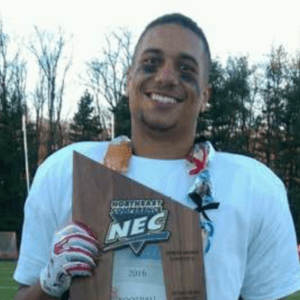
His best friend unfortunately tore his ACL and Marcus began rotating in, finally receiving some playing time. He scored his first touchdown and won a championship with the school, their first. To Marcus, it was the perfect way to close out his football career.
More Than Just Athletes
That success didn’t mean the time after graduation would be any easier for Marcus. In 2017, he lost his maternal grandfather with whom he was very close. He was in a toxic relationship for six months, breaking up in the spring of 2018. And transitioning out of sport into a full-time IT job was more difficult than he expected.
“It was a really low point in my life,” said Marcus. “I had no idea what I was supposed to be doing.”
While searching for help online, Marcus found the Concussion & CTE Foundation and utilized its resources to get better. He attended therapy regularly and still does to this day. He also pledged to donate his brain for research and encourages others to do the same.
During his darkest days, Marcus remembers wanting to give up. He credits his faith in persevering through those difficult times and finding a greater calling than football.
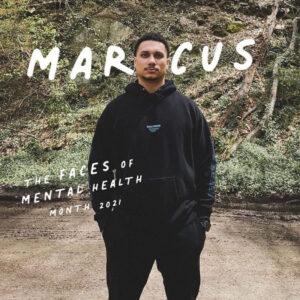
In the fall of 2019, Marcus decided to start his own nonprofit: Alston for Athletes. Back when he was at his worst, there weren’t as many athletes talking about the importance of mental health as there are now. This applied doubly so for male athletes, and especially those of color. He wanted to create a safe space where people could speak freely about their struggles.
Marcus knows many athletes are still uncomfortable having these types of conversations. But the only way to break this stigma is to keep talking about it. He urges them to find passions outside of sports and take time to reflect. To realize they’re not alone and there are resources out there if they need help.
“I always tell anyone who comes to me, you’re so much more than just an athlete,” said Marcus. “You’re a unique person. Son or daughter. Sibling. Parent. Friend. Even if you’re fortunate enough to go pro, it’s really a small window of your life. There’s so much more in the future ahead!”

When mismanaged, concussions can have devastating consequences. However, with proper management and support, concussion patients can expect a full recovery.

There’s more to treating a concussion than prolonged rest in a dark room. There are a number of treatment options to consider that may noticeably improve your symptoms.