Largest study finds former NFL players under 50 are 42x more likely to die from ALS than general population
Family of former Raiders fullback Steve Smith, who died from ALS in 2021 reveal his stage 4 CTE diagnosis
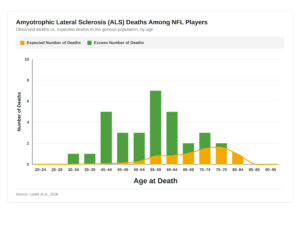
BOSTON — Former National Football League (NFL) players who die before age 50 are 42 times more likely to die from amyotrophic lateral sclerosis (ALS) than men of the same age in the general population, according to findings from the largest study ever conducted of mortality among NFL players. The study of nearly 20,000 former NFL players also found former NFL players overall are 4.5 times more likely to die from ALS than expected. The research was conducted by Mass General Brigham, Boston University, and the Concussion & CTE Foundation, and published last week in eClinicalMedicine, an open-access journal from The Lancet.
ALS is a progressive neurodegenerative disease that attacks nerve cells controlling voluntary muscle movement, gradually leading to paralysis. Although ALS is rare in the general population, previous research suggested an increased risk among professional football players. This study provides the strongest evidence to date that the disease occurs at dramatically higher rates in former NFL players, particularly those who die at younger ages.
On June 29, 2026, former 3x Pro Bowl running back Chris Johnson announced he is the latest NFL player to be diagnosed with ALS at age 39. Based on population models, there should have been fewer than one NFL player (0.24) since 1960 who died of ALS before age 50 – instead, there have been 10. Recent former NFL players who publicly revealed their ALS diagnoses and died before age 50 include Kevin Turner, Orlando Thomas, Glenn Montgomery, and Eric Scoggins.
“ALS deaths among former NFL players, particularly those who die at younger ages, are occurring far more often than could possibly be expected by chance,” said Daniel Daneshvar, MD, PhD, co-senior author of the study, Chair of Physical Medicine and Rehabilitation at Mass General Brigham and Harvard Medical School, and director of the HealthSpan Lab. “These findings are deeply concerning and underscore the urgent need to understand how repetitive head impacts and motor neuron disease may be connected. We must translate this knowledge into action by helping former players access specialized neurological care and accelerate research toward treatments and prevention. Every ALS diagnosis is devastating, and this data strengthens our responsibility to act with urgency.”
Former Los Angeles Raiders and Seattle Seahawks fullback Steve Smith developed ALS at just 37 years old after a nine-year NFL career. Smith lived with ALS for nearly 20 years before his death in 2021 at age 57. After his passing, Boston University CTE Center researchers diagnosed him with stage 4 (of 4) CTE.
“We were not surprised. I think we were almost waiting to hear a stage 4 CTE diagnosis,” said Chie Smith, Steve’s wife of 31 years. “Considering his position as a fullback in the NFL and how many times we would see him after every single game, you know, coming home with a big knot between his head. It gave us an understanding that this was more than likely the catalyst that caused the ALS, and that closure is very, very helpful.”
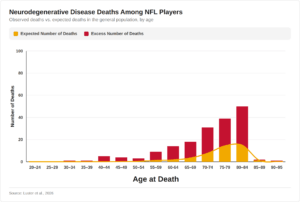
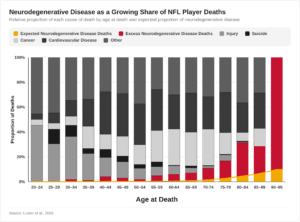
The study, the largest retrospective cohort analysis of its kind, examined health and mortality records for 19,824 NFL players who competed between 1960 and 2019, comparing their causes of death against national mortality data. Researchers found that while NFL players lived longer, healthier lives on average than the general population, with lower rates of death from cancer, cardiovascular disease, and suicide, they died of neurodegenerative disease at nearly four times the expected rate.
Additional findings include:
- Former NFL players were 3.8 times more likely to die from dementia and 3.88 times more likely to die from Parkinson’s disease than expected.
- Players with careers lasting five or more seasons had significantly higher neurodegenerative mortality than those with shorter careers, supporting a dose-response relationship between years of play and long-term brain disease risk.
- Players who died before age 60 had more than 12 times the rate of neurodegenerative death compared to the general population.
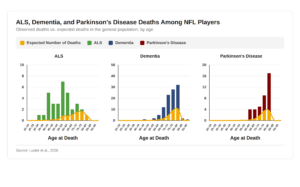
The researchers conclude that these findings reinforce the growing body of evidence linking repetitive head impacts sustained during football to long-term neurodegenerative disease and highlight the importance of reducing head impact exposure while advancing research aimed at preventing these devastating conditions.
Former NFL players who are concerned about their brain health or neurodegenerative disease risk are encouraged to seek evaluation from clinicians specializing in neurodegenerative disease. Many conditions can cause symptoms that resemble neurodegenerative disease, and many of these conditions are treatable. Even when long-term risk cannot be eliminated, identifying and managing modifiable risk factors can help support overall brain health and quality of life. Players seeking guidance, specialist referrals, or support in managing health concerns are encouraged to utilize available resources, including The Trust Powered by the NFL Players Association (NFLPA), the NFLPA’s Professional Athletes Foundation, and the Concussion & CTE Foundation HelpLine.