
David Fink
James MacLeod
Patrick Anderson
A HISTORY OF BRAIN TRAUMA, AND THE DEATH OF OUR JOYFUL BOY
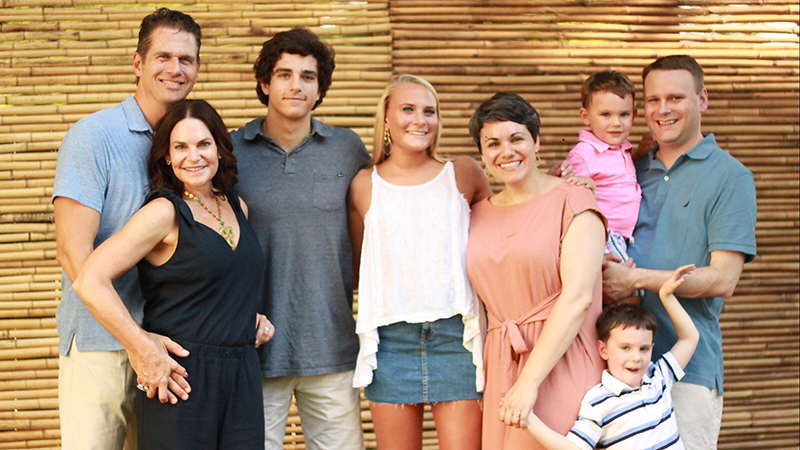
My earliest recollection of glimpsing Patrick’s true nature; mischievous jokester, lover of life, occurred at age three. Patrick decided it would be funny if he peed off the upper floor landing while his sister and I were standing in the hall on the first floor. He was giggling and grinning from ear to ear. Seconds after the shockwave came and went, the three of us were crying with laughter. Patrick could be so random! Like the time in high school he asked his friend to pull over while driving through a local park. Patrick jumped out of the car and ran over to a group of folks playing a giant game of Jenga. Without stopping or saying a word he tackled the game pieces rolled across the grass and trotted back to his friends! The video is hilarious. The shockwave for those folks lasted a little longer than a few seconds, his friends are in the car busting a gut! Making people laugh was Patrick’s passion.
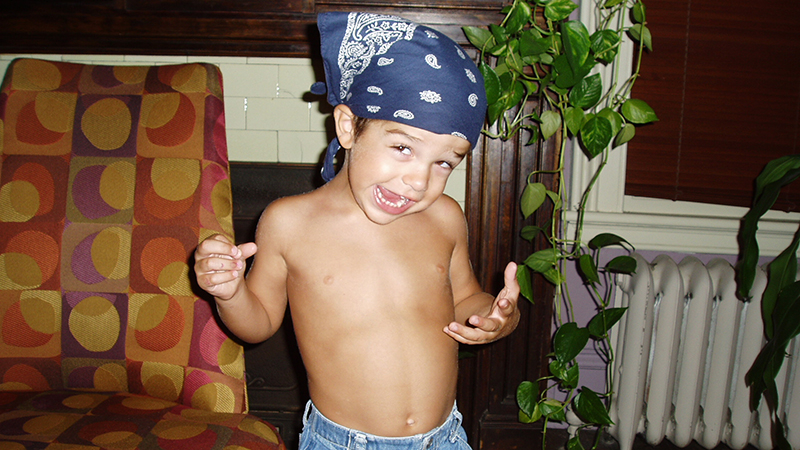
Patrick was beautiful. Kind and compassionate, he made friends easily. Patrick approached strangers like he wanted to be treated; with a smile, eye contact and a warm handshake. He didn’t see the color of their skin, or the clothes they were wearing, he saw the individual. Patrick was also blessed with natural physical abilities, instinctively aware of his physical boundaries from a very early age. “Monkeyboy” was his acquired nickname as he would literally climb anything deemed manageable by his young persona, which was most things. We were a good match, my parenting style encouraged discovery. If he felt physically capable of a feat, I rarely ever told him no. Believing in the “Art of Possibility” to build confidence in my children, I trusted their internal instincts.
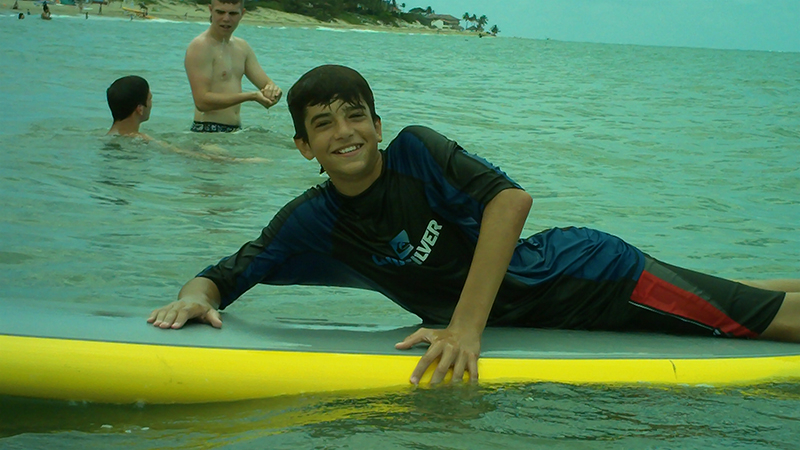
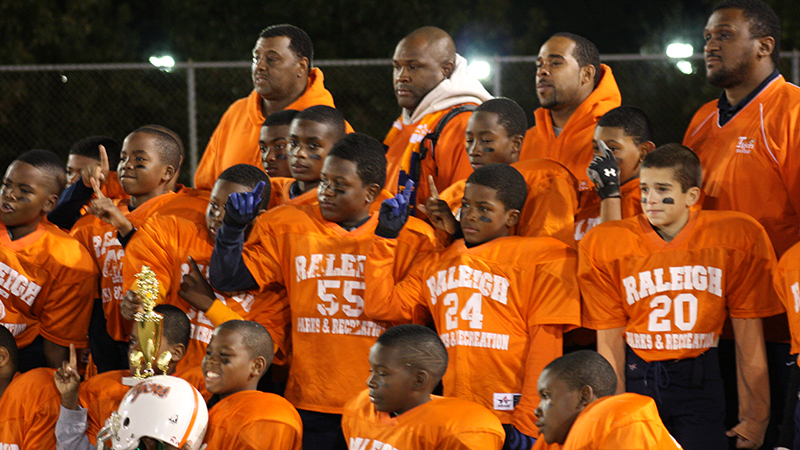
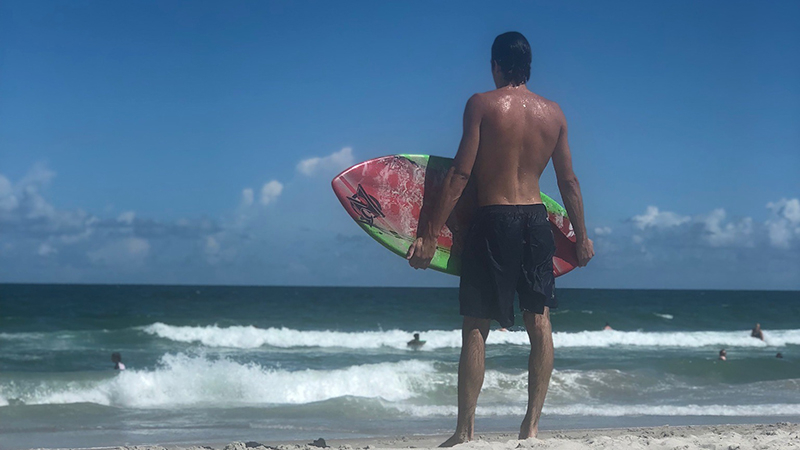
As Patrick grew older, he ventured into team sports but also had a passion for solo sports. Skimboarding was a favorite from an early age, he eventually acquired the skill to backflip off his skimboard while taking a wave. For obvious reasons this practice was not my favorite. In elementary school a skateboard was his favorite mode of transportation. Confidence, independence, and comfort in his own skin were all traits Patrick displayed from an early age. Patrick played football in the fourth and fifth grade. Being on a team with all African American boys, Patrick learned how it felt to be isolated, how it felt to be the kid that looked different. Navigating “how do I fit in” was an incredible lesson that Patrick never forgot. Patrick was loved by his teammates and he loved them back; he became their friend, their brother. The Tigers won the city championship two years in a row! When my sister asked him in middle school why he didn’t play football anymore he said, “it made my head hurt.”
Patrick started kiteboarding and wakeboarding when he was 13, but his favorite was snowboarding which he started when he was nine. I’ll never forget the look on his face the first time I took him up to Peak 8 in Breckenridge. When he saw the drop into the bowl for the first time, he looked at me like I was the crazy one. I looked him in the eye and told him, “you have this, just follow me and you’ll do great.” Not only did he do great, he was hooked.
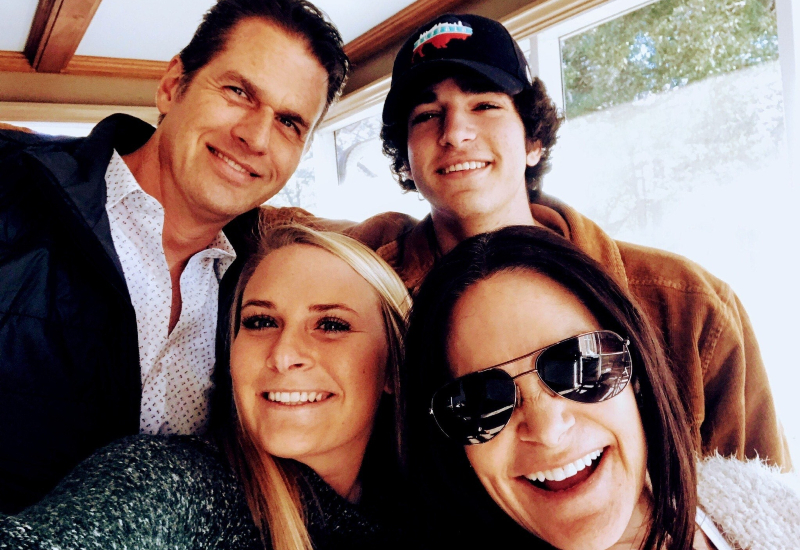
Patrick was my adventure buddy. We were adrenaline junkies. From the time he was little, it was always the two of us on family vacations jumping off cliffs/waterfalls and my husband and daughter watching and taking pictures.
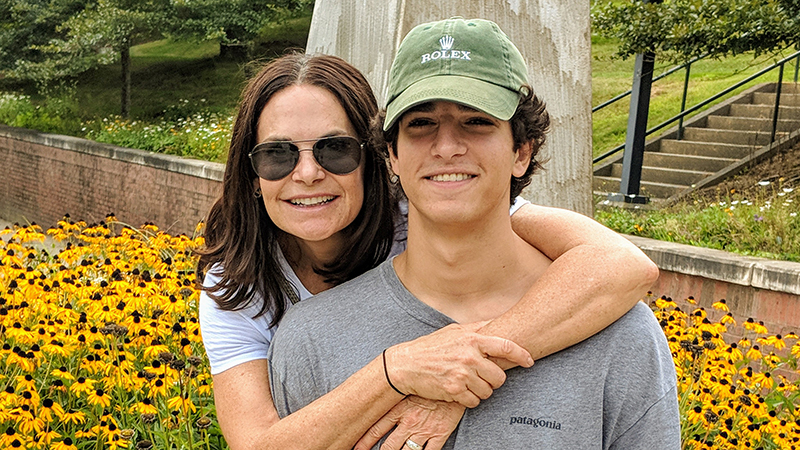
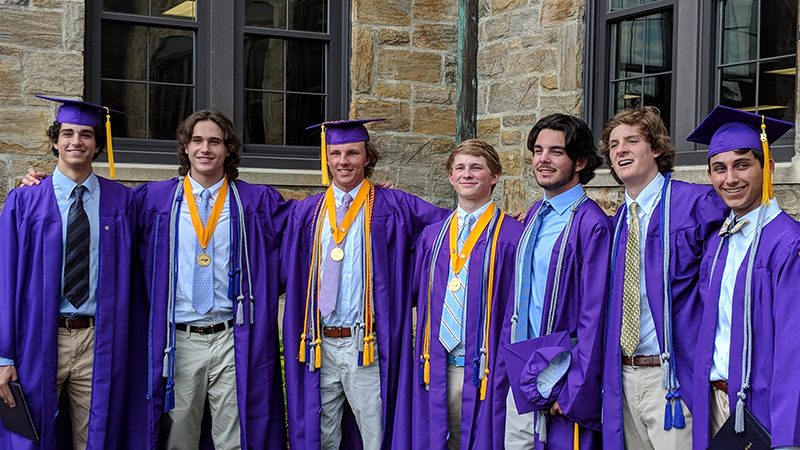
Patrick didn’t just have friends; he had a tribe. Kids naturally gravitated towards his non-judgmental attitude. His kind, compassionate nature along with his sense of humor and thirst to find the possibilities in every day was like a light to a moth. Kids were always at our house. The older he got the bigger the group became. I loved having them. Now that Patrick is gone, there is a quietness about the house during the months that he would naturally be home. It’s weird and it takes some getting used to. I play music to keep it from being so noticeable.
A HISTORY OF CONCUSSIONS
When Patrick was a sophomore in high school, he received his first diagnosed concussion. He was running and somehow tripped and hit his head on a concrete parking lot curb. Banged up pretty badly, we took him to urgent care, then to a private doctor the next day. His lacrosse coach was notified and concussion protocol was followed. Two weeks later he was cleared to practice and play with the team. He complained of headaches from time to time but when I took him to the doctor everything checked out OK. If I knew then what I know now, I would have taken him to a doctor who specializes in concussions.
Patrick’s senior year, he was sucker punched while trying to pull a boy off one of his best friends during an attack. It was dark and Patrick didn’t see the other kid coming. At 6’ 1”, Patrick fell backwards hard and was knocked out cold. Another boy who was there said Patrick was unconscious for about a minute.
A third concussion occurred the summer before he started his freshman year at Appalachian State University. Patrick and friends were wakeboarding on a trip to the beach, he wiped out, and the board hit him in the head. He was unconscious in the water for a few seconds. He didn’t go see a doctor after this incident and didn’t make us aware that it even happened until much later in the summer. We found a prescription for Ibuprofen amongst his things, he apparently was still having headaches from time to time.
The last day Patrick was alive was Valentine’s Day 2019. This seems appropriate to me given his ability to love deeply. Other than being Valentine’s Day, it seemed to be a normal day for him at school. We texted back and forth, I sent him $50 and a funny pair of socks for the holiday. My husband talked to him several times that afternoon. He sent a funny picture of himself wearing protective goggles during a routine medical exam with a goofy smile on his face like he was in mid laughter! He put his deposit down on his apartment for the following year and he paid for his spring break trip.
Later that evening Patrick met up with his friends at the “cabin,” a regular hang out spot in Boone, NC. On his way out of the dorm, he ran into his good friend Hannah. She said they chatted for several minutes, caught up, and exchanged hugs before Patrick began his walk.
That night, the boys without girlfriends hung out, drank a few beers, started goofing around and being silly. At some point they started to joke-wrestle with each other. Patrick and another boy ended up falling over the porch railing and down a slight hill. They both said they were OK and the fun resumed. At 10:30 p.m. Patrick asked a girl to an upcoming formal, she said yes. Being a school night, the boys disbanded around 11:30 p.m. Patrick was there with his very best friend Palmer, who he said goodnight to and then walked back to his dorm alone.
There is video footage of Patrick walking into the dorm at 12:10 a.m. His roommate JT wasn’t yet home, he had fallen asleep in another friend’s dorm room. Video footage shows JT entering the dorm at approximately 3:00 a.m. Two minutes later 911 was called. JT tried to revive Patrick but he was gone.
No note, nothing in a text message, or email. Nothing in his sketchbook, no dark poetry. The police interviewed over 20 kids, not one said they noticed that Patrick was different, withdrawn, not himself. We, his family, had just spent 10 days in Belize over Christmas break. My husband bought us all tickets to go see Justin Timberlake in concert. We went to see the latest Marvel movie, Patrick’s favorite. Spent time just hanging around the house together. Everything seemed normal.
So, what happened? Why did this carefree kid, who loved his family, had multiple tribes, and felt blessed to be a part of this college experience at App State suddenly end his life?
This doesn’t make any sense. I realize that suicide survivors often say the same thing about their loved one that has passed. I strongly feel something is out of place. Intuitively, I would have known something was going on with Patrick. We were too close, there is no way I wouldn’t have felt an underlying pain if Patrick was hiding something.
BRAIN TRAUMA AND PATRICK: WHAT MIGHT HAVE HAPPENED.
Concussions, brain trauma and CTE had recently come into focus as more and more research, documentaries, and athletes stepped forward. With that in mind, my focus started to shift to Patrick’s past concussions and the fall he took the night he died. I remember thinking, the fall must have been significant because several of the boys mentioned it to me the day of his service. Was it possible that he hit his head that night during the fall and reinjured a part of his brain that had been previously damaged? While he was alone in his dorm room in the middle of the night did his brain experience an aneurism, did it short circuit somehow?
I connected with several psychic mediums to try and find answers. Through that process, I was able to communicate with Patrick and learn he felt very intense pressure deep in his head that night. He couldn’t process how dangerous his actions were and thought an escape from the pain would mean sleep, not death. This revelation was incredibly significant.
My goal in sharing my journey in connecting with my son after his death is to highlight the connection between brain trauma and suicide. Studies show suffering just one concussion doubles your risk of suicide. Even without any history of depression or observable changes in mood, it’s important for everyone to understand the potential link. Patrick wasn’t depressed, he was hopeful and full of life. Something happened in his brain that night that can’t fully be explained, not yet. My hope is there will be more research and more questions will be asked like, did the deceased recently experience a fall that could have damaged their brain? Was the deceased healing from a recent concussion? Unless this knowledge is documented, how can it be researched? How will we as a society be aware of the danger without awareness and education?
Click here to donate to the Anderson family fundraiser in memory of Patrick Anderson.
Suicide is preventable and help is available. If you are concerned that someone in your life may be suicidal, the five #BeThe1To steps are simple actions anyone can take to help someone in crisis. If you are struggling to cope and would like some emotional support, call the 988 Lifeline at 988 to connect with a trained counselor. It’s free, confidential, and available to everyone in the United States. You do not have to be suicidal to call.
Are you or someone you know struggling with lingering concussion symptoms? We support patients and families through the Concussion & CTE Foundation HelpLine, providing personalized help to those struggling with the outcomes of brain injury. Submit your request today and a dedicated member of the Concussion & CTE Foundation team will be happy to assist you.
This story adheres to the Recommendations for Reporting on Suicide from reportingonsuicide.org
Kevin Barlow
Michael Bartlett
Wyatt Bramwell
Warning: This story contains mentions of suicide that may be triggering to some readers.
A Life Gone Too Soon
Wyatt Byron Bramwell had it all: he was a handsome, kind, funny, and smart 18-year-old with so much to offer. He was a beloved son, brother, grandchild, great-grandchild, cousin, and friend. Wyatt was born on a warm, beautiful summer day in Blue Springs, Missouri, on August 19, 2000; he took his life on a very similar beautiful summer day in Pleasant Hill, Missouri, on July 30, 2019.
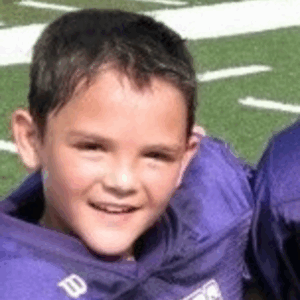
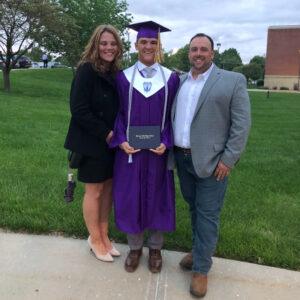
Before his passing, Wyatt graduated summa cum laude from Pleasant Hill High School with a 3.8 GPA and membership in the National Honor Society. A gifted student, he was preparing to attend the University of Missouri College of Engineering. Everyone in our family was immensely proud of all Wyatt’s achievements during his brief 18 years on Earth; the future looked extremely bright. He was not a perfect human being, but pretty ideal for a teenager.
Athletics came naturally to Wyatt, who excelled at every sport he touched. He started playing tackle football with pads and helmets at age eight, focusing on it all the way to high school. His routine was intense but regimented, waking up weekday mornings by himself at 4:30 a.m., working out at the local gym before it was time for class. Wyatt also made sure to complete his course work, maintain a high GPA, and earn academic letters for his studies.
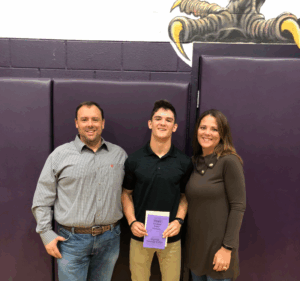
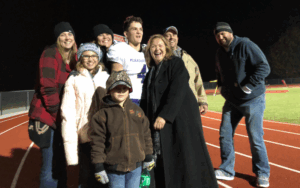
Wyatt missed his sophomore year of playing football due to an injury but supported the team any way he could, including attending practices and games, and recording them on video to watch later. He then made the varsity squad as a junior and senior. A starter and standout on both sides of the ball, he alternated between wide receiver, cornerback, and placeholder. It’s not an understatement to say Wyatt was one of the best on the field and on the team overall. He was a dynamo, a star in the making. Friday nights became “can’t miss” events, centered around Wyatt’s football schedule.
A Sudden Change
Wyatt’s last ever football game was in November of 2018, suddenly deciding to quit the sport after his senior season was over. This came as a surprise to everyone, as his dream was always to eventually play for a Division I university. He never offered a reason why, stating he simply wanted to focus on school. In hindsight, Wyatt had already begun to experience symptoms and suspected he might have CTE, which no one would know until later.
In May of 2019, Wyatt left on a scuba diving trip to Bonaire with his girlfriend and her parents, to celebrate graduating from high school. Upon their return, he demanded a family meeting and admitted he had:
- Received a speeding ticket prior to leaving on vacation
- Smoked marijuana a couple of times
- Been fired for absenteeism from his job at Walmart (and not laid off like he’d originally said)
- Tried to overdose one night (despite repeated urging to provide further details, Wyatt wouldn’t reveal when this occurred or what medication he’d taken)
Then Wyatt informed his parents he no longer wanted their help and was moving out. He relinquished his car, phone, and the expensive 18th birthday watch his parents had given him. For about two months, Wyatt was estranged from his mother and father, despite multiple attempts to communicate and reconcile. He lived for a while with a friend in Pleasant Hill before moving to a family member’s home nearby.
On the afternoon of July 30, 2019, an otherwise beautiful sunny Tuesday, Wyatt borrowed a car to retrieve belongings from a friend’s house. He’d said it was a simple errand and would return shortly. Instead, Wyatt traveled to a secluded area in his hometown and filmed a message on his phone, before taking his life.
In the video, Wyatt admitted to being depressed for a long time, probably since his freshman year. He also confessed to having racing thoughts and hearing voices he referred to as demons. He said, “My head is pretty messed up and damaged,” and that he’d covered it up with sports, video games, and hanging out with friends, but it only got worse over the years.
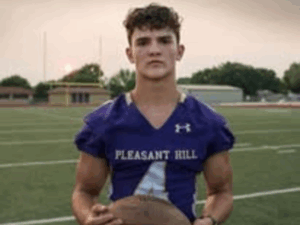
“I took a lot of hits through football,” said Wyatt. “I took a lot of concussions, and a lot of times I never told anybody about how I was feeling in my head after a hit, I just kind of kept playing which was not smart on my end. I know that.”
Wyatt also specifically requested his brain be donated for study, saying, “I feel like it’ll be closure for me and it’ll be closure for you guys to know that maybe I suffered from brain damage, maybe that was the reason.”
Bringing Meaning to Loss
Despite their overwhelming confusion and profound grief in the moment, Wyatt’s parents, Bill and Christie, were able to contact the UNITE Brain Bank and donate Wyatt’s brain for study, fulfilling his final request. We all nervously awaited the results, not really believing he suffered from CTE. After all, he’d been an excellent and committed student. He was beyond trustworthy, responsible, predictable and easygoing; that is, until his last 57 days, but couldn’t his behavior be attributed to the adolescence of a growing boy?
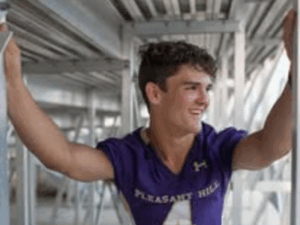
While Wyatt had played football since age six, he’d never even complained of headaches nor mentioned any concerns about his brain or CTE. He hadn’t displayed the behaviors of hearing demons or voices as he described before his death. All those who loved Wyatt remained confused and in a perpetual state of shock, having to come to terms with a new normal.
In September 2020, Lisa McHale of the BU CTE Center and the Concussion & CTE Foundation arranged a conference call between our family and Dr. Ann McKee to review the study findings. Dr. McKee revealed Wyatt suffered from stage 2 (of 4) CTE, the first teenager and, to date, youngest athlete to have such advanced pathology of the disease.
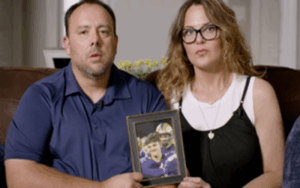
Bill and Christie shared Wyatt’s diagnosis in November 2023, as part of a New York Times special feature on young athletes who lost their lives and were later diagnosed with CTE.
“We were completely shocked to learn that Wyatt had CTE,” said Wyatt’s parents. “While this is very painful for us to share, we have several reasons for revealing all this publicly. One, so families can have open conversations about allowing their children to play contact sports while offering others’ patterns they may recognize. Two, we want Wyatt’s legacy to be more than his sudden suicide and to serve as a cautionary tale to all football parents, as he had no visible symptoms until it was too late. Finally, and ultimately, we hope by sharing Wyatt’s story, it can bring some meaning to our loss.”
______________________________
Suicide is preventable and help is available. If you are concerned that someone in your life may be suicidal, the five #BeThe1To steps are simple actions anyone can take to help someone in crisis. If you are struggling to cope and would like some emotional support, call the 988 Suicide & Crisis Lifeline at 988 to connect with a trained counselor. It’s free, confidential, and available to everyone in the United States. You do not have to be suicidal to call.
Are you or someone you know struggling with lingering concussion symptoms? We support patients and families through the Concussion & CTE Foundation HelpLine, providing personalized help to those struggling with the outcomes of brain injury. Submit your request today and a dedicated member of the Concussion & CTE Foundation team will be happy to assist you.
Daniel Brett
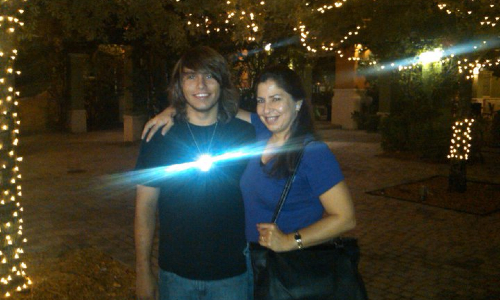
On August 24, 2009, our son Daniel made starting linebacker for Cypress Bay High School’s JV football team. It was a victory for him and his first major step in actualizing his desire to play in college. It was also his last day ever playing football.
At 5’9”, 160 pounds, he wasn’t big, but he was tough and fearless, and he thought it was the way to be, to one day play for his dream team, the University of Miami Hurricanes. No pain, no gain.
Daniel began playing football at 11, and never looked back. Tough and versatile, he played offense, defense, and special teams, rarely getting off the field. He loved it, and he was good. Determined, he did all that was needed: kept in shape, practiced hard, kept up his grades, and never complained. No, he never complained and never told anyone when he was hurt until August 24, 2009.
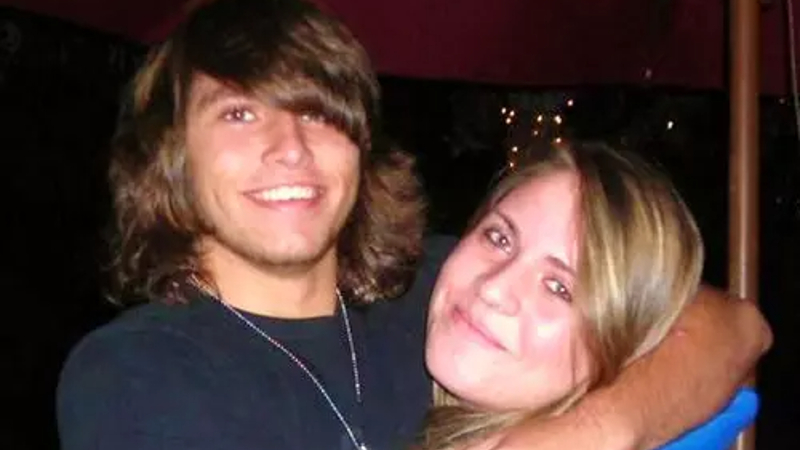
“Coach, I can’t see,” Daniel finally confessed. Coaches noted he was sluggish, not responsive during play and the reason was obvious when he finally went to them. The athletic trainer suggested a trip to the pediatrician the next day to possibly get an MRI. In the ensuing days and months Daniel further acknowledged he had been hit head-on and taken quite a few blows that left him seeing stars. The previous week alone, Daniel never told anyone – the coaches nor his parents – how many times he got clocked in the head, was sick, dizzy, and had headaches. A Tylenol here and there was all he asked for.
In the following 19 months Daniel underwent every imaginable medical test: MRIs, MRAs, EEGs, and CT scans multiple times as a course of regular treatment, in the hospital, and even during an emergency room visit. He was seen by medical experts and specialists that looked at and tested his balance, ears, eyes, even his skin. Diagnosed with Post-Concussion Syndrome and ‘migraine-type headaches,’ Daniel regularly saw a neurologist, was on anti-seizure/migraine medication, visited a chiropractor, and even tried acupuncture. Nothing helped his chronic headaches, growing depression, sluggishness, and apathy. Daniel’s value judgments and behaviors deteriorated as he tried in vain to alleviate his pain through self-medication. Psychiatrists at one hospital prescribed anti-depressant and anti-psychotic medications geared to treat his depression, but they, just like all the numerous well-intentioned medical professionals in Broward County, never followed a process to also treat his injured brain.
It wasn’t until March 2011 when Daniel was truly diagnosed and finally underwent treatment for his multiple football concussions 19 months prior. It was perchance a newspaper article on the Internet where I read about another young man with sports-related concussions from playing soccer and the neurologic and cognitive issues he and his family encountered. Within three months of his injuries, they found the UHealth Sports Medicine’s Concussion Program, and this young man was properly diagnosed, treated, and is thriving today. Since then the family partnered with the UHealth Sports Medicine’s Concussion Program, and the KiDZ Neuroscience Center at the Miami Project to Cure Paralysis and together made enormous strides to keep young athletes safe in all of Miami-Dade County’s Public High Schools through concussion awareness training and proper and immediate diagnoses. They established a protocol for monitoring all of Miami-Dade’s high school athletes before, during, and after an injury via ImPACT (Immediate Post-Concussion Assessment and Cognitive Testing); the first, most-widely used, and most scientifically validated computerized neurocognitive assessment. We need to implement ImPACT testing and more concussion education in other counties in Florida.
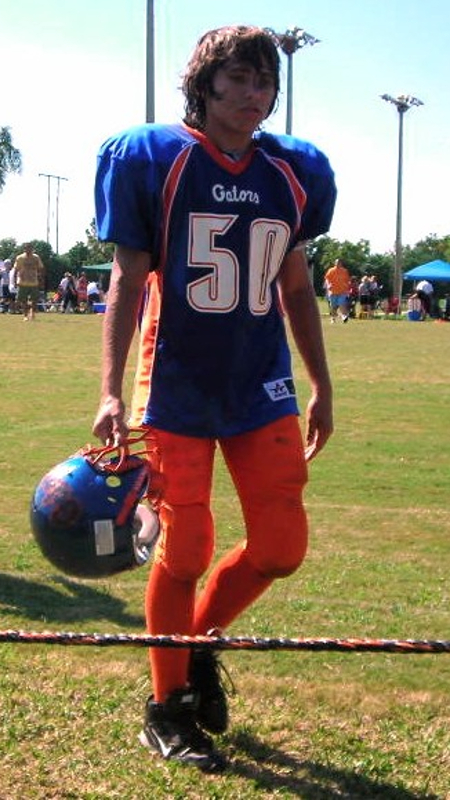
Today we know, thanks to the doctors from University of Miami’s Concussion Program, Daniel indeed suffered multiple concussions and what Daniel suffered in totality for too long should never have happened. Daniel was an amazing young man, with a kind heart, a love for life, music, friends and family; and a zest for football. It is a parent’s worst nightmare to see their child suffer. It is as a result of a young man’s demise – why we need to not let it happen again, and why this is so important. Daniel took his own life in May 2011 as a result of the several disabilities resulting from his brain injury.
Our family also now understands, disabilities resulting from concussions range differently for each person. Problems with thinking, memory, and reasoning as well as communication can be different from one athlete to another. If left untreated or under-diagnosed it can also lead to behavior and mental health issues such as depression, anxiety, aggression, loss of impulse control and value judgment. None of these issues can be diagnosed by MRIs, MRAs, EEGs, or CT scans.
To start, neurocognitive testing such as ImPACT is needed for every one of our young athletes. Parallel to the required physical exam every athlete needs prior to playing sports, a neurocognitive baseline for post injury comparison is neither unreasonable nor unattainable. It provides parents and coaches a full awareness of the extent of the injury and is simply the best way to ensure our children are safe before returning to play after an injury. ImPACT is here and is available through awareness and School Board policies.
From March to May 2011, Daniel’s quality of life improved greatly due to the correct diagnoses and treatment by the doctors at the University of Miami’s Concussion Program. It was too late for Daniel for ImPACT or ongoing concussion management and education, but through countywide awareness and action, it is our hope his story can lead the way in other counties for ImPACT, concussion awareness, and integrated procedures to keep our kids safe.
Finally, a standardization of protocols for our injured young athletes within each high school, pop warner, or optimist club needs to be addressed on behalf of these student athletes; so the worst-case scenario doesn’t play out again. Overarching policies in our communities and schools based on laws and proven processes for training, awareness, procedures, and testing is a must for concussion management. There is no excuse not to have it as this is not a watershed cause.
After Daniel died, our family vowed to help others and do what we could so no other child or family goes through what we did and create a legacy for Daniel, so…
- In 2011 we incorporated The Daniel Brett Foundation, Inc. as a non-profit 501 (3) (c) organization;
- With the support of some amazing people, The Daniel Brett Foundation met with School Board Member Ms. Laurie Rich Levinson, Broward County Director of Athletics and Student Activities Mr. Damian Huttenhoff and many others, and on March 20, 2012 the School Board of Broward County adopted a Resolution to provide a true Concussion Management Program for all Broward County public high schools. The Resolution now provides the mandatory implementation of neurocognitive testing (ImPACT) for every student athlete prior to participating in any sport to achieve a baseline through 2014; concussion awareness training countywide for parents, athletic trainers, students, and teachers; and follow-up guidance and services post-injury. Read more here.
- On March 31, 2012, The Daniel Brett Foundation sponsored the inaugural Daniel’s Dash for Concussion Awareness 5K Run/Walk! Supported by family, friends, community, and kind sponsors, over 400 runners and volunteers participated in the 1st (known anywhere) Concussion Awareness 5K Run/Walk at Markham Park in Sunrise, FL and it was a resounding success bringing true concussion education and awareness for all student athletes and parents in Broward County.
- Florida’s Concussion Law passed April 27, 2012! Spearheaded by a state task force led by Daniel’s doctor, Dr. Gillian Hotz, Ph.D., research professor of neurological surgery and director of UM’s Concussion Program, and sponsored by state Senator Anitere Flores of Miami, the law bars young athletes who endure concussions from returning to practice or play until they are cleared by a physician. It also requires parents to sign informed consent forms acknowledging they are aware of the risks of concussion. Daniel’s family and friends brought Daniel’s Story forward as a voice for more families to assist, and to support Dr. Hotz, the Goldstein Family, and many others already leading consciousness for concussion management protocols via Legislative change. On October 12, 2012 Governor Rick Scott visited The Miami Project to Cure Paralysis at the University of Miami to officially sign into law the bill designed to safeguard Florida’s youth athletes from the potentially devastating consequences of brain injuries suffered on the playing field. Thanking Dr. Hotz, and all of UM for its “admirable” work, Governor Scott dedicated the new law to Daniel Brett, a Broward County high school freshman who took his own life after enduring two years of long-term effects, including dizziness, mood swings and migraines, following multiple concussions playing football. His mother is now working with Broward Schools to bring baseline ImPACT testing and education to high school athletes. “This bill cannot bring Daniel back,” Scott said, “but it will live in his memory and hopefully protect the health and welfare of other students for generations to come.” Read more here.
- Finally, as the dangers and disabilities inherent with concussions become more apparent for both our younger and older athletes it is time to change the rules, to understand what can and will affect our kids in the future. The Boston University CTE Center notes: “Chronic Traumatic Encephalopathy (CTE) is a progressive degenerative disease of the brain found in athletes (and others) with a history of repetitive brain trauma, including symptomatic concussions as well as asymptomatic nonconcussive hits to the head. CTE has been known to affect boxers since the 1920s. However, recent reports have been published of neuropathologically confirmed CTE in retired professional football players and other athletes who have a history of repetitive brain trauma. This trauma triggers progressive degeneration of the brain tissue, including the build-up of an abnormal protein called tau. These changes in the brain can begin months, years, or even decades after the last brain trauma or end of active athletic involvement. The brain degeneration is associated with memory loss, confusion, impaired judgment, impulse control problems, aggression, depression, and, eventually, progressive dementia.” Read more about CTE here.
Shortly after Daniel died, he was included into the clinical study at Boston University CTE Center. CTE clinical researchers found athletes as young as 17 and 18 showing early signs of CTE caused by the kind of repetitive head trauma experienced on the field – similar to Daniel. The effect of Daniel’s brain injuries due to concussions were studied in Boston. Daniel was not found to have CTE – he was only 16 and a more in-depth study of his brain was not possible. What was found however was the build-up of abnormal tau protein in his brain tissue. We will never know if Daniel would have developed CTE, but looking forward, it is the asymptomatic nonconcussive and successive hits to the head he experienced playing high school sports and the “return to play” issues stemming from those hits, that we hope to help address. See the wonderful things Concussion Legacy Foundation is doing through its Legacy Donor Program.
Thank you truly for the continued support to me and my family and to all student athletes everywhere.
Diana Pilar Brett
The Daniel Brett Foundation, Inc.
A 501 (3) (c) Organization to Promote Concussion Awareness
[email protected]
http://danielsdash.org/
954.336.1320
Daniel this is for you.
The Daniel Brett Foundation is your legacy to help others as you always did, and how I will honor and love you forever, Mom