Clyde L. Scott

My father Clyde Scott was an extraordinary athlete who lived a long and productive life. He died in 2017 at the age 93 after a long battle with dementia. After his passing, we were surprised to learn that he was diagnosed with Stage 4 (of 4) CTE.
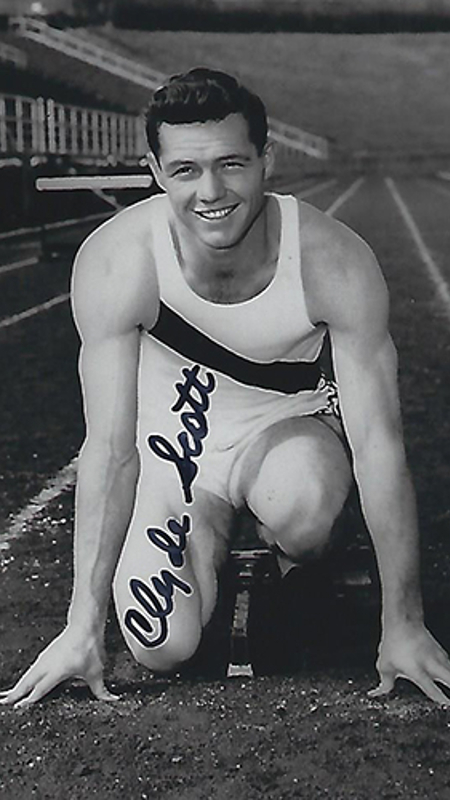
In February 2000, the state’s largest newspaper The Arkansas Democrat Gazette declared Clyde Scott Arkansas’ Athlete of the Century (1900 – 1999). They called his sports resume impeccable and undisputable. It is easy to see why.

Clyde was an All-American at two universities and at two sports, held two world records in track, won a gold medal at the NCAA championships, a silver medal at the 1948 London Olympics, was a first round NFL draft pick, played four seasons and was on two World Championship teams (1949 Eagles and 1952 Lions). He was considered one of the greatest athletes of his time.

Clyde was born August 29, 1924 in Dixie, Louisiana, the third of ten children. His dad was an oil field worker. Clyde first gained notoriety in high school on the football field, but he also ran track where he set a number of state records. In the summer, he played baseball which he always considered his best sport. The St Louis Cardinals offered him a contract his senior year. Clyde loved baseball but wanted to go to college.

With the help of some businessmen in his home town, he received an appointment to the US Naval Academy. He played football for the Midshipmen in 1944 and 1945 and was named a second team All-American in 1945. At the time, Navy was the second best team in the country.  He also ran track at the Academy where he set Academy records in the 100 dash, 220 low hurdles, 110 high hurdles and the javelin. In 1944 and 1945, he was the Academy’s undefeated light heavyweight boxing champion.
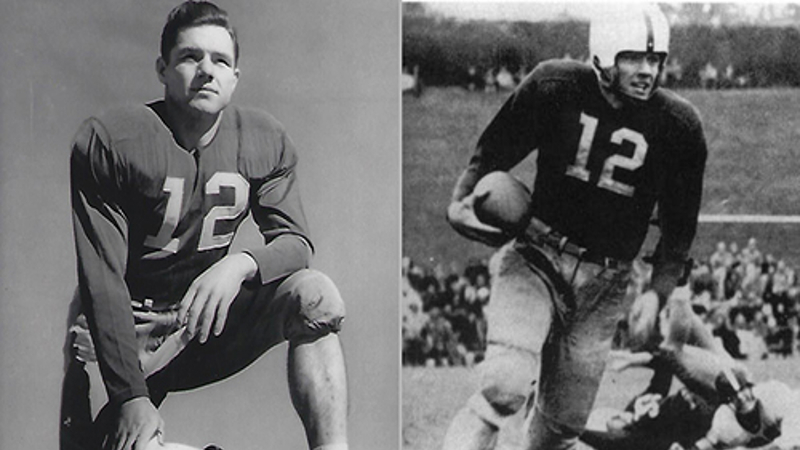
After football practice one day in 1945, Clyde had the good fortune to meet Miss Leslie Hampton from Lake Village, Arkansas. She was the reigning Miss Arkansas visiting the Naval Academy for a tour. His roommate was scheduled to be her escort but was called away on a cruise and Clyde was asked to fill in. They met, fell in love, and decided by the end of the school year they wanted to get married. With the war having ended, Clyde made the decision to resign from the Academy. That summer he was visited by coaches from around the country including Bear Bryant at Kentucky and Johnny Vaught at Ole Miss. He was recruited to come to the University of Arkansas by head coach John Barnhill, where he ultimately decided to continue his football career. The fact that his bride-to-be was attending the U of A may have influenced his decision to join the Razorbacks.

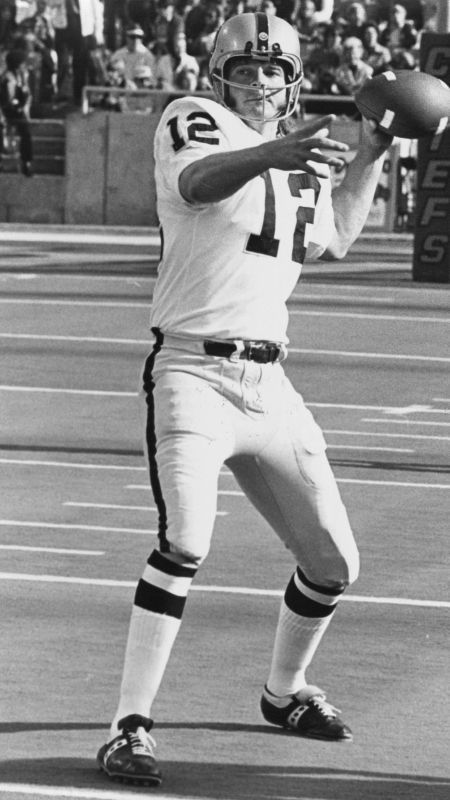
At Arkansas, Clyde was named All-Southwest Conference in 1946, 1947 and 1948, a second team All-American in 1946 and a first team All-American in 1948. His jersey number 12 was retired after his graduation. Clyde also wanted to play baseball, but his coach would not allow it. He did permit Clyde to run track where he set school records in the 100-yard dash, the 220 low hurdles, the 110 high hurdles, the 440-yard relay, and the javelin. In the 1948 NCAA Finals he tied the world record in the 110 high hurdles with a time of 13.7 seconds. That summer he made the U.S. Olympic team in the 110 high hurdles and went to the 1948 London Olympics where he won the silver medal in a very close finish.

Clyde was drafted in the first round of the 1949 NFL draft by the Philadelphia Eagles. He played three seasons with the Eagles and one season with the Detroit Lions. He battled injuries throughout his professional career and was forced to retire after the 1952 season.

Having lived such a long life, my dad would seem to be an unlikely candidate for the CTE brain study. His cognitive problems began when he was in his 80’s, much later in life than would be expected. Having a 93-year-old suffer and die with dementia did not seem that uncommon. Credit his wife of 72 years, Leslie, for making the decision to donate his brain to the study. She had seen some press coverage of the CTE study being conducted at Boston University and heard that the researchers were especially interested in brain donations from former NFL players. She realized it was an important study. After talking it over with me and my sister, the family decided to pledge my dad’s brain for research through the VA-BU-CLF Brain Bank research registry prior to his death.

After his death, the efficiency of the donor program was very impressive. His brain was in Boston within the first 24 hours. Over the next several months, researchers gathered detailed information on dad’s life and sports career. You could tell that everyone we dealt with in the program was very committed to their work.

It came as a big surprise to the family that the study found dad had stage 4 (of 4) CTE. The reporting doctor said they found evidence of CTE throughout his brain which had also shrunken considerably.

Looking back, we realized there were signs that fit the CTE profile. He did not become aggressive or suffer from depression, but he did become extremely paranoid. For years, he had several irrational fears he had a very hard time dealing with. He hallucinated and had recurring nightmares. It made his life very difficult. It was also very hard on his family, especially his wife. Thankfully, the paranoia went away in the later stages of his dementia.

Dad’s mother lived to be 102 and maintained her wit and intellect to the end. His dad died of emphysema at the age of 96. There was no history of dementia in his family. How many years of meaningful life did he lose to CTE? I suspect a couple of decades but of course we will never know.

Would he have played football if he had known what may be coming? I never got to ask him that question. Football got him out of poverty, gave him an education and helped set up a successful business career, so I expect his answer may well have been yes. I do know he never encouraged me or my son to play football. Would he be glad to be part of this important study that may encourage others to avoid that dangerous path? Knowing what we know today, I have no doubt he would say “yes” to that.
Charles “Bubba” Smith

Read this excerpt from Spartan Verses by Pat Gallinagh; edited by Jim Proebstle, author of Unintended Impact. 

Pat and Jim were teammates of Bubba’s at Michigan State University during the 1965 and 1966 seasons, when they won back-to-back National Championships.

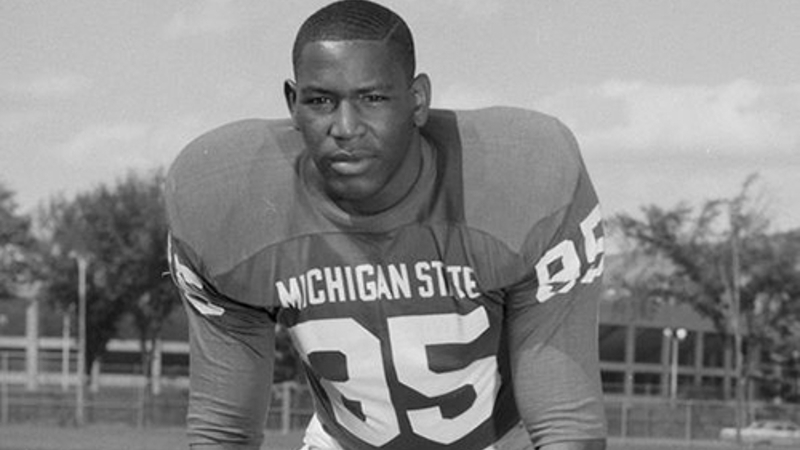
Every now and then you run into a character who is “bigger than life.” Charles “Bubba” Smith of Beaumont, Texas at 6 ft. 7 in. and 270 lbs. did both literally and figuratively fit that mold. Bubba was a passenger on the “underground railroad” of talented black athletes from the Jim Crow south that prohibited players from playing in the South. He, along with many others, was actively recruited by Coach Duffy Daugherty of Michigan State University in the sixties in what was to become one of Duffy’s hallmark achievements. Given a choice, Bubba probably would have preferred playing at a major university in his home state, like the University of Texas or Texas A&M.


By far the biggest member of the Spartan freshman football team in 1963, it was impossible for him to blend in with the thousands of new students pouring into East Lansing from all over the world. He stood out like a giant oak in an apple orchard. Many students stared at him in disbelief and rather than shy away from the fact that he was a behemoth, Bubba played the role to the hilt using his comedic talent to pretend to be a dim-witted, bumbling, good-natured oaf. A skill he would parlay into a successful acting career in Hollywood. He was a teaser and practical joker pushing his teammates’ buttons and his coaches to their limits with his pranks. In reality, Bubba was a good friend to those around him and never actively sought out the notoriety that just naturally presented itself.

There were some members of the college community who thought football players were modern day Neanderthals who dragged their knuckles on the ground as they prowled the campus. Others felt the football scholarships were a form of color-blind affirmative action for the intellectually challenged. Bubba was neither uncivilized nor stupid, although his persona did often catch the attention of the administration and coaching staff as his celebrity peaked during his senior year. The many Bubba sighting and urban legend stories that still exist to this day on the MSU campus are telltale of a man who easily adapted to the “big stage.”

With his enormous physical talent, he was often accused of not using it to the fullest on the field. There may have been some truth to that at times, but if so, it probably had more to do with peer pressure than not making an effort. When you are the biggest kid in your class you are often chided for using your superior strength and size by your classmates. Being labeled a class bully was not a coveted title back then or now, so unless prodded to do so by teammates or coaches, he sometimes may have appeared that he wasn’t trying very hard. And, it may have been because he didn’t have to. We should ask Terry Hanratty, Notre Dame’s QB who was permanently knocked out of the 10-10 Game of the Century, what he thought after a crushing tackle by Bubba in 1966. In any event, most teams ran their offense away from him as the fans in the stands chanted, “Kill, Bubba, Kill.” In the locker room Bubba was a very unique actor and just one of the guys adding tremendous chemistry and humor to a determined team of athletes.

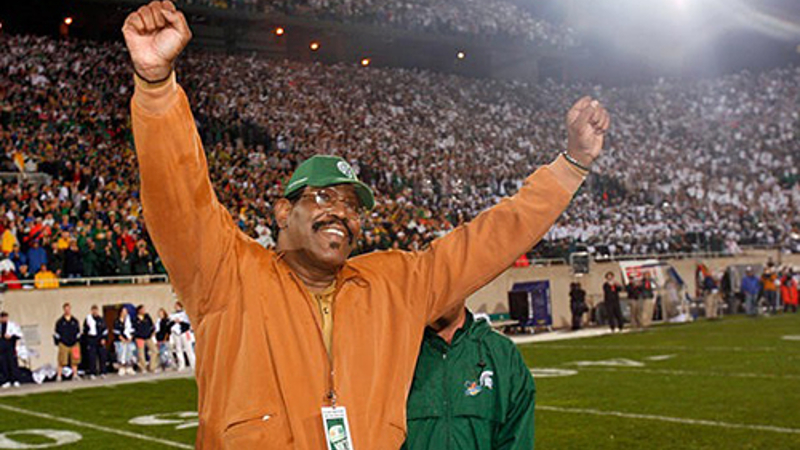
The pros knew what they were doing when he was selected as the number one draft pick in 1967. He helped lead Baltimore to two Super Bowl performances in his five years with the Colts, winning Super Bowl V in 1971. After the Colts he spent two seasons each with Oakland and Houston. As one of the best pass rushers in the game, Bubba often drew two blockers, yet was effective enough to make two Pro Bowls, one All-Pro team and be recognized through the Vince Lombardi Trophy. Bubba Smith was enshrined in the College Football Hall of Fame in 1988. The Big Ten Defensive Lineman of the Year Award bears his name. It is not documented to what extent he experienced concussions during his playing years. Clearly, there was significant punishment. What is known, however, is that the Chronic Traumatic Encephalopathy (CTE) discovered in Bubba’s brain by neuropathologists at Boston University Medical Center was classified as Stage III CTE with symptoms that included cognitive impairment and problems with judgment and planning. Bubba died on August 3, 2011 at the age of 66. Smith was the 90th former NFL player found to have had CTE by the researchers at the UNITE Brain Bank out of their first 94 former pro players examined.

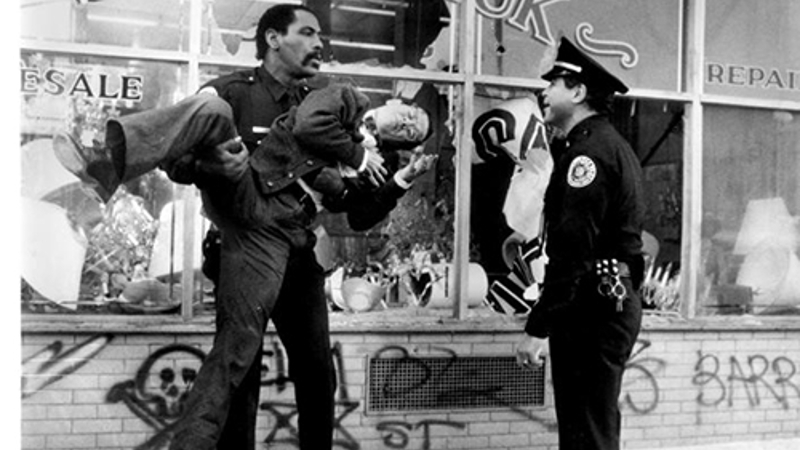
He was likely on his way to the NFL Hall of Fame until landing on a sideline marker in an exhibition game that curtailed his playing career and headed him into his acting career. Between 1979 and 2010, Bubba appeared in various roles in over twenty-two movies and television performances. Probably his most noteworthy efforts came in his role of Moses Hightower in the Police Academy movies and his role with Dick Butkus in the “taste great…less filling” Miller Lite commercials. It was this beer commercial contract that led to his proudest moment. When he realized that he was being used as an instrument to promote drunkenness; he walked away from his contract. His matured social consciousness took both strength and courage to break such a lucrative deal. He valued integrity over money. In the final analysis he was just Bubba: friendly, easy to approach, generous and never getting “too big” as a result of his success.

Bubba Smith is survived by his son, Nathan Hatton.


Ken Stabler

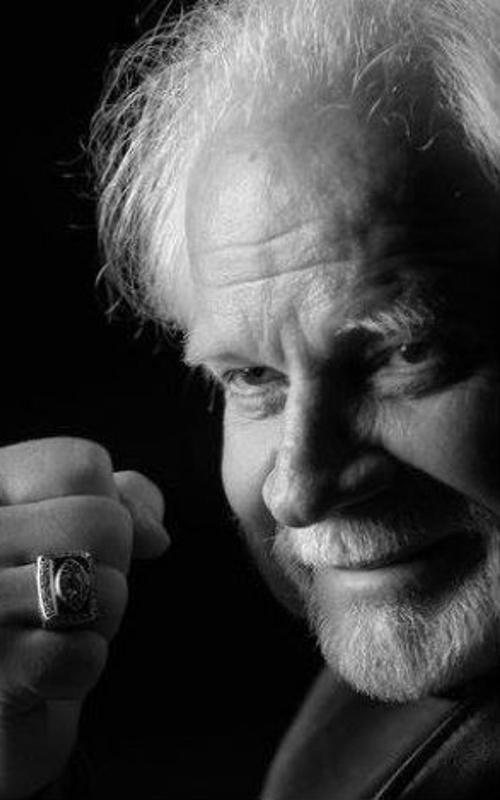
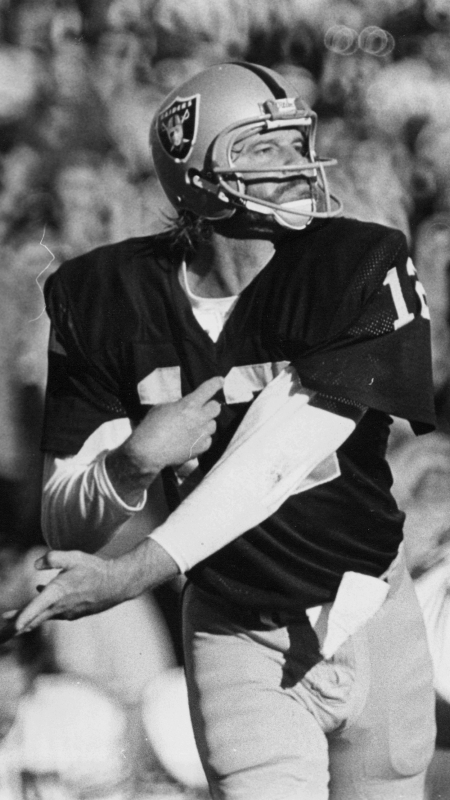
The full NFL story cannot be told without Ken ‘Snake’ Stabler. Some of the greatest moments of the 1970s included this football legend. After his death in July 2015, Ken Stabler was posthumously inducted in the Pro Football Hall of Fame in 2016.

Stabler was a stand out when he played college football for the University of Alabama under the tutelage of legendary Coach Paul “Bear” Bryant. He earned a National Championship ring with the Tide and in his senior year lead his team to a stunning 11-0 record, winning the Sugar Bowl where Stabler was selected as MVP.

Stabler was drafted in the second round of the 1968 NFL Draft by the Oakland Raiders. Stabler first attracted attention in the NFL in a 1972 playoff game against the Pittsburgh Steelers. After entering the game in relief of Daryle Lamonica, he scored the go-ahead touchdown late in the fourth quarter on a 30-yard scramble. The Steelers, however, came back to win on a controversial, deflected pass from Terry Bradshaw to Franco Harris, known in football lore as the Immaculate Reception. He also orchestrated other iconic plays; “Ghost to the Post”, “Sea of Hands” and the “Holy Roller.” Stabler had a remarkable 15-year career in the NFL and spent a decade with Hall of Fame owner Al Davis’ Silver & Black.

During his 10-year career with the Oakland Raiders, Stabler was the 1974 NFL MVP, made the Pro Bowl four times, was the NFL’s leader in touchdown passes twice, and earned a Super Bowl ring with a win over the Minnesota Vikings in Super Bowl XI. He also spent time with the Houston Oilers and New Orleans Saints during his playing days.

A remarkable career on the field and a remarkable man off the field, Stabler lived life to the fullest. He went on to entertain his legions of fans as a sports analyst for CBS, Turner Sports Network and for the University of Alabama’s Crimson Tide Sports Network. He also was a highly sought after public speaker and spokesman for various national and regional brands and corporations.

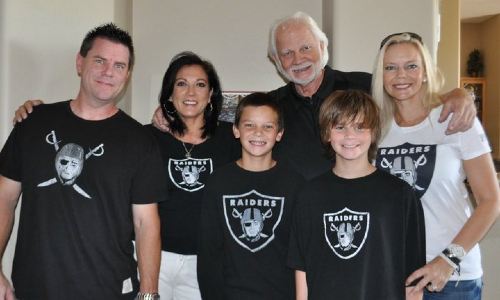
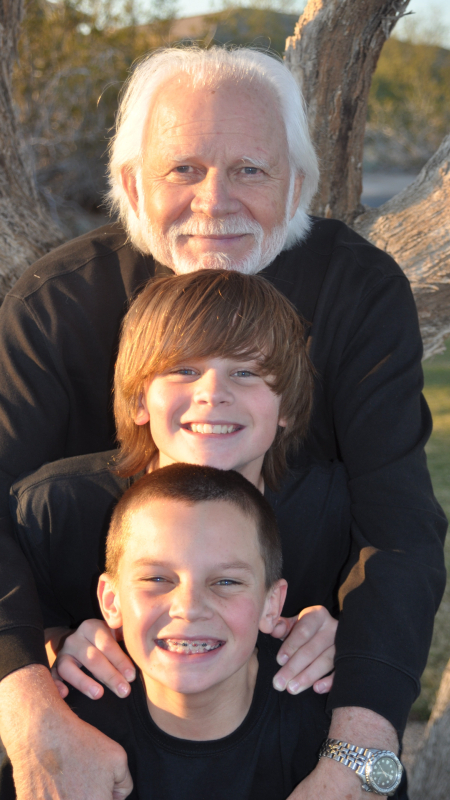
But the job Stabler coveted most was definitely that of being a Father. His greatest joy in life came in the gift of three beautiful daughters whom he adored; Kendra, Alexa and Marissa. And in 1998 when Kendra gave birth to twin sons, Jack and Justin, Stabler became Papa Snake and found glory in the best position ever, that of Grandfather.

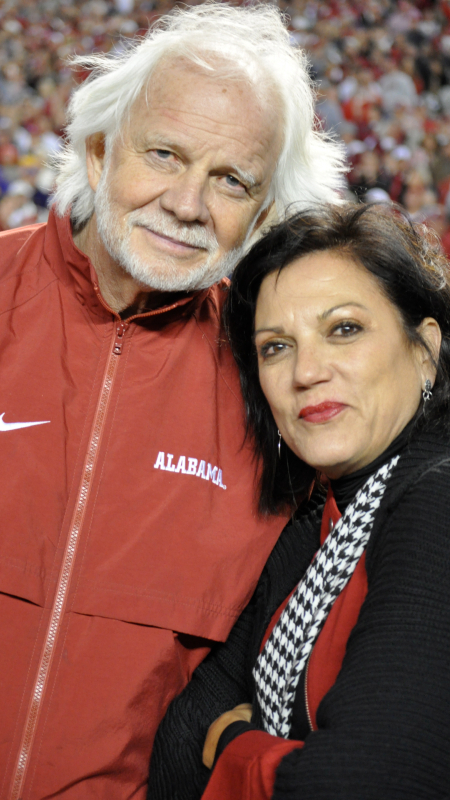
I was Ken Stabler’s partner the last sixteen and a half years of his life, or as I like to say, I played the fourth quarter with him and we won. Even though my life with Ken had nothing to do with the game of football there were parallels you could not deny; he was a fierce competitor, a leader and a victor in his campaigns to help those in need. Whether it be the $600,000 he raised through his celebrity golf tournaments to build the Ronald McDonald House in Mobile, Alabama or his contributions to Cystic Fibrosis of Alabama, the American Heart Association, the American Cancer Society and many other non-profits, he was there to lead the way and battle the cause presented. Stabler founded the XOXO Stabler Foundation, a 501(c)3, in 2003 to raise funds for various causes. Upon his death we have decided that the battle we must continue to wage a war against is that of traumatic brain injury caused by contact sports.

In my opinion, Ken may have eluded the worst of CTE. The beast of colon cancer trumped the impending perils of CTE. After interviewing his daughters and me, Dr. Ann McKee concluded that Ken must have done a “great job compensating for the level of brain damage” he sustained and what is now clearly documented.

His story may be different than most. Ken was of clear and present mind the day he walked into the hospital only to die of complications from the cancer that took his life five months after being discovered. We did see signs of what was to come and undoubtedly the CTE would have progressed to the point of robbing him of his mind.

His daughters, grandsons and I witnessed changes in Ken that were increasingly becoming more obvious. Kendra and I noticed him often repeating himself and he was sometimes confused at stop lights and four way stop signs. He had chronic headaches that went on for days, he described them to be like constant thunderous collisions in his head. The never-ending high pitched sound of tinnitus that simmered all day and night, making it difficult to sleep. He often would look at me and say, “bang, bang, bang” nodding his head all the while trying to explain the noise that just would not go away. He grinded his teeth to the point that he destroyed a bridge in his mouth. When sound and light continued to cause discomfort, he slowly surrendered some of the things he enjoyed the most; his love of music, the volume of sports and CNN. Even the simple day-to-day rituals of me cooking a meal would force him to leave the room and seek shelter in some place of quiet that never quite existed.

As deeply as we miss him in our lives, I think we would all agree that he had lived a great life, and when the clock finally stopped, maybe he had been as elusive with CTE as he had been on the field where he achieved such greatness. He will forever be missed in the lives of all who loved him and the millions of fans who cheered for him on Sundays. His light shines bright and it always will.