Darrell Burris

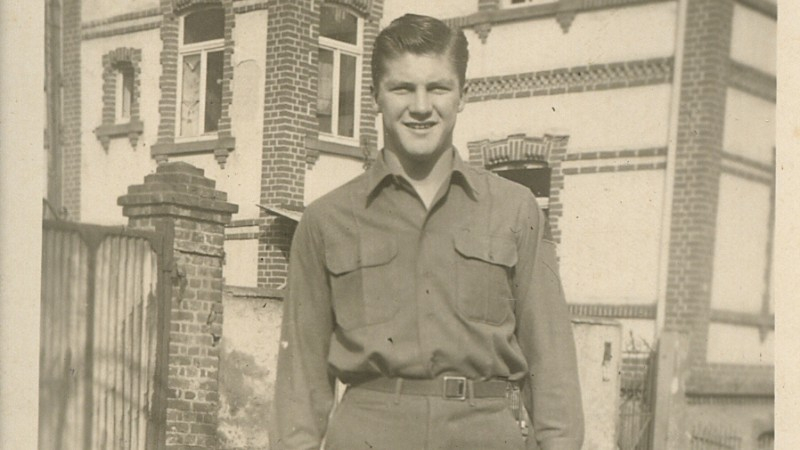
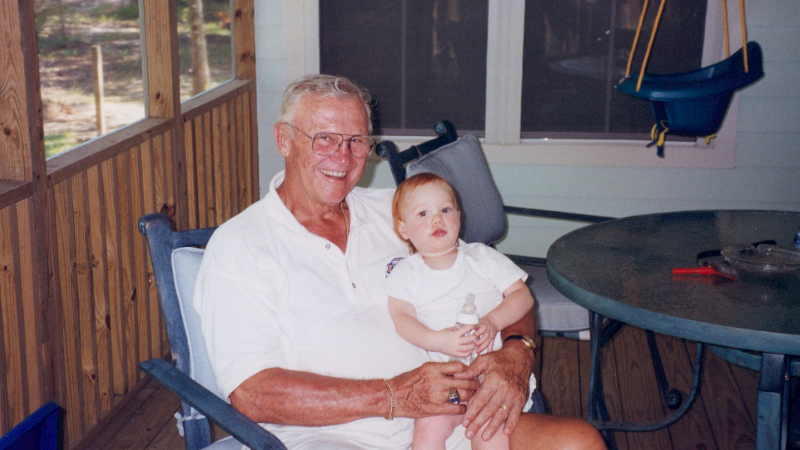
On a cool November day in 1934, in a small Oklahoma house with a dirt floor, Darrell Gene Burris began his journey, touching the lives of thousands. What day, exactly, that was, became a point of contention, because the doctor went on vacation and ultimately forgot the exact date he was born.

“I remember,” his mother Ruby would tell him. “I was there.”
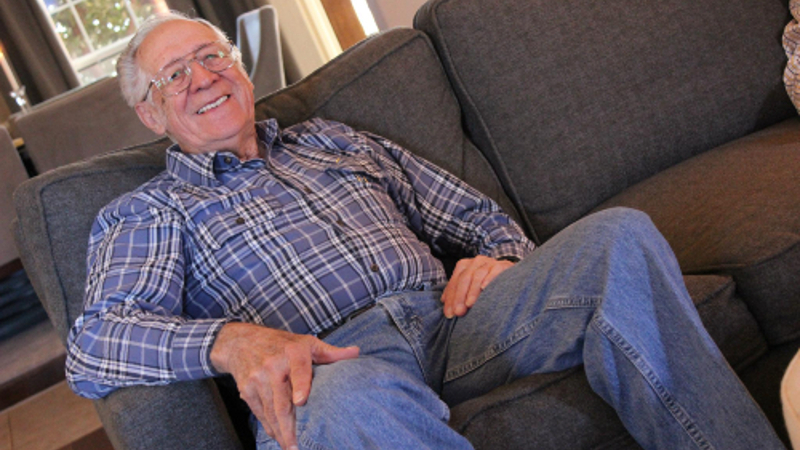
From that humble start, Darrell began a life filled with service to others, not only because it was his faith, but also part of his being. He helped his late father Gene Burris paint and wallpaper houses at a very young age. When his sister Paula (Burris) Casey and brother Randy Burris were born, he helped his mother shower them with love.

When he was just 17-years-old, he saw a tall, beautiful girl walking to school and asked if she wanted a ride. Despite being a baseball, basketball, boxing, and football star as well as a handsome high school teen, she told him “no.” Day after day he would drive by her and ask again until finally, she agreed to have a coke with him after school. Less than a year later, when Mary Lou Porter was just 15-years-old she and Darrell snuck off to get married.

For six months they kept their marriage a secret by continuing to live with their families and longing to be together. Her father was furious and threatened to annul the marriage when he discovered it. Darrell fought to keep Mary Lou and they remained married for 35 years until one freezing day in 1987 when she was taken too soon in a tragic car accident on the Overholser Bridge on Route 66 near Bethany, Oklahoma. She was just 50-years-old. He would never remarry.

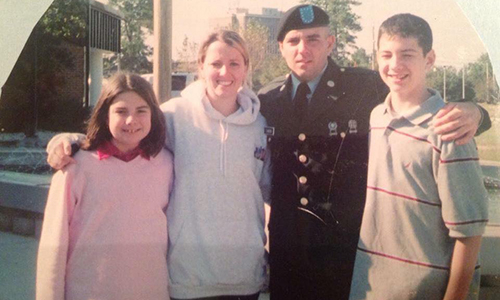
Besides Darrell’s love for his wife Mary Lou, he loved his family and many friends. He enjoyed the service members he met during his basic training in the U.S. Army at Ft. Sill, Ft. Polk and Ft. Belvoir. He excelled at artillery, but one day he confessed to his commanding officer that he didn’t think he could ever kill another person because he was a Christian. Instead of sending him for further combat training, they sent Darrell to the Ft. Belvoir print shop, where he learned a trade that would carry through the rest of his life.

Civilian life allowed Darrell to use his printing skills by working at several companies including OPUBCO while always dreaming of owning his own shop. In 1979 in Oklahoma City he finally achieved his goal and opened Burris Printing. The company printed material for many clients including Braum’s Ice Cream & Dairy, the National Weather Service Training Center in Norman, Oklahoma, and Stucky’s Diamonds in Houston, Texas, just to mention a few.

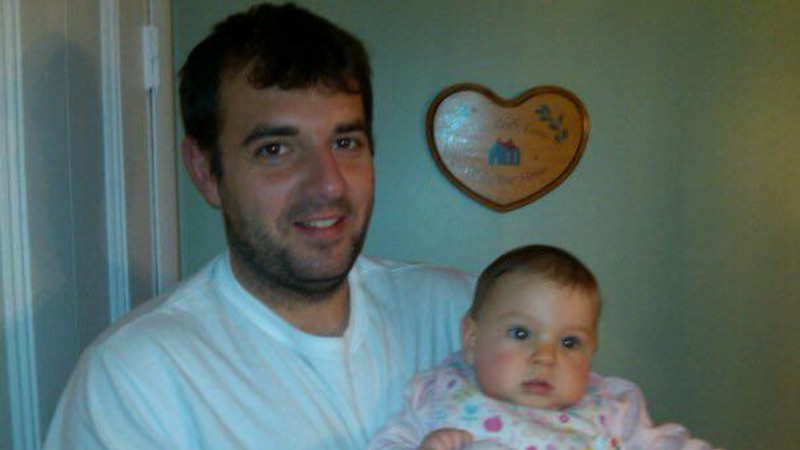
When his granddaughter Sarah Katheryn was born, Darrell and Mary Lou’s lives changed forever. After his wife’s death, it was his time with Sarah he said, that saved him. “You’re going to have to learn how to use the dishwasher,” Darrell remembered Sarah telling him. At age 6, Sarah literally saved him when he accidentally caught his kitchen on fire while cooking as he watched a basketball game on TV despite the house filling with smoke. There were also times Sarah tried to force him to eat his vegetables and she would later find them hidden in his napkin. Darrell struggled with diabetes and she would frequently find his freezer full of Nutty-Buddies and chocolate milk.

His Yukon, Oklahoma home frequently became a favorite place for his granddaughter’s giggling teenage friends to hold their slumber parties and New Year’s sleepovers. To this day, a whole generation of Yukon graduates, teachers, and administration staff refers to him as “Papa.”

After retiring from printing, Darrell joined the team at Lowe’s working part-time, always promising his customers 10% discounts. He enjoyed using his time away from Lowe’s at the Yukon Bowling Alley where he volunteered to teach over a hundred children in youth bowling classes. Many of his students even went on to win tournaments. Darrell’s family and friends lost track of the number of perfect score-300 games he bowled but each game would bring a gold ring he kept lined up in his sock drawer.

Darrell joined his wife Mary Lou in Heaven on Wednesday, April 22, 2020. His granddaughter Sarah and his sister Paula lovingly held his hands while playing his favorite Elvis songs.

Those left behind are his sister, Paula (Burris) Casey and husband Mike Casey of Oklahoma City, brother Randy Burris and wife Vicki of Sautee Nacoochee, Georgia, son Michael Burris and wife Susan of Yukon, son Samuel Burris of Los Angeles, California, granddaughter Sarah Burris of Washington, D.C. as well as nephews Michael Siekel and wife Jeri of Oklahoma City, Scott Wallace and wife Jennifer of Southlake, Texas, nieces Jennifer Burris and Andee Allen of Georgia as well as great-nephews and nieces Lucas, Lilyan, Jacob, Brandon Kyle and Dee.

Neurologists were never able to fully diagnose Darrell’s dementia. There were suspicions of Alzheimer’s Disease, questions about CTE and others. So, Darrell donated his brain to the Boston University’s study with the Veterans Administration investigating how concussions can contribute to degenerative brain diseases. The family’s hope is that their struggles to diagnose him and searches for solutions for care can help other families.
Ron Condrey


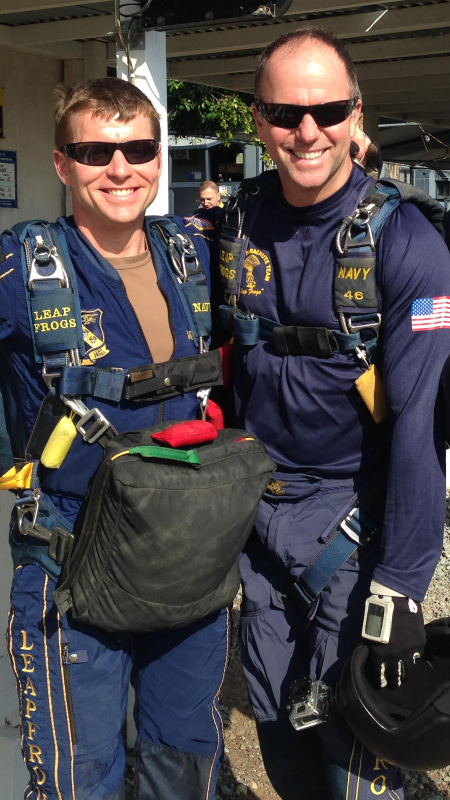
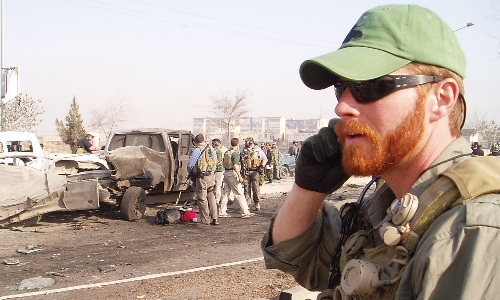
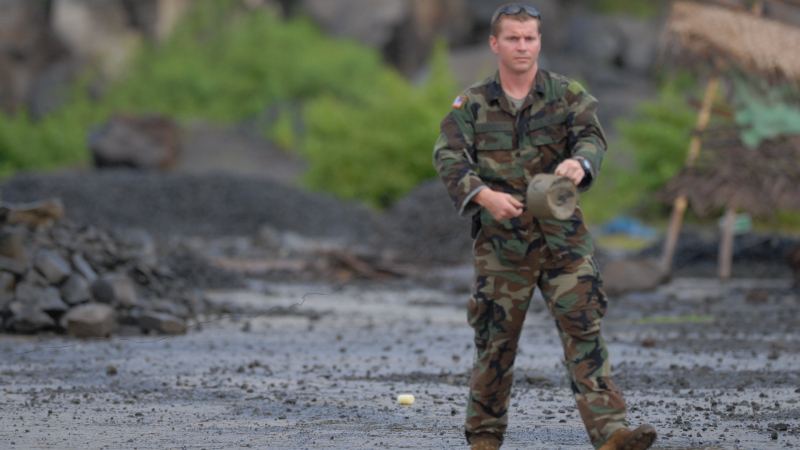
Ron Condrey was a recently retired veteran of the US Navy from Salisbury, NC, finishing his career as a Master Explosive Ordnance Disposal (EOD) technician and Master Naval Parachutist in 2017. He dedicated himself on countless occasions over 14 deployments, conducting missions around the world in direct support of the Global War on Terrorism. His actions were recognized by numerous meritorious commendations, and for Valor. Throughout his 25 years of military service, Ron sustained a variety of injuries during combat and training, the most harsh of which included a variety of Traumatic Brain Injuries (helicopter crash, Humvee rollover, a fall down a mountain, and repeated blast exposures) and extensive orthopedic injuries, all of which posed significant challenges both during his career and as he made the transition through retirement to find new purpose in the civilian world.

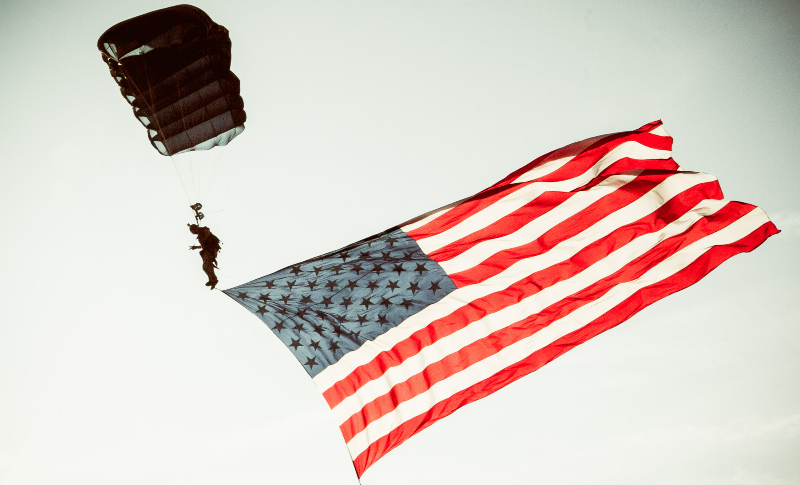
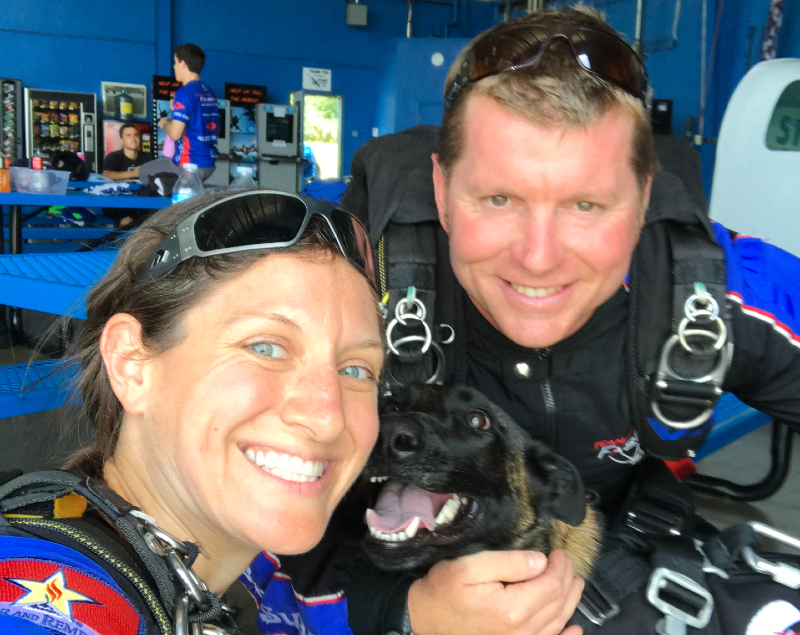
A true warrior whose passion was to serve his country and inspire others, he found purpose outside the military by honoring and supporting our country’s military men, women, and families through his passions of skydiving, athletics, and the outdoors. He captained the Navy’s Warrior Games team and volunteered with Combat Wounded Coalition, Spike’s K9 fund, Navy SEAL Foundation, and Blue Skies for The Good Guys and Gals Warrior Foundation. After retiring from the Navy, Ron and his wife joined Team Fastrax professional skydiving team, traveling the country in support of our veterans and Gold Star families.

Ron ultimately died from the invisible wounds of war, stemming from his Traumatic Brain Injuries (TBIs). He lived in a suicidal state for nearly three years as he transitioned out of the military into civilian life. He felt that he had become a shell of the warrior he once knew: losing executive functioning skills, increased decision-making time, emotional uncontrolled bouts of anger, pushing everyone around him away. For a warrior, these losses meant that his defenses were weak, which resulted in his increased hyper-vigilance and a lack of trust in anyone and anything, to include himself. The TBI symptoms and misdiagnosis of Post-Traumatic Stress (PTS) set him into a downward spiral of depression.

Humans know very little about the brain, and doctors found it easier to diagnose Ron with PTS rather than the unknowns of TBIs. They gave him pills and convinced him that he was haunted by the visions of war, which had not affected Ron to date. Ron went to war expecting to see what he saw and returned a stronger warrior for it. Trusting doctors, Ron went through Prolonged Exposure treatment to “heal his PTS”. Instead of helping, this treatment only emboldened Ron’s feelings of worthlessness. Ron spent years of his life trusting doctors and addressing PTS when he could have been focused on the TBIs. While we have no certain answers about how to heal the brain, and the symptoms of PTS and TBIs overlap, their treatments for the most part do not. For a warrior, a visible wound and scar is a sign of pride. Invisible wounds inevitably result in judgement from bystanders and often loved ones, as they provide no immediate visual story or reminder. Yet they contain pains within the individual for which humans have no pill.

Ron would want his life to inspire you to get out and accomplish something greater than yourself: something you feel is just outside your reach. If something sounds like an extreme challenge, he would tell you not to hesitate and to attack it. He loved the quote, “Life begins at the end of your comfort zone.” Ron has never stopped inspiring, and anyone who met Ron would know that he is grateful his brain and story continue to give back through the Concussion & CTE Foundation.

John Costello

John Bernard Costello was born on September 7, 1917, in Minneapolis, Minnesota, and died peacefully at home on September 29, 2011, in Bloomfield Hills, Michigan.

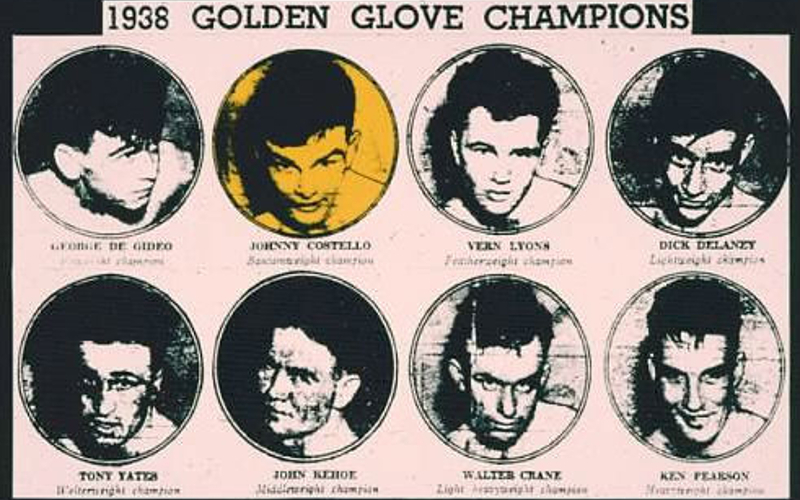
He graduated from the University of Minnesota in 1940 with a degree in business administration, and was a lifelong supporter of university alumni activities. He was a member of Phi Delta Theta fraternity. During his college years he was an avid boxer; boxing was an inter-collegiate sport at that time. He won the 1938 Minnesota Golden Gloves, Bantam Weight Division.

In 1942, he attended U.S.N.R. Midshipmen’s School at Northwestern University, and was commissioned an Ensign in the U.S. Navy. John saw action aboard submarine chasers throughout World War II, both in the North Atlantic and the Pacific. He participated in the invasion of Normandy on D-Day, and eventually became captain of a sub chaser in the Pacific.

John met Marian Greenwood in the summer of 1948 on a blind date at a dance at Interlochen Club in Minneapolis. They were married June 13, 1949, and observed their 62nd wedding anniversary in 2011.

In 1947, John joined Ford Motor Company in St. Paul, Minnesota, as a “Road Man,” calling on Ford dealers in the Midwest. When he was transferred to Dearborn, Michigan, he moved his family to Bloomfield Hills in 1957. John’s work was primarily in fleet sales and leasing, which involved extensive travel in the U.S., Europe, South America, and Australia. At the time of his retirement in 1991, he was Manager of Government Sales.

John and Marian belonged to various dance clubs through the years, and passed on their love of dance and music to their children. John was an amateur guitarist, and sang with choirs at St Hugo and St. Thomas More churches. He was also an occasional skier and an enthusiastic golfer.

John is survived by his wife, Marian, his children Elaine (Thompson) Potter, Robert Costello, Danny Costello, Cynthia (Cimarron) Buser, and Michael (Melinda) Costello. His grandchildren are Mary Potter, Jimmy Costello, Paul and Colette Buser, and Quinn Costello. He was preceded in death by his son James Costello.


Joseph Coyle

The honor of being at my father’s side when he passed on September 21, 2022, was a day I’ll hold dear the rest of my life. I felt it a privilege to be there in the final moments of a life I believe was that of a hero. For certain, he was a good man. He always tried to do his best and my earliest memories in life are of him and how good a Dad he was, how much he wanted what was best for me.

Joseph “Joe” Francis Coyle was born in the Mission Hill neighborhood of Boston on June 21, 1936. It was a tough Irish Catholic neighborhood and he was definitely a city kid. The 1940s in Mission Hill were much like the rest of America where post-Depression and WWII were the dominant forces for kids growing up. He was very intelligent, however school and academics were not his focus and he enlisted in the Marine Corps at 17.

His strong personality and being from Boston made for interesting stories, including his tour of duty in Korea. He incurred several documented injuries where he suffered head injuries, one in particular was severe and his brain/skull was operated on. He was young, strong, and recovered quickly and probably thought little of it after the fact.

After being discharged and returning home, he worked several jobs, including joining the Metropolitan Police Department (merging later with the Massachusetts State Police). The Metropolitan Police was a department that covered unique jurisdictions ranging from rural state properties to inner city patrol assignments. He did them all with the same intensity as the city kid who joined the Marines.

Before they had some of the current police equipment of today, cops in the 60s, 70s and 80s resorted to much of their suspect interactions using their hands, engaging in arrests resulting from a fight. He certainly did not back down from anyone and from all accounts was in the fight whenever needed. I’m sure he took additional brain trauma in the years he was working nights in Boston.

He was well read, well spoken, and challenged me to expand my goals and intellectual pursuits. He truly was the smartest guy I’ve ever known. He was always available for any advice I ever needed and looking back, he was instrumental in my life and successes. Whether during my time in the Marine Corps, or in college, or at a new job, or in a relationship, I could talk to him and get the advice of a dad who only wished the best for his son. I have so many memories of having a tough, but loving dad that truly wanted and prayed for my success. I’m so grateful for every day I had him and miss him still, always will.

In 2016, when he was age 80, I started to notice little things, forgetful inconsequential patterns which I wrote off to natural aging. Just a missed appointment or repeating himself or losing his train of thought easily – all of which were very new for me to see in him. Concerned enough, I moved him in with me in Boston, so I could look out for and take care of him as he always did for me.

At the time, I was a Boston firefighter and worked 24-hour shifts, but felt calling him often while at work would be OK on those days. It was only living with him that I realized it was so much worse than I thought. I was seeing how short his memory had become and when I returned home, I could tell he didn’t really know how long I had been gone. It was apparent to both of us he needed 24/7 care that I wasn’t able to give him.

Once in the care facilities in Boston, we could really see something was very off. Some medical professionals thought it was typical Alzheimer’s and/or dementia. As a firefighter I had seen a lot of both diseases and just didn’t think it fit him. I couldn’t put my finger on it, but knew it was something else.

After seeing several documentaries on CTE in football and some subsequent reading on the subject, I just knew it was the answer. I really had no doubt. I told my dad my thoughts, he would listen and agree and two minutes later he would tell me he thinks he’s having memory issues and wasn’t sure why. I’d tell him about CTE and he would listen and agree – and two minutes later tell me he thinks his memory is failing and he’s not sure why.

I researched BU’s Brain Bank and made a point of telling my dad more than ten times over several months I wanted us to donate his brain for study. We had a laugh once when I told him again about the plan and he sat up and said, “When?!?” I told him, “After you pass.” “Oh that’s fine,” he replied back. I can still hear his laugh, so genuine, just wanting to enjoy the company with him and make sure everyone around him felt good.

Within an hour of his death, arrangements were made with the amazing and dedicated scientists at BU to harvest and study his brain. I was hopeful, if my suspicions were found to be true, some good needed to come from his donation.

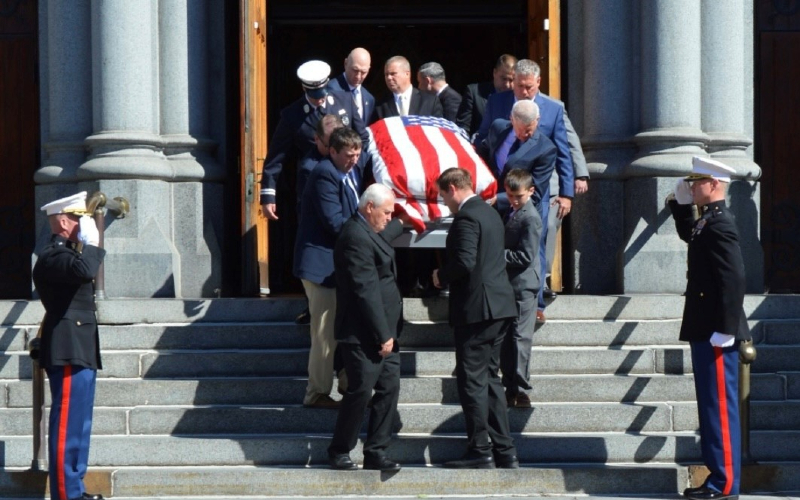
In the week between his death and funeral, friends of mine from the military and fire department started gathering to recall stories of my dad and begin to assist me in laying him to rest. It was an honor to have them, heroes of mine, to help me in giving the first hero of my life the burial honors he earned and deserved.

The researchers got back to me once my dad’s study was complete and told me they found stage 4 (of 4) CTE. It was comforting to know the answer as to what had been impacting his final years. To have my friends, all serving in those very roles he served in, carrying his casket I immediately knew I wanted his life and service to continue in the Legacy efforts to help others. I look forward to sharing my dad’s story so military members returning home or young cops on the job might be more aware of the critical education and care needed for themselves and their peers, regarding brain injuries resulting from work related traumas.

The effort was best summed up when I told Congressman Seth Moulton about the report findings and my hopes for my dad’s story helping others: “And now he continues to serve others!” I look forward to the path ahead, gaining education and working together to advance awareness and policy to care for those who protect us everyday.

Maybe my next conversation with Congressman Moulton will be more formal.


Louis Creekmur

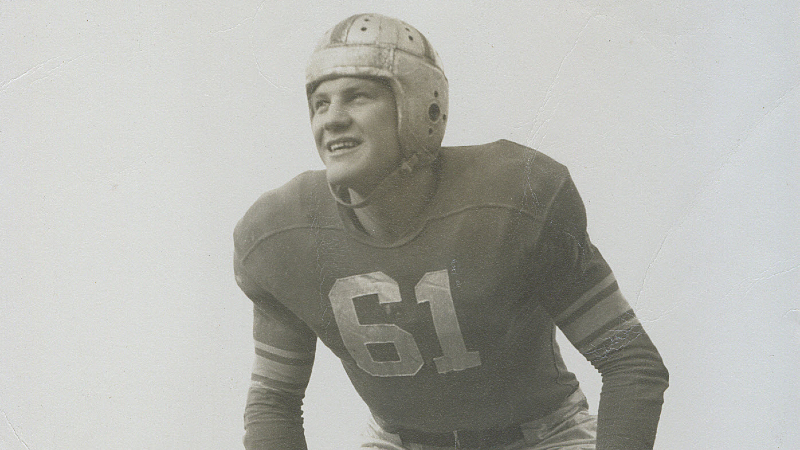
Lou Creekmur was unwaveringly loyal and relentlessly tough in everything he did. Creekmur was born on January 22, 1927, in Hopelawn, New Jersey. He went on to play college football at the College of William and Mary, but his football career was interrupted when he served in the US Army to fight in World War II in 1945 and 1946.

Creekmur returned to William & Mary and finished school before being acquired by the Detroit Lions prior to the 1950 NFL season. He immediately held the crucial responsibility of protecting Bobby Layne and Doak Walker, the Lions’ star quarterback and running back, respectively. Early in his first season, Creekmur felt Layne’s scorn after allowing a sack. He made a vow to his quarterback.

“I didn’t want to take the wrath of Bobby Layne. If I was going to stay in the league, I was going to block for Bobby Layne. I was going to do everything possible to not let any one of those defensive guys get to Bobby Layne,” said Creekmur in an NFL Films documentary.

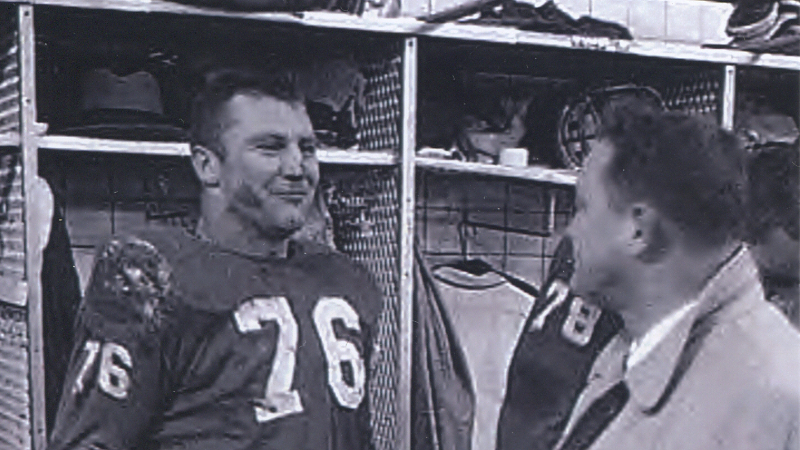
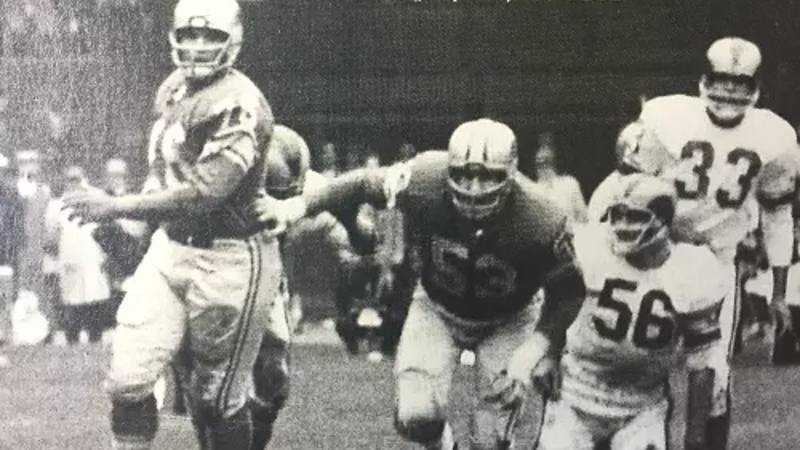
He lived up to his word. Creekmur played every single snap in every practice, and all 165 preseason, regular season, and playoff game the Lions played from 1950-1958, including NFL Championship games. In many of those games, Creekmur was playing with at least one significant injury.

“I played one complete season with a crushed sternum and just put a pad over it… You were going to get paid on Monday, so I had to play on Sunday,” said Creekmur.

In addition to his litany of bone and muscle injuries, Creekmur also suffered several concussions in an era where offensive linemen led with their heads, not their hands. He and his last wife Caroline recounted “16 or 17” concussions in his career.


During Creekmur’s career, playing in the NFL wasn’t all that lucrative. He, like many of his peers, held day jobs during the football season. Creekmur was a manager at the Saginaw Transfer Co.

“There were many days when I’d make a call on a Monday morning after a football game with a black eye or a bloody nose or a cut across my forehead. For some reason, I was always let in to see the boss first,” said Creekmur.

After the 1958 season, Creekmur retired from football to focus on his business career. But after the Lions started out with a dismal 0-4 record in 1959, Creekmur’s iconic loyalty was on full display. The Lions called him back to play, and Creekmur obliged to help the Lions finish out the season. He officially retired from football after the 1959 season.

In 1996, Creekmur’s tenacious nature paid off once again. After years of urging, Creekmur was enshrined in the Pro Football Hall of Fame.

Creekmur went on to serve as the Public Relations Director of Ryder Systems, Inc. until his retirement. But in the late 1970’s, Creekmur began to experience cognitive and behavioral issues. His memory progressively faded, he grew inattentive, his executive functioning declined, and he became increasingly intense, angry, and aggressive. He was thought to be suffering from Alzheimer’s disease.

Lou Creekmur passed away on July 5, 2009, at age 82. After his death, his brain was studied by Dr. Ann McKee and the research team at the UNITE Brain Bank. He became the 10th former NFL player diagnosed with Chronic Traumatic Encephalopathy (CTE).

“By examining his brain, I was able to confirm that there was absolutely no sign of Alzheimer’s disease or any other type of neurodegenerative disease except for severe CTE. This is the most advanced case of CTE I’ve seen in a football player; his brain changes were similar to those of profoundly affected professional boxers,” said Dr. McKee in 2009.

Creekmur’s brain pathology helped show the world the toll a career in football could have. He will forever be known for his relentless offensive line play and his dedication to his country, his teammates, and his family.

Scott Damon


Scott Damon was a kind soul who would do anything for anyone. He was extremely proud of his military service, always having a story to tell. He had three nieces, Olivia, Abigail and Aubree, who loved their Uncle Scotty. His three sons Anthony, Jake and Jaxyn were his whole world and he loved them unconditionally.

Scott grew up in Peabody, Massachusetts, living with our mother Judy and father Bill. He had an older sister, Jennifer, who he loved riding bikes and playing games with along with their cousins Jason, Jared and Jeremy. His younger brother William was born in February of 1993 and Scott embraced the role of big brother. When I was born in July of 1996, we became inseparable. We would play lacrosse, football and baseball in the backyard, always competing to see who could hit the ball over the house.

In 2006, Scott made the decision to join the United States Army as a Blackhawk mechanic. This decision took him away from home for six years and to Germany, Afghanistan, and Iraq. His first deployment was in Iraq, where he served with a medical evacuation unit. His deployment lasted 15 months and during that time he was flying into combat zones to rescue injured service men and women. When he came home on a visit we noticed some changes in his personality. Scott’s patience became very short and certain noises would make him uncomfortable. This was the beginning of his battle with Post Traumatic Stress Disorder. Once he returned from Iraq, he moved to Fort Campbell Kentucky and deployed to Afghanistan. He flew into the mountains transporting troops and other people throughout the area. He was happiest in the air in the back of the helicopter. During both deployments he was the gunner on the door. Scott was in three helicopter crashes or hard landings.

I remember the day Scott’s plane landed on the base returning from Afghanistan. I was so incredibly proud of my big brother. He took us around the area and we got to see a little piece of his life in Kentucky. Scott seemed so happy and optimistic about life after the military. He was excited to move home and spend time with family and friends.

Scott drove home directly from Kentucky, which was about a 15-hour ride. When he arrived home, he was sleep deprived and exhausted. He was having flashbacks to his deployments and was admitted to the VA hospital for help. He believed he was clearing the road and prepping the helicopter for flights. After sleeping he was fine, but the reality was his PTSD was a lot more severe than we thought.

Scott’s first son Anthony was born in 2011, then Jake in 2014 and Jaxyn in 2016. His boys were his life and he loved taking them to the Salem Willows, to parks, and to visit his family. Anthony loved learning about the helicopters his daddy worked on and they were two peas in a pod. Jake loved to play monster trucks with Scott and they would always race each other around the yard. Jaxyn was a baby when Scott passed, but Scott was always holding him and playing with him. His boys were his whole world and his proudest accomplishment in life. Whenever they needed him he was there and loved them unconditionally.

Scott tried to live a normal life, but his brain just was not working correctly. With the helicopter crashes and PTSD we figured something was going on, but we needed to figure out how to help him. Doctors prescribed him different things, but nothing helped with his pain. He did not like how those prescriptions made him feel, as he would often sleep and isolate himself after taking them.  We would never be able to understand what my brother went through during his deployments. He never let his inner pain show on the outside. His smile was contagious and would always make people laugh.

Our whole world came crashing down when Scott passed away on September 21, 2017. At his services, people told stories of how Scott impacted their lives; a helping hand at work, a friend they could confide in, or someone who made them smile. Hearing those stories made me so proud to be his sister.

Jennifer and I made the decision to donate Scott’s brain to the UNITE Brain Bank in Boston. Scott was very open about his journey through life and would be the first person there if someone needed help. We knew that donating his brain could potentially help other people going through the same battle Scott did. We wanted answers and through the Concussion Legacy Foundation and the research at the Brain Bank we were able to get them. My family was so incredibly lucky to have Scott in our lives and I am so blessed to have had 21 years with my big brother. He will forever be our American hero.

Read about Project Enlist, CLF’s program to accelerate research on TBI, CTE, and PTSD in military veterans.