Stan Mikita


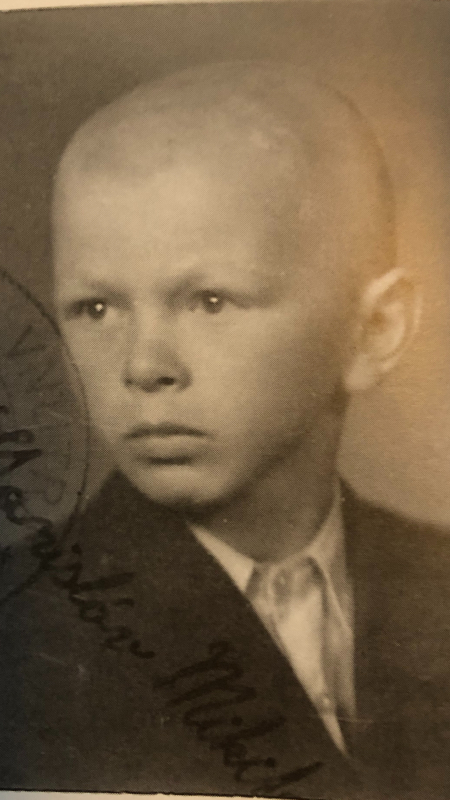
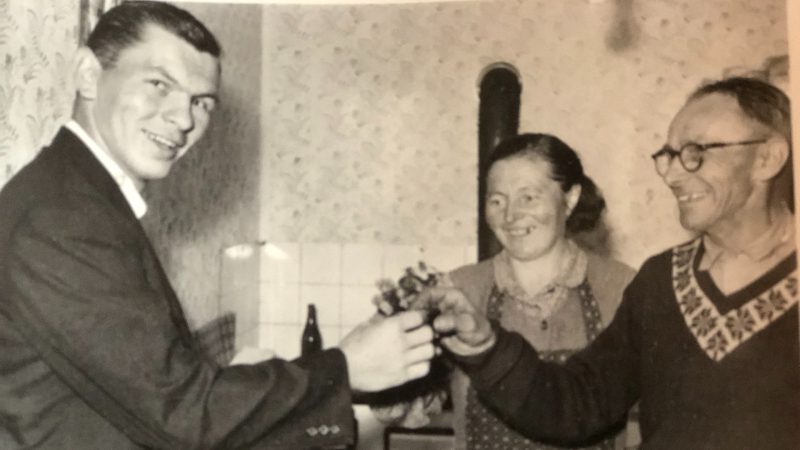
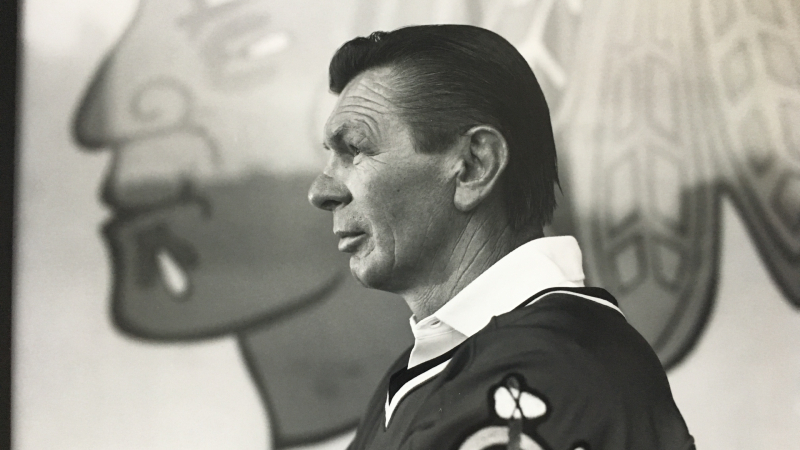
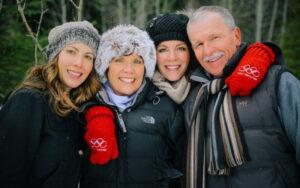
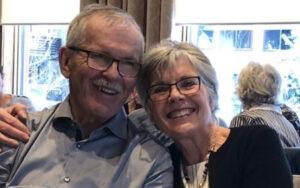
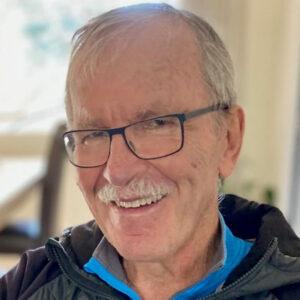
It is important to understand the manner in which our father lived his life: his compassion for others, his ability to meet a stranger and make a friend, and his devotion to family and friends defined him. Our father was born in Sokolce in 1940, then a part of communist Czechoslovakia. At the age of 8, his aunt and uncle visited to ask if they could adopt Stan and raise him in Canada. Stan’s mother, Amelia, and father, George, refused. Then came the miscommunication that would change the course of Stan’s life: the hungry 8-year-old came in to ask for a snack. When Stan was sent back to bed without his snack, he cried. His parents thought he was upset because he wanted to live in Canada, so they changed their minds and let him go. That small moment set in motion a series of events that greatly impacted our dad’s life.

When he arrived in Canada, Stan did not speak the language. He looked different than the other kids and he was not with his “real” family. Even though he was 8 years old, he was placed in a Kindergarten classroom due to his lack of English language skills. He was bullied, he was called a DP (displaced person, a great insult), he had no friends, and in his mind, he didn’t have his family.

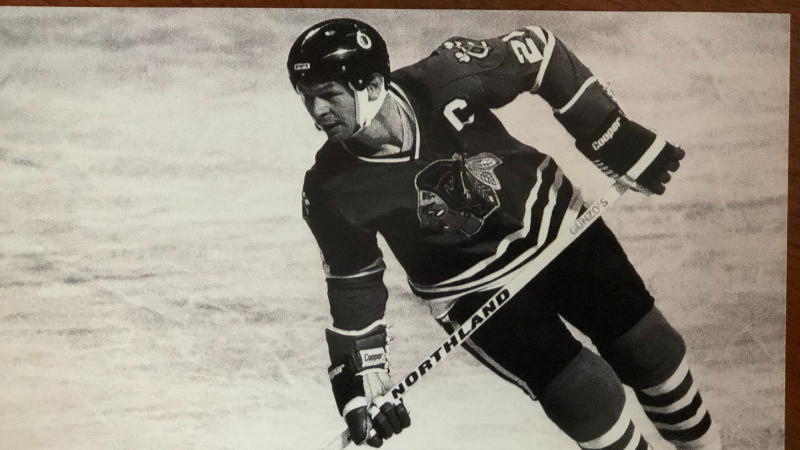
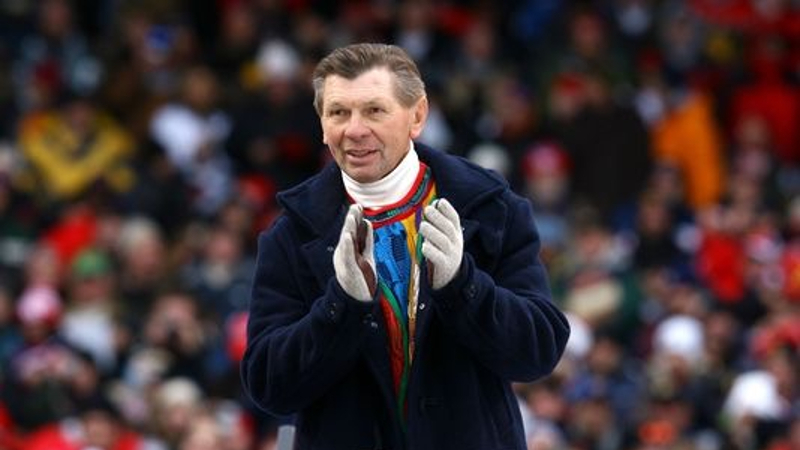
In the midst of that great loneliness, he found the game of hockey, which would go on to become a great joy of his life. While our dad’s professional hockey accomplishments were many, we are most proud of his legacy of giving back and caring for others.

Those early moments upon his arrival in Canada made a lasting and profound mark on our dad. He learned what it was like to be alone in a world full of people, and how to reach out to others who felt that way. Our dad was a husband, father, and grandfather who fiercely loved his family above all else. A friend who would always lend a hand and never missed an opportunity to pull a prank. A kid from Czechoslovakia who never forgot the sacrifices his parents made, his feelings of being different and left out or his humble beginnings. A selfless Chicagoan who felt a duty to give back. A human who saw other people with differences as simply that – people.

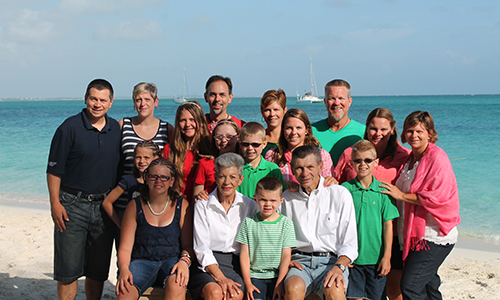
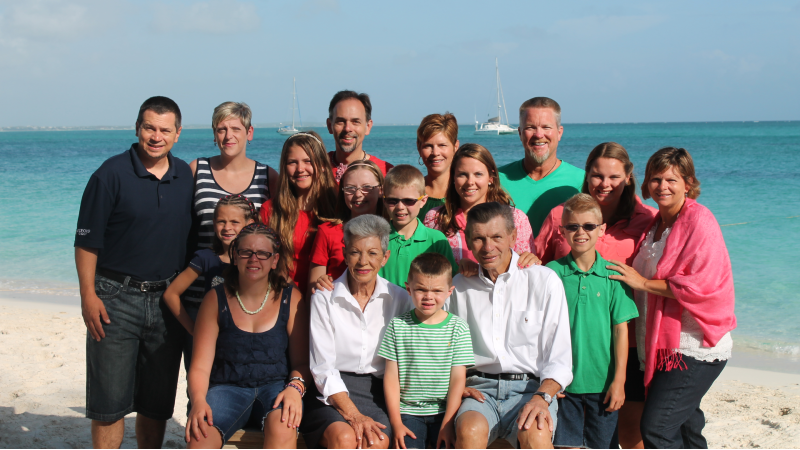
As a father, he taught us by example about acceptance, compassion and patience, often reminding us that it doesn’t cost anything to be nice to people. He stressed that everyone is equally worthy of respect and kindness; that people are more alike than they are different. Our dad would ask us if we wanted to go to a track meet or a visit a hospital with him. He never qualified these outings as doing charity work or made note that some of the participants would be mentally, physically or medically challenged. We were just going to cheer some people on. We accompanied him to be “huggers” at the Special Olympics when he helped start the program in Chicago. When our dad and Uncle Irv founded AHIHA (American Hearing Impaired Hockey Association) in 1973, we were all involved from the beginning, helping any way we could. AHIHA is still going strong, fielding the US Deaf Olympic Team. The next generation of Mikitas, the grandchildren, continue to support the program by volunteering on and off the ice. Many of our good friends are AHIHA families. On Thanksgiving we would go to Larabida Children’s Hospital to play and have lunch with the kids and their families.

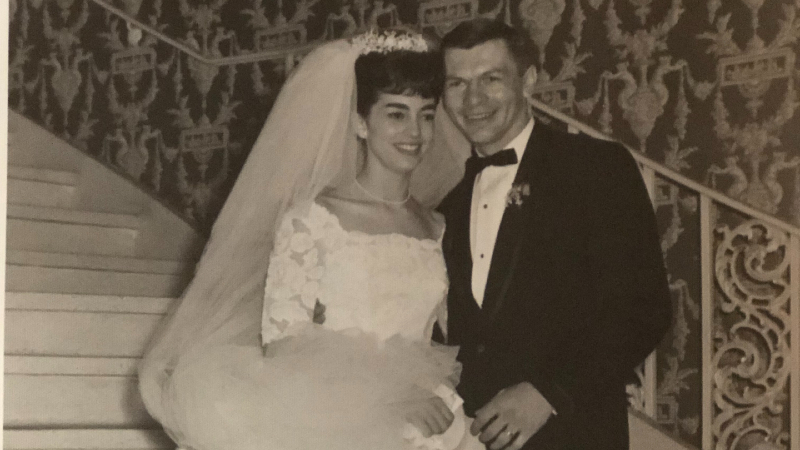
Several years ago, our father began declining mentally. Almost overnight, our mother’s partner of 52 years was mentally gone but physically still here. Our loving father and doting grandpa was suddenly confused and different from the person we knew.

This new journey was a change for all of us. As a family we decided that it was important to share news of his dementia. Our public statement was met with sorrow, understanding, compassion, love and support for both Stan and our family. We knew we were not alone in this journey, ours was just going to be a little more public than most because of Stan’s name and notoriety.

This is not a path any family foresees for a loved one, but it is, unfortunately, one that unites many of us. One amazing revelation was that once people knew that Stan was suffering with dementia, almost everyone who reached out to us had a family member or loved one fighting the same battle.

Because of the way our dad lived his life, during the end of his life, we were supported and loved by so many of the people he had touched. Friends, former teammates and rivals, kids he visited at schools and hospitals, old neighbors and strangers all reached out to offer comfort and share memories.


In keeping with the way he lived his life as a giver, it was our father’s idea to donate his brain to the UNITE Brain Bank upon his death. He made his wishes abundantly clear, and as he said in his book, “This is a serious issue, and I am willing to be part of a test group. While I’m alive, I will gladly cooperate with the investigation of post-concussion syndrome. It’s the least I can do.” He visited Boston in 2013 to undergo baseline testing with Dr. Stern. He knew this was not diagnostic testing and he would not be receiving any medical treatment to help his memory loss, but that this information would be able to help others in the future. He told our sister Meg after the testing, “I told them they could have my brain, but not yet, I’m still using it.”

Our dad ended his book, Forever a Blackhawk with this quote, “By now, I thought for sure that I would be forgotten. Instead, I am still being remembered. How lucky can a guy be?” We were lucky to have him as a dad and friend, and we are honored to continue Stan’s wish to give back.

-The Mikita Family

Jill Mikita – wife

Meg Mikta

Scott Mikita

Jane Mikita Gneiser

Chris Mikita

Nick Miniati

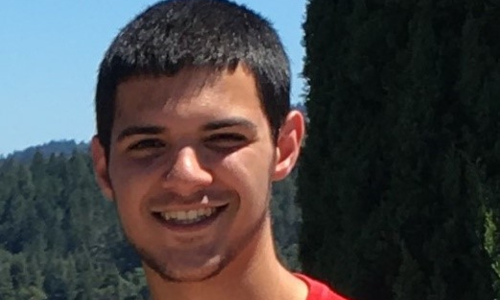
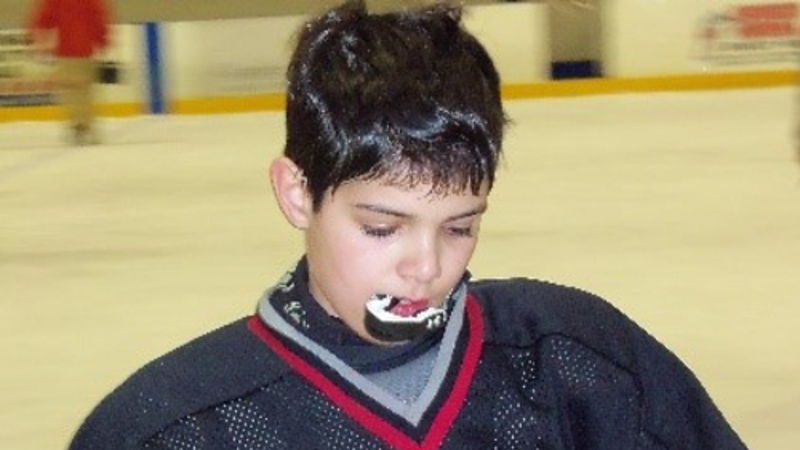
Nick was a vivacious child and a charmer. He was always a balance between rugged and sensitive; shy and intense; carefree and caring.

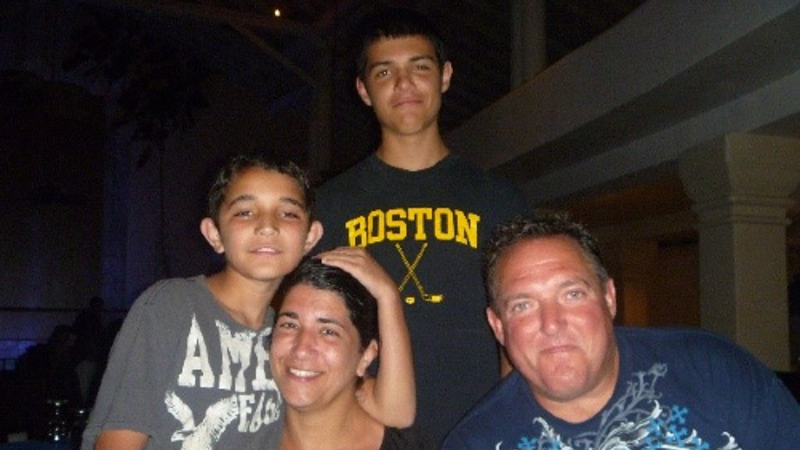
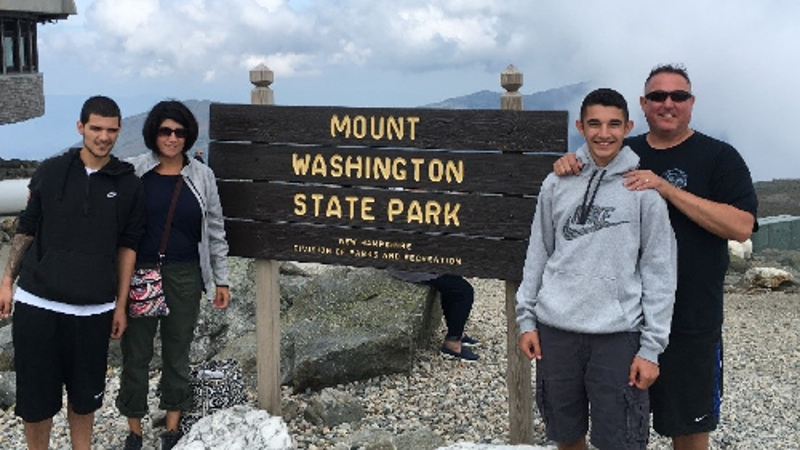
He grew up surrounded by his family, making memories with his brother, cousins, and friends whether it was playing games in the backyard, golfing, fishing, kayaking, visiting the White Mountains of New Hampshire, Chatham, the Caribbean or trips to Disney World, where he went more times than he could count!

Nick kept the people he liked close and was fiercely loyal to his family and friends. He was always there to lend a helping hand, watch sports, or just hang out.

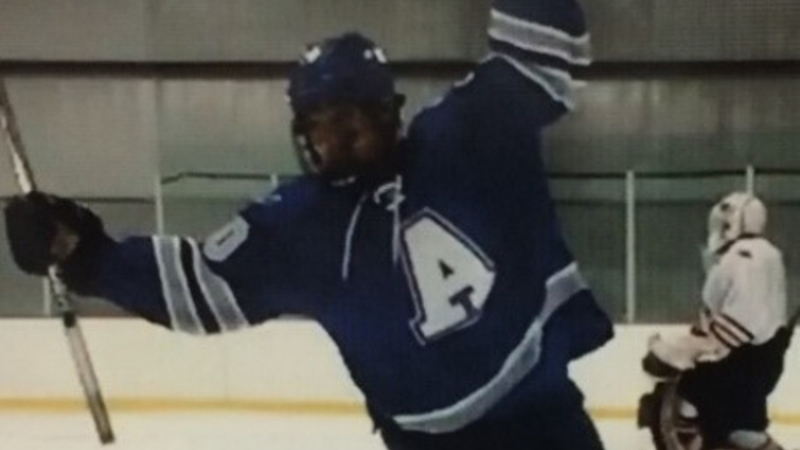
Some of his earliest and closest friendships came from hockey, which was his passion from the first time he put on a pair of skates.

When he looked in the stands, he always saw his mom there and often other family members cheering him on. He could always find his dad watching rink side, near the goalie net because he wanted the best view of Nick when he scored a goal!

Nick carried with him his father’s voice booming: “Skate hard!

Nick played with grit and determination. He was never afraid to go up against larger opponents and battle it out in the corners. In early adolescence, he suffered two significant concussions that we sought treatment for.

But the extent of Nick’s head trauma was not limited to those two diagnosed concussions. Later in life, Nick revealed to his family how he had his “bell rung” more times than he could remember. He never considered these incidents as concussions or told us about them when they happened.

Nick hid the physical and emotional pain he was in from others. His friends never knew what he was going through and, initially, neither did we. But his suffering began to manifest in ways we could pick up on.

We noticed he had immense difficulty sleeping and was plagued by waves of headaches. He didn’t tell us when his head bothered him, but we could tell he was in pain when he had to step away from TV or video games.

His mental health also declined as he entered his early 20’s. He had mood swings. He lost his motivation and his sense of drive. He began to isolate from others and showed signs of depression.

Nick was seeing a family doctor and began seeing a therapist. There was reason for optimism from how the sessions were going. But even after seeking help, we still saw Nick suffer from many of the same problems.

On September 7, 2020, Nick died by suicide at the age of 22.

Upon Nick’s death, we donated his brain to the VA-BU-CLF Brain Bank. There, researchers found Nick did not have CTE, but said he could have eventually developed the disease later in life. Researchers also reported Nick had damage to his frontal lobe, and had brain bleeds deep inside his brain. They noted those types of brain bleeds were greater than expected for his age and may be related to his repetitive head impacts.

Our goal in sharing his story is to highlight the connection between brain trauma and suicide. A 2018 study published in the Journal of the American Medical Association found those who were diagnosed with concussion or mild TBI were twice as likely to die by suicide than those who had not been diagnosed with a concussion or mild TBI. A 2019 study from the University of Texas Health Science Center at Houston found teenagers with a history of concussions reported having thoughts of suicide and feeling sad or hopeless at higher rates than teenagers without a history of concussions. The more educated players, coaches, and parents can be about the signs and symptoms of concussion, the safer our kids can be.  If you notice a change in behavior on or off the ice, speak up!

Something happened in Nick’s brain that we do not fully understand. But with more research like the work being done at the UNITE Brain Bank, we hope to prevent another family from going through the unbearable pain of losing a child.


Suicide is preventable and help is available. If you are concerned that someone in your life may be suicidal, the five #BeThe1To steps are simple actions anyone can take to help someone in crisis. If you are struggling to cope and would like some emotional support, call the Suicide & Crisis Lifeline at 988 to connect with a trained counselor. It’s free, confidential, and available to everyone in the United States. You do not have to be suicidal to call.

Are you or someone you know struggling with lingering concussion symptoms? We support patients and families through the Concussion & CTE Foundation HelpLine, providing personalized help to those struggling with the outcomes of brain injury. Submit your request today and a dedicated member of the Concussion & CTE Foundation team will be happy to assist you. Click here to support the HelpLine.

Andrew Mulligan

This is the story of my brother and best friend Drew.
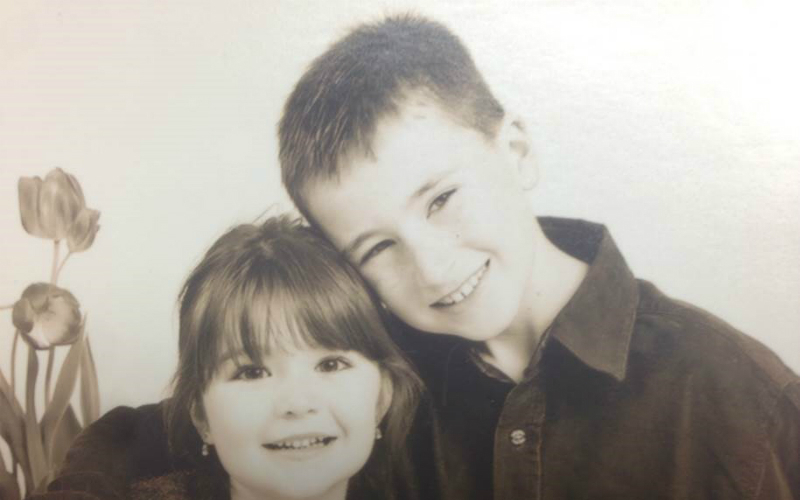
Andrew ‘Drew’ Mulligan, was born on June 15, 1993. It wasn’t much longer after that day that Drew met the love of his life: the sport of ice hockey. Being 4 years younger than Drew, I don’t remember a time where his schedule did not revolve around practices or games. I know it’s cheesy to say but he really did eat, breathe and sleep hockey. Even towards the end when things got bad, hockey always put a smile on D’s face. And for that, I am eternally grateful.
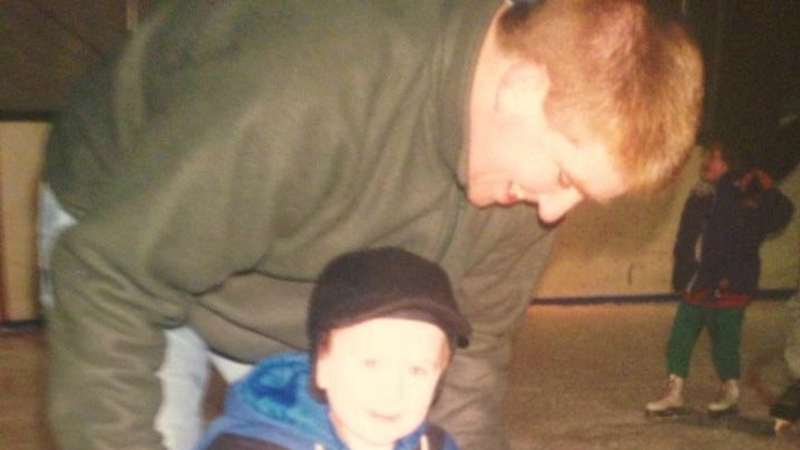
 

Drew played hockey his whole life, spending weekends traveling with his teams and weeknights practicing. His senior year of high school, he lived with our aunt in Pennsylvania so he could play juniors hockey. He took online classes before returning back to our local high school when the season ended. Drew graduated from RHAM High School in 2011 and then went away to North Carolina to attend High Point University.
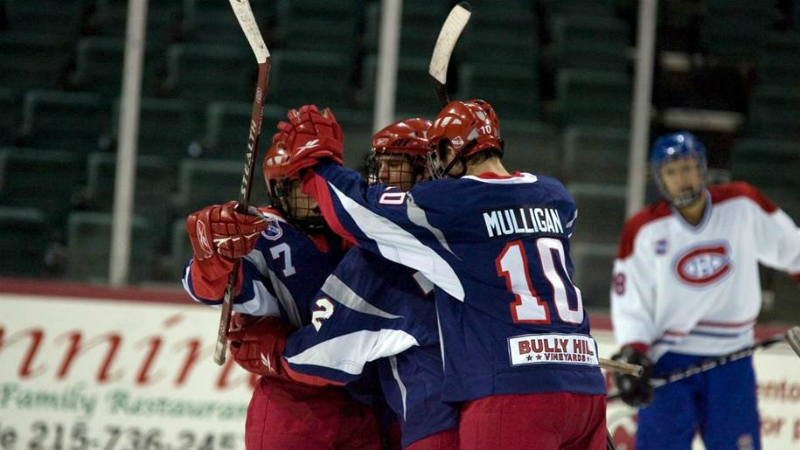
Everything seemed to be going well for Drew. As hard as it was saying goodbye to him and adjusting to being an only child, he was happy. He quickly made friends and started to get serious about his school work. But, when I think of High Point now, one story comes to mind… one where his concussions impacted him off the ice. He was playing basketball with friends and fell, hitting his head. Luckily one of his friends from home also went to school there and he called her. Obviously, when you hear someone hits their head, it is a given that they are in a lot of pain. However, his speech was slurred and he wasn’t making much sense. This is when I began to realize how damaging head trauma is.

I always knew Drew had a history of concussions. At a very young age, he got his first one during a game. Being 6’4” and scrappy, Drew was always the first to jump off the bench to defend his teammates or run his mouth and antagonize his opponents. Being the “enforcer” comes with lots of responsibilities, but in Drew’s case, it also came with a lot of concussions.

To be honest, I am not sure just how many concussions D had in total… sometimes I felt like a simple bump of the head brought on symptoms. Sometimes, I think he wouldn’t say anything because he didn’t want to be taken out of the game. But, it wasn’t until the last concussion that made brushing them under the rug impossible.

I will never forget where I was when I got the phone call saying that everything changed for the first time. He had come home from college his freshman year and joined another junior hockey team in Massachusetts. I was at my friend’s house when the home phone rang for me. It was my mom. I always had a fear of not being at Drew’s game in case something happened. 9 out of 10 games he was ok… This game he wasn’t. Someone checked him, but it was not a normal check. The other kid’s stick was pushed against his chin, popping Drew’s helmet off. When he landed, his head hit the boards then the ice. My mom had said he was coming home after going to the hospital.
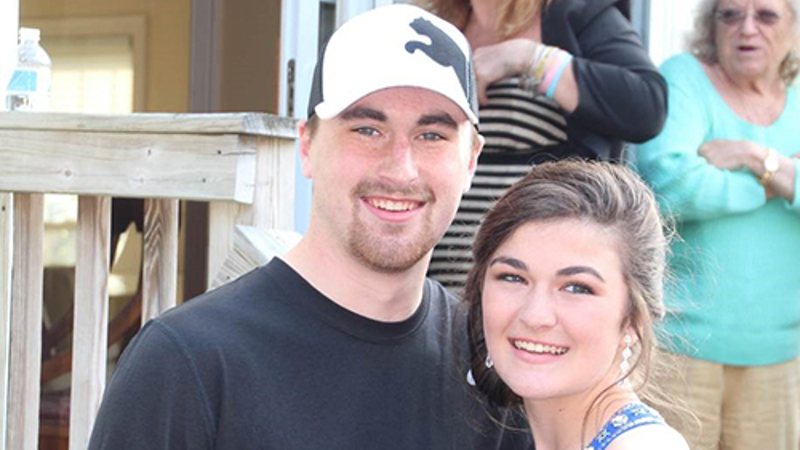
When he came home, he was out of it and in a lot of pain. His last memory was being hit, but he completely forgot the process of going to the hospital and getting home. After going to the doctors, they told him that his brain damage was so severe, he was never to play a contact sport again. This is when his worst nightmare came true and mine started.

After that hit, Drew was never the same. For weeks, he sat in a dark room refusing to talk to anyone. Yes, he was in pain from his concussion… but I think that what hurt more was losing hockey. Desperate to get back on the ice, he used to hide his hockey bags in the bushes in hopes my mom didn’t see.

I find it hard to verbalize who Drew was, because quite honestly, I have never met anybody like him. He was kind, but protective. He was smart, but an idiot at the same time. He was capable of being serious, but preferred not to be. After a bad day, I would come home to his freckled-face and goofy smile and no matter my mood, laugh until tears rolled down my cheeks. He made everyone laugh. Underneath his 6’4″ stature, Bauer jacket and exterior “game face,” lay a heart of gold. He would do anything for anyone if they just took the time to ask. He did everything for me. Most of what I know today, Drew taught me. Most of who I am, Drew inspired me to be.

After that hit, the Drew I knew was not there anymore. His whole demeanor changed. Drew scored a 2100 on his first attempt at SATs. However, simple things that once were easy for my intelligent brother to accomplish became frustrating. School work that I used to ask him for help with became so challenging for Drew, I found myself tutoring him. He became irritated a lot faster, snapped a lot quicker and smiled a lot less.

With this being said, Drew attended trade school to become an electrician and graduated top in his class. The work, though harder for him, got done. Concentrating, which was again more difficult, was accomplished. He did it. He started playing men’s league, which was non-checking, and reintroduced hockey into his life. He got hired by a local electrician shortly after and started working immediately. He loved it. I was so proud of him. I thought things were looking up for Drew and I had high hopes that his new-found success was enough to keep him here. I so badly just wanted him to be happy.
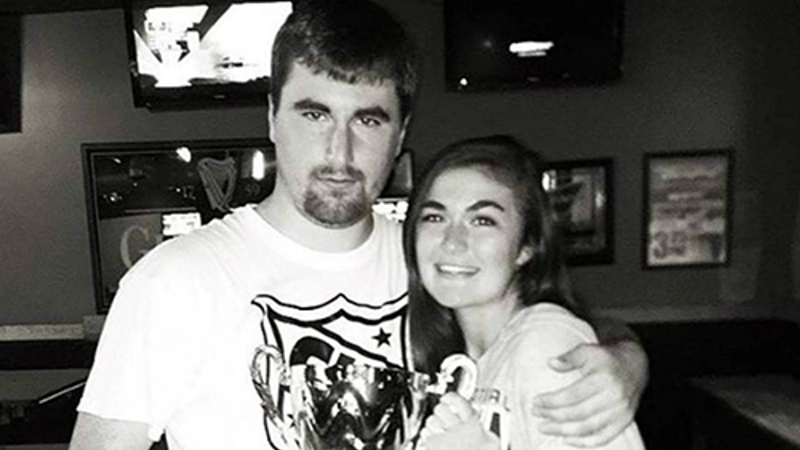
However, on February 17, 2016, Drew died of suicide. This was when my life changed forever. The pain is indescribable and every day it consumes me.  It has been over a year and I still can’t understand why or how… “why did he leave, how am I never going to hug my brother ever again, why didn’t he say something that night, how am I going to live life without my best friend?” I will never get any of these questions answered.

Drew used to tell me that he knew his brain was not working and that there was something wrong. He said he could feel himself being incomplete. He felt his brain change. I so desperately wanted to help him or give him answers myself. However, at the time, there were none.

However, after deciding to donate Drew’s brain, some of my family’s question found clarity. His brain was diagnosed with chronic traumatic encephalopathy (CTE) as well as Post-Concussion Syndrome. The more I learn about CTE and PCS, the more I answer Drew’s questions. I wish I could call him and tell him he wasn’t crazy… that the changes and confusion he was feeling, he was not alone in feeling. Maybe he would still be here today if he had the answers.
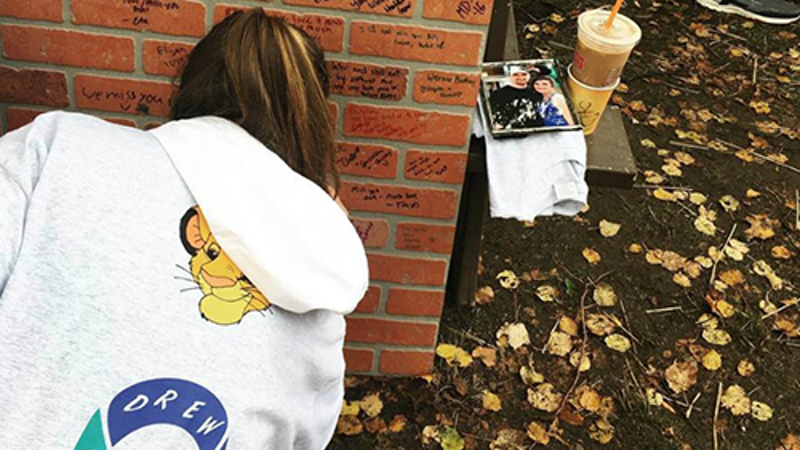
My brother’s death was my worst nightmare that every day I wish I could wake up from. But I know I never will. With this being said, what my family and I went through is something that another family should never have to experience. Drew’s death is a reminder of how important safety and observation is. No matter how bad they want to get back on the ice or field, don’t let them until they are ready. No matter how much they love the sport, no game is ever worth saying goodbye.

Although Drew’s earthly journey has ended (far too soon), his passing continues to teach me things every day. I now realize that brain injuries are not something to mess with. Although the consequences can be life-altering, if you realize the severity and the potential dangers, avoidance is possible. So, if you or anybody you know suffers from similar conditions, please please please seek proper medical attention for the sake of you and your family. Had Drew known then what I know now, things could be different. Regardless of circumstances, Drew has always been and will always be my big brother–partner in crime–bodyguard (at least he’d like to think so)–role model, but most importantly–my very best friend. I know he walks beside me each and every day and I feel blessed to even have had the opportunity to have him in my life for the time that I did. We’ll always be together in mind & in spirit, jamming to our favorite song… “Like an ocean you can’t see, but you can smell…but I do know one thing, where you are is where I belong.”
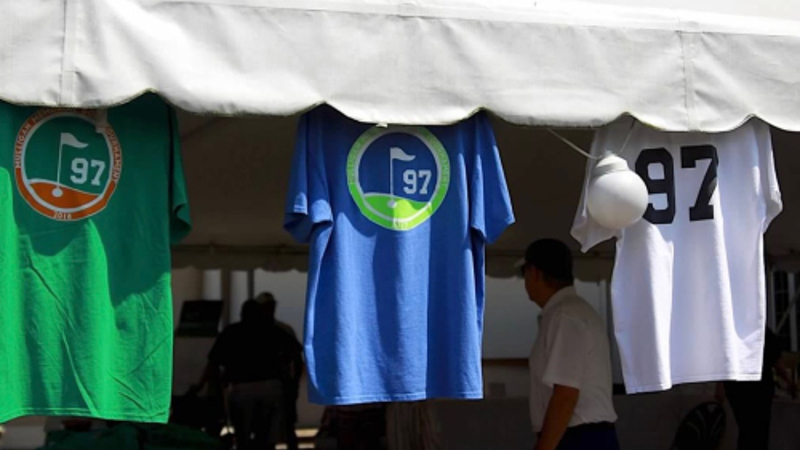
Since his passing, our family and friends have been committed to spreading the word of CTE and brain injuries. Each year we host an annual golf outing in his honor. All proceeds are donated to Boston University and the brain bank to further research and hopefully help other families.

However, I do not want his death to be the only thing his legacy stands for. I want my brother to be remembered for the happy, loving, wiseass he was. I want memories of Drew to bring smiles to people’s faces. I want Drew to be remembered as the real Drew, who he really was before CTE. With this being said, I want his absence to serve as a constant reminder to all…

No matter how much they love the sport, no game is ever worth saying goodbye.

Love you always, D


Continuing the Legacy

A five-year follow-up to Drew’s story, written by Karly Mulligan

Time is a funny thing. These past five years have managed to feel like five minutes and five decades all at the same time. It was right around five years ago that I sat down to write my original piece about my brother’s story and my family’s decision to donate his brain to the Concussion & CTE Foundation. A lot has changed in this time but my intentions for writing and sharing my brother’s story have remained consistent a half decade later. As is the case for many of the Legacy Donor families, the decision to donate your loved one’s brain was not an easy one. There is not a day that goes by where I do not miss him. However, personally, I think this was one of the best decisions my family and I could have made. There is power in education and knowledge. Those who suffer or suffered from brain injuries as well as their friends and family are not alone and are heard. And the efforts put forward by the Foundation as well as the Legacy Donor families are all striving towards making stories like my family’s no longer needing to be told. I am honored to be a part of such an amazing movement.

When I first lost my brother Drew, my baseline knowledge for concussions and the effects of brain injuries was limited. Drew was a hockey player who was labeled as an “enforcer”, so fights and concussions were not foreign concepts to me. His protective nature translated on and off the ice and his first documented concussion occurred in youth hockey at a very young age. While I knew what a concussion was, something much bigger was happening right in front of my eyes. I understood only what he was able to express to me about his symptoms, but never knew what those symptoms spelt out. As my knowledge grew, the more I was able to make sense of what my brother was describing. The headaches, the inability to focus and remember things, the irritability… it all started making sense. And while the diagnosis was not an easy pill to swallow, I personally felt like this may have been one of the last gifts I could have given my brother. This was validation for him. What he was describing was something real. What he was feeling was valid and had a medical catalyst behind it. What he struggled so hard to explain and express was finally labeled – stage 1 (of 4) Chronic Traumatic Encephalopathy and Post-Concussion Syndrome (PCS).

While I knew the diagnosis did not change that my brother’s life was over, it did spark something inside of me that has since shaped mine. Selfishly, I admit I was and still am worried that his memory will be forgotten. But, more importantly, I am worried that his passing would be in vain. As I involved myself in the Concussion & CTE Foundation, it became apparent to me very quickly that my brother’s story is one that many people can relate to. My family’s grieving was one that so many others are also experiencing. Friends and teammates of my brother’s too started expressing eerily similar symptoms and experiences. I knew that even if it would touch one person who read my piece I wrote on my experience as a donor sister, then it was worth it. I applaud each and every person that has had the courage to share their stories as they truly do make a difference. The more we talk and share, the more educated people will be. This is in locker rooms, on the side lines, at dinner tables. This is looking out for friends, family and teammates being an advocate for them. This is knowing that brain trauma is real and that there are resources out there. This is knowing you are not alone and that organizations like the Concussion & CTE Foundation are here to help. This is knowing your story and experiences matter and your voice can make a difference.

Through finding my voice, I was fortunate to have others who also shared the same mentality as me. Family, friends and those closest to Drew also agreed that in addition to donating his brain, there was more we wanted to do to contribute. My family is forever grateful for the support we have received and continue to receive because we could not have done it alone! We have held six annual Drew Mulligan Memorial Golf Outings, which is a great day for charity as well as a conversation starter in Drew’s memory. A group of families who have been friends of ours since the start of hockey have been beyond instrumental with making that day happen. In addition, teammates, friends, teachers and supporters show up each year to not only celebrate the life of Drew, but to play golf in the name of concussion research. Each year, the proceeds are donated toward the Concussion & CTE Foundation and we look forward to continuing to do so. I have been fortunate enough to attend a few Foundation Galas, which highlight all the progress that has been made in both education, prevention and resources available.
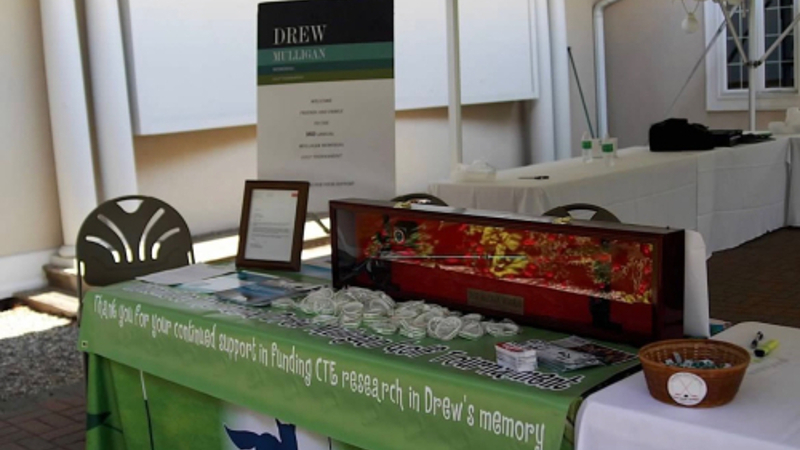
The progress made in the last five years alone has blown me away and motivates me to continue. I am excited to see where things will be in another five years let alone decades later when my kids and grandkids are playing sports. And above all, I am hopeful.

Thank you so much for reading!
 

Bob Murdoch

Bob Murdoch was born on November 20, 1946, in northern Ontario, Canada, the youngest of three siblings. Growing up in a small community, his family embraced an outdoor lifestyle filled with activities like baseball, football, skiing, and hockey. From an early age, Bob developed a passion for hockey, becoming exceptionally skilled at the sport.

Though he had the chance to attend an American college, Bob chose the University of Waterloo in Ontario, where he played hockey alongside his childhood friends and earned a dual degree in Mathematics and Physical Education. His contributions to the school were later recognized when he was inducted into their Athletic Hall of Fame.

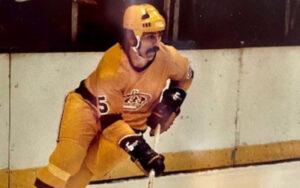
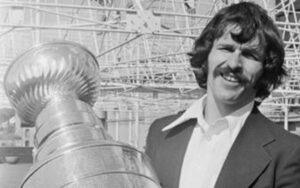
Known as “Mud” on the ice, Bob represented Team Canada and was later signed by the Montreal Canadiens, launching a remarkable 22-year NHL career that included two Stanley Cups. He played for several teams, including the Los Angeles Kings, Atlanta Flames, and Calgary Flames. After retiring as a player, Bob transitioned to coaching, leading teams such as the Flames, Chicago Blackhawks, Winnipeg Jets, and San Jose Sharks. His coaching prowess earned him the Jack Adams Coach of the Year award in 1990 for his work with the Jets. Bob also fulfilled his dream of coaching internationally, for six seasons in Germany, as well as some Olympic and World Championship events. At age 55, Bob decided to retire to spend more time with his family.

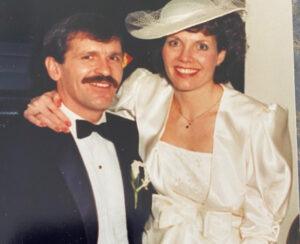
Bob married in 1972 and had four children from his first marriage. In 1986, he married his current wife, Bev, with whom he had two more children. Bob was a devoted husband, father, and grandfather, leaving a lasting positive impact on everyone he met. His infectious smile, quick wit, and playful humor endeared him to many.

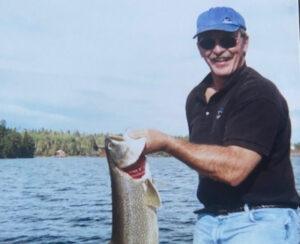
In addition to family time, Bob enjoyed traveling, fishing, gardening at his summer cottage, cross-country skiing, and playing old-timers hockey.

Around the age of 65, Bob developed atrial fibrillation, a condition which ran in his family. He began experiencing vivid dreams of fighting other hockey players and, after struggling with snoring, eventually got a CPAP machine for sleep apnea. Despite these health issues, Bob did not connect them to dementia or CTE.

In 2017, a memory test showed Bob scored 30 out of 30, reassuring the family there were no immediate concerns. However, in late 2018, a neurologist noted some irregularities in his movement and suspected mild Alzheimer’s disease. Subsequent MRI and PET scans in mid-2019 led to a diagnosis of probable Lewy Body Dementia and Alzheimer’s. Although CTE was discussed, it could only be confirmed post-mortem. Given Bob’s lengthy career in contact sports, the family suspected CTE might be a factor.

Despite the diagnosis, Bob remained resilient, continuing to travel and spend time with family. In early 2019, he underwent a right knee replacement and worked hard to return to old-timers’ hockey, but after just two games, he suffered a shoulder injury that ended his playing days.

Though Bob’s cognitive abilities remained stable, both his neurologist and family doctor advised him to stop driving due to worsening eyesight. He had always struggled with vision issues, stemming from a “lazy left eye” diagnosed at age five, and despite two major eye surgeries, his vision did not improve.

Over time, Bob became quieter and less his usual witty self. He stopped driving both his car and boat, and in 2020, the difficult decision was made to sell their cottage. They relocated to Canmore, Alberta, closer to medical facilities and family support. This transition felt like a series of losses, not unlike grieving.

By the summer of 2021, Bob’s condition had deteriorated significantly. Sleep became elusive, and he experienced frequent awakenings and violent hallucinations. It became necessary to place him in a private care facility near his home, with support from the NHL Alumni staff during this challenging transition.

Bob entered long-term memory care in January 2022 but was hospitalized for over three months due to rapid progression of his illness. Despite never being aggressive, he exhibited threatening behavior during episodes, leading to police involvement. In the hospital, Bob faced confusion and worsening delusions. After a fall which resulted in a broken hip, he was transferred to a complex dementia care facility, where he never walked again.

On August 3, 2023, the family was called to be with Bob due to a GI bleed. He passed away later that day at the age of 76, surrounded by loved ones, filling the room with warmth and love.

Following his passing, Bob’s brain was donated to the UNITE Brain Bank for research. By March 2024, the neuropathology report revealed severe brain atrophy, CTE stage 3 (of 4), Lewy Body Dementia, Alzheimer’s disease, and TDP (ALS). The family expresses gratitude to the Boston University CTE Center and the Concussion & CTE Foundation for providing closure and a deeper understanding of Bob’s illness, knowing their research will help save lives in the future.