Daily Goals as we Fight CTE: Diet and Exercise

Click here to donate to The Mike Adamle Project: Rise Above and help support families living with suspected CTE.

Posted: March 2, 2018

Through The Mike Adamle Project: Rise Above, my husband Mike and I are on a quest to learn how best to live with CTE. Part of that process is discovering how to create the healthiest possible lifestyle for Mike when it comes to diet, exercise, and cognitive stimulation. Here’s what we have learned:


Exercise

Mike has always been most at home in athletics – in motion.  Movement is like meditation for him.  We knew exercise was important for health overall, but were there exercises that were found to be helpful for brain functioning?  We discovered exercise increases oxygen to the brain, promotes neurogenesis (new brain growth), produces the release of “feel good” brain chemicals (like serotonin, endorphins, and dopamine), and reduces stress. All of these benefits also fight off the depression and paranoia that CTE causes.

While you should create your exercise plan in coordination with your physician and take into account what is appropriate considering your health and injury history, Mike and I discovered research linking the following physical activities with brain health, and Mike found they were FUN!

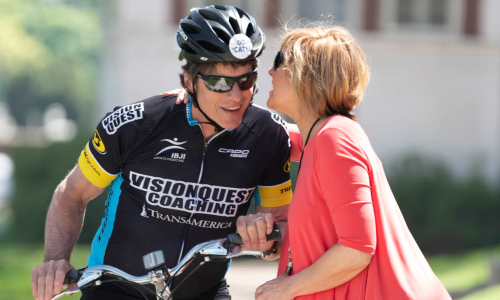
Biking – biking has all of the benefits you might expect, like cardio-vascular and strength/muscle improvements. Recent studies, however, have demonstrated improved movement for people with Parkinson’s. Brain imaging demonstrated improved connections in parts of the brain associated with Parkinson’s. Biking not only improved movement and cognition, but also proved to be more effective than drug treatments, according to this 2013 study.

Cardio Boxing – NO, we are not advocating punches to the head!  But boxing is about so much more than punching: the patterns of jabs, punches, and undercuts includes thinking and memory skills used in coordination with body movement.  When reacting to a partner, your brain is also working to read cues and react defensively as well as spontaneously planning your next moves.  A boxing workout without head contact packs a one-two-punch of physical and cognitive exercise!

Ballroom Dancing – rumba, anyone? Believe it or not, ballroom dancing is one of the best activities for brain health as well as for overall longevity. Why? Ballroom dancing incorporates multiple facets shown to benefit our brains, bodies, and mental health. First, dancing is a workout – great cardio benefits, isometric muscle conditioning, and increased flexibility. Secondly, your brain is actively working by remembering dance patterns, body placement and positions. Your brain is also responding to your dance partner – whether you are leading or following.  And speaking of dance partners, dancing is a social activity – the third facet that contributes to brain and social/emotional health.  In ballroom, you are face-to-face and touching – powerful medicine for the brain.  And lastly, dancing always involves music.  Music is a potent therapy that evokes memory, improves mood, and triggers brain stimulation on multiple levels.  Who knew you could waltz your way to wellness?  (PS – Mike adds ballroom dancing is like a “get out of jail free card” with your wife!)

Diet and nutrition

Healthy diets are well-documented as a necessity for optimal functioning, well-being, and longevity – but there are so many different types of “diets”, it can be overwhelming to know which to follow and how to start.  “Diet” conjures up spats of quick weight loss hacks and trends that come and go out of style but never really work in the long run, so paramount to us was eating in a way that was not only healthy, but also sustainable.  And it had to be enjoyable and great tasting.

Our research showed that most disease, including brain degeneration, involves inflammation, so we concentrated on foods and a way of eating that reduced inflammation.  A good brain diet is one that is anti-inflammatory and low glycemic, with lean protein, lots of antioxidants, and good fats that are high in omega-3 and 6.  Sugar is a primary cause of inflammation and so we keep sugar intake to a minimum.  Simple carbohydrates from things like white bread, white rice, packaged cookies and crackers, most processed foods, and alcoholic drinks metabolize into sugar when digested, so we try to avoid these types of food, as well.

Books have been written describing this way of eating (we’ve found The Perricone Prescription, by Nicholas Perricone, M.D., to be a good guide and many of the recommendations here are from his plan), but here is a snapshot of a healthy brain diet:

Basic eating plan

  • Eight to ten glasses of water
  • Three meals, evenly spaced throughout the day
  • Two snacks, spaced between meals
  • Each meal and snack should contain a source of protein (our bodies cannot store protein, so we need to provide it regularly), good carbohydrates, and fats in the form of omega-3 and omega-6 essential fatty acids
  • Choose fresh or frozen foods whenever possible

Antioxidant best bets

  • Avocado
  • Bell peppers
  • Berries – blueberries, strawberries, blackberries
  • Cantaloupe and honeydew melons
  • Dark green leafy vegetables – spinach and kale
  • Broccoli
  • Orange-colored squash
  • Salmon
  • Tomatoes

Optimal protein sources

  • Chicken breast
  • Turkey breast
  • Seafood – wild salmon (not farm raised), cod, halibut, sardines
  • Egg whites
  • Natural peanut butter without added sugar or salt

Other foods to enjoy

  • Nuts – almonds, walnuts, pistachios, hazelnuts, pecans
  • Beans – black, kidney, lima
  • Quinoa
  • Lentils
  • Olive oil – and lots of it
  • Coffee – a cup or two in the morning, minus all the sweeteners
  • Cocoa – yes! Dark chocolate is chockfull of antioxidants
  • Whole wheat or oatnut bread
  • Oatmeal – steel-cut or old-fashioned oats, not the instant kind
  • Tea – black or green
  • Spices – turmeric, ginger, garlic
  • Apples – green apples are lowest on the glycemic scale
  • Lemons – provide vitamin C and bioflavonoids; squeeze in water or on steamed veggies and fish
  • Cottage cheese
  • Greek yogurt – avoid varieties with added sugar

Foods to avoid

  • White bread
  • Cake
  • Cookies
  • Sugar-laden cereals
  • Doughnuts
  • White bagels
  • Instant rice
  • Puddings
  • Sodas

Vitamins and supplements

Although eating a wide range of healthy, fresh, and chemical-free food may provide all the nutrients we need, Mike and I choose supplements to ensure that we are providing our minds and bodies with all the nutrients needed; and when fighting a neurodegenerative deterioration, it’s essential to flood our systems with powerful fuel.

Learning from the experts

The exercise and diet plan Mike and I have incorporated into our daily lives is based on the latest research showing how best to promote brain health. I encourage you to stay up to date and sign up for the Concussion & CTE Foundation’s CTE Resources newsletter for access to what the world’s leading researchers on CTE are saying. One of those researchers is Dr. Robert Stern, director of clinical research at the Boston University CTE Center. Hear what Dr. Stern suggests when it comes to diet, exercise, and social engagement that will promote brain health:

Click here to make a donation in support of The Mike Adamle Project: Rise Above.
The Mike Adamle Project: Rise Above

Click here to donate to The Mike Adamle Project: Rise Above and help support families living with suspected CTE.

Posted: March 1, 2018

Why we’re here: from Kim Adamle, executive director of The Mike Adamle Project: Rise Above

“If I have this, then I want to be the one to show others how to LIVE with it” were the first words from Mike when his neurologist told him his epilepsy and cognitive degeneration were probably due to Chronic Traumatic Encephalopathy (CTE).  The doctor did not have much advice to share with us on how to cope with CTE – the most he could advise was 1,000mcg of B12 daily, a healthy balance of omega-3 and omega-6 fats, and to work as long as possible – to keep learning and stay active.

There is no cure yet for CTE, so our quest became: How do you live with CTE?  How do you stay alive and experience a life of quality?  Mike has always lived his life 110% all heart and all-out, so we approached this challenge with the same vigor.  Through many heart-wrenching, tearful, gut-honest conversations, Mike distilled the essence of his goals for his life fighting CTE: to live with Dignity, Optimism, Energy and Excitement, Contribution and Purpose, and most of all – to give Hope to others.

Awareness of CTE is just emerging, and doctors and researchers are working to discover treatments.  But for the many who are affected right now, we need to share our journeys, our experience, and offer support to one another.  We do not have the time or luxury of waiting; we need to take action now for the sake of those afflicted with CTE and traumatic brain injury (TBI), and for their families and spouses, who are often the care partners.

CTE/TBI is pervasive, so we knew our life plan had to be comprehensive and multi-faceted. We targeted these primary life areas:

  • Medical
  • Nutrition
  • Exercise
  • Learning and Cognition
  • Social and Community
  • Spiritual

From these areas we started drawing big concept maps, asking what resources we already had – who were our “teams”?  You know the saying, “it takes a village”?  Dealing with CTE requires teams – many, many teams.  Drawing up our teams in each of the above areas helped us organize and identify people, resources, and activities to support Mike’s functioning.

After establishing our support teams, we researched what to do. Did you know our brains continue to grow connections throughout our lives?  Our goal was to do all we could to promote overall brain health as well as try to support neurogenesis (the scientific term for new brain cell growth) to offset the brain deterioration from CTE.  We don’t know if we can stop or slow the brain degeneration yet, but we can do things to improve the functioning of the brain we have and strengthen the trillions of connections between our brain cells. Because we were determined to live our best life for as long as we could, we knew that various therapies once or twice a week would not be enough: Mike’s therapies had to be constant and consistent, so we incorporated everything we learned into our daily routines.  Activities promoting brain health became our lifestyle, and every activity became an opportunity for growth.

This journey is improved by a strong support team. Those “care partner(s)”, whether they be a spouse, children, or other family or friends, necessitates a strong commitment and healthy working relationship.

The content you read from Mike and me as part of Rise Above is designed to give you the inside scoop on how we have approached our life since that moment Mike was diagnosed with probable CTE. We have heard from many families going through experiences all too similar to ours. We want to give you tools, resources, a supportive community, and hope. As you read and watch all that Project Rise has to offer, also incorporate the expert information and strategies from the Concussion & CTE Foundation’s CTE Resources pages so that your resources toolbox is as full as it could possibly be. We’re here for you, and we will get through this together.

If you have questions for me or Mike, email [email protected].

Click here to make a donation in support of The Mike Adamle Project: Rise Above.
My Legacy: The Story of Legacy Donor Tom McHale

Posted: May 10, 2016

Below is a full transcription of Margy and Marnie’s interview:

The McHale family:

Margy McHale: I’m the youngest of five and then Tom was fifteen months older than I am. We’re really close to in age – there’s less than eight years between five of us. Tom and I were extremely close. Many people I think thought we didn’t even have other brothers and sisters because we were always hanging out. He and I actually shared a room when we were younger. We had a mutual trust with each other even as very young kids, always talking going to sleep every night. I went to most of his games growing up, everyone did in the neighborhood. It was a planned community so everyone supported each other.

Who was Tom McHale:

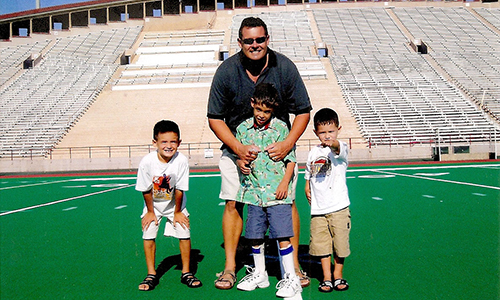
Margy McHale: My brother, when he swam on swim team as a kid always had records, he had records in high school for track, anything he did, he did really, really well. My brother was an extremely kind person, fun, always interested in everything I was doing. When you spoke to him you felt like you were the only person in the room. During college or even after that, even when he was married, we would spend hours talking after everyone would go to sleep and just catch up on everything and I still live where we grew up, so he’d want to know about everybody. He was a really, really good person. Just a gentle, gentle man. He loved his family. He has three children; his oldest boy is special needs.

What happened to Tom:

Margy McHale: Nine years in the NFL. He’s not your typical football player. He loved it and he respected it and it was a business and he was extremely good at it, but it wasn’t something that defined him. He was into cooking and a lot of other things that never really were football related. I don’t think he and I ever really talked football that much. We were brother and sisters, we talked life. Tom seemed fine for a long time and then there was a huge shift in his personality and he started doing drugs and drinking and not taking care of himself. It was really sad to see because we could talk forever and be together forever and those conversations change and he didn’t reach out to me or return my calls.

What is CTE:

Margy McHale: Chronic Traumatic Encephalopathy is Tau proteins building up in your brain and basically, it’s shutting your brain down and causing damage to your brain. Intelligent, wonderful men who’ve given their life to play and entertain people – can you imagine for all these guys not knowing what’s happening to them?

What do you want Tom McHale’s Legacy to be:

Marnie Abramson: Most people are not going to become professional athletes but most kids will play sports. I hope that the legacy with this event is that sports get safer.

Margy McHale: I want to win if I’m playing something but not at the expense of not being around to enjoy your children, permanently be in brain damaged, having pain from headaches the rest of your life. It should never happen. It doesn’t have to happen and it will change. But people have to get on board and that’s why we do what we do.

How Socializing can Help Fight CTE

My husband Mike Adamle and I constantly remind the people we engage with as part of The Mike Adamle Project: Rise Above that eating right and exercising are two of the more obvious and important components of a healthy lifestyle. But did you know socializing and staying connected with friends and family may also help your brain fight against Chronic Traumatic Encephalopathy (CTE)?

Dr. Robert Stern, Director of clinical research at the Boston University CTE Center, says staying socially engaged wires the brain in a way that may help slow down or even prevent it from getting damaged. This can be as simple as picking up the phone to call an old friend, joining a book club, or any other method of maintaining a social network. These connections are crucial in helping the brain protect against degeneration.

Mike and I have experienced the power of socialization firsthand. Watch the below video to learn more about how staying social has helped improve Mike’s mood, energy level, and overall mindset as he lives with what doctors believe is probable CTE.