With Brain Pledge, Navy Veteran Rewrites Her Story

Posted: June 28, 2021 

Navy veteran Christine Conley has quite a story, but to her, being a part of the Concussion & CTE Foundation’s Project Enlist is the “and’ to it.

For 10 years she had a successful music career in concert and event production as a lighting technician and designer. For a long time, her travels throughout North America satisfied her inquisitive nature and desire to learn more, and she was happy. But then the 9/11 attack on the World Trade Center and the Pentagon happened. It was at that moment she decided she wanted to do something more, to find a way to give back.

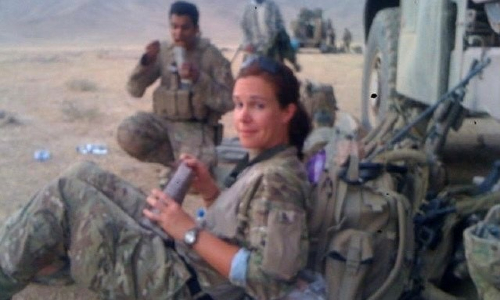
So, at age 27, Conley joined the Navy and was assigned to be part of the military’s law enforcement arm. She spent most of her military career as a criminal investigator and as an instructor in weapons, security, and anti-terrorism.

While deployed to Iraq and Afghanistan she experienced significant injuries, including two events that were later identified as causes of major brain trauma. In one instance, she was inside a building that was hit by explosives and large pieces of rubble hit her on the back of her neck. Another time she was too close to an RPG blast and was thrown up against a door jamb, causing her head to snap back and hit hard. Both times, she did not give the collisions much thought and continued in the action.

Conley was involved in other firefights, too, and her injuries required numerous surgeries.

“I was a hot mess,” she said.

Conley was put on limited duty several times. After those assignments, she was told, “You’re not getting any younger,” and she decided to take a medical retirement; serving 12 years had taken enough of a toll on her body and brain.

It was while she was having some imaging done on her spine in preparation for her retirement that a physician asked if she had had experienced any traumatic brain injuries (TBIs). It was the first time she had ever considered that her earlier head injuries might be the cause of the cognitive and emotional difficulties she was experiencing. And she discovered she was not alone; the Defense and Veterans Brain Injury Center reports more than 410,000 service members have been diagnosed with TBI since 2000.

For a long time, Conley had been finding it was especially hard finishing sentences and coming up with the right words.

“It was like my brain was on pause. It was a great day if I could make it through getting the words out of my head to my mouth,” said Conley.

She was challenged in completing tasks and started feeling totally undone by bright lights and loud noises. Conley remembers a time when she was grocery shopping and she suddenly felt so completely overwhelmed by the people, the sounds, and the glare of the neon lights that she had to escape the store.

“I didn’t understand what was going on with me, so I had a tendency to push people away or hold them at arm’s length,” said Conley. “I wasn’t getting much sleep and was constantly on edge.  My hypervigilance and anxiety were exhausting. I was also grappling with some survivor’s guilt, which- coupled with the guilt I felt seeing my daughter struggle with the impacts of being shuffled around to different friends and family members during my deployments, led to deep depression.”

What Conley was coming up against was what some have called a “perfect storm.” She had been diagnosed with post-traumatic stress disorder (PTSD) and her symptoms certainly were indicative of that, but she later found out she was also experiencing similar symptoms from her traumatic brain injuries. While PTSD and TBI are separate conditions, this “perfect storm” of both PTSD and TBI can be overpowering and destructive.

“There’s an incredible overlap in terms of symptoms between TBI and PTSD,” said Dr. Rebecca Van Horn, a psychiatrist and U.S. Army Reservist. “The overlap makes it really challenging to determine whether it’s TBI or PTSD causing a particular symptom or maybe it’s both. An individual not only has developed PTSD which is a reaction that occurs after an individual has experienced a trauma, but they also have a physical injury to their brain that has affected the intrinsic functioning of the brain. You have this sort of layering effect of potential structural abnormality in the brain as a result of the direct trauma and you have a behavioral reaction to that trauma in terms of someone’s emotional state and how they interact and function in the world.”

For Conley, life’s simplest responsibilities were more taxing. Her then 10-year-old daughter, Keegan, had to take on many of the adult chores her mother could no longer handle.  The toll her problems were having on her daughter were enormous. Reflecting back, Conley says, “Keegan told me, ‘My mom didn’t come back’ [from her deployment]. Keegan had to grow up fast, too fast, out of necessity because I depended on her to step in and help.”

According to the National Center for PSTD and the American Psychological Association, both PTSD and TBI can make a person more difficult to live with, and the recovery can be long and hard on a child or partner. Dr. Van Horn advises any veteran who believes they may have a history of brain trauma to seek medical care. The Concussion & CTE Foundation HelpLine is also available to caregivers and patients suffering with brain injury symptoms, offering personalized recommendations for support and care.

“An important place to start would be seeing a doctor, having an evaluation of an individual’s history, doing imaging, doing studies to try to understand the nature of the TBI, and then also seeking care for the PTSD,” said Dr. Van Horn. “Several of the treatments for PTSD are also effective at addressing symptoms of depression and anxiety that may be related to TBI.”

Conley tried to seek help but had a very difficult time for many years because, despite medications and treatments, she was not finding the relief she had hoped for. She found some success with other, complementary medicine treatments and today says she feels better than she has in a long time.

“I’ll never be back to who I was, but I’ve finally been able to learn ways to help compensate for the effects from TBI and new ways to function,” said Conley.

The knowledge she gained about the major trauma to her brain which caused her cognitive and emotional difficulties, and the challenges of her search for help, have led her to work with other veterans. Conley says her path has deepened her passion for helping the military community. The same desire to make a difference that led her to enlist in the Navy is now fueling her work for the Boulder Crest Foundation, an organization working to ensure that combat veterans, first responders, and their families can live great lives in the midst of trauma.
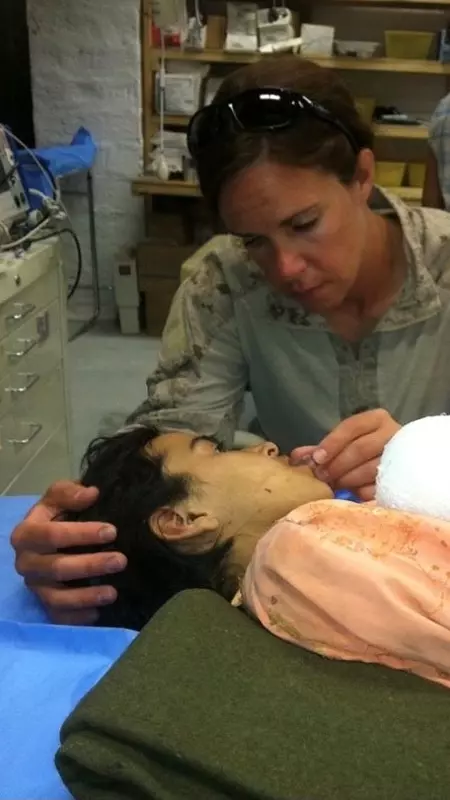
She sees the toll PTSD and TBI take on the lives of active military and veterans through her work, and through her friendships. In 2013 she met Ron Condrey and soon after, his wife, Nicole, and they became fast friends. Like Christine, they were committed to giving back to the military community, though in a different manner; both were master skydivers and volunteered at events all over the country. Ron and Nicole’s story, and later Ron’s death by suicide, had a tremendous impact on Conley.

Ron joined the Navy at 17 and was an EOD (explosive ordinances disposal) Tech, as well as a highly trained paratrooper and well-respected leader. He suffered repeated brain injuries from his time around explosives and in combat.  By 2015 Ron showed numerous symptoms of TBI, though because his condition was not well understood, he was only diagnosed with PTSD. Nicole told The American Legion Magazine Ron’s condition was plummeting.

“It was like a roller coaster,” said Nicole Condrey. “One day he could be really great and the next day in the dumps. One hour doing great, the next hour not.”

At the time, common knowledge about TBI was just growing. Very often treatments such as the ones Ron received were geared to PTSD, not a dual diagnosis of PTSD and TBI. Ron went down numerous avenues, but none were highly effective. Ron’s condition continued to worsen after retirement, leading him to isolate himself, and even stop skydiving which he loved so much. In September 2018, Ron took his own life at the age of 45.

Conley had numerous discussions with Ron and Nicole before Ron’s death about what he was dealing with. Because she was having her own struggles with TBI, she could relate.  Once when she asked him how he was doing, he replied, “I’m not doing good.” His honesty got her attention, and though she knew something was not right, she did not fully realize the depth of his pain.  His death woke her up to how brain trauma was affecting so many of the people she had deployed with, and she became interested in the research being done to help solve the invisible wounds of war.

“Ron’s death hit so close to home,” said Conley. “It was a sobering reminder that it could happen to anyone of us because of our head injuries.”

She was aware of Nicole’s decision to donate Ron’s brain to the VA-BU-CLF Brain Bank, and she began thinking about it for herself. She read up on Project Enlist, which aims to serve as a catalyst for critical research on TBI, CTE, and PTSD in military veterans by encouraging brain donation. She learned that studying donated brains will help researchers better understand how military brain trauma uniquely leads to brain disease and how to diagnose and treat it.

Nearly 8,000 people have pledged to donate their brain to the VA-BU-CLF Brain Bank, including more than 1,600 military servicemembers and veterans. Project Enlist is actively recruiting military veterans who are willing to pledge to donate their brain, whether or not they have a history of brain trauma, to support the ongoing research. By signing up, participants can also learn about clinical studies they may be eligible for during life.

“There is exploration and discovery in neuropathology that is not possible with neuroimaging,” Dr. Ann McKee, Director of the VA-BU-CLF Brain Bank, told The American Legion Magazine. Dr. McKee is also the director of the National PTSD Brain Bank and published the first ever case series on CTE in the military.

Once Conley understood the impact of TBI and CTE on her beloved military community, and how she and other veterans could accelerate research, she stepped up and pledged to donate her brain to Project Enlist.

“If this is the only way to get answers, I’ll do it,” said Conley. “The truth is you can’t take [your brain] with you. I figure no matter what else you’ve done in your life – whatever selfish deed – this is an opportunity to do what’s good at the end.  This is my living legacy because I know it’s going to make a difference and help others as they live.  I have a story as we all do, but this is my AND.  This is what comes after my story and it’s a good and.”


Servicemembers and veterans interested in pledging to donate their brain to Project Enlist can click here to get started.

If a veteran you know has passed way and the family is interested in brain donation, please instruct them to call the 24-hour UNITE Brain Bank emergency brain donation pager at 617.992.0165.
Spreading Inspiration through #ConcussionHope

Posted: August 6, 2020 

Hope helps us keep going through our toughest challenges. Hope is the belief that there can be a better future, and it inspires us to take action. Hope helps reduce depression and improve mental health.

Hope is a crucial component of recovery for people struggling with symptoms of concussion and Post-Concussion Syndrome (PCS). Hope can also be contagious. Our #ConcussionHope campaign provides members of the brain injury community with messages of hope, inspiration, support, and helpful tips from people who have recovered or are currently recovering from a concussion. Each Monday, we post a new Hope video to our Instagram (@concussionfoundation) and Twitter (@ConcussionLF) pages. Follow us there to never miss a new video!

If you’re struggling with the effects of concussion and need connections to resources, treatment options, or support, please submit a request to the Concussion & CTE Foundation HelpLine.

Below, you’ll find some of the examples of Hope videos posted to our Instagram:


Team Up Against Concussions in Ireland

Posted: June 11, 2020

Could you tell us a little bit about yourself?

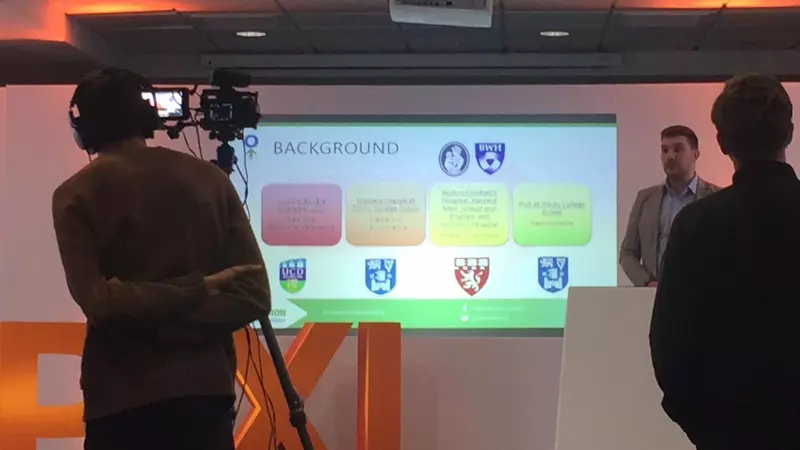
My name is Oisín Joyce and I am currently a Ph.D. student at Trinity College Dublin, Ireland in the area of sports concussion and traumatic brain injury. The current focus of my research is to investigate the utility, reliability and validity of an objective test of multi-sensory integration in the hopes it would aid in the diagnosis, prognosis and recovery following a concussive incident. When I was a child, I always wanted to be a superhero and try to help people. Although my hope of acquiring superpowers remains, with age comes perspective and a degree of realism. So, for now the cape and cowl have been substituted for science and research. My interest in concussion began during my undergraduate degree in Health and Performance Science in UCD, where I received a lecture on the physiology and management of concussion from a Ph.D. student who is now a very good friend of mine. I became captivated with the science and implications surrounding concussions, not only from sporting scenarios but also a clinical standpoint. It is fascinating how much we know and yet how little we understand at the molecular level and the underlying pathology associated with concussion. It was that lecture that was the catalyst to undertake my master’s degree in Neuroscience at Trinity College Dublin and conduct a research project in the area of sports concussion.

Why did you want to get involved with the Concussion & CTE Foundation?

Following on from my master’s degree I worked as a research assistant II in Boston Children’s Hospital and as a research associate in Brigham and Women’s Hospital in Boston for a year. There, I investigated novel therapeutic targets for the treatment of concussion through small molecule arrays, alongside the development of objective and diagnostic tools for the identification of concussion and CTE in both a clinical and sports setting through animal models. Throughout my research and reading I began to get a sense that there was a lack of sound and understandable scientific information being translated to the general public and sporting bodies, and I wanted to try and reach out to my local communities back in Ireland and develop an educational outreach program alongside my doctoral studies. It was during this time in Boston that I came across the Concussion & CTE Foundation. I reached out wanting to get involved as an ambassador and work with them in Ireland to educate student-athletes about concussions through discussion, video, and interactive games, teaching them that successful athletes play hard and play smart.

How have those presentations gone?

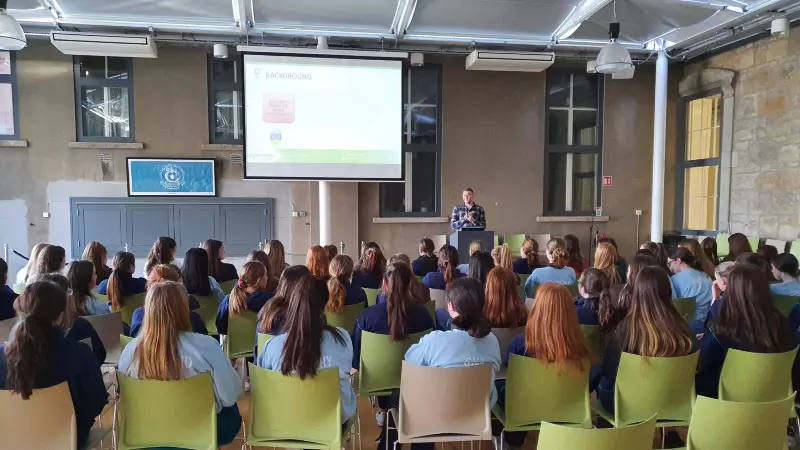
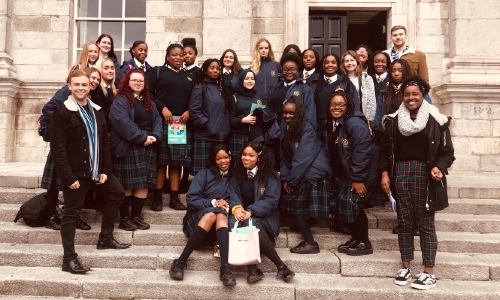
I have had great success since my return to Ireland as a Concussion & CTE Foundation ambassador with my educational outreach. I became a tutor for Scholars Ireland of AccessEd NGO at Trinity College. It is here that I have paired my work with the Foundation to provide a seven-week course discussing the basics of the brain, the science of concussion and appropriate management, and the definition of CTE. So far, I have undertaken this course with two secondary schools. Additionally, I have presented to multiple crowds of approximately 100 teenage students during health and wellness week and further talked to them about career paths in neuroscience. From these talks I had the heads of the schools come to me asking for me to talk to individual sports teams and specifically to the faculty regarding the appropriate return to education guidelines and rehabilitation management.

What has the response been like to the presentations from students and faculty?

I have received excellent responses from both students and faculty from the presentations I have given so far. They seem to really appreciate the talk and find it very informative. Many were unaware how many career paths are available in the realm of concussion research and neuroscience; they found the talk fascinating and the students got loads out of it. One administrator told me, “The students who attended the presentation were telling the other students about it which is probably the best compliment I can give you!”

What are the biggest misconceptions people have about concussions before the presentations?

Throughout all my presentations I make a point to debunk some common myths surrounding concussion. The one that comes up time and time again is that people believe concussions only happen when you get a hit to the head, but a look of surprise comes over their faces when I tell them concussions can also occur when you get a hit anywhere on the body and the resulting force is transmitted to the head causing a concussion. Furthermore, many people believe concussions only happen in contact and combat based sports, which is not true. It is true some high-speed sports or contact sports may possess a higher risk of concussion than others. But concussions can happen at any place, any time. On the pitch or on the running track. On the playground or when riding a bike or merely a slip or fall!

This can be somewhat frightening for some audience members. To address these concerns, I always conclude each presentation by asking the audience if we should be afraid of concussions. The answer is always no, we should not. There is a lot of talk as to whether parents no longer think sports are safe for their children to engage in due to the potential risk that they may suffer a concussion. But I personally think sport is one of the most purposeful and foundational activities that a child can engage in for several reasons. The first being exercise. From iPads to iPhones, PlayStations and Xboxes, the number of handheld and gaming devices out there now is overwhelming. But equally the number of devices and platforms out there almost equals the number of sports available to children. Too much screen time and lack of exercise is contributing to an unhealthy and sedentary lifestyle.

Rather than holding kids out of sports for fear of concussion, the most important thing is to make sure kids are playing sports as safely as possible. That means minimizing the amount of head impacts kids are taking and making sure any potential concussion receives proper medical care.

What is your favorite part of the Team Up Against Concussions presentations?

The active engagement with the audience. I love getting volunteers up early in the presentation to help me demonstrate the signs and symptoms of concussion. It’s always fun to see volunteers demonstrate what it is like to have blurry vision following a concussion and how that affects their perception of their surroundings.

What inspires you to keep going and do more presentations?

Knowing that for every time that I do one presentation it provides me with a larger platform to disseminate the most up to date and translatable concussion facts. One presentation leads me to another and another and before I know it I have presented to over a thousand students and faculty, all of which will have the appropriate knowledge to identify and understand the signs and symptoms respectively and act in a way that will reduce the time spent in recovery and return to both sport and education in the safest and shortest amount of time possible.

What’s next for you?

In the future I aim to continue my educational outreach with the Concussion & CTE Foundation alongside my doctoral studies in hopes of reaching a larger audience that will hopefully facilitate change in some aspects of sporting law across the country of Ireland. I also hope the current research I am conducting will create a more versatile and alternative approach to concussion diagnostics that accounts for the underlying pathology of the injury correlating with representative signs and symptoms.

If you’re interested in bringing concussion education to your community via the Team Up Against Concussions curriculum like Oisin, reach out to Special Programs Manager Dan Molloy at [email protected] for more information.

A Former NHL Player’s Message on Concussions

Posted: October 25, 2019

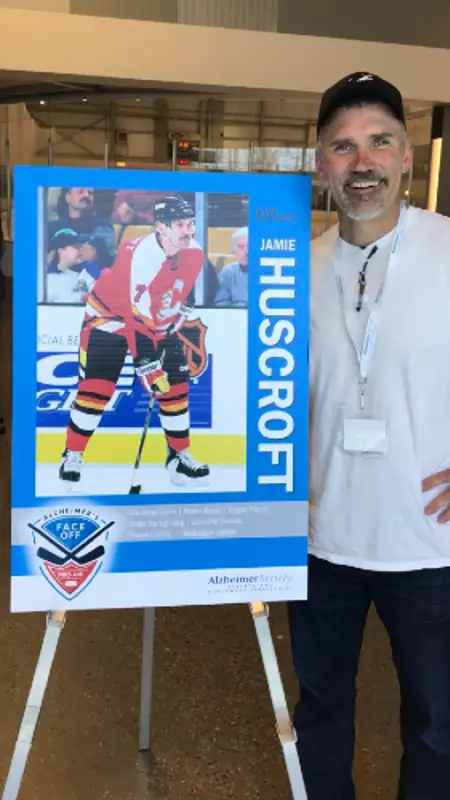
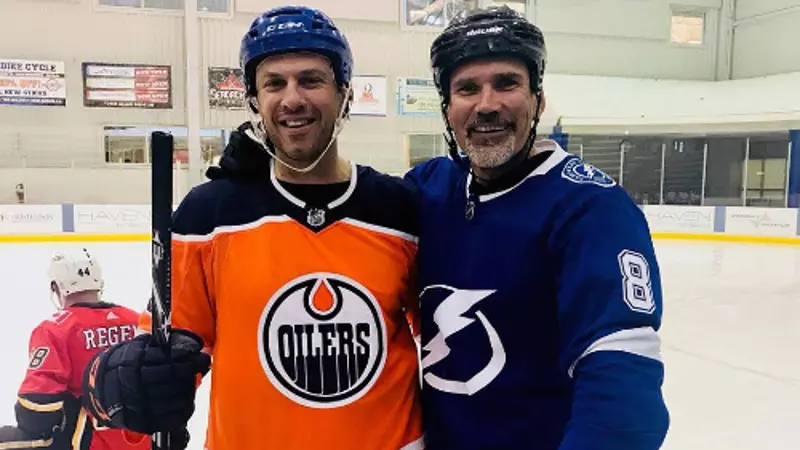
That included hiding every injury that he could for fear of losing his job. Huscroft estimates he suffered at least 14 concussions through his career. In 2001, after several concussions compounded to the point that he could no longer hide the symptoms, he had to walk away.

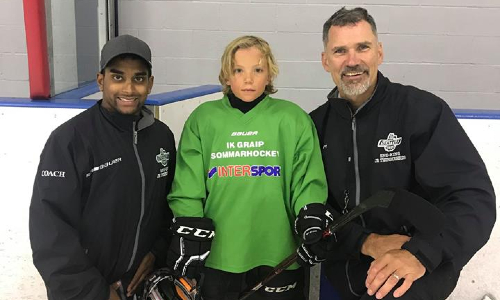
Huscroft now works as a director of facilities for a nonprofit hockey association in Washington. He’s surrounded by the game he loves and enjoys giving back to the hockey community. He is working hard to make sure the old culture of unnecessary hits and hiding hockey injuries is a thing of the past. To that end, Huscroft brought the Team Up Against Concussions education program to coaches and athletes at Sno-King Ice Sports as part of USA Hockey’s Team Up Against Concussions Week.

In the interview below, Huscroft talks about his love for the game, how concussions impacted his career, and the importance of sharing the Team Up Against Concussions message.

What was it like to have such a long hockey career and what has it meant to you since?

Playing professional hockey was never on the forefront of my mind growing up. I came from a small town in British Columbia and everybody played hockey. If there were 15 boys in the class, 14 of them played hockey. On weekends we all gathered around and watched Hockey Night in Canada. It was just something we did for fun. I never thought it would take me anywhere.

When I finally did start playing more seriously in junior hockey, I loved the culture, the players, the coaching. It really taught me hard work. If you had even an inclination or a thought of moving on to the next level, you had to work hard. That attitude continued on throughout my career. When I got drafted into the NHL the reality was that a mistake could cost you everything. Especially if you were someone with my talent. I didn’t have much talent. I worked hard and I was tough, but I lived on that fringe every day where I woke up every day not knowing how long I’d have a job.

That experience really helped me in the second phase of my life and career. It prepared me for all kinds of things. I work for a nonprofit hockey association and I have for the past 15 years. I’m surrounded by kids and people who want to be at the rink every day. It’s great. Every day I wake up and thank the good Lord that he gave me the chance to play in the best league in the world for quite some time.

What was your experience with injuries and concussions during your career?

Back in the day, most of us didn’t want to take a game off. I remember Kenny Daneyko who was the fiercest warrior I’ve ever played with or against in the NHL. There were times that his teeth got taken out, his finger was broken, or his foot got broken with a slapshot or something and I’d say to him, “Kenny – why don’t you take a couple games off and let me play?” I was the 7th defensemen and could have filled in. He said to me, “Husky, if I let you play, I may never get in the lineup again.” And I’d say, “Yea you will, you’re Kenny Daneyko!” But things like that made me feel like it didn’t matter what happened—you couldn’t sit out a game.

I wound up with at least 14 concussions. There were times that I’d take a big check and I’d get knocked out, but I’d be able to get right up. If anyone asked what happened, I’d tell them my knee went out or my shoulder was hurt but I would never let them know that I got knocked out. Unless it was blatantly obvious, because if I got known for having a glass-jaw or not being able to take a hit then by golly I wouldn’t have a job the next contract.

How did concussions lead to your retirement?

I was in Vancouver when I was probably close to 30-years-old. I played three exhibition games in a row and I got knocked out three times in a row over the course of a week. That was the beginning of the end for me. There is nothing you can do to hide the injury at that point. I think the hits were from a fight, an elbow, and a simple hit to the boards. It buckled my knees every time, but I got right up because that was my job. I knew that if I said I got a concussion, I could be out for months and I wouldn’t be sure if I was coming back to a contract or not. So out of pure stupidity I didn’t speak up.

I look back and I think “why did I do that?” But that was your life when you were in the thick of a career. That’s all you knew. You just said, “I’m a warrior. I’ll get around it and persevere.” Well, that didn’t happen, and my symptoms stuck with me. A year after that I took a simple body check in an AHL game and I never recovered. I was out of the game, and it kept me out.

I had deep, dark symptoms. The whole bit. But I was one of the ones who came out of it. I had a good support system. I rebounded and I luckily got a job in business where I was exercising my brain and working out physically on my own. I rebounded and I’m very fortunate.

How can Team Up Against Concussions help prepare teams to spot and respond to concussions?

No matter where you are and what you’re doing, if you’re playing sports concussions are a possibility. It all stems at the top with your team manager or coach. With Team Up, it’s vitally and critically important that we all get the coaches and managers and players to spread that message that teammates have a responsibility to look out for each other when it comes to concussions. It is so important that we recognize concussions on the ice or on the bench. To do that we get need to teach players the Team Up message in the locker room, on the team bus, and on the ice.

You can’t tough out a concussion. I think coaches all know about it, and I think USA hockey and Hockey Canada have done a lot to educate all these coaches throughout the Level 1-5 courses that athletes can’t tough out concussions. We know to respect concussions, and the challenge is to respond accordingly. The awareness is 100-fold now compared to when I was a kid.

Do you think the culture surrounding concussions has changed since you played?

In my day, in the 80s, we knew what concussions were, but we didn’t change our behavior much. Now that we all know and respect concussions, we know that you have to be really careful. Sports, especially hockey, has done a great job taking steps to protect our youth. There is no hitting until you get to the 13-year-old level. Even then the hitting is at the top tiers. Very few hockey players will ever go on to experience the full-contact game. Kudos to USA Hockey and the NHL for adapting, bringing this issue to the forefront, and protecting our youth.

Across the board leagues are taking unnecessary hitting out of the game. I oversee about 700 athletes in our adult league right now and I’m on the discipline committee. We do not accept hitting. If you take a run at somebody and hit them and knock them over, that’s it – you’re suspended. And if you do it a couple of times, we kick you right out of the league. And youth they’re doing the same thing. Kudos to all the people that are advancing this culture change.

Embracing Epilepsy with an EPIC Mindset

Posted: October 4, 2019

“If I woke up this morning, I’m winning.” Rap lyrics from 2 Chainz that really hit home. Not only do I strive to live each day with a grateful heart, but as someone with epilepsy I go to bed each night knowing I may have multiple seizures in my sleep, if I wake up the next morning, it is truly a blessing.

That’s how I’ve learned to see my life with epilepsy – as a blessing. Every day I choose to focus on what I can do, instead of what I can’t. If you’re out there living with epilepsy, living with seizures in any way, I hope I can inspire you to do the same.

I’ve had an eight-year journey with epilepsy. I developed it in my early 20’s during my football career. I detail my concussion history and the beginning of my experience with seizures and how it impacted my relationships in the piece, “How Football Changed my Life.” It’s been a long road, with some serious lows, but living with epilepsy has taught me so much.  It’s taught me that greatness isn’t reaching every goal in life, greatness is the maximum effort you’re able to give – win, lose or draw. Not everyone will beat epilepsy, but I want us all to find greatness in the fight, in knowing we’re trying.

I try to live with an EPIC mindset, and I want to encourage you to do the same. EPIC stands for epilepsy, pride, inspiration and courage.  Epilepsy looks different for each of the 40 million people in the world who suffer from it. It’s a chronic neurological disorder that produces brief disturbances in the normal electrical functions of the brain, causing recurrent seizures. Some people are born with it. Others develop it later in life from a brain injury, brain tumor, stroke or other reasons. Some have grand mal seizures, others don’t. Along with seizures, many have debilitating headaches, nausea, memory loss and fatigue.

No matter what your experience with epilepsy looks like, I want you to know people are capable of loving you, and people are capable of understanding what you’re going through. It’s easy to put walls up, but sometimes we have to let our guard down and figure out a way to get through to society, so they see beyond our seizures and realize we’re humans too. We have bills, stress, trials and daily obstacles we face just like anybody else, yet we get looked at like we’re lazy bums. Trust me, I want to go to work, but I don’t want to have a seizure and put somebody in harm’s way. Many of us are unable to work with our conditions, but we still have to find a way to provide and live in a world where money is key in everything you do or want to be.

Imagine, out of nowhere, your body jerking violently out of your control. Or you lose the ability to control your speech. Sometimes you go completely blank, as if you’re stuck in space for a short period of time. A seizure can hit at any moment, at any time. The very noticeable symptoms are hard to hide.   We need to spread more cultural awareness of seizures, so people can understand what we’re going through and realize in those scary moments, we need someone to help us, not make fun of us. It’s easy to be embarrassed, but I want to be part of a movement where we erase the shame and realize the epilepsy is not our fault. We didn’t ask for this, but it’s our reality and we have to find the strength to get through it.

I won’t accept epilepsy beating me down or getting in my way of bettering myself. It’s all about going out there and just trying every day. Being misunderstood in society can cause a lot of pain. I walk around looking like a “normal” person. People say I don’t look like I have seizures, I look athletic. While that can be hard to hear, I have to accept that some people will listen when I try to explain my condition and others won’t. The epilepsy community needs to be there to support each other and offer that understanding.  We are in a unique position and what we’re going through completely changes lives.

Epilepsy is a monster. It’s so humbling and eye opening to try and understand something you’ve never seen. I’ve never seen someone have a grand mal seizure. It’s amazing when you have people around you who can recognize it and take care of you. I have friends who tell me they caught me before I fell and laid me down because they knew what was going on. It’s scary to lose all control of your body and mind during a seizure, but I’ve learned how to have enough pride to accept help. Let’s all have enough pride to get up every day with epilepsy and try our hardest, but not the sort of false pride where we don’t let people in. It’s easy to push people away because you’re caught up in yourself and your own struggles, but when somebody is there for you, don’t misconstrue it. Try to remind yourself they’re facing struggles as well and you must be there for them too. Let’s have enough pride to be honest about what we’re going through. I want to be able to admit to my wife that I don’t remember things that happened at our wedding. It’s frustrating not to remember, but I have enough pride not to lie, and to own my illness and its symptoms. You must have enough pride to look past people’s opinions about your injury. If you let the negativity bother you, you can lose yourself. Instead, let’s work together to educate people on what to do when they see someone having a seizure.

’18-’19 Teammate of the Year: Lynn Kleyer

Posted: September 10, 2019 

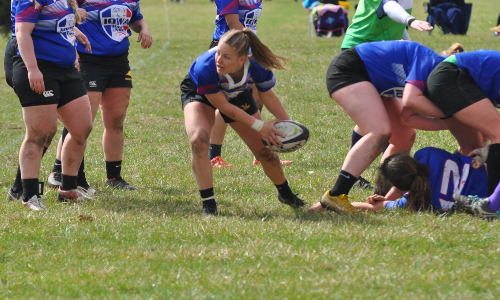
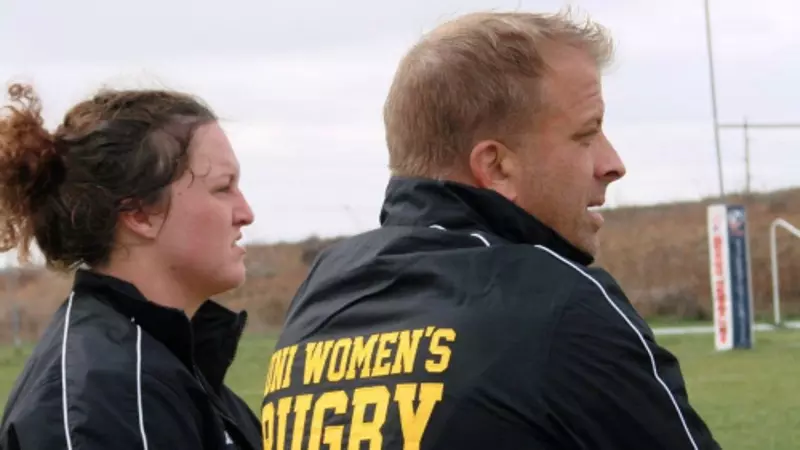
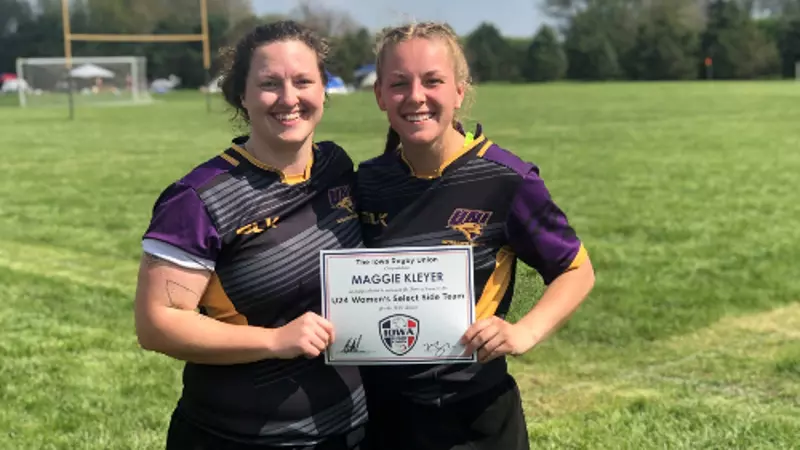
The University of Northern Iowa junior and her teammates have a unique understanding of the value of concussion safety. Current UNI women’s rugby head coach Meghan Flanigan makes it a priority to educate her athletes on brain trauma and concussions, to honor the program’s former longtime coach Steve Murra. Murra passed away in 2016 and was later diagnosed by researchers at the VA-BU-CLF Brain Bank with Stage II CTE.

Murra’s passing started a lasting conversation about concussions and brain trauma within the eastern Iowa community. Flanigan, who played for Murra, says the team aims to continue his legacy by doing more than just playing excellent rugby. Many athletes on the team pledged to donate their brains for research at the VA-BU-CLF Brain Bank and have delivered the Team Up Speak Up Speech each year since 2016.

After learning about Murra’s passing when she joined the team her freshman year, Kleyer worked to gain a stronger understanding of concussions and CTE.

“In high school I didn’t really think concussions were a big deal,” Kleyer said. “Knowing the signs and symptoms of a concussion definitely has opened my eyes to seeing what I need to do to take care of my body.”

During a 2018 all-star rugby game, Kleyer put her knowledge into practice. She noticed her teammate took a hard hit to the head. When asked if she felt alright, Kleyer’s teammate was quick to say she was fine, but Kleyer kept a watchful eye on her friend as they continued the match. A few plays later, her teammate took another bad hit.

“I could definitely tell right away something was up and she wasn’t doing OK,” Kleyer said.

She noticed her teammate was getting up much slower than usual.

“Our ‘thing’ as a team is to push each other if we are ever winded,” Kleyer said. “We’ll say, ‘get up! You’re OK!’”

In this situation, though, she could tell her teammate was suffering from something more serious than fatigue. Kleyer told fellow teammates to help her injured friend as she brought the situation to Coach Flanigan’s attention.

“I was talking to some other coaches trying to form a game plan when I heard the ref’s whistle blow,” Flanigan said. “I heard Kleyer screaming my name and saw her talking to the refs.”

The injured player was brought off the field and evaluated. Doctors eventually diagnosed her with a concussion. Kleyer made sure to check up on her daily during her recovery as she sat out from classes and practice.

The best teammates, like Kleyer, care more about the health and wellbeing of their teammates than they do about winning or losing. If it weren’t for Kleyer’s leadership, her teammate could’ve continued to play and risked developing serious health consequences like Post-Concussion Syndrome (PCS), or even Second Impact Syndrome (SIS), a rare condition that is often fatal when it occurs.

By working with the team’s Athletic Trainer and following their return to play protocol, Kleyer’s teammate was able to take the field again later that season.

“Had we not been proactive in saying something she could’ve been out a lot longer,” Kleyer said. “She was able to continue playing later on…that gave me happiness.”

Coach Flanigan says all her players take concussions very seriously, but especially Kleyer.

“Every year she is one of the first to inform the girls what a concussion is,” Flanigan said. “What we can do as a team, what to look for.”

Coach Flanigan wasn’t surprised it was Kleyer who stopped the game to get her teammate help, describing Kleyer as having a “natural ability to lead people on and off the field.”

Watch the University of Northern Iowa Women’s rugby team give the Team Up Against Concussions Speech:

Two of Kleyer’s own personal role models, Alev Kelter and Kate Zackary, are members of USA Rugby Women’s Eagles Sevens team. The CConcussion & CTE Foundation is proud to partner with USA Rugby for the first ever USA Rugby Team Up Week Sept. 8- 14, 2019. Members of the USA Rugby community can pledge to participate and learn more here.

Teams from every sport can participate in Team Up Against Concussions. Get started here.

Our Duty As Athletes is to Support Research

Posted: April 17, 2019

“More people should be aware that you can pledge to donate your brain to research,” Wilson said. “Without research, we can’t make educated decisions about our sports. I think it’s the duty of players, not just ex-pro athletes, to step up and contribute to research to allow people to make better decisions.”

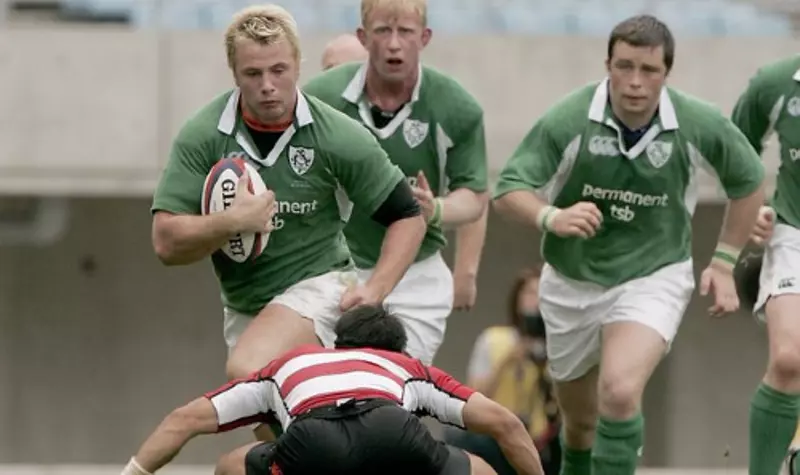
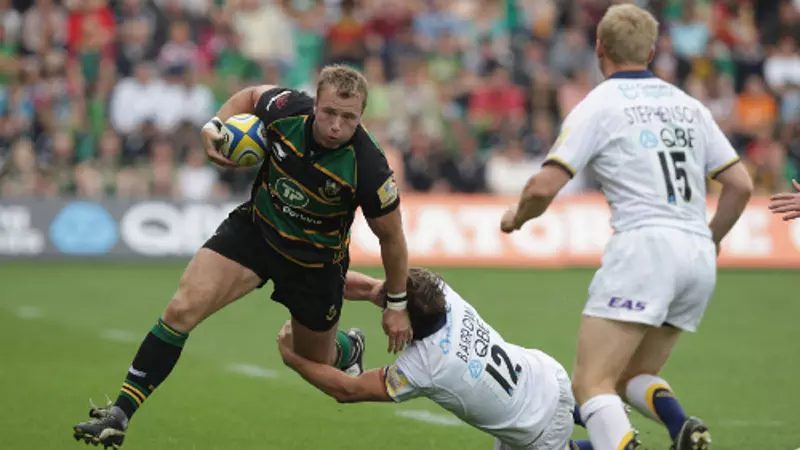
Wilson spent 15 years as a top-tier professional rugby player, more than double the career length for most of his teammates and opponents. He was born into a rugby family in Belfast, Northern Ireland, started playing at age six, and worked his way up to represent his country on the Irish national team like his grandfather and uncles before him.

As Wilson traveled the globe for Ireland and premiere rugby teams like Ulster and the Northampton Saints, concussions and the long-term impact of brain trauma were not a major concern.

“When you’re playing professional rugby, that’s your lifestyle and your income and your livelihood. You don’t really think too much about brain trauma,” said Wilson. “You’re just focused on getting picked for the team and performing at your maximum.”

In recent years, a global conversation has emerged on brain trauma within rugby. In 2018, the Concussion & CTE Foundation launched the Global Brain Bank to study the brains of former contact sport athletes for CTE. Australian rugby icons Ian Roberts and Peter FitzSimons pledged their brains to support the research. Several other Australian rugby legends went public with cognitive issues they’ve been told are related to their years of hits to the head playing rugby.

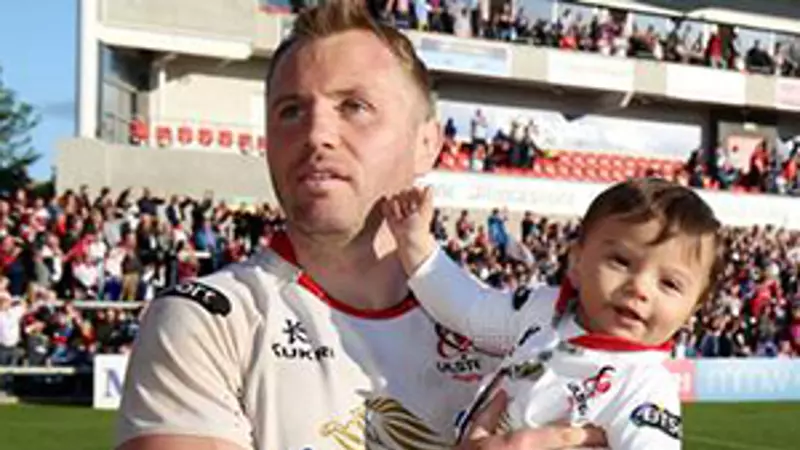
Fortunately, Wilson left rugby feeling healthy and without a dramatic concussion history. Reflecting on his retirement in 2017, Wilson said, “I had played such a long career and I was able to finish on my terms, which a lot of players don’t get to do. I was able to play in the very last game of the season, score a try, and get awarded Man of the Match before taking my young son on the field for a lap of honor. In many ways it was a fairytale ending to a long career.” Nonetheless, Wilson knows many athletes aren’t as fortunate and wants to give back to rugby by contributing to research.

“Concussion is something nobody talked about 20 years ago, but thanks to research people are more aware of certain dangers. It’s a bit like the anti-smoking campaign and issues with tobacco. It was only when people realized how bad it could be for you that something was done about it.”

Wilson expects mixed reactions to the news of his brain pledge from rugby fans and former teammates in Ireland. The issue of concussions in rugby has been widely reported in recent years and many people embrace changes to address the danger; however, Wilson anticipates some still won’t understand his enthusiasm to support research and might view it as a part of a larger attack on their beloved sport.

“Where people might ask why I want to pledge my brain, my answer is ‘why not?’” said Wilson. “People may worry this type of research will lead to the demise of contact sports, but we can only make educated decisions if we know the truth. Why would you not want to know the truth?” Wilson hopes that by pledging to donate his brain he can help raise awareness about the need for more concussion education and research.

One famous case in Northern Ireland illustrates, to Wilson, the danger of inaction. Ben Robinson, a 14-year-old boy in Belfast, continued playing in a rugby game despite showing clear signs of a concussion. Robinson collapsed and died from second-impact syndrome. After the tragedy, Robinson’s family boldly advocated for change, and his story led to new regulations in the UK. “We have to recognize the risks,” Wilson said. “People can’t bury their head in the sand. There are families who have gone through real, preventable trauma that we can’t forget about.”

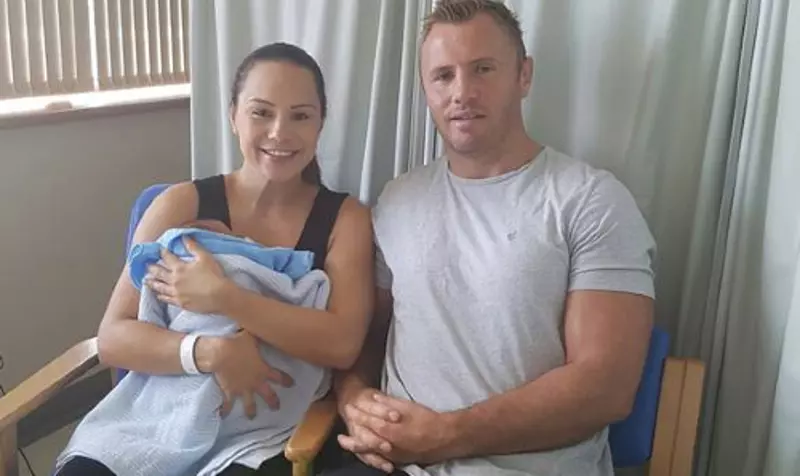
Wilson’s passion as a concussion advocate emerged from intersecting life experiences. A new career, several years’ perspective on life as a professional athlete, and two young children impacted the way he viewed contact sports. “It was only when I retired, and we started a family—we have a young boy who is probably going to get into sports in a year or two—that my conscience changed a little bit and I started thinking about concussion.”

Now, Wilson makes his living teaching the tackling techniques he learned playing rugby to American football players in Dallas, Texas. His knowledge about intentional collisions, coupled with a Master’s in Performance Science that he earned in Ireland, has shaped his efforts to mitigate concussion risk.

Wilson’s new brain donor card will undoubtedly spark conversations among the athletes he played alongside and against. With luck, it will inspire more athletes to follow his lead and act to make their sports safer.

Follow Roger Wilson on Twitter.

Click here to join Wilson and pledge your brain.

A Powerful Documentary: “Football in America”

Posted: November 20, 2018 

I submitted this film to the Sports Emmy group back in 1982. I was amazed when it got nominated for Outstanding Achievement in Sports Programming and shocked when my brother in law called me to say he had accepted the award for me. Our small crew consisted of me as director/cameraman/interviewer, and an assistant/sound person. Funding for the film was a PBS grant out of WNET in New York City. What was most telling to me was that the sports industry was acknowledging that there was a problem with the game of football and it deserved attention. Thirty-seven years later, with today’s players bigger, stronger and faster, I want to thank Chris Nowinski and those at the Concussion Legacy Foundation for honoring our film, and its cautionary message once again.

How A Jockey is Racing Toward Concussion Safety

Posted: September 21, 2018 

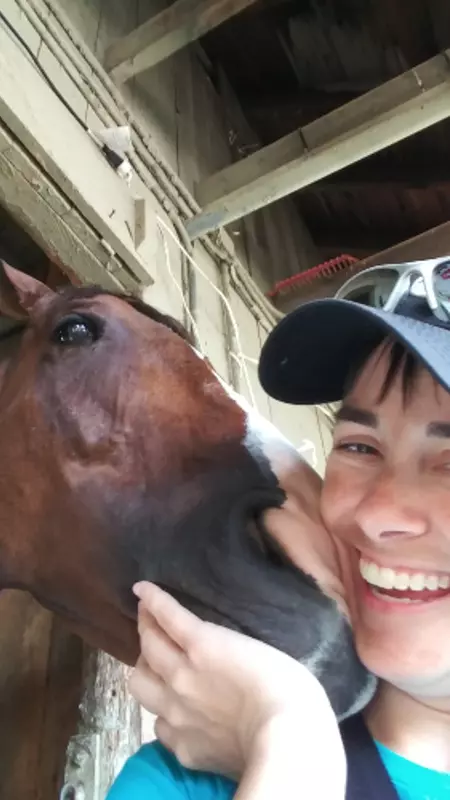
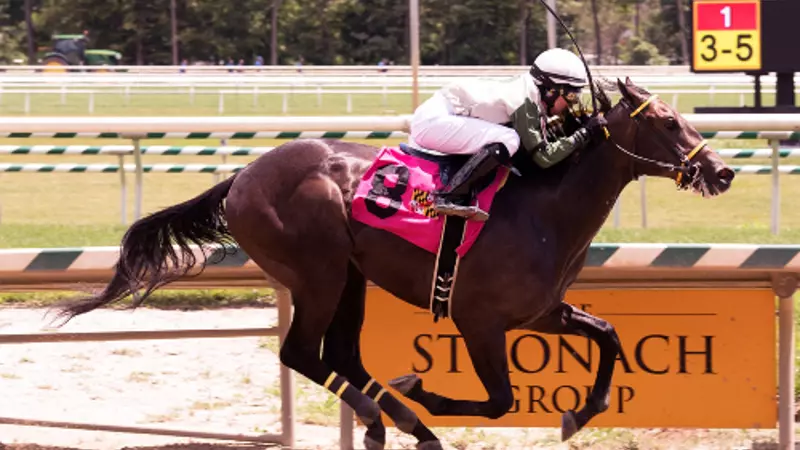
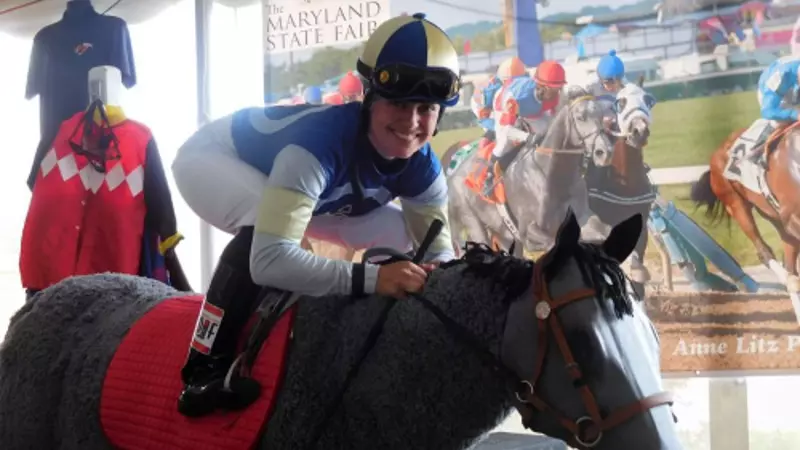
The Massachusetts native was hospitalized in Washington D.C. for intensive care and spent the last year recovering from her injuries, the most persistent of which is her severe concussion. The experience showed Miller just how difficult it can be to return to life after a concussion – and how much research still needs to be done to understand the effects brain trauma can have on long-term health.

Now, Miller is pledging to donate her brain to the Concussion Legacy Foundation to raise awareness about the need for research. There is growing awareness about research on brain trauma in the jockey community, but much more progress is needed. Miller hopes that her experience and her enthusiasm to improve jockey welfare will inspire more jockeys to pledge their brains and create a larger educational movement in the racing community.

Could you tell us about your injury last year and how it happened? What has the recovery process been like for you?

I went down in a race in West Virginia and I don’t remember much of that day. After watching the replay, it looks like I was quite likely knocked out upon hitting the ground. I had one horse left behind me in the race who came along and kicked me in the jaw when he tried to jump me. Whether the brain injury came from the initial fall or getting kicked by a thousand-pound animal, I’m not sure. It could have been either or could have been both.

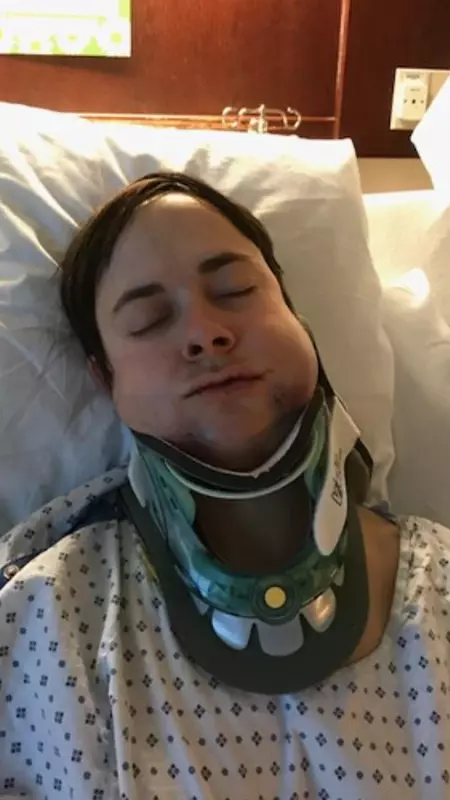
I ended up with two jaw fractures and three separate brain bleeds all on the surface of my brain that put me in the ICU, I’m not sure how long. Then I was in the hospital for a couple weeks, and I stayed at another rehabilitation hospital for five days after that.


My memories are a little fuzzy from when I first got out of the hospital. I know they warned me a lot about the possible psychological aspects of head trauma like depression and anxiety. They warned me enough when they discharged me that I remember it. Now I’ve been discharged from my speech rehab, but I’ve still been in physical therapy.

What is your general sense about how concussions are perceived in the racing world?

I think it’s more just something that’s accepted as a risk that we are willingly taking to do something that we love. From what I know, it’s not openly spoken about. The one thing I do know is we are all very aware of the risks. All of us have either heard of or met jockeys who have had serious injuries whether they be brain injuries, spinal injuries, or even deaths from going down in a race. We all know it’s a very real possibility, and that it’s significantly more a matter of luck than skill or decision making.

Why are you donating your brain to the Concussion Legacy Foundation?

I think it’s important to further both research and awareness as much as possible now, rather than getting to the point where we have parents saying it’s not safe for their kids to play sports at all because the proper research was not done ahead of time. Too many people are getting hurt, so let’s find out what adjustments need to be made now so that in the long run all of these sports that we love can keep going.

Is donating one’s brain to research something that you’d like to see catch on with your fellow jockeys and fellow riders?

Absolutely, I think it’s a good way to spread awareness. Most jockeys currently racing tend to be younger – hopefully they live nice long lives – but by the time they pass away there will probably still be research to be done. So why not donate it? We are certainly in a position to have suffered a variety of brain traumas. Most of us will get through our careers suffering numerous concussions and some will have some big brain injuries, so I think it presents a good pool of variety to gather information.

Did you struggle to manage and coordinate your recovery?

The insurance company did provide me with a nurse case manager for the first few months. She organized all my appointments and came into almost all of them with me, just in case I was struggling to ask a doctor a question or understand something, so she could get more details. We’d talk about it afterwards and she would take notes on everything, so I didn’t have to feel the pressure of trying to remember everything that was discussed. She was immensely helpful with that. It would’ve been nicer to have her a little bit longer but I’m glad I had her for as long as I did.

But I feel lucky. After a brain injury, you aren’t really in a position to be seeking help because you aren’t necessarily mentally capable. And on top of that, I grew up in America, English is my primary language and I’m familiar with our medical system. A lot of the jockeys I race with are young guys from other countries and I couldn’t imagine trying to go through this if I was still learning English at 18 years old while my family is in another country.

What do you hope the future of horse racing will look like in relation to brain injuries and jockey welfare?

I would like to see everybody get on board for making sure jockeys don’t ride when they aren’t cleared and aren’t medically ready. I don’t believe that there is ever going to be anything that will completely get rid of the risk. But I’m not looking for that as much as utilizing what’s available for technology to decrease the risk. One of the concerns for a lot of jockeys is the time spent out of work is time spent with no income. Some people rush back to work because they have families, and that’s understandable. Not every injured jockey knows about the financial resources available to us because it varies a -little bit state-to state. Also, many people are trying to put better concussion protocols in place, but they are not consistent nationwide. We need to take the best technology and the best recovery protocols and make it all a little more accessible for those that get hurt.

Join Jenn in taking the pledge to donate your brain.

’17-’18 Teammate of the Year: Sydney DeMasi

Posted: September 12, 2018

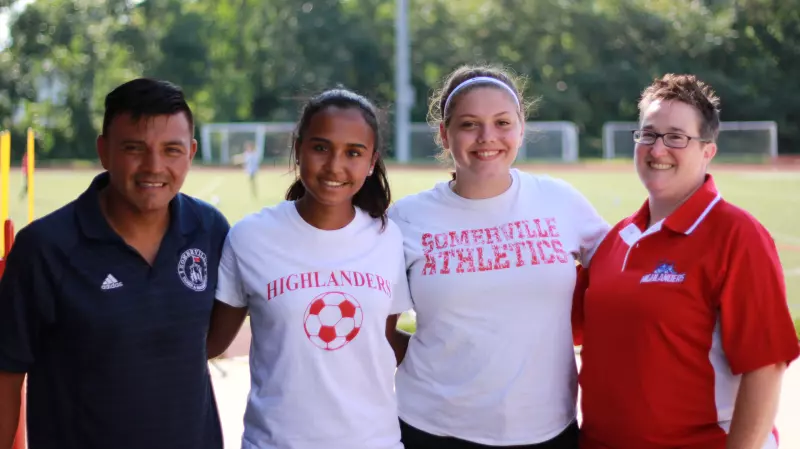
Sydney DeMasi from the Somerville High School Girls Soccer team went above and beyond to protect her teammate Samiyra.

With only a few minutes left in one of the final games of the 2017 season, a forceful kick by the opposing team struck Samiyra directly in the forehead. Sydney witnessed the ball hit Samiyra and, as good teammates do, went to check on her.

As Sydney remembers it, “Sami was like ‘I’m fine, I’m fine.’ But then it got to the point where she was unsteady walking.” So, Sydney informed Somerville’s athletic trainer Michelle Kelly that something was wrong with her teammate, and also told Samiyra to check in with Michelle.

The next day in school, Sydney sought out Samiyra to see how she was feeling. “I asked her if she saw Michelle or the coach. She said, ‘No I think I’m fine.’”

Despite Samiyra’s assurances that she felt okay, Sydney suspected that she was hurting. Sydney noticed Samiyra was squinting at the lights and she admitted to getting headaches.  “Sami is not one to speak out when she’s hurt, she’s very quiet…[but] I was told by another teammate she was falling asleep in class which isn’t like her, so I told her to go see Michelle,” said Sydney. Still worried, Sydney followed up with Michelle Kelly and Samiyra later that day to be sure that she reported her symptoms. It turned out that Samiyra did have a concussion.

Samiyra was diagnosed and entered the concussion protocol to start her rest and recovery process right away. But not long ago, a concussion like Samiyra’s might have gone unnoticed and undiagnosed. It’s impossible for coaches and athletic trainers to monitor every player at all times, so occasionally concussions can slip through the cracks. That’s why looking out for teammates and speaking up when a concussion is suspected, the core principles of the Team Up Against Concussions program, is so crucial to keeping athletes safe.

Team Up Against Concussions encourages coaches to give a speech at the beginning of every season asking their players to speak up if they think a teammate might have a concussion. Understanding that injured athletes often cannot recognize when they have a concussion, or that they may feel pressure to stay in the game, the goal of the program is to create a positive concussion culture and make sure athletes with a possible concussion are removed and checked immediately. Studies show that immediate removal is the key to getting them back to full strength and back in the game most quickly.

And that’s just what Sydney did. Michelle Kelly and head coach Tony Arias have created a positive concussion culture on the team by teaching their athletes how to recognize the signs of a concussion and about the importance of speaking up if they think a teammate has a concussion. “The kids really do look out for each other,” said Michelle Kelly. “The soccer team in particular has this family mentality where they protect each other.”

That protective family environment is obvious in Sydney’s actions and in how she speaks about her teammate. “Sami is a big part of the team,” said Sydney. “If she wasn’t able to play ever again because she got hurt worse, it wouldn’t just hurt us, it would hurt her. Soccer is something she loves and we all love, and we all want to be part of it together.”

“I’m very proud of what Sydney has done during the couple of years that she has been with the program, especially when she took initiative that night with Samiyra’s case,” said Coach Arias. “She is one of those people where if she wants something done, she gets it done. That’s her character and I was not surprised that she handled it so well.”


Michelle echoed Coach Arias’ praise of Sydney. “To be able to recognize that someone is in distress – make sure they’re ok – realize they’re not ok – and to tell somebody about it then make sure the follow up happened, I think that’s something pretty remarkable. We don’t see that all the time.”

The Concussion & CTE Foundation is proud to present the Teammate of the Year Award to Sydney and hope that more athletes follow her outstanding leadership.